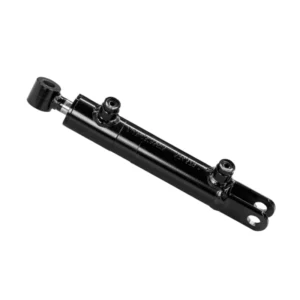
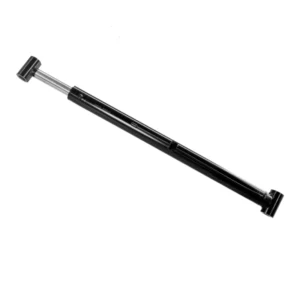
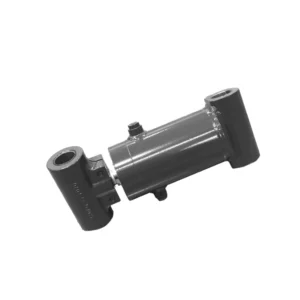
Support hydraulic cylinders
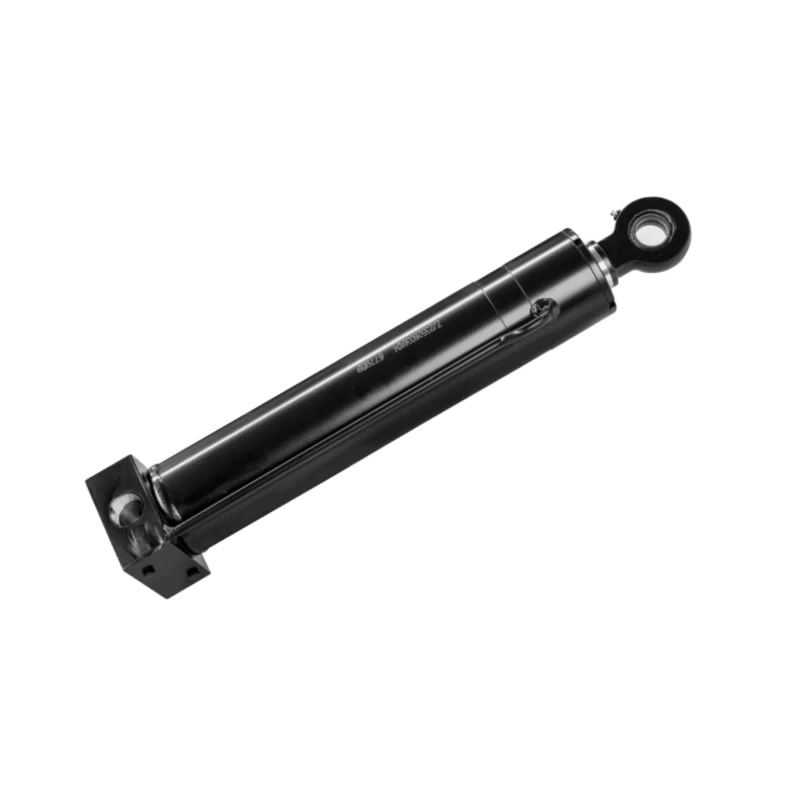
Ensure the complete safety of your aerial work platforms with our heavy-duty AWP Support Hydraulic Cylinders. As a specialist manufacturer, we engineer safety-critical stabilizer cylinders designed for maximum reliability and zero-drift performance. Our cylinders feature high-strength steel bodies, precision-finished rods, and are integrated with load-holding safety valves to guarantee a solid, stable base. Trust our OEM-quality replacement cylinders to prevent leaks, withstand harsh site conditions, and protect your operators at height.
What are support hydraulic cylinders?
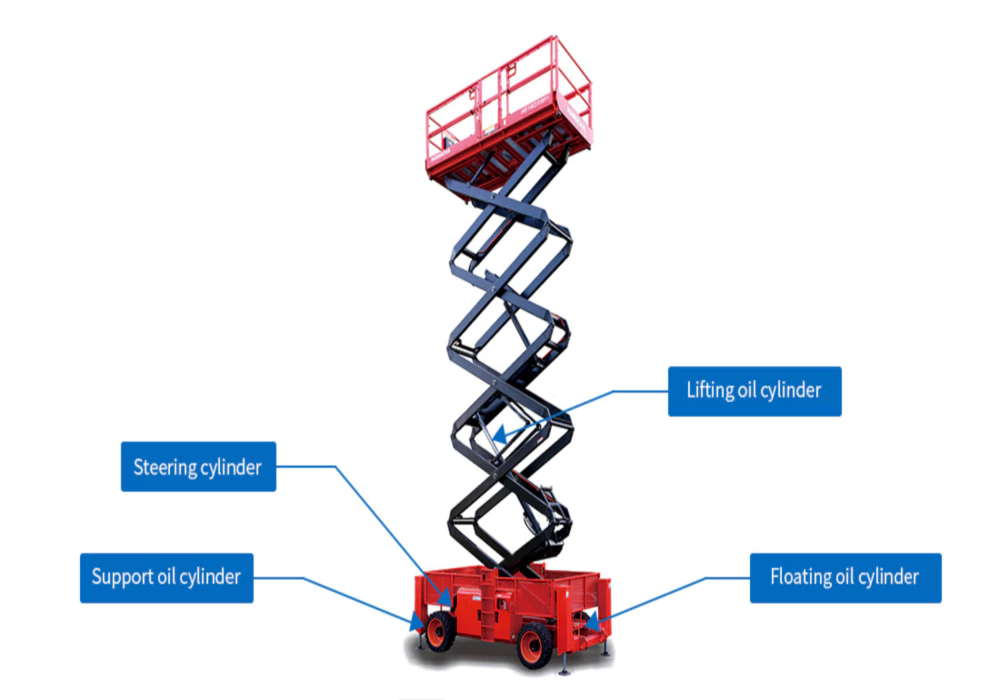
Aerial Work Platform (AWP) support cylinders are hydraulic actuators used to provide a stable and secure support base for aerial work platforms (such as boom lifts or vehicle-mounted lifts) before they are raised.
Unlike cylinders used to generate movement (such as lifting cylinders or telescoping boom cylinders), support cylinders extend downwards from the machine chassis to the ground. This action lifts the machine's wheels, increasing the support area and leveling the entire chassis on uneven ground. This creates a solid and stable foundation, which is crucial in preventing the machine from tipping over when the boom is extended.
Support Hydraulic Cylinders Technical Parameters
| Item | Specification |
|---|---|
| Function | Balance the center of the car to prevent it from tilting |
| Cylinder diameter | 70mm-90mm |
| Rod diameter | 50mm-700mm |
| Travel | 477mm-754mm |
| Maximum pressure | 20MPa |
| Maximum thrust | 127KN |
Advantages of Support Hydraulic Cylinders
- Crucial Safety: This is their primary purpose. They provide a wide support base, preventing the aerial work platform from tipping over, which is the biggest risk in working at height.
- Enhanced Stability: They provide a firm and stable platform, making the operator feel safe and secure in the work basket, avoiding the swaying that occurs when the machine is supported only by its tires.
- Operation on Uneven Ground: Support cylinders are essential for leveling the machine on slopes or uneven ground, ensuring that the mast or boom lifts vertically.
- Maximizing Working Range: Only with properly deployed support cylinders can the aerial work platform achieve its maximum horizontal reach and vertical height. Without them, the machine's working range would be severely limited.
Applications Of Support Hydraulic Cylinders
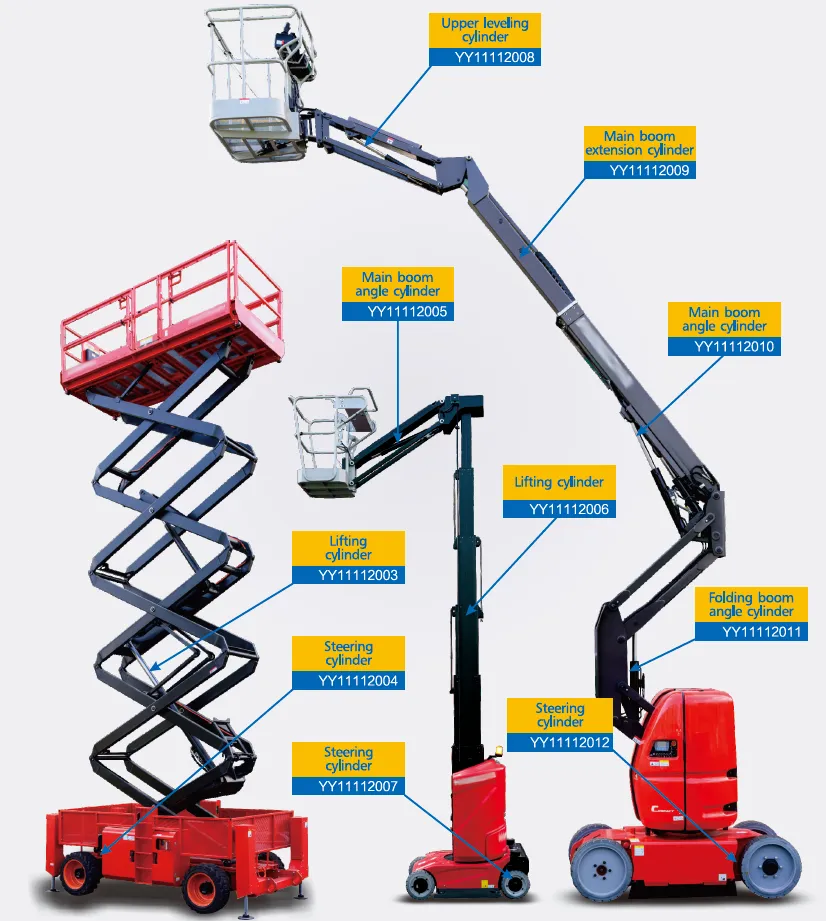
- Boom lifts (telescopic and articulated): Most large boom lifts use these hydraulic cylinders to stabilize the chassis before extending the boom.
- Vehicle-mounted boom lifts (aerial work vehicles): They are crucial for stabilizing the host vehicle (truck or van), as the host vehicle itself is often not heavy or wide enough.
- Spider lifts (atrium lifts): These machines are characterized by their long, multi-jointed outriggers, allowing them to operate in confined spaces or on fragile ground.
- Large off-road scissor lifts: Many heavy-duty scissor lifts use outriggers to increase stability when lifting to maximum height on construction sites.
How to Maintain The Support Hydraulic Cylinders?
- Check for leaks: Regularly inspect the cylinder body, piston rod seals, and hydraulic hose connections for any signs of fluid leaks.
- Check the piston rod: The piston rod is often extended in harsh, dirty environments. Keep it clean and check for any scratches, dents, rust, or concrete splatter. A damaged piston rod will quickly damage the internal seals.
- Test for "creep" (slow descent): This is the most important safety test. Once the outriggers are set and the machine is stable, they should not "creep" or slowly retract under the weight of the machine. If the outriggers sink, it means the internal piston seals of the hydraulic cylinder or, more likely, its load-holding valve are malfunctioning. This is extremely dangerous and must be repaired immediately.
- Check mounts and pins: Ensure the hydraulic cylinder mounting pins and retaining clips are secure and not excessively worn.
- Test with outrigger pads: Always use appropriate outrigger pads to support the outriggers to distribute the load on the ground. Check the outrigger pads for cracks or damage.
How to select suitable support hydraulic cylinders?
1. Determine the Exact Replacement Part (for Repair)
This is the safest method if you are replacing a hydraulic cylinder on an existing machine.
Use the Original Equipment Manufacturer (OEM) Part Number: The simplest and most accurate method is to find the original equipment manufacturer (OEM) part number, which is usually printed on the hydraulic cylinder body or listed in the aerial work platform (AWP) service manual. Provide this number to your supplier.
Use the Machine Model and Serial Number: If you cannot find the part number, please provide us with the complete machine model and unique serial number. We can use this information to find the correct hydraulic cylinder configuration for that specific machine.
2. Specify Key Technical Dimensions (for Custom or Unknown Models)
If you are ordering a custom hydraulic cylinder or cannot determine the part number, you must match the original specifications exactly. Never guess.
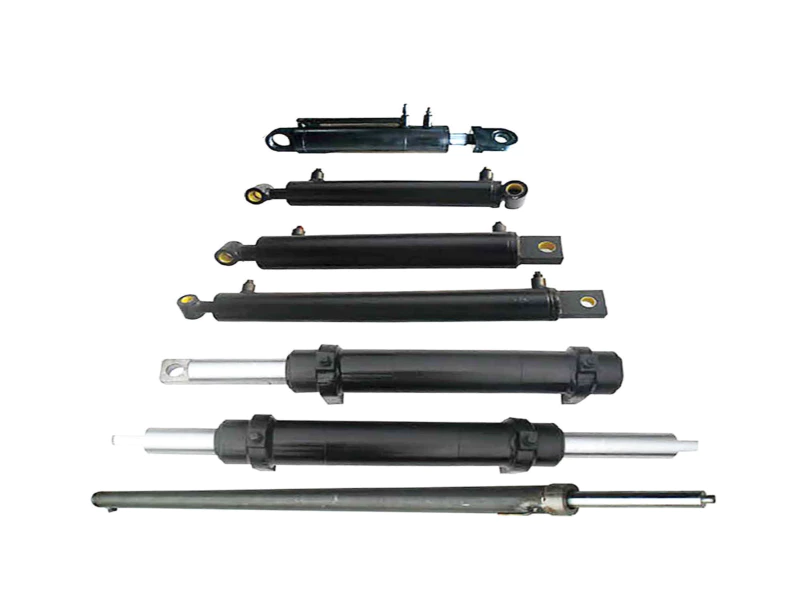
Stroke Length: The total distance the piston rod travels from fully retracted to fully extended.
Retracted Length (Pin Hole Center Distance): The distance between the centers of the two mounting pin holes when the hydraulic cylinder is fully retracted. This ensures it can be mounted on the chassis.
Extended Length (Pin Hole Center Distance): The distance between the centers of the pin holes when the hydraulic cylinder is fully extended. (This equals the retracted length + stroke length).
Bore Diameter: The inner diameter of the hydraulic cylinder barrel. This, along with the pressure, determines the lifting force of the hydraulic cylinder.
Piston Rod Diameter: The diameter of the chrome-plated piston rod. This is crucial for its strength and resistance to bending under the weight of the machine.
Mounting Type: Determine the mounting method (e.g., U-joint at both ends, pin eye, trunnion). You must also measure the pin hole diameter.
3. Emphasize Key Safety Features
This is the most important step. Outrigger hydraulic cylinders are not just standard hydraulic cylinders; they are load-bearing safety devices.
Integrated Load Holding Valve: The hydraulic cylinder must be equipped with a pilot-operated check valve or counterbalance valve. These valves are usually built directly into the cylinder head or attached to the port.
Why they are so important: If a hydraulic hose bursts, these valves automatically lock the hydraulic cylinder, preventing it from retracting. This prevents the aerial work platform (AWP) from tipping or overturning. Never use a hydraulic cylinder without this feature in an outrigger application. 4. Evaluating Manufacturing Quality and Materials
For such critical components, quality is directly related to safety.
High-strength steel: Ensure that the hydraulic cylinder body, piston rod, and mounting base are all manufactured from high-strength steel capable of withstanding high compressive loads.
Piston rod quality: The piston rod must be hard chrome plated. This provides a smooth, wear-resistant surface for the seals and, most importantly, protects the piston rod from corrosion (rust) and pitting, thus preventing leaks.
High-quality seals: Choose seals from reputable brands. The seals must be able to withstand high pressure and varying temperatures without leaking or failing.
Please visit our VR factory.
Additional information
| edited | by hyw |
|---|