Product Description
Hydraulic Cylinder for dump truck and trailer
Company profile
*History:22 Years of history , the registered capital of 60 million yuan
*Scale: 180000 square meters,with 500 employees
*Capacity:Annual production of more than 200,000 sets
*Equipment:700set ,invested a large amount of money in introducing 1 electroplating production line.
*Certificate:ISO9001,ISO/TS16949,ABS,AQA etc
*Delivery time:20Days
*Service:52 Service Outlets nationwide,24-hour Service
*Accept Custom
Product Details
| HS Code | 8412210000 |
| Application | Dump truck, Tipper, Dump Trailer |
| Material of cylinder tube | steel |
| Seal | Hallite, NOK, Guarnitec, Parker |
| Coating | All tubes are chrome plated |
| Working pressure | 16mpa-23mpa |
| Stroke | 3000mm-11000mm |
| Color | red black blue gray, according to customer’s requirement |
| Mounting Type | Earring-trunnion, double trunnion, double earring (eye end) |
| Certification | ISO9001,ISO/TS16949,ABS,AQA etc |
| Package | shrink film, pallet, plywood case and carton |
| Warranty | Factory nameplate date within 14 months |
| Main export market | US, Canada, South Korea, Russia, Australia, Indonesia, Malaysia, Kenya, Philippines, Xihu (West Lake) Dis.via, the United Arab Unites, Singapore |
| Payment terms | T/T, L/C, West Union |
| Delivery time | 20 Days |
Quality guarantee system
Program before Delivery
1. Trial Operation Test
2. Start-up Pressure Test
3. Pressure-Tight Test
4. Leak Test
5. Full Stroke Test
6. Buffer Test
7. Testing the Effect of Limit
8. Load Efficiency Test
9. Reliability Test
Every piece of hydraulic cylinder are tested and will send out only after they are pasted the each test
Product line
Packing
Certificated:
Guarantee and after sale service:
>7 x 24 hours technical support through email
>Goods will be delivered safely on time
>One year guarantee after destination port arrival
>Life long time track service
Why Wantong?
1.Complete Manufacturing Processes:
The company has complete and total manufacturing processes from raw material entering to factory and up to the final finished products to customer.Which all are done under same premises.Therefore we can control the quality and delivery time at our best.
2.Strict Quality Control system:
We have gained ISO/TS16949, CCRI, CCS, and DNV AND ABS, API,etc and the quality of the products has been controlled in strict accordance with the certification standard.
3.Rich Market Experiences:
Many years cooperation with famous brands,likeSINOTRUK,CIMC,SHACMAN,ZMJ and YANKUANG GROUP.
FAQ:
Q1. What are the same aspects of your cylinder with CHINAMFG cylinder?
A: Same inside structure.
Same outside dimension and same mounting sizes. It can be interchangeable with Hyva’s
Q2. Compared with CHINAMFG cylinder, what are your cylinder advantages?
A: 1. Rod are chrome plated.
2. Tubes are quenched and tempered.
3. Tube inner hole goes through deephole boring machine processing. Surface roughness is 0.4Ra
and circular degree is 0.571.
4. Good quality yet lower price.
Q3: Are you a manufacture or a trade company?
A: Manufacture, we are the leader manufacturer of hydraulic industry in China with 20 years’ experience and technology accumulation. With strong technical team we could solve any annoyance of you.
Q4: Do you have quality control system?
A: Yes, The quality management system introduced is: ISO/TS 16949:2009-certified by NQA and IATF cert.
Q5: How can i get a booklet and buy a cylinder from you?
A: Very easy! Just leave me a message or email or call me directly, let me know you are interesting in our products. I will talk with you for the details soon!
Q6: Can you tell me the price for the cylinder?
A: 1. Please advice the drawing with technical requirement.
2. Please advice the model No. after you check our booklet.
3. Please advice the tipping capacity, number of stages, closed length, mounting type and size.
4. Please also help advice the quantities, this is very important.
Q7: Do your products come with a warranty?
A: Yes, we have 1 year warranty. In this year, if the quality problem we will free repair for you.
Q8: Hydraulic cylinder internal leakage?
A: 3 main reasons causing internal leakage: Overload, polishing bad controlled, cheap seal kits. As is known to all, vehicles in China are often overloaded, our products all designed to bear the overload power. Advanced equipment could assure the polish processing. And we use the imported/TOP brand seals to meet customers’ requirement.
Q9: What about the quality feedback of your products?
A: WE HAVE NEVER RECEIVED EVEN ONCE QUALITY COMPLAINT FOR MANY YEARS OF INTERNATIONAL BUSINESS.
Q10: Can you help me to install or recommend what kind of hydraulic cylinder or power pack should I use for specific machine?
A: Yes, we have 25 experienced engineers who are always ready to help you. If you do not know what kind of hydraulic cylinders should be used in your machine, please just contact us, our engineers will design the exact products match your need.
Q11: What is the delivery time?
A: Within 15 days for samples.
15-30 days for bulk production, which is depend on quality, production process and so on.
Q12: What is your main payment term?
A: T/T, L/C, D/A, D/P either is available.
Dream
*Company vision:Act as the laeder of internal hydraulic industry
*Enterprise concept:Better and stronger
*Core values:Learning and innovation,equality and justice,customers the first,and quality winning the world
*Enterprise spirit:Complete sincerity,complete precision more excellent,and up to date
*Quality policy:Pursue zero defects of our products,and realize zeo customers’ complains
*Company type:Respond quickly,act immediately,finish what to do today,and improve day after day
Exhibition
| Certification: | RoHS, CE, ISO9001, Ts16949 |
|---|---|
| Pressure: | Medium Pressure |
| Work Temperature: | -30~100ºC |
| Acting Way: | Single Acting |
| Material: | Steel |
| Shaft Diameter: | 20-400mm |
| Customization: |
Available
|
|
|---|
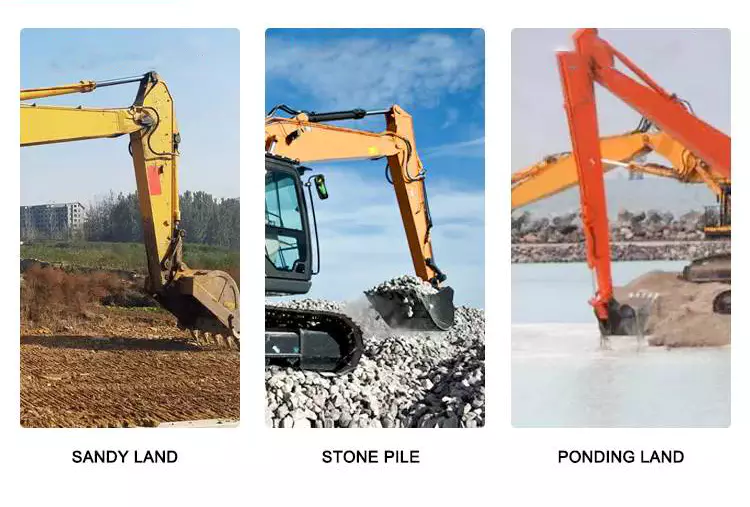
What advancements in hydraulic cylinder technology have improved sealing and reliability?
Advancements in hydraulic cylinder technology have continuously contributed to improving sealing and reliability in hydraulic systems. These advancements aim to address common challenges such as leakage, wear, and failure of seals, ensuring optimal performance and longevity. Here are several key advancements that have significantly improved sealing and reliability in hydraulic cylinders:
1. High-Performance Sealing Materials:
– The development of advanced sealing materials has greatly improved the sealing capabilities of hydraulic cylinders. Traditional sealing materials like rubber have been replaced or enhanced with high-performance materials such as polyurethane, PTFE (polytetrafluoroethylene), and various composite materials. These materials offer superior resistance to wear, temperature, and chemical degradation, resulting in improved sealing performance and extended seal life.
2. Enhanced Seal Designs:
– Advancements in seal designs have focused on improving sealing efficiency and reliability. Innovative seal profiles, such as lip seals, wipers, and scrapers, have been developed to optimize fluid retention and prevent contamination. These designs provide better sealing performance, minimizing the risk of fluid leakage and maintaining system integrity. Additionally, improved seal geometries and manufacturing techniques ensure tighter tolerances, reducing the potential for seal failure due to misalignment or extrusion.
3. Integrated Seal and Bearing Systems:
– Hydraulic cylinders now incorporate integrated seal and bearing systems, where the sealing elements also serve as bearing surfaces. This design approach reduces the number of components and potential failure points, improving overall reliability. By integrating seals and bearings, the risk of seal damage or displacement due to excessive loads or misalignment is minimized, resulting in enhanced sealing performance and increased reliability.
4. Advanced Coatings and Surface Treatments:
– The application of advanced coatings and surface treatments to hydraulic cylinder components has significantly improved sealing and reliability. Coatings such as chrome plating or ceramic coatings enhance surface hardness, wear resistance, and corrosion resistance. These surface treatments provide a smoother and more durable surface for seals to operate against, reducing friction and improving sealing performance. Moreover, specialized coatings can also provide self-lubricating properties, reducing the need for additional lubrication and enhancing reliability.
5. Sealing System Monitoring and Diagnostic Technologies:
– The integration of monitoring and diagnostic technologies in hydraulic systems has revolutionized seal performance and reliability. Sensors and monitoring systems can detect and alert operators to potential seal failures or leaks before they escalate. Real-time monitoring of pressure, temperature, and seal performance parameters allows for proactive maintenance and early intervention, preventing costly downtime and ensuring optimal sealing and reliability.
6. Computational Modeling and Simulation:
– Computational modeling and simulation techniques have played a significant role in advancing hydraulic cylinder sealing and reliability. These tools enable engineers to analyze and optimize seal designs, fluid flow dynamics, and contact stresses. By simulating various operating conditions, potential issues such as seal extrusion, wear, or leakage can be identified and mitigated early in the design phase, resulting in improved sealing performance and enhanced reliability.
7. Systematic Maintenance Practices:
– Advances in hydraulic cylinder technology have also emphasized the importance of systematic maintenance practices to ensure sealing and overall system reliability. Regular inspection, lubrication, and replacement of seals, as well as routine system flushing and filtration, help prevent premature seal failure and optimize sealing performance. Implementing preventive maintenance schedules and adhering to recommended service intervals contribute to extended seal life and enhanced reliability.
In summary, advancements in hydraulic cylinder technology have led to significant improvements in sealing and reliability. High-performance sealing materials, enhanced seal designs, integrated seal and bearing systems, advanced coatings and surface treatments, sealing system monitoring and diagnostics, computational modeling and simulation, and systematic maintenance practices have all played key roles in achieving optimal sealing performance and increased reliability. These advancements have resulted in more efficient and dependable hydraulic systems, minimizing leakage, wear, and failure of seals, and ultimately improving the overall performance and longevity of hydraulic cylinders in diverse applications.
Contribution of Hydraulic Cylinders to the Precision of Robotic and Automation Systems
Hydraulic cylinders play a significant role in enhancing the precision of robotic and automation systems. These systems rely on precise and controlled movements to perform various tasks with accuracy and repeatability. Let’s explore how hydraulic cylinders contribute to the precision of robotic and automation systems:
- Precise Positioning: Hydraulic cylinders enable precise positioning of robotic arms or automation components. They provide accurate control over the linear motion required for tasks such as picking, placing, and assembly. By precisely controlling the extension and retraction of the hydraulic cylinder, the system can achieve the desired position with high accuracy, ensuring precise alignment and consistent results.
- Controlled Motion: Hydraulic cylinders offer controlled and smooth motion, which is crucial for precise operation in robotic and automation systems. The flow of hydraulic fluid can be precisely regulated to control the speed and acceleration of the cylinder’s movement. This precise control allows for gentle and controlled movements, minimizing vibrations, overshooting, or jerky motions that could affect the accuracy of the system.
- Force Control: Hydraulic cylinders provide force control capabilities that contribute to precision in robotic and automation systems. By adjusting the hydraulic pressure, the force exerted by the cylinder can be precisely controlled. This is particularly valuable in applications that require delicate force-sensitive tasks, such as gripping fragile objects or performing precise force feedback during assembly or testing processes.
- Load Handling: Hydraulic cylinders are capable of handling heavy loads, allowing robotic and automation systems to manipulate and transport objects with precision. The high force capabilities of hydraulic cylinders ensure secure and stable handling of loads, minimizing the risk of slippage or imprecise positioning. This is crucial in applications where precise control over heavy objects is required, such as material handling or industrial assembly processes.
- Durability and Reliability: Hydraulic cylinders are known for their durability and reliability in demanding industrial environments. The ability to withstand repeated use, high loads, and harsh conditions ensures consistent performance over time. This reliability contributes to the precision of robotic and automation systems, as any deviation or failure in the cylinder’s movement could lead to inaccuracies or disruptions in the system’s operation.
In summary, hydraulic cylinders make significant contributions to the precision of robotic and automation systems by enabling precise positioning, controlled motion, force control, load handling, and offering durability and reliability. These capabilities ensure accurate and repeatable movements, minimize errors, and enhance the overall precision of the system. By incorporating hydraulic cylinders into robotic and automation systems, manufacturers can achieve higher levels of precision, efficiency, and productivity in various industrial applications.
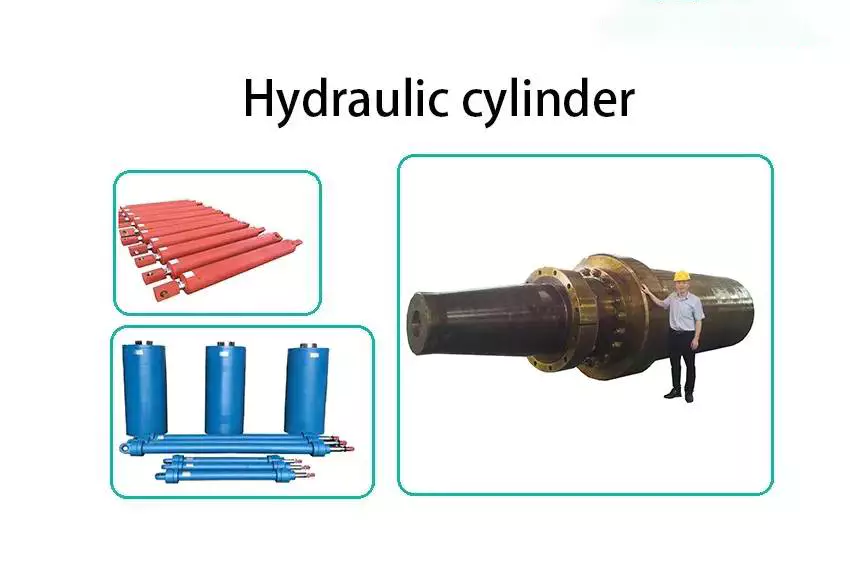
How do hydraulic cylinders handle variations in load and pressure during operation?
Hydraulic cylinders are designed to handle variations in load and pressure during operation, making them versatile and efficient in various applications. Hydraulic systems use the principle of transmitting force through incompressible fluid to generate linear motion. Here’s a detailed explanation of how hydraulic cylinders handle variations in load and pressure:
1. Load Handling:
– Hydraulic cylinders are capable of handling different loads by utilizing the principle of Pascal’s law. According to Pascal’s law, when pressure is applied to a fluid in a confined space, the pressure is transmitted equally in all directions. In a hydraulic cylinder, the force applied to the piston results in an equal force output at the rod end of the cylinder. The size of the piston and the pressure exerted determine the force generated by the cylinder. Therefore, hydraulic cylinders can handle a wide range of loads by adjusting the pressure applied to the fluid.
2. Pressure Compensation:
– Hydraulic systems incorporate pressure compensation mechanisms to handle variations in pressure during operation. Pressure compensating valves or regulators are often used to maintain a consistent pressure in the hydraulic system, regardless of load changes. These valves automatically adjust the flow rate or pressure to ensure stable and controlled operation of the hydraulic cylinder. By compensating for pressure variations, hydraulic cylinders can maintain a consistent force output and prevent damage or instability due to excessive pressure.
3. Control Valves:
– Control valves play a crucial role in managing variations in pressure and load during hydraulic cylinder operation. Directional control valves, such as spool valves or poppet valves, control the flow of hydraulic fluid into and out of the cylinder, enabling precise control of the cylinder’s extension and retraction. By adjusting the position of the control valve, the speed and force exerted by the hydraulic cylinder can be regulated to match the load and pressure requirements of the application. Control valves allow for efficient handling of variations in load and pressure by providing fine-tuned control over the hydraulic system.
4. Accumulators:
– Hydraulic accumulators are often used to handle fluctuations in pressure and load. Accumulators store hydraulic fluid under pressure, which can be released or absorbed as needed to compensate for sudden changes in load or pressure. When the load on the hydraulic cylinder decreases, the accumulator releases stored fluid to maintain pressure and prevent pressure spikes. Conversely, when the load on the cylinder increases, the accumulator absorbs excess fluid to maintain system stability. By utilizing accumulators, hydraulic cylinders can effectively handle variations in load and pressure, ensuring smooth and controlled operation.
5. Feedback and Control Systems:
– Advanced hydraulic systems may incorporate feedback and control systems to monitor and adjust the operation of hydraulic cylinders in real-time. Position sensors or pressure sensors provide feedback on the cylinder’s position, force, and pressure, allowing the control system to make continuous adjustments to optimize performance. These systems can automatically adapt to variations in load and pressure, ensuring precise control and efficient operation of the hydraulic cylinder.
6. Design Considerations:
– Proper design considerations, such as selecting the appropriate cylinder size, piston diameter, and rod diameter, are essential for handling variations in load and pressure. The design should account for the maximum anticipated load and pressure conditions to ensure the hydraulic cylinder operates within its specified range. Additionally, the selection of suitable seals, materials, and components that can withstand the anticipated load and pressure variations is crucial for maintaining the reliability and longevity of the hydraulic cylinder.
By utilizing the principles of hydraulic systems, incorporating pressure compensation mechanisms, employing control valves and accumulators, and implementing feedback and control systems, hydraulic cylinders can effectively handle variations in load and pressure during operation. These features and design considerations allow hydraulic cylinders to adapt and perform optimally in a wide range of applications and operating conditions.


editor by CX 2023-10-30