Product Description
Product Picture
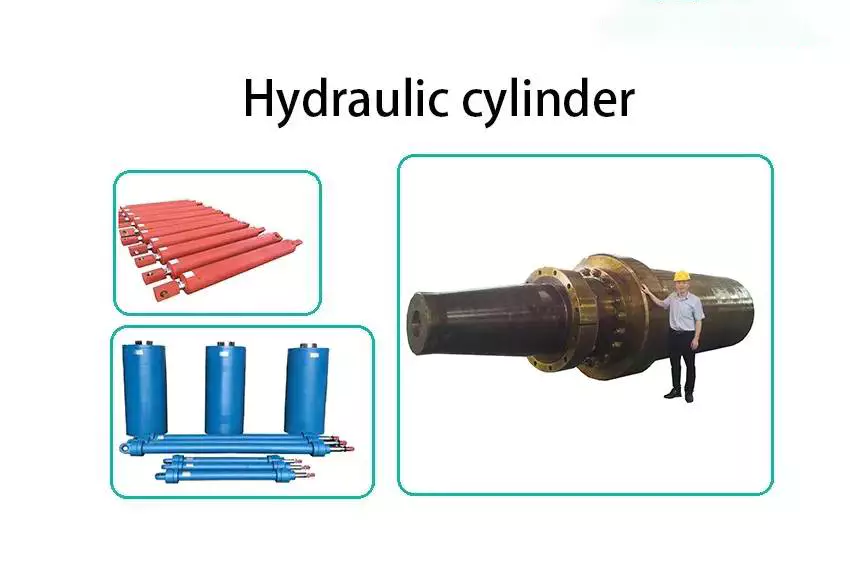
| Item | Telescopic Hydraulic Cylinder |
| Mode of Action | Single Action,Double Action |
| Raw Material | 27Simn seamless steel pipe with quenched&tempered |
| Seal Kits | Hallite,Kaden,Merkel,Guarnitec etc |
| Each Stage Diameter(mm) | 214/191/169/149/129/110/91/75/60mm 202/179/157/137/118/99/80/63mm 9.375”/8.125”/7”/6”/5”/4”/3” |
| Chrome Plating | Hard Chrome Plated |
| Chrome Thickness(mm) | 0.015-0.571mm |
| Max.Stroke(mm) | 12000mm |
| Max.Working Pressure | 25MPa/250BAR/3625PSI |
| Rated Pressure | 20MPa/200BAR/2900PSI |
| Color | According to your requirements |
| Overseas Market | USA,Canada,Mexico,Russia,Australia,New Zealand,South East Asia,Middle East etc |
| Quality Check | All hydraulic cylinders will be strictly inspected before delivery |
| Package | Plywood or steel package suitable for export |
Company Introduction
Zhongxin Machinery specialize in the production and R&D of Dump Truck&Trailer Telescopic Hydraulic Cylinder,
Dump Truck Hydraulic System,Agricultural Machinery Hydraulic Cylinder, Garbage Truck Hydraulic Cylinder,
Tipping Platform Hydraulic Cylinder,Snow Plow Hydraulic Cylinder and so on.
Over the years development,our products have been exported to
America,Australia,Russia,Canada,Mexico,Guatemala,Colombia,Netherlands etc
and have been widely praised by the customers from home and abroad.
We are committed to providing customers with high quality and reasonable price products.
All ZhongXin products are designed,engineered and manufactured by highly skilled and experienced engineers,
All the products do QC 3 times before delivery to make sure the quality.
Hydraulic Cylinder Production Process
Hydraulic Cylinder Quality Inspection
Our Equipment
Hydraulic Cylinder Technical Data
| Model Number | 1st stage diameter(inch) | Extensions | Stroke(inch) |
| S95DC-265 | 9.375″ | 5 | 265″ |
| S95DC-220 | 9.375″ | 5 | 220″ |
| S85DC-265 | 8.125″ | 5 | 265″ |
| S85DC-250 | 8.125″ | 5 | 250″ |
| S85DC-235 | 8.125″ | 5 | 235″ |
| S85DC-220 | 8.125″ | 5 | 220″ |
| S85DC-190 | 8.125″ | 5 | 190″ |
| S74DC-180 | 7″ | 4 | 180″ |
| S74DC-156 | 7″ | 4 | 156″ |
| S74DC-135 | 7″ | 4 | 135″ |
| S73DC-125 | 7″ | 3 | 125″ |
| S73DC-120 | 7″ | 3 | 120″ |
| S64DC-156 | 6″ | 4 | 156″ |
| S64DC-135 | 6″ | 4 | 135″ |
| S63DC-140 | 6″ | 3 | 140″ |
| S63DC-132 | 6″ | 3 | 132″ |
| S63DC-126 | 6″ | 3 | 126″ |
| S63DC-120 | 6″ | 3 | 120″ |
| S63DC-108 | 6″ | 3 | 108″ |
| S53DC-126 | 5″ | 3 | 126″ |
| S53DC-84 | 5″ | 3 | 84″ |
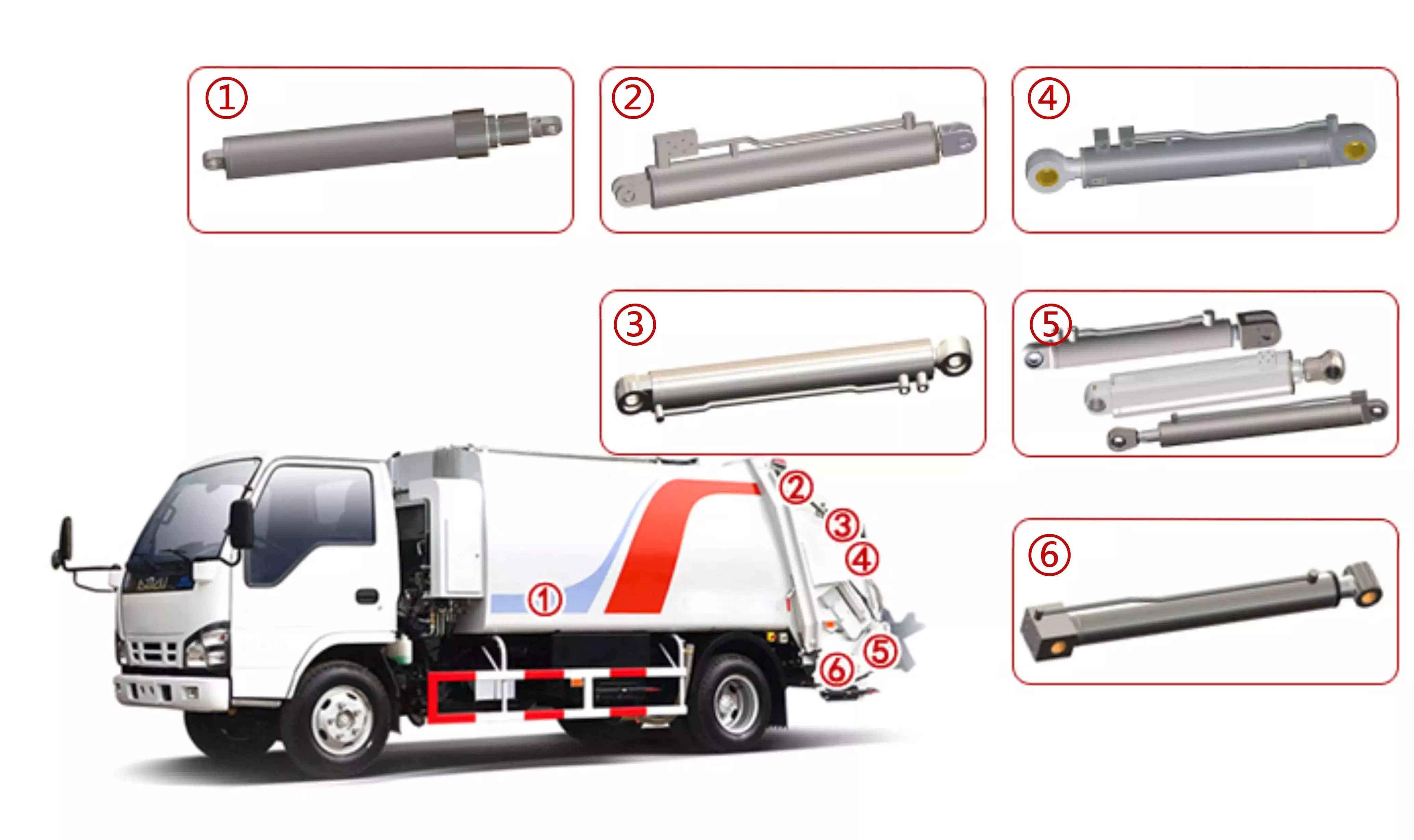
Hydraulic Cylinder Application
Package&Shipping
Overseas Customers
FAQ
A. Compared with HYVA/PARKER/CUSTOM cylinder, what are your cylinder advantages?
1. Rod are chrome plated.
2. Tubes are quenched and tempered.
3.Tube inner hole goes through deep hole boring machine processing. Surface roughness is 0.4Ra
and circular degree is 0.571.
4. Good quality yet lower price.
B: Are you a manufacturer or a trading company?
Manufacturer, we are the leader manufacturer of hydraulic industry in China with 14 years’ experience and technology accumulation.With strong technical team we could solve any annoyance of you.
C: How can I get a booklet and buy a cylinder from you?
Just leave me a message or email or call me directly, let me know you are interesting in our products. I will talk with you for the details soon!
1. Please advice the drawing with technical requirement.
2. Please advice the model No. after you check our booklet.
3. Please advice the tipping capacity, number of stages, closed length, mounting type and size.
4. Please also help advice the quantities, this is very important.
D: Do your products come with a warranty?
Yes, we have 14 months warranty. In this year, if the quality problem we will free repair for you.
E: What about the quality feedback of your products?
We have never received even once quality complaint for many years of international business.
F: Can you help me to install or recommend what kind of hydraulic cylinder or power pack should I use for specific machine?
Yes, we have 6 experienced engineers who are always ready to help you. If you do not know what kind of hydraulic cylinders should be used in your machine, please just contact us, our engineers will design the exact products match your need.
G: What is the delivery time?
Within 15 days for samples.
25-30 days for bulk production, which is depend on quality, production process and so on.
H: What is your main payment term?
T/T, L/C, either is available.
| Certification: | CE, ISO9001 |
|---|---|
| Pressure: | High Pressure |
| Work Temperature: | Normal Temperature |
| Acting Way: | Single Acting |
| Working Method: | Straight Trip |
| Adjusted Form: | Regulated Type |
| Samples: |
US$ 360/Piece
1 Piece(Min.Order) | |
|---|
| Customization: |
Available
|
|
|---|
Can hydraulic cylinders be used for precise operations like CNC machining or molding?
Yes, hydraulic cylinders can be used for precise operations like CNC machining or molding. While hydraulic systems are commonly associated with heavy-duty applications, they can also provide the necessary precision and control required for precise operations in CNC machining and molding processes. Here’s a detailed explanation of how hydraulic cylinders can be utilized for such precise operations:
1. Force and Control:
– Hydraulic cylinders are capable of generating substantial force, which is essential for precise operations in CNC machining and molding. By using hydraulic pressure, the cylinders can deliver the required force to cut or shape materials accurately or exert pressure for molding operations. The hydraulic system allows precise control over the force applied, ensuring consistent and reliable performance.
2. Adjustable Speed and Positioning:
– Hydraulic cylinders offer adjustable speed and precise positioning capabilities, making them suitable for precise operations. By controlling the flow of hydraulic fluid, the speed of the cylinder’s movement can be adjusted according to specific requirements. This adaptability allows for fine-tuning the machining or molding process, achieving the desired precision in material removal or shaping. Hydraulic systems also enable accurate positioning of tools or molds, ensuring precise operations.
3. Integrated Feedback Systems:
– Advanced hydraulic systems can incorporate feedback sensors and control mechanisms to enhance precision in CNC machining and molding. These sensors provide real-time information about the position, speed, and force exerted by the hydraulic cylinders. The control system processes this data and adjusts the flow of hydraulic fluid accordingly, allowing for precise and accurate control over the operations. The feedback systems help maintain consistent performance and compensate for any deviations, ensuring high precision.
4. Damping and Vibration Control:
– Hydraulic cylinders can be equipped with damping mechanisms to minimize vibrations and ensure stability during CNC machining or molding operations. Vibrations can negatively impact precision by causing tool chatter or material deformation. By incorporating cushioning or damping features, hydraulic cylinders help absorb shocks and suppress vibrations, resulting in smoother and more accurate operations.
5. Customization and Adaptability:
– Hydraulic cylinders can be customized and adapted to meet the specific requirements of CNC machining or molding processes. Engineers can design cylinders with unique dimensions, stroke lengths, mounting options, and sealing arrangements to fit into equipment or systems with precise specifications. Customized hydraulic cylinders ensure optimal performance and compatibility for precise operations, enabling seamless integration into CNC machines or molding equipment.
6. Energy Efficiency:
– Hydraulic systems can be designed to be energy-efficient, contributing to cost savings in CNC machining or molding operations. By utilizing variable speed pumps, efficient control valves, and well-designed hydraulic circuits, energy consumption can be optimized. This efficiency reduces heat generation, leading to improved stability and precision in operations while minimizing energy costs.
7. Maintenance and Calibration:
– Regular maintenance and calibration of hydraulic systems are essential to maintain their precision in CNC machining or molding applications. Proper lubrication, inspection of seals, and replacement of worn-out components help ensure optimal performance. Regular calibration of control systems and feedback sensors ensures accurate readings and reliable operation, contributing to precision in machining or molding processes.
In summary, hydraulic cylinders can be effectively used for precise operations like CNC machining or molding. Their ability to generate substantial force, adjustable speed and positioning, integration with feedback systems, damping and vibration control, customization and adaptability, energy efficiency, and proper maintenance contribute to achieving the required precision in these operations. By leveraging the strengths of hydraulic systems, manufacturers can enhance the accuracy and reliability of CNC machining or molding processes, resulting in high-quality products and improved productivity.
Utilizing Hydraulic Cylinders in Conjunction with Alternative Energy Sources
Hydraulic cylinders can indeed be used in conjunction with alternative energy sources. The versatile nature of hydraulic systems allows them to be integrated with various alternative energy technologies to enhance efficiency, control, and power generation. Let’s explore some examples of how hydraulic cylinders can be utilized alongside alternative energy sources:
- Hydraulic Energy Storage: Hydraulic cylinders can be employed in energy storage systems that utilize alternative energy sources such as renewable sources (e.g., solar or wind) or waste energy recovery. These systems convert excess energy into hydraulic potential energy by pumping fluid into a high-pressure accumulator. When the energy is needed, the pressurized fluid is released, driving the hydraulic cylinder and generating mechanical power.
- Wave and Tidal Energy Conversion: Hydraulic cylinders can be utilized in wave and tidal energy conversion systems. These systems harness the power of ocean waves or tidal currents and convert it into usable energy. Hydraulic cylinders, along with associated pumps and valves, can be used to capture and control the energy from the waves or tides, driving the cylinders and generating mechanical power or producing electricity.
- Hydroelectric Power Generation: Hydraulic cylinders play a crucial role in traditional hydroelectric power generation. However, alternative approaches such as small-scale or micro-hydropower systems can also benefit from hydraulic cylinders. These systems utilize natural or man-made water flows to drive turbines connected to hydraulic cylinders, which then convert the hydraulic energy into mechanical power or electricity.
- Hydraulic Actuation in Wind Turbines: Hydraulic cylinders can be employed in wind turbines to enhance performance and control. For example, hydraulic pitch control systems use hydraulic cylinders to adjust the pitch angle of wind turbine blades, optimizing their aerodynamic performance based on wind conditions. This allows for efficient power generation and protection against excessive wind loads.
- Geothermal Energy Extraction: Geothermal energy extraction involves utilizing the natural heat from the Earth’s interior to generate power. Hydraulic cylinders can be utilized in geothermal systems to control and regulate fluid flow, allowing for efficient extraction and utilization of geothermal energy. They can also be used in geothermal heat pumps for heating and cooling applications.
In summary, hydraulic cylinders can be effectively utilized in conjunction with alternative energy sources to enhance energy storage, power generation, and control. Whether it’s through hydraulic energy storage systems, wave and tidal energy conversion, hydroelectric power generation, hydraulic actuation in wind turbines, or geothermal energy extraction, hydraulic cylinders offer versatile and efficient solutions for harnessing and utilizing alternative energy sources.
How do hydraulic cylinders accommodate variations in stroke length and force requirements?
Hydraulic cylinders are designed to accommodate variations in stroke length and force requirements, providing flexibility and adaptability for different applications. They can be tailored to meet specific needs by considering factors such as piston diameter, rod diameter, hydraulic pressure, and cylinder design. Here’s a detailed explanation of how hydraulic cylinders accommodate variations in stroke length and force requirements:
1. Cylinder Size and Design:
– Hydraulic cylinders come in various sizes and designs to accommodate different stroke lengths and force requirements. The cylinder’s diameter, piston area, and rod diameter are key factors that determine the force output. Larger cylinder diameters and piston areas can generate greater force, while smaller diameters are suitable for applications requiring lower force. By selecting the appropriate cylinder size and design, stroke lengths and force requirements can be effectively accommodated.
2. Piston and Rod Configurations:
– Hydraulic cylinders can be designed with different piston and rod configurations to accommodate variations in stroke length. Single-acting cylinders have a single piston and can provide a stroke in one direction. Double-acting cylinders have a piston on both sides, allowing for strokes in both directions. Telescopic cylinders consist of multiple stages that can extend and retract, providing a longer stroke length compared to standard cylinders. By selecting the appropriate piston and rod configuration, the desired stroke length can be achieved.
3. Hydraulic Pressure and Flow:
– The hydraulic pressure and flow rate supplied to the cylinder play a crucial role in accommodating variations in force requirements. Increasing the hydraulic pressure increases the force output of the cylinder, enabling it to handle higher force requirements. By adjusting the pressure and flow rate through hydraulic valves and pumps, the force output can be controlled and matched to the specific requirements of the application.
4. Customization and Tailoring:
– Hydraulic cylinders can be customized and tailored to meet specific stroke length and force requirements. Manufacturers offer a wide range of cylinder sizes, stroke lengths, and force capacities to choose from. Additionally, custom-designed cylinders can be manufactured to suit unique applications with specific stroke length and force demands. By working closely with hydraulic cylinder manufacturers, it is possible to obtain cylinders that precisely match the required stroke length and force requirements.
5. Multiple Cylinders and Synchronization:
– In applications that require high force or longer stroke lengths, multiple hydraulic cylinders can be used in combination. By synchronizing the movement of multiple cylinders through the hydraulic system, the stroke length and force output can be effectively increased. Synchronization can be achieved using mechanical linkages, electronic controls, or hydraulic circuitry, ensuring coordinated movement and force distribution across the cylinders.
6. Load-Sensing and Pressure Control:
– Hydraulic systems can incorporate load-sensing and pressure control mechanisms to accommodate variations in force requirements. Load-sensing systems monitor the load demand and adjust the hydraulic pressure accordingly, ensuring that the cylinder delivers the required force without exerting excessive force. Pressure control valves regulate the pressure within the hydraulic system, allowing for precise control and adjustment of the force output based on the application’s needs.
7. Safety Considerations:
– When accommodating variations in stroke length and force requirements, it is essential to consider safety factors. Hydraulic cylinders should be selected and designed with an appropriate safety margin to handle unexpected loads or variations in operating conditions. Safety mechanisms such as overload protection valves and pressure relief valves can be incorporated to prevent damage or failure in situations where the force limits are exceeded.
By considering factors such as cylinder size and design, piston and rod configurations, hydraulic pressure and flow, customization options, synchronization, load-sensing, pressure control, and safety considerations, hydraulic cylinders can effectively accommodate variations in stroke length and force requirements. This flexibility allows hydraulic cylinders to be tailored to meet the specific demands of a wide range of applications, ensuring optimal performance and efficiency.


editor by CX 2023-10-20