Pin shaft hydraulic cylinders For Truss arm crawler crane
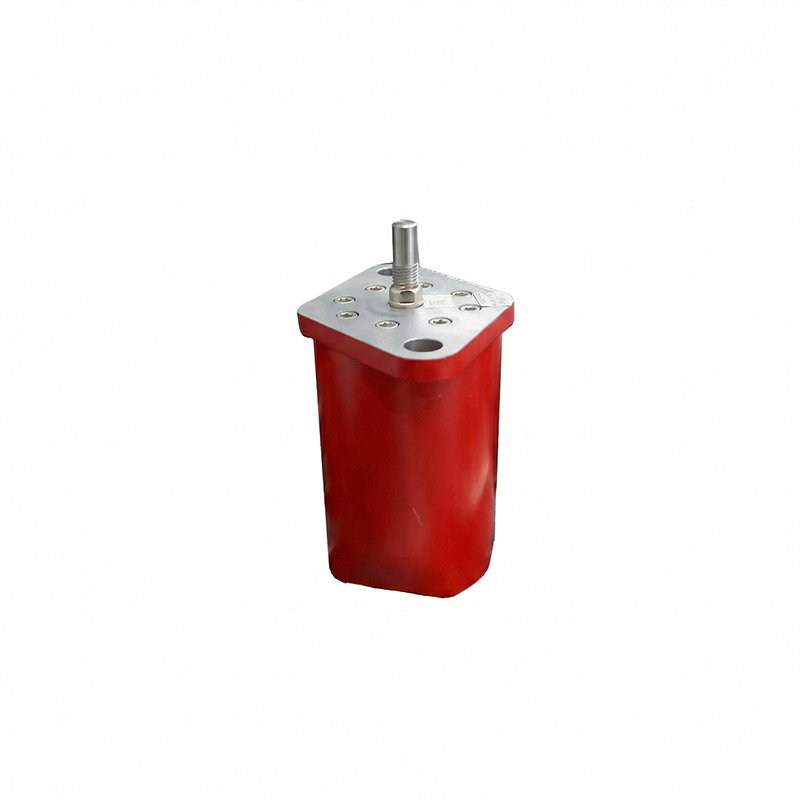
Secure your heavy lifts with Ever Power’s precision Pin Shaft Hydraulic Cylinders. Engineered for Truss Arm Crawler Cranes, offering rapid custom manufacturing in China and global shipping. Get your factory-direct quote today!
You know, in the 18+ years we’ve been breathing hydraulic fluid and steel dust, we’ve noticed a recurring theme with heavy lifting equipment. Everyone obsesses over the main boom cylinders—the giants that do the heavy lifting—but they often overlook the unsung heroes of the operation: the Pin Shaft Hydraulic Cylinders. These compact, high-force actuators are the veritable "glue" that holds a massive truss arm crawler crane together. When you are assembling a 600-ton crane on a wind farm site with winds gusting at 15 m/s, you don't want a pin cylinder that hesitates. You want a component that slides the locking pin home with the authority of a bank vault door closing.
In our experience, the failure of a pin pusher cylinder isn't just a maintenance annoyance; it’s a project stopper. We’ve seen operators lose entire days trying to manually hammer out stuck pins because the OEM cylinder seals failed under thermal expansion, or the rod bent slightly due to unseen shear forces during disassembly. That is why we don't just "manufacture" cylinders; we engineer them to survive the brutal reality of construction sites, from the freezing tundras of Heilongjiang to the humid coasts of Florida.
The trick isn't just raw power. It's about concentricity, seal memory, and material resilience. Before we dive into the metallurgy that makes our Pin shaft hydraulic cylinders different, I want you to see where the magic happens. We believe in total transparency (something rare in this industry).
The Engineering Reality of Pin Insertion
Most printers and catalog designers don't realize that a pin cylinder acts as a structural member once the crane is assembled. While its primary job is insertion and retraction, during the lift, it often endures micro-vibrations and side-loading that can destroy standard commercial seals. We design our Truss arm crawler crane hydraulic cylinders with a specific focus on "holding integrity."
We use high-grade 42CrMo steel for the piston rods, quenched and tempered to ensure that even if the truss sections are slightly misaligned during assembly (and let's be honest, they always are), the rod won't buckle. We also integrate a specialized wiper seal technology. Why? These cylinders live in the joints of the crane, exactly where grease, sand, and metallic grit accumulate. A standard wiper lets that grit in, scoring the barrel. Our dual-lip wipers keep the internal fluid pristine, extending service life by 30-40%.
Technical Specifications & Performance
| Parameter | Value |
|---|---|
| Function | Buffering effect |
| Cylinder diameter | 80 mm |
| Rod diameter | 40 mm |
| Travel | 200 mm - 530 mm |
| Maximum pressure | 25 MPa |
| Maximum thrust | 125 KN |
*We customize mounting styles (flange, trunnion, earring) to match any crane chassis perfectly.
Critical Application Scenarios
Where do these cylinders actually live? They are the gatekeepers of the crawler crane's modularity. You will find our pin shaft hydraulic cylinders engaging the track frame connections, locking the counterweight trays, and most critically, securing the lattice boom sections. In offshore wind assembly ports, where salt spray is a constant enemy, we apply a specialized ceramic-composite coating to the rod to prevent pitting corrosion. If that pin seizes due to rust, you are looking at days of downtime.
Another intense scenario is the "super lift" attachment phase. This is where the crane needs to increase its capacity by adding a back mast. The hydraulic pins here must align with absolute precision. Our cylinders feature integrated linear position sensors (optional) or stroke-end damping to ensure the pin doesn't slam into the housing, preserving the structural steel integrity over thousands of cycles. It’s about finesse, not just brute force.

Case Study: The "Iron Dust" Challenge in Western Australia
The Problem: A major mining infrastructure firm in the Pilbara region of Australia was facing a crisis. Their fleet of 400-ton crawler cranes was experiencing a 15% failure rate on boom locking cylinders every quarter. The culprit? The ultra-fine red iron ore dust was bypassing the OEM seals, turning the hydraulic fluid into an abrasive grinding paste.
Our Solution: They reached out to us for a custom solution. We didn't just sell them a catalog part. We re-engineered the cylinder head gland to accept a heavy-duty, aggressive ice-scraper style wiper (usually used in Siberia, but excellent for hard dust). We also upgraded the piston rod plating to a double-layer chrome process to increase surface hardness to HV900.
The Result: After retrofitting the first crane, the cylinders ran for 18 months without a single seal failure or leakage event. The client estimated a savings of $120,000 in downtime and fluid replacement costs in the first year alone. This proves that understanding the environment is just as important as understanding the hydraulics.
"We operate retrofitted Sany and XCMG cranes. Ever Power's replacement pin cylinders fit perfectly and have outlasted the originals by a long shot."
— Carlos M., Fleet Director, Brazil
"The response time from their engineering team in China was faster than my local suppliers in Germany. The drawings were spot on."
— Hans Weber, Technical Lead, Hamburg
"Finally, a pin pusher that doesn't leak after three months of heavy-duty cycling. The finish on the rod is superb."
— Liam O'Connor, Site Manager, UK
Factory Direct Customization
Being based in China’s premier industrial zone allows us to offer something most Western distributors can’t: speed and flexibility combined. We are not a middleman. When you send us a request, you are talking to the people who program the CNC machines. Whether you need a single replacement cylinder for an out-of-production crane or a batch of 500 units for a new OEM line, we scale to your needs.
We offer complete customization of port orientations, integrated valve blocks (counterbalance valves), and rod end attachments. We treat every order with the rigor of an aerospace project. Our facility utilizes automated welding robots to ensure consistent penetration on cylinder bases, eliminating the risk of fatigue cracking under high-cycle loads.

Frequently Asked Questions
Here are the real questions we get asked by procurement officers and maintenance leads worldwide.
How do I determine the correct pin cylinder size for my crane if the manual is missing?
This happens more often than you'd think. The critical measurements we need are the pin diameter (which dictates the rod end inner diameter), the retracted length (pin to pin center), and the stroke length. If you can send us photos of the mounting bracket and the approximate tonnage of the crane, our engineering team can usually deduce the required force and dimensions based on our database of similar Truss arm crawler crane models.
What is the typical lead time for custom hydraulic cylinders shipping from China?
For standard pin shaft cylinders, our manufacturing turnaround is roughly 15 to 20 days. Air freight to Europe or North America takes another 5-7 days. So, realistically, you can have a custom-engineered part in your hands in under 4 weeks. Compare that to the 12-week lead times we frequently see from major European OEMs, and you start to see the advantage.
Can you supply cylinders with specific low-temperature seals for Arctic projects?
Absolutely. For environments dropping below -20°C, standard nitrile seals become brittle and fail. We switch to specialized low-temperature polyurethane or fluorosilicone compounds depending on your hydraulic fluid type. We just need to know your operating environment and the lowest expected ambient temperature during the quoting phase.
Do you offer price discounts for bulk orders of replacement crane cylinders?
Yes, we do. Because setup times for our CNC machines are a significant part of the cost for single units, ordering in batches (even small ones like 5 or 10 units) drastically reduces the cost per unit. Many of our fleet customers order "shelf spares" along with their immediate replacement to lock in that lower pricing and minimize future downtime.
Ready to stop worrying about hydraulic failures?
Additional information
| edited | by hyw |
|---|
Related products
-
Support hydraulic cylinders For Truss arm crawler crane
-
Hydraulic cylinders For Truss arm crawler crane
-
Arm anti tilt hydraulic cylinders For Truss arm crawler crane
-
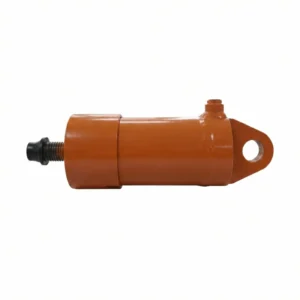
Spring hydraulic cylinders For Truss arm crawler crane
-
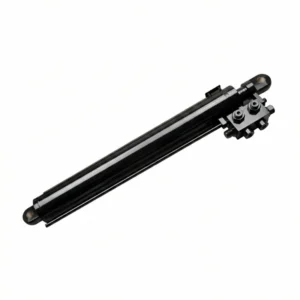
Lift hydraulic cylinders For Truss arm crawler crane
-
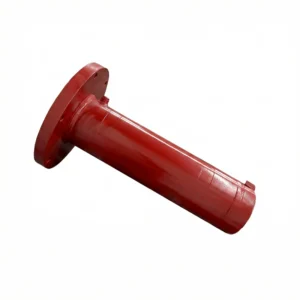
Power pin hydraulic cylinders For Truss arm crawler crane