You know the nightmare. You are on a paving job, the asphalt mix is running a bit hotter or stickier than usual, and suddenly the drum starts picking up material. The operator tries to engage the scraper blades, but the movement is sluggish, or worse, the scraper digs in on one side and floats on the other. In my 18 years of crawling over road rollers—from the massive single-drum soil compactors to the tandem asphalt rollers—I’ve found that the scraper adjustment cylinder is the most abused component on the entire machine. It lives in the splash zone. It gets covered in wet clay, abrasive slurry, and hot bitumen, yet we expect it to perform with the precision of a Swiss watch every time we need to clean that drum.
Most printers and OEMs (no offense to them) tend to treat this as a “low-pressure auxiliary function.” They slap a standard agricultural-grade cylinder on there and call it a day. But here is the thing: agricultural cylinders aren’t designed to vibrate at 50Hz while being sprayed with liquid sandpaper. We’ve seen rods scored so badly after six months that they look like they were chewed by a dog. The trick isn’t just “more metal”; it’s the right metal and the right seal geometry. That’s why we shifted our production entirely to welded Q345D alloy steel for these units, focusing heavily on chrome hardness and wiper seal aggression.
👀 Take a Virtual Walk Through Our Workshop
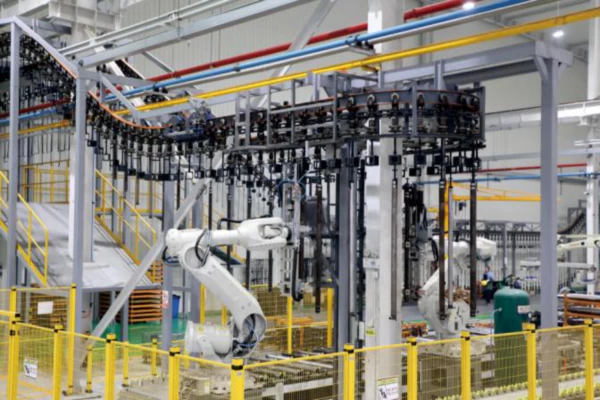
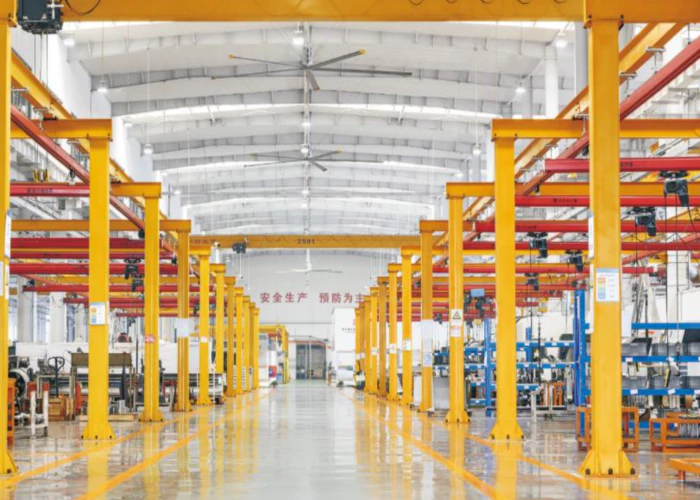
I can write specs all day, but seeing is believing. We’ve digitized our production floor so you can see the automated welding and chrome polishing lines yourself. Check out how we build these cylinders right from your phone.
The “Hidden” Wear Factor: Why Standard Cylinders Fail
Let’s get real about the environment these things operate in. When a road roller is compacting soil, especially cohesive soils with high moisture content, the “mud splatter” isn’t just dirty water. It contains micro-particles of quartz and silica. When the cylinder is extended to engage the scraper, the rod is exposed. When it retracts, if the wiper seal isn’t up to the task, it drags those silica particles right into the gland.
Once that grit is inside, it embeds itself in the guide bushing. Now, every time you adjust the scraper, you are essentially lapping the rod with grinding compound. We’ve seen seals fail not because they were old, but because the chrome rod underneath them had lost 5 microns of thickness due to abrasion. To combat this, we use a Hard Chrome plating exceeding 30 microns (standard is usually 20) and a specialized double-lip wiper made of high-grade Polyurethane, not simple nitrile rubber. It acts like a squeegee, physically forcing the mud cake off the rod before it can enter the housing.
Why Q345D and Welded Construction?
You might ask, “Why not just use standard 45# steel?” Well, vibration is the enemy here. A road roller is literally a vibration machine. Standard threaded or tie-rod cylinders have too many mechanical connections that can loosen under the constant 30-50Hz shaking. We utilize a fully welded structure. By welding the base and the gland port to the barrel, we create a monolithic unit that vibrates as one piece.
We chose Q345D steel (which is roughly equivalent to S355J2) because of its low-temperature impact toughness. Road rollers sit outside. They freeze in winter and bake in summer. Q345D maintains its structural integrity even when the machine starts up on a freezing morning, preventing the brittle fractures we sometimes see in cheaper mild steels near the mounting eyes. It’s about building a part that you can install and forget about.
Technical Specifications: Built for the Grind
We don’t believe in “one size fits all,” but we do have a “Gold Standard” specification that we recommend for 80% of road roller applications (compatible with Dynapac, Bomag, Hamm, etc.). Here is what makes our cylinders tick:
| Feature | Specification Details |
|---|---|
| Cylinder Type | Double-Acting Piston / Welded Construction |
| Barrel Material | Q345D (High Tensile Structural Steel) |
| Rod Surface | Hard Chrome (>30μm), Polished to Ra 0.2, Salt Spray > 96h |
| Sealing System | Hallite / Nok (PU Double-Lip Wiper + Buffer Ring) |
| Vibration Rating | Designed for 50Hz continuous vibration |
| Working Pressure | 16 MPa – 21 MPa (Medium Pressure, High Cycle) |
| Mounting Style | Spherical Plain Bearing (Self-aligning) or Clevis |
Application Scenarios: Where Rubber Meets the Road
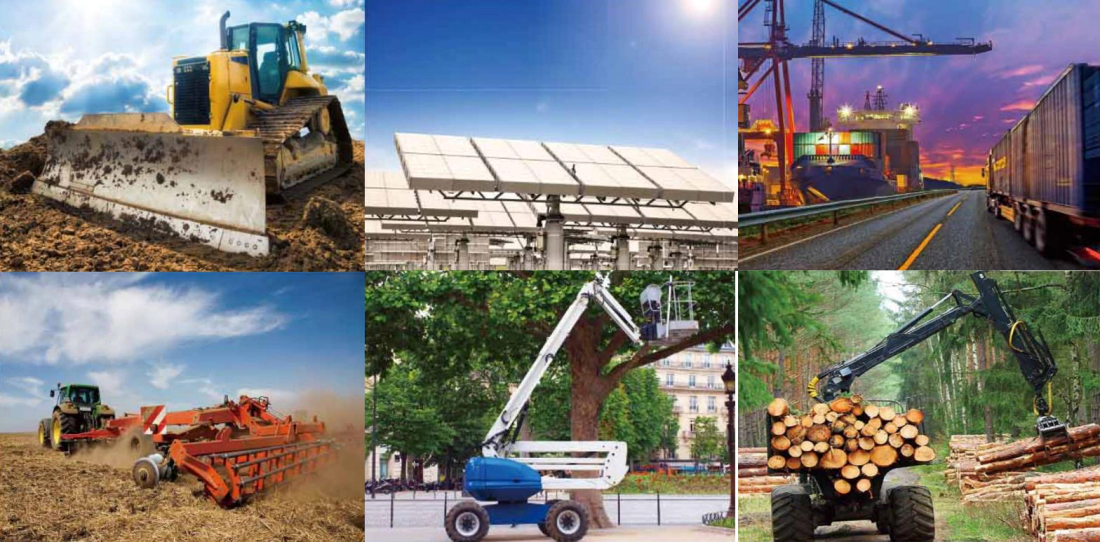
These cylinders are typically mounted on the framework above the drum, actuating the scraper bar that peels material off the drum surface. In Asphalt Applications, the cylinder must withstand heat radiating from the 160°C asphalt mat. We often upgrade the seals to Viton (FKM) for these specific hot-mix rollers.
In Soil Compaction, specifically landfill compactors or sheep-foot rollers, the challenge is physical impact from debris. Here, we sometimes add a steel shroud or bellow to protect the rod, though our heavy chrome plating usually handles the job. The key is that the scraper cylinder allows the operator to adjust the pressure of the blade against the drum—too light and it skips, too hard and you wear out the blade in a week. Our cylinders provide that fine control.
SWOT Analysis: The Q345D Scraper Cylinder
To give you a fair assessment—because no product is perfect for every single budget—here is how our welded Q345D solution stacks up.
Strengths
- Durability: Welded Q345D resists vibration cracking better than cast or tie-rod units.
- Seal Life: Double-lip wipers prevent mud ingress.
- Corrosion: Thicker chrome extends rod life in wet conditions.
Weaknesses
- Cost: Higher material cost than standard 45# steel cylinders.
- Repair: Welded cylinders are harder to disassemble for repair than tie-rod types.
Opportunities
- Huge retrofit market for aging fleets in developing nations.
- Integration with automated “Smart Scraper” systems.
Threats
- Cheap, low-quality knockoffs are flooding the aftermarket.
- Supply chain volatility for high-grade alloy steels.
Customer Success Story: Paving Through the Monsoon
Let me tell you about a project we supplied for a major highway expansion in Vietnam. The contractor, Mekong Infrastructure Ltd., was working during the monsoon transition. The ground was saturated clay. Their existing rollers (a mix of older Japanese brands) were blowing scraper cylinder seals every two weeks. The mud was drying on the rods and cutting the seals to ribbons. They were losing hours of productivity every time they had to stop and clean the drums manually because the scrapers weren’t engaging.
We sent them a sample batch of our Q345D cylinders with the “Severe Duty” seal kit (the Polyurethane double-wiper setup). They installed them on two machines. Three months later, the maintenance manager called me. He said, “I haven’t touched them.” The rods were still bright, and the seals were tight. They proceeded to retrofit their entire fleet of 25 compactors. We calculated they saved about $40,000 in downtime and parts over the course of that single project.
What The Field Says
“The mounting eyes on these cylinders are noticeably beefier than the stock ones. No ovaling out after a season of vibration.”
– John K., Fleet Manager, USA
“We deal with sticky bitumen all day. The scraper action is smooth, no stuttering. Good product.”
– Ahmed S., Site Engineer, UAE
“Custom dimensions were spot on. Plug and play installation.”
– Lars P., Workshop Lead, Sweden
Trend Analysis: The Intelligent Scraper
The industry is moving towards automation. We are starting to see requests for scraper cylinders with integrated position sensors. Why? So the machine can automatically adjust the scraper pressure based on the drum speed and direction. While our Q345D cylinders are currently mechanical workhorses, we are “Sensor Ready.” We can machine the ports to accept linear transducers if your fleet is upgrading to smart compaction systems. This future-proofing ensures you aren’t buying 1990s technology for a 2025 job site.
Customization: We Build What You Need
Look, I know that every compactor model has slightly different mounting geometry. Maybe the pin diameter is 25mm, maybe it’s 30mm. Maybe the stroke is 100mm or 150mm. You don’t need to modify your machine to fit our cylinder. We modify the cylinder to fit your machine.
Send us a sketch, a photo with a tape measure, or the OEM part number. Our engineering team can turn around a drawing in 24 hours. We handle everything in-house: cutting the Q345D tube, welding, chrome plating, and assembly. This means we control the quality at every step.
Frequently Asked Questions (FAQ)
We hear these questions every time we pick up the phone. Here are the honest answers.
Why do my scraper cylinder seals fail so fast in clay soil?
It is usually the abrasive particles. Clay dries on the rod, acts like sandpaper, and cuts the standard rubber. You need a double-lip polyurethane wiper to physically scrape the rod clean before it retracts.
Can I replace a cast-iron cylinder with a welded Q345D version?
Absolutely. Welded Q345D cylinders are actually more resistant to the high-frequency vibration of the roller drum than cast iron, which can crack under fatigue.
What is the typical lead time for custom scraper cylinders?
For custom dimensions, we usually look at 15 to 20 days. We stock the raw Q345D tube and chrome rods, so it is just a matter of machining and welding to your print.
Do you ship replacement hydraulic parts to construction sites in Africa?
Yes, we ship globally. We have robust logistics routes to get heavy hydraulic parts to remote sites in Africa, South America, and Southeast Asia. We handle the paperwork.
How does chrome plating thickness affect the scraper cylinder life?
Thicker is generally better here. We recommend at least 30 microns. Thin plating (under 20 microns) allows moisture to penetrate, causing the rod to rust from the inside out.
Ready to Clean Up Your Operation?
Don’t let mud clog your productivity. Upgrade to Q345D toughness today.