Multi-Stage Telescopic Hydraulic Cylinders for Aerial Pruning Boom Trucks — Double-Acting Welded Design Built for Extended-Reach Horticulture Operations
When high-canopy orchard management, roadside tree corridor maintenance, or urban green infrastructure pruning demands reaching branches far beyond what a conventional boom can access, the actuator at the heart of every reliable aerial pruning vehicle is the telescopic hydraulic cylinder. A properly engineered multi-stage telescopic cylinder for an aerial pruning boom truck delivers working radii of six to more than nine metres from a retracted package short enough to fit within the vehicle chassis — all powered by a double-acting hydraulic circuit that provides positive force in both extension and retraction directions. Without this actuator architecture, pruning crews would need to reposition the truck multiple times per tree, dramatically cutting productivity and increasing ground compaction in sensitive orchard environments. The specific combination of double-acting actuation, multi-stage barrel nesting, and welded structural construction makes this cylinder family uniquely suited to the load pattern of a rotating pruning arm: asymmetric side loads during reach, combined axial and radial forces during cutter engagement, and the constant demand for precise incremental positioning as an operator works through a canopy from below.
The outdoor operating environment of agricultural and horticultural machinery introduces challenges that standard industrial cylinders are not rated to address. Pesticide mist, fertiliser aerosols, seasonal temperature swings from hard frost to summer heat, and constant exposure to leaf debris and fine soil particles all create conditions where seal degradation, bore corrosion, and inter-stage wear can develop rapidly in under-specified cylinders. A telescopic hydraulic cylinder for aerial pruning boom truck applications must integrate a multi-stage seal combination, a high-hardness chrome-plated rod surface, and a structural material capable of sustaining the cyclic fatigue loads that accompany thousands of partial-stroke operations per season. Ever Power has engineered this product around exactly these operational realities, drawing on more than eighteen years of hydraulic actuator application engineering in demanding outdoor mobile machinery sectors.
Visit Our Factory Without Leaving Your Office
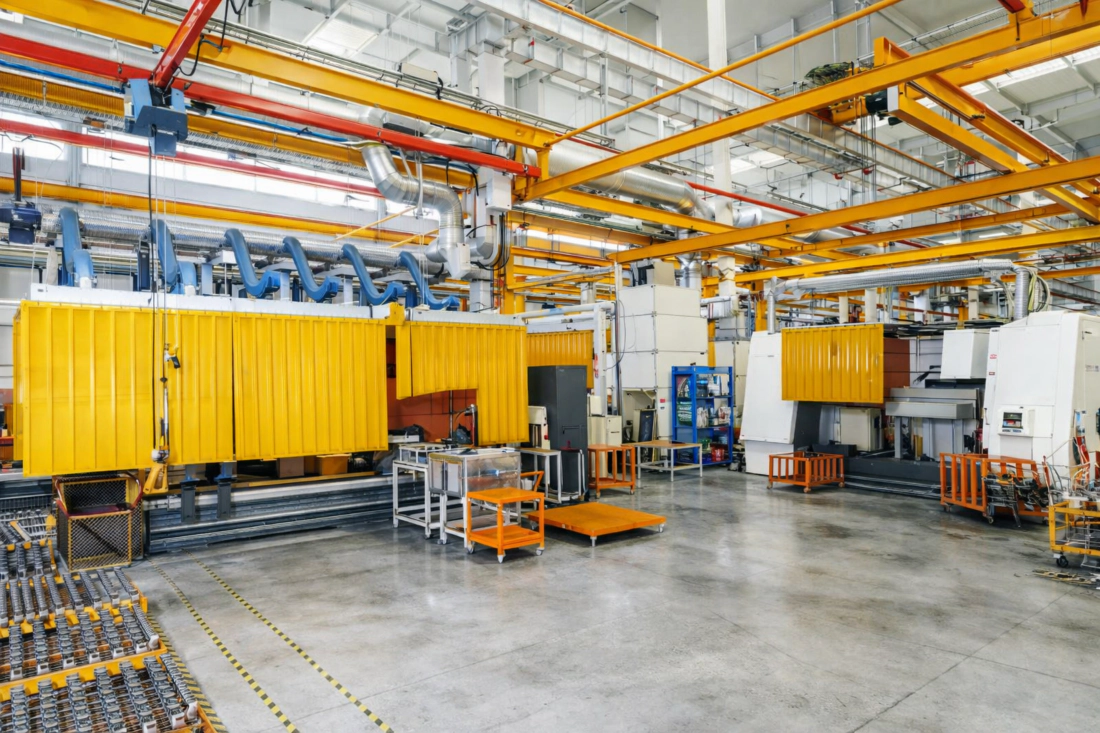
We invite procurement managers, quality engineers, and project directors worldwide to explore our production facility through an immersive VR factory tour. Walk through our CNC deep-hole boring lines, heat-treatment stations, chrome-plating tanks, multi-stage assembly bays, and hydraulic pressure test benches — no travel required. Verify our manufacturing capability before committing to an order, exactly as our most demanding customers in Europe, North America, and Southeast Asia have done.
Engineering Architecture: How a Double-Acting Multi-Stage Telescopic Cylinder Delivers Reach on Aerial Pruning Equipment
The operating principle of a double-acting multi-stage telescopic cylinder centres on a nested barrel assembly in which successive stages — typically three to five cylindrical tubes of descending diameter — extend sequentially under hydraulic pressure supplied to the cap end port, and retract under pressure supplied to the rod end port. Unlike a single-acting telescopic cylinder that relies on gravity or spring force for retraction, the double-acting architecture provides controllable, forceful retraction independent of boom orientation — a critical property when the pruning arm is angled upward at forty-five degrees and operators need to pull the arm back quickly. In extension, hydraulic oil enters the largest-bore outer barrel first, building pressure against the annular area and pushing the first stage out until it contacts its travel stop. Pressure then automatically routes to the next stage via internal porting, continuing the sequential extension until the specified working stroke is achieved. The effective force output at each successive stage changes with bore area, which is why specifying the correct bore sequence for the load diagram of a particular pruning machine model is an engineering task that directly affects arm responsiveness and cutter feed force.
In the welded construction format used for agricultural telescopic cylinders, the barrel assembly is joined by full-penetration weld beads rather than threaded retention rings. This gives the completed cylinder a structurally continuous load path that resists the bending moments introduced when a pruning arm is loaded laterally — for example, when cutting against a branch that pushes back perpendicular to the cylinder axis. The weld-fabricated end caps and barrel joints also allow the wall thickness of each stage to be individually calculated and optimised, keeping the retracted assembly as compact as possible while meeting the fatigue life target for the intended service cycle count. Multi-stage wear — the characteristic failure mode for telescopic cylinders that are cycled over partial strokes repeatedly — is controlled by specifying bronze or filled-PTFE guide bands at every stage interface, ensuring the lateral load from the arm’s weight is transferred through the guide elements rather than through the seal lips, which are designed exclusively for pressure containment, not radial load bearing.
Technical Specifications — Standard Configuration for Aerial Pruning Boom Telescopic Cylinders
The table below details the standard performance parameters for our aerial pruning boom telescopic cylinder range. Custom bore diameters, stroke lengths, port configurations, and mounting interface geometries are available; the values shown represent the most common specifications sourced by orchard management equipment builders and aerial work platform OEMs.
| Parameter | Specification | Notes |
|---|---|---|
| Cylinder Type | Double-acting Multi-stage | 3 to 5 stages configurable |
| Construction | Welded | Full-penetration MIG/TIG welds |
| Barrel Material | 27SiMn alloy steel | Tensile strength ≥ 980 MPa |
| Bore Diameter Range | Ø 63 mm – Ø 220 mm | Per stage; custom available |
| Extended Stroke | 1,200 mm – 6,500 mm | Total; machine-specific |
| Retracted Length | 400 mm – 1,600 mm | Optimised for chassis clearance |
| Rated Working Pressure | 16 MPa – 25 MPa | Test pressure 1.5 × working |
| Rod Surface Treatment | Hard chrome 0.03–0.05 mm | Ra ≤ 0.2 µm after polishing |
| Seal System | Multi-stage combination | Parker / Hallite or equivalent |
| Operating Temperature | −20 °C to +80 °C | FKM seals available to +130 °C |
| Environmental Rating | IP67 equivalent | Dusty / wet outdoor operation |
| Mounting Interface | Clevis / flange / trunnion | Drawing-based custom machining |
| Cushioning | Adjustable end cushion valves | Protects arm structure at end-of-stroke |
27SiMn Alloy Steel — Why Material Selection Defines the Service Life of a Pruning Arm Telescopic Cylinder
The specification of 27SiMn low-alloy high-strength structural steel as the barrel and sleeve material for telescopic hydraulic cylinders for aerial pruning boom trucks is not an arbitrary choice — it reflects a direct match between alloy characteristics and the mechanical demands of multi-stage actuator service. 27SiMn contains silicon and manganese additions that significantly improve the steel’s hardenability, allowing full-section through-hardening of thick-walled cylinder barrels during quenching, and its carbon content of approximately 0.24–0.32% places it in the range where excellent toughness is retained alongside a minimum yield strength of 835 MPa and minimum tensile strength of 980 MPa after appropriate heat treatment. For a multi-stage cylinder that must resist the concentrated contact stress at each stage guide band interface, and the bending moment transferred from the pruning arm’s overhung load, these mechanical properties translate directly into resistance against the permanent bore deformation and galling that would cause inter-stage binding and premature guide wear. The silicon content additionally improves resistance to graphitisation during welding, making 27SiMn particularly well suited to the weld-fabricated structural joints that are integral to the welded telescopic cylinder construction. Every barrel tube and sleeve in our telescopic cylinders for pruning equipment is sourced from certified billet with full material traceability documentation, third-party chemical composition testing reports, and mechanical property test certificates available on request for quality-assurance verification.
Hard Chrome Plating on Telescopic Cylinder Rods — Protection Against Outdoor Agricultural Corrosion
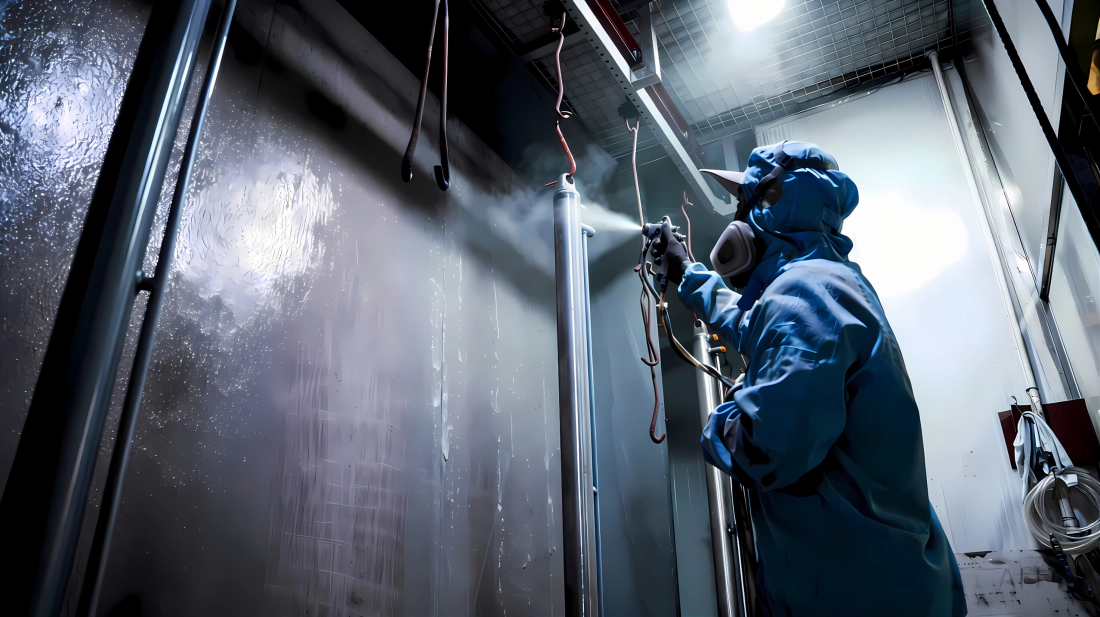
The external rod surfaces of every stage in a multi-stage telescopic cylinder operate as dynamic sealing interfaces — the chrome-plated outer diameter of each telescoping sleeve contacts the wiper and primary rod seals of the next larger barrel continuously throughout the working cycle. Any surface defect on the plated rod, whether from corrosion pitting, mechanical impact, or tribological wear, translates immediately into seal damage and eventual oil leakage. For telescopic hydraulic cylinders deployed on aerial pruning boom trucks operating in orchards, roadside verges, and municipal parks, the plated surfaces are exposed to copper- and sulfur-based pesticide residues, organic acids from decomposing leaf litter, high humidity during night and morning work periods, and the occasional direct impact from falling branch debris. A hard chrome deposit thickness of 0.03 to 0.05 mm, applied electrolytically to a base hardness of 950 to 1,050 HV, provides the combination of corrosion barrier performance, surface hardness for tribological wear resistance, and adequate ductility to resist micro-cracking under bending loads. After plating, the rod surfaces are finish-polished to a roughness Ra of 0.2 µm or better — the critical smoothness threshold at which rubber seal lips form a consistent hydrodynamic film during sliding, enabling the designed seal life to be achieved without premature lip erosion. All our chrome plating operations are conducted in-house at our production facility in China, with in-process thickness gauging, adhesion testing, and 100% post-plating dimensional inspection.
Multi-Stage Seal Combination — Engineering the Contamination-Exclusion System for Outdoor Horticulture Equipment
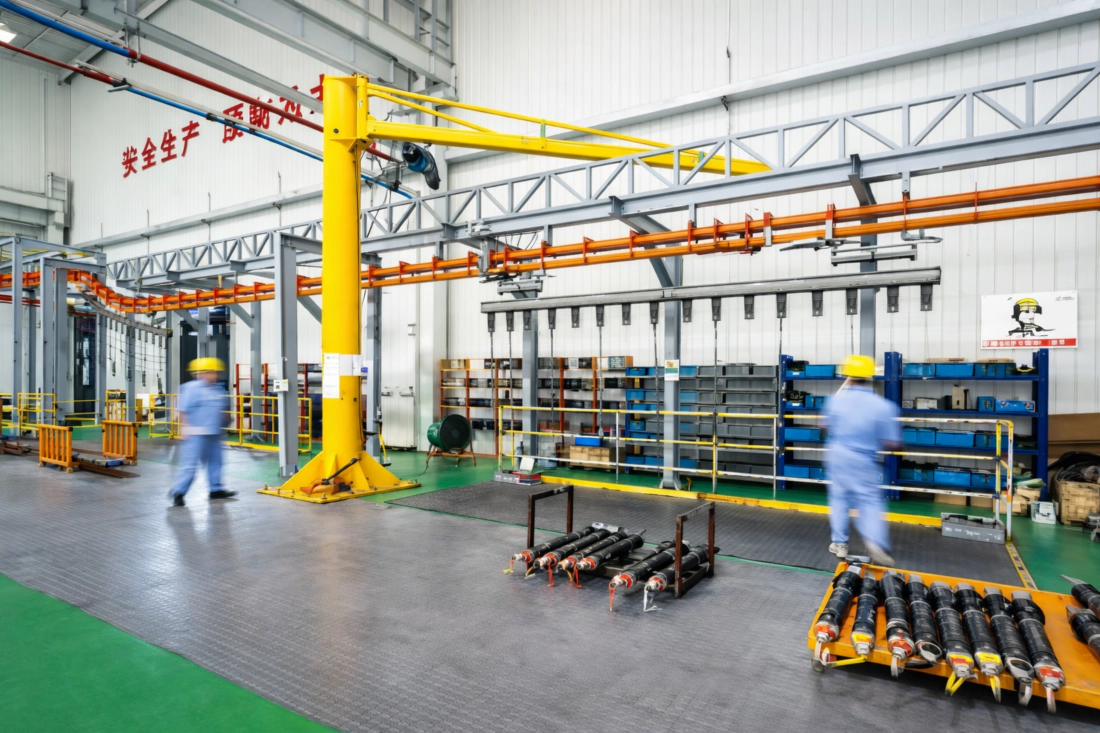
The seal architecture of a telescopic hydraulic cylinder for aerial pruning boom trucks must accomplish four distinct engineering objectives simultaneously: exclude external contaminants from entering the oil circuit as the rod extends through dusty or wet environments; retain system pressure without bypass leakage at rated working conditions; provide the minimum breakout and running friction consistent with the responsiveness requirement of the pruning arm control system; and survive the cyclic deformation and thermal exposure of outdoor operation across multiple growing seasons without requiring disassembly for seal replacement. Achieving all four objectives simultaneously requires a multi-stage seal combination in which each element in the stack performs a specific role. The outermost wiper seal — typically a polyurethane lip design — scrapes bulk contamination from the rod surface before it contacts the hydraulic oil. Behind the wiper sits the primary rod seal, commonly a double-acting profile cut from a compound comprising PTFE-loaded polyurethane or NBR, which provides the main pressure barrier. An intermediate back-up ring of harder durometer prevents the primary seal from extruding into the rod clearance gap under high pressure pulses. An inner guide ring or wear ring, fabricated from glass-filled PTFE or bronze-filled PTFE, takes all lateral loads transferred from the pruning arm weight, isolating the seal elements from the radial force component that would otherwise cause asymmetric lip loading and accelerated wear on the high-load side. This complete four-element combination is what we mean by the multi-stage seal combination recommended for pruning arm telescopic cylinders, and it is a standard specification feature on every cylinder we manufacture for this application category.
Application Scenarios: Where Double-Acting Telescopic Cylinders Deliver Operating Value in Agriculture and Horticulture
Orchard Canopy Management
Apple, pear, citrus, and stone fruit orchards require annual canopy shaping to maintain light penetration and fruit size. The telescopic cylinder provides the reach variability needed to address both inner scaffold branches and outer canopy terminals from a single vehicle position, reducing tyre track damage in row middles.
Roadside Corridor Pruning
National and provincial highway authorities in China and across Asia deploy aerial pruning boom trucks to maintain road-edge tree lines. The extended reach of a multi-stage cylinder allows operators to clear overhead limbs up to 9 m from the road surface without lane closure, improving safety for maintenance crews.
Urban Park and Street Tree Maintenance
City governments responsible for urban forest management — including major municipal authorities across China’s coastal provinces — rely on compact telescopic cylinder configurations to navigate pavement-restricted environments while still reaching mature specimen trees with crowns above 8 m. The double-acting retraction enables rapid relocation between work sites.
Utility Right-of-Way Clearance
Power distribution grid operators and telecommunications infrastructure maintainers use aerial pruning vehicles to clear conductor approach zones. The precision positioning of a double-acting multi-stage cylinder allows incremental repositioning of the cutter head to within centimetre accuracy — essential when working close to energised conductors under controlled approach conditions.
Six Engineering Advantages That Distinguish Our Telescopic Hydraulic Cylinders for Aerial Pruning Applications
Procurement teams evaluating telescopic cylinders for aerial pruning boom trucks consistently identify six performance characteristics that separate an engineered solution from a commodity product. These are the criteria our design and manufacturing teams target with every custom build we produce for agricultural equipment OEMs and aftermarket procurement specialists sourcing from China.
Maximum Stroke-to-Retracted-Length Ratio
Our multi-stage nesting geometry achieves extended-to-retracted ratios of up to 4.5:1, meaning a cylinder that fits within a 1,200 mm chassis bay can deliver a 5,400 mm working stroke — the extended reach necessary for high-canopy pruning without vehicle repositioning.
Anti-Sag Force Balance in Extended Positions
Double-acting hydraulic circuits allow precision load-holding at any intermediate position through a counterbalance valve mounted at the cylinder port. This prevents gravitational sag of the pruning arm head when the operator pauses to reposition the saw or cutter — a safety-critical feature for elevated work near overhead infrastructure.
Long Inter-Service Seal Life
The multi-stage seal combination and bronze-guided stage interfaces reduce seal replacement frequency to once every 2,000–3,000 operating hours under normal agricultural conditions — achieved through the combination of contaminant exclusion geometry, chrome surface quality, and correctly specified seal durometer grades for agricultural chemical compatibility.
Structural Resistance to Cyclic Bending Fatigue
Welded construction with full-penetration joint geometry and post-weld stress relief achieves fatigue lives that exceed 500,000 cycles at the rated lateral load condition — tested per internal protocols aligned with EN ISO 10100. This extended structural life matches or exceeds the typical service horizon for a pruning vehicle chassis.
End-of-Stroke Cushioning for Arm Structure Protection
Adjustable hydraulic cushion valves at both extension and retraction end positions decelerate the moving mass of the pruning arm over the final 30–50 mm of stroke, eliminating the hard mechanical impact that would otherwise transmit shock loads into the boom’s welded structure, pin joints, and the vehicle outrigger system over years of daily operation.
Full Custom Specification Against Customer Drawing
No two aerial pruning machine models share the same mounting geometry, stroke requirement, or hydraulic circuit pressure level. Our engineering team processes customer CAD drawings, 3D models, and technical specifications to generate detailed DFM (design-for-manufacture) proposals within five working days, enabling fast-tracked prototype development and series production scheduling without design compromise.
Customer Success Stories — Verified Outcomes from Agriculture and Horticulture Machinery Operators
The following cases represent outcomes reported by customers who integrated our custom telescopic hydraulic cylinders into their aerial pruning equipment programmes. Details are shared with appropriate permissions and reflect the documented performance improvements observed in service following component replacement or new platform build.
A leading agricultural machinery manufacturer based in Victoria, Australia, approached us after experiencing accelerated stage-wear failures in the original telescopic cylinders on their self-propelled orchard pruning platform — a machine designed for intensive apple and pear block work in the Goulburn Valley region. Their original cylinders showed guide band groove wear within 800 operating hours, leading to lateral slop that made precise positioning difficult and caused secondary seal damage. After reviewing their machine loads and duty cycle data, we redesigned the guide band geometry, uprated the stage clearances, and supplied a three-stage double-acting welded cylinder in 27SiMn with our multi-stage seal combination. The replacement cylinders have now accumulated over 2,400 hours in the same application without guide wear recurrence or seal replacement requirement, representing a threefold service life improvement that reduced the annual maintenance cost per machine by an estimated 40%.
— Technical Director, Agricultural Machinery Division, Victoria, Australia
A tree management contractor operating a fleet of fifteen aerial pruning boom trucks across municipal contracts in Baden-Württemberg required a cost-effective source for cylinder rebuilds as their machines entered mid-life maintenance cycles. Sourcing replacements from the OEM had become cost-prohibitive, and domestic European suppliers quoted 14–18-week lead times that were incompatible with contract service schedules. Working from the original cylinder dimensional drawings and performance specifications provided by the customer, we manufactured exact-replacement telescopic cylinders to meet their equipment’s OEM parameters, with chrome plating specification upgraded from the original 0.025 mm nominal to our standard 0.04 mm to improve long-term corrosion resistance. Delivery of the first batch of six cylinders was completed in nine weeks from drawing approval. The customer has since expanded the programme to cover their full fleet and reports zero warranty returns across 38 units delivered over an 18-month period.
— Maintenance Manager, Arboriculture Fleet Services, Baden-Württemberg, Germany
A specialist vehicle builder in Nagano Prefecture producing compact track-mounted pruning platforms for Japan’s intensive high-density apple and cherry orchard market needed a four-stage telescopic cylinder with an unusually short retracted length constraint of 780 mm imposed by the machine’s narrow chassis width, combined with a 3,600 mm extended stroke requirement. No standard catalogue product could satisfy both dimensional requirements simultaneously. Our engineering team developed a custom four-stage bore sequence using a tapered wall-thickness approach, verified the design against the machine’s specified load envelope using finite element analysis, and produced a prototype within eleven weeks of drawing approval. The prototype passed the customer’s internal test protocol — which included a 50,000-cycle endurance run at rated load — on first submission without modification. Series production of 40 units per year has been maintained for the past two production seasons.
— Engineering Manager, Compact Agricultural Platform Division, Nagano, Japan

Manufacturing Capability and Custom Design Service — Built to Your Exact Specification
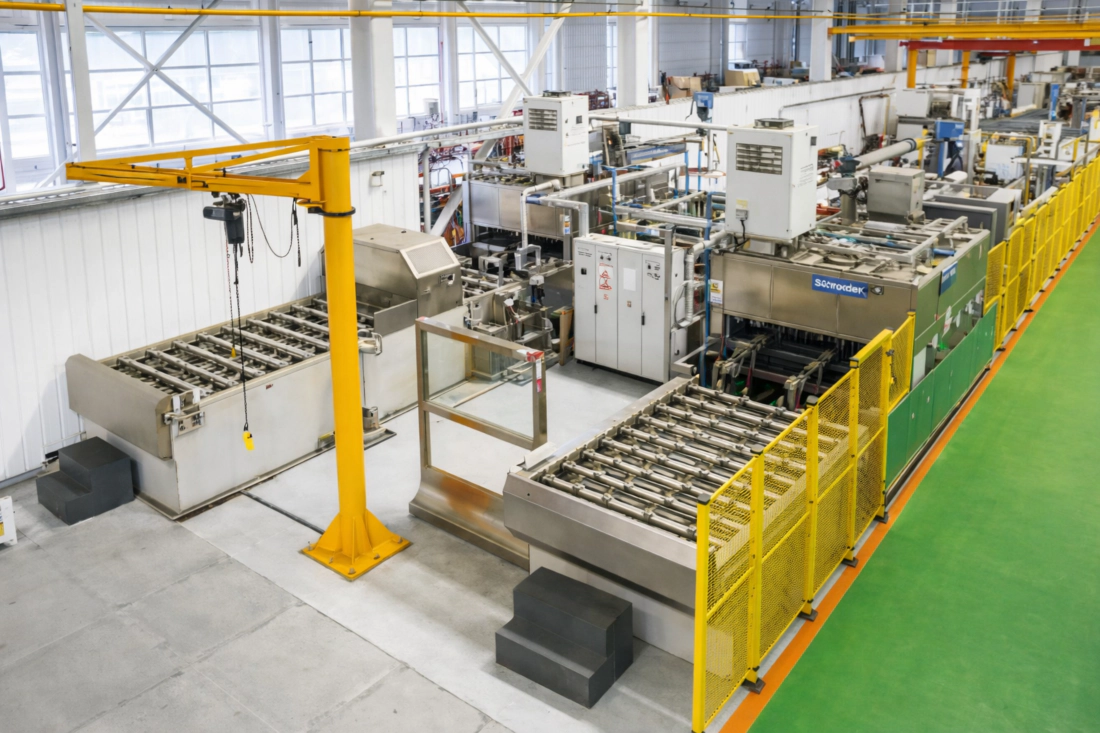
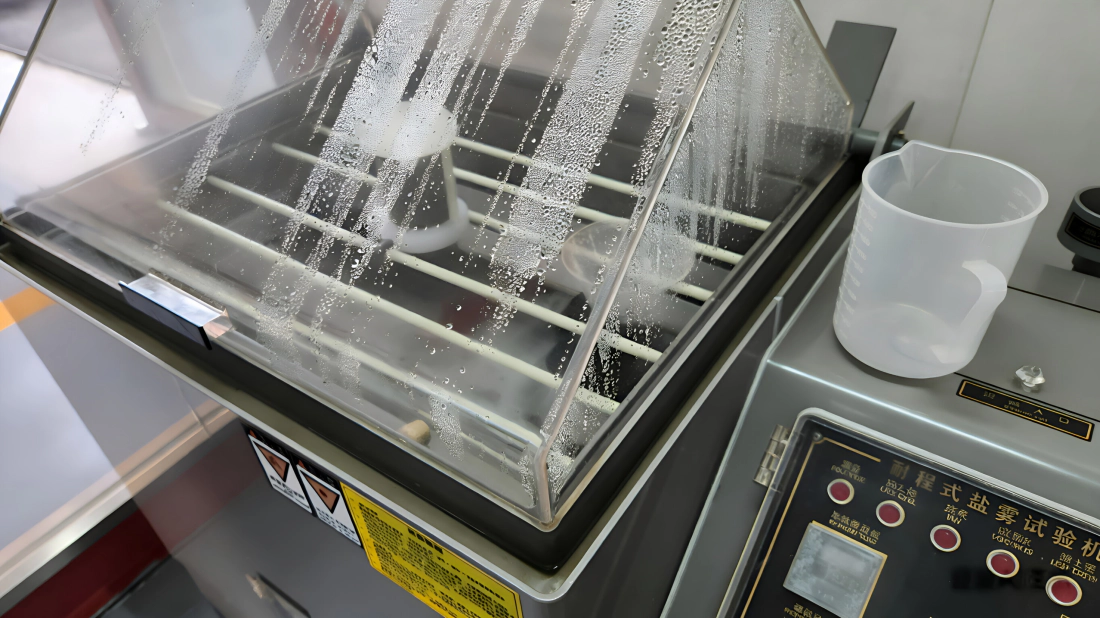
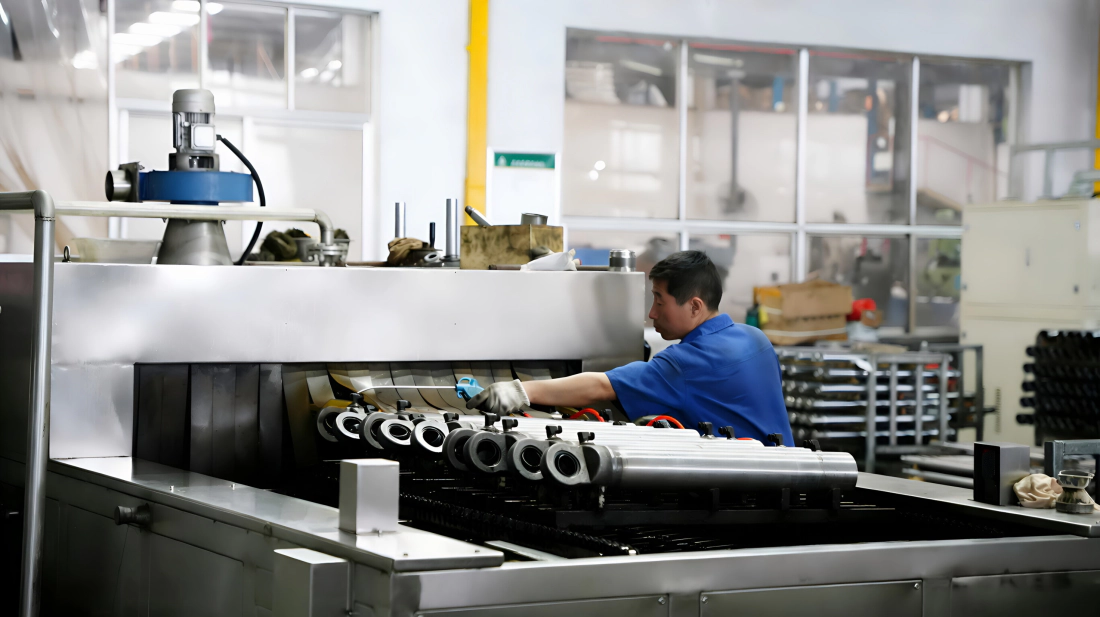
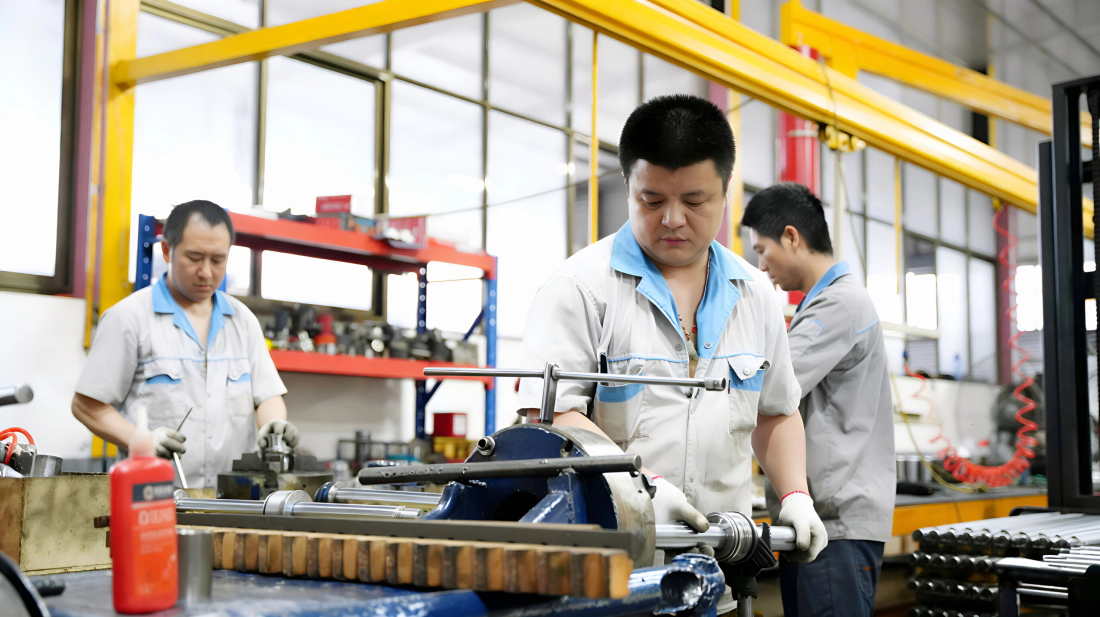
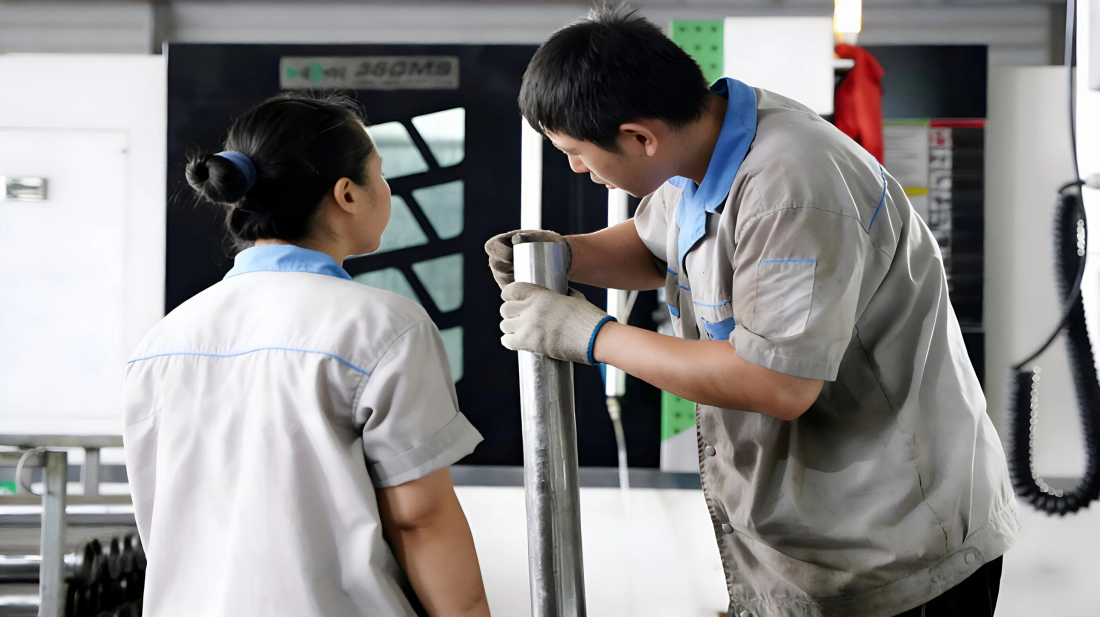
Our production facility, located in China and operating under a quality management system aligned with ISO 9001, is equipped to manufacture telescopic hydraulic cylinders for aerial pruning boom trucks across the full range of bore diameters, stage counts, stroke lengths, and mounting configurations encountered in agricultural and horticulture machinery applications. Key production assets include large-format deep-hole boring machines capable of processing cylinder barrels up to 320 mm bore diameter and 8,000 mm length, skiving-and-roller-burnishing lines that produce bore surface finishes of Ra 0.4 µm or better without grinding, in-house heat treatment furnaces for post-weld stress relief and normalising of 27SiMn barrel assemblies, and a dedicated multi-tank chrome plating facility with full-thickness monitoring and adhesion testing capability. Our hydraulic test benches deliver pressures up to 45 MPa for proof testing, and all completed cylinders undergo a documented test sequence covering no-load extension-retraction cycling, pressure hold testing at 1.5 times rated working pressure, leakage check at rated pressure, and stroke measurement verification against drawing tolerances. Learn more about our manufacturing heritage and quality credentials.
The custom product development service is a core competency of our engineering organisation — not an add-on reserved for large volume commitments. From a customer’s initial concept sketch or reverse-engineered dimensional survey, our team develops a complete manufacturing drawing package, agrees on DFM modifications to improve producibility where necessary, and establishes material certification, test, and inspection plans appropriate to the application severity and target market. Small-series prototype runs of as few as five cylinders can be accommodated on our standard scheduling, allowing equipment builders to validate a design before committing to series production tooling. For established OEM programmes, kanban scheduling, pre-positioned buffer stock, and priority build slots are available to support just-in-time production line requirements. Whether you are developing a new pruning machine model, re-engineering an underperforming legacy cylinder, or sourcing a cost-effective replacement supply for an existing fleet, our team can structure a programme that meets your specification, schedule, and commercial requirements.
Sourcing Telescopic Hydraulic Cylinders from China — What Agricultural Machinery Procurement Specialists Need to Know
China’s hydraulic component manufacturing sector has undergone a significant capability transformation over the past fifteen years, driven by investment in precision machine tools, metallurgical process control, and quality management systems aligned with international standards. For procurement specialists evaluating telescopic hydraulic cylinders for aerial pruning boom trucks, the relevant question is no longer whether Chinese manufacturers can meet the technical requirements — it is whether a specific manufacturer has the engineering depth, quality infrastructure, and communication processes to manage a custom development programme reliably and to sustain consistent quality across production batches. Our facility in China combines the cost structure advantages of domestic raw material pricing and processing infrastructure with the engineering capability and documentation rigour required by agricultural machinery OEMs in Europe, Japan, Australia, and North America. We ship to all major ports and can arrange FCA, FOB, and CIF delivery terms. Certificate packages including material traceability, test reports, dimensional inspection records, and conformance certificates are provided as standard with every consignment. Customs harmonisation codes, REACH compliance statements, and other market-entry documentation can be provided on request for specific destination markets. Connecting directly with our engineering team through the link below is the fastest way to establish whether our capabilities and your requirements are a match.
Frequently Asked Questions — Telescopic Hydraulic Cylinders for Aerial Pruning Boom Trucks
What is the best type of multi-stage telescopic hydraulic cylinder for aerial pruning boom trucks used in orchard canopy management operations in China?
How much does a custom double-acting telescopic hydraulic cylinder for a tree pruning vehicle typically cost when sourced from a Chinese manufacturer, and what affects the price?
Which seal combination should I specify when ordering a hydraulic pruning arm cylinder for outdoor agricultural machinery operating in pesticide-rich orchard environments?
Where can I find a reliable Chinese supplier of welded telescopic hydraulic cylinders for horticulture boom trucks that offers full OEM customisation and ships internationally?
What causes premature multi-stage seal failure in telescopic hydraulic cylinders on aerial pruning equipment and how can it be prevented through correct specification?
How long does it take to receive a custom multi-stage telescopic hydraulic cylinder quote and first prototype delivery from Ever Power in China?
Ready to Specify Your Custom Telescopic Hydraulic Cylinder?
Send us your drawing, target application data, and quantity requirement. Our engineers will review your specification and return a detailed quotation, DFM analysis, and programme proposal — within one business day.
Ever Power · Hydraulic Cylinder Manufacturer · China · ISO 9001 Certified