The Backbone of the Crane: High-Reach Telescopic Boom Cylinders That Don’t Quit
There is a very specific feeling you get when you are sitting in the cab of a 100-ton mobile crane, fully extended to 60 meters, and the wind off the North Sea starts to gust. If your main boom telescopic cylinder is doing its job, the sway is controlled, rhythmic even. But if that cylinder has worn guide bands or internal bypass? That sway turns into a “wobble,” and suddenly, placing a wind turbine blade becomes a terrifying game of chance.
In my 18+ years of engineering hydraulic systems, I’ve seen more compromised boom cylinders than I care to count. Most operators don’t realize that the double-acting multi-stage telescopic cylinder is arguably the most complex hydraulic component on the entire machine. It’s not just pushing oil; it’s a structural column that has to slide effortlessly while holding massive loads against gravity and leverage. We aren’t just talking about lifting capacity here; we are talking about side-load management. When you have five stages extended, the overlap between tubes is minimal, and the stress on the guide rings is immense. If you get the geometry wrong, or if the steel grade isn’t up to par, the cylinder creates that dreaded “stick-slip” shudder that makes precision work impossible.
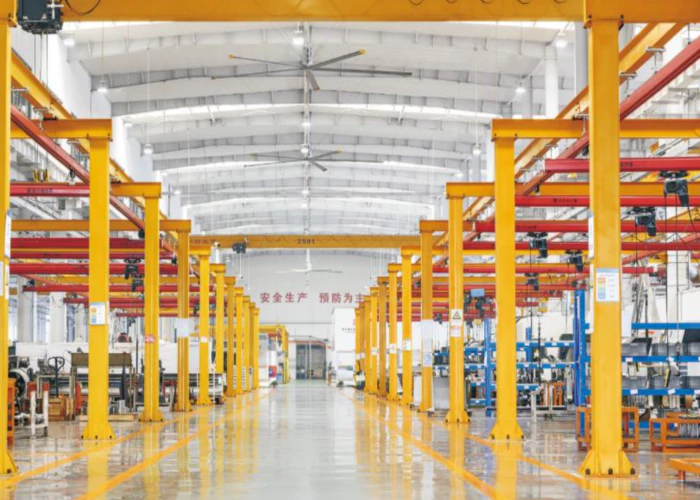
We build these cylinders differently. We use high-strength welded alloy designs rather than standard carbon steel to keep the weight down (because every kilo of cylinder is a kilo less payload). But before I bore you with yield strength numbers, I want you to see the scale of our operation.
🏭 Step Inside Our High-Tech Facility
You don’t need a flight to see our honing machines and welding robots. Take a virtual tour right now.
The “Stick-Slip” Nightmare and How We Fix It
Let’s get into the weeds a bit. The biggest complaint I hear from crane rental companies—especially in damp environments like the Netherlands—is that the boom doesn’t extend smoothly. It jerks. This is usually “stick-slip,” caused when the static friction of the seals is higher than the dynamic friction. On a multi-stage cylinder, this is compounded because you have multiple sets of seals interacting at once.
Our approach is to use a proprietary Multi-Stage Guidance System. Instead of standard iron guide rings, which can score the barrel under heavy side loads (like when you are lifting at a low angle), we use high-load composite guide tapes. These absorb the contaminants that inevitably get into the system and prevent metal-on-metal contact. It makes the telescope action buttery smooth, even after 5,000 cycles.
And then there is the material. Standard ST52 steel is fine for a dump truck, but for a 50-meter boom? It’s too heavy. We use High-Strength Alloy Steel (like Q690 or modified 42CrMo). This allows us to reduce the wall thickness—and therefore the weight—without sacrificing the pressure rating. Lighter cylinders mean your crane charts look better, and you can lift more payload at a longer radius. That’s the trick that separates a generic replacement from a performance upgrade.

Technical Architecture: Built for the Extremes
We don’t just guess at these specs. Every stage is calculated for buckling strength (using the Euler column formula) and ballooning resistance.
| Parameter | Our High-Performance Spec | Operational Benefit |
|---|---|---|
| Cylinder Type | Double-Acting, Multi-Stage (3-5 Stages) | Controlled extension AND retraction (gravity isn’t enough for horizontal booms). |
| Material | High Strength Alloy (Q690/42CrMo) | Maximized strength-to-weight ratio; increases crane lifting capacity. |
| Surface Treatment | Hard Chrome (Salt Spray Test > 100h) | Vital for corrosion resistance in Dutch coastal/port areas. |
| Working Pressure | 250 Bar – 350 Bar | High pressure allows for a smaller cylinder diameter (compact design). |
| Guidance System | Composite Guide Rings + Overlap Optimization | Prevents “scoring” on the tubes during heavy side-load lifts. |
| Safety Integration | Integrated Counterbalance Valves | Prevents boom collapse in case of hose failure; ensures smooth motion control. |
🇳🇱 Case Study: Steadying the Giants in Rotterdam
The Client: “Maasvlakte Heavy Logistics” (Name changed for privacy), a premier crane service provider operating in the windy expanse of the Rotterdam port expansion.
The Challenge: They were operating a fleet of 120-ton all-terrain cranes. The original telescopic cylinders on their 5-section booms were failing prematurely—specifically, the seals on the 3rd stage were blowing out every 600 hours. The operators reported severe vibration when telescoping under load (20+ tons). In the high winds of the Maasvlakte, this vibration made precise container placement dangerous.
The Solution: We analyzed the failed units and found that the original guide bands were too narrow for the side loads being applied. We engineered a custom replacement set using our “Wide-Stance” guide ring technology and upgraded the chrome plating thickness to combat the salty air. We also adjusted the internal cushioning.
The Result: The “jitter” was gone instantly. Seal life extended from 600 hours to over 2,500 hours (and counting). The fleet manager estimates they saved €45,000 in downtime and seal kits in the first year alone. Plus, the operators are much happier.
What the Industry Says
★★★★★
“Replacing a 4-stage cylinder is usually a nightmare of compatibility. Ever Power’s drawing team got the dimensions perfect. It dropped right into our Tadano chassis without modification.”
— Hendrik J., Maintenance Lead, Eindhoven
★★★★★
“The smoothness is what I noticed first. No more banging when the stages transfer. For delicate work in the city center of Amsterdam, control is everything.”
— Bas V., Crane Operator, Amsterdam
★★★★★
“We needed a supplier who understood EU safety standards. These cylinders came with all the material certs we needed for the safety inspection.”
— Lieke T., Safety Officer, Rotterdam
More Than Just Mobile Cranes
While the mobile crane is the “king” of telescopic cylinders, this multi-stage technology is the muscle behind many pieces of equipment we see on Dutch infrastructure projects every day.
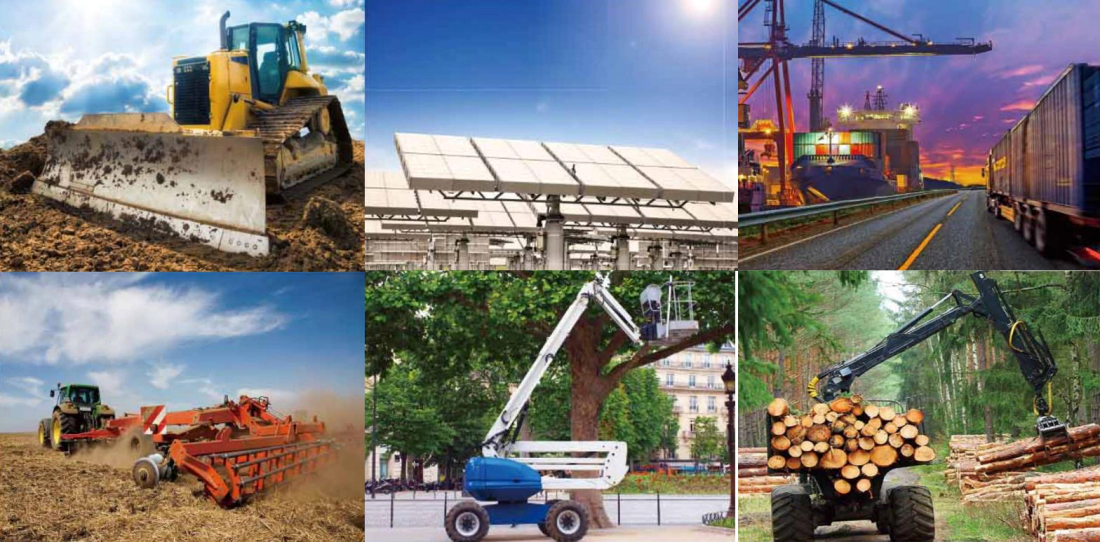
- Crawler Cranes: For those massive wind farm installations, crawler cranes need telescopic booms that can handle immense static loads. Our welded cylinders provide the rigidity needed here.
- Piling Rigs: You see these everywhere in the Netherlands, reinforcing the soft soil. The telescopic leaders require cylinders that can withstand high vibration and dirt ingress.
- Reach Stackers: At the port terminals, reaching over three rows of containers requires a robust, double-acting telescopic boom that can cycle hundreds of times a day.
Customization: We Re-Engineer What’s Broken
Here is a trade secret: many OEM cylinders are designed for “average” global conditions. They aren’t specifically tuned for the high-cycle, heavy-load, wet-weather environment of Northern Europe.
When you come to us, we don’t just look up a part number. We ask: “How did the old one fail?” If it failed due to ballooning, we would increase the wall thickness. If the chrome peeled, we would change the plating process. We can manufacture cylinders with strokes up to 20 meters and multiple stages (2, 3, 4, or 5). We can match the mounting dimensions of your Liebherr, Grove, or Terex machines perfectly, but with upgraded internals.
Strategic Product Analysis (SWOT)
We believe in being honest about what our product is (and isn’t). Here is the breakdown for our High-Reach Telescopic Series.
💪 Strengths
- Payload: High-strength alloy reduces cylinder weight, increasing crane capacity.
- Durability: Multi-stage guidance reduces wear from side-loading.
- Weather Proof: Enhanced chrome plating for the Dutch maritime climate.
🔻 Weaknesses
- Complexity: Multi-stage designs are harder to service in the field than single-stage.
- Lead Time: Custom manufacturing takes longer than off-the-shelf standard parts.
🚀 Opportunities
- Green Energy: Massive demand for cranes in wind farm maintenance.
- Infrastructure: Retrofitting aging fleets for renewed safety certification.
⚠️ Threats
- Supply Chain: Fluctuations in high-grade alloy steel availability.
- Low-Quality Copies: Cheaper, unsafe cylinders are flooding the market.
Answering Your Top Questions
Why is my crane boom jerking when extending?
That is called “stick-slip.” It happens when the internal friction is uneven, usually due to worn guide bands or side-loading, causing metal-to-metal contact. Upgrading to a cylinder with composite guide rings and low-friction seals will solve this and smooth out the motion.
How much does a custom telescopic boom cylinder cost?
It varies based on the number of stages and stroke length. A complex 5-stage unit is an investment, but our direct-from-factory price is typically 25-30% lower than buying the OEM part from the crane manufacturer. Use our quote button for an exact number.
Can you ship large multi-stage cylinders to Rotterdam?
Yes, we ship heavy freight to the Netherlands regularly. We use specialized crates to protect the chrome stages during sea freight, ensuring they arrive in Rotterdam or Amsterdam in perfect condition, ready to install.
Do you repair telescopic cylinders or only make new ones?
We focus on manufacturing new, high-performance replacements. Often, by the time a multi-stage cylinder has failed, the tubes are scored and fatigue-stressed. Building a new one with better materials is usually safer and more cost-effective in the long run than a risky repair.
What is the lead time for a custom crane cylinder?
For a complex multi-stage cylinder, engineering and production typically take 4-6 weeks. We know downtime hurts, so we can sometimes expedite production for urgent “machine down” situations.
Safety at 60 Meters Starts Here
Don’t let a wobbly cylinder compromise your lift. Upgrade to high-strength alloy reliability.
Direct Shipping to Netherlands • Full Material Certification