Absorbing the Shock: Heavy-Duty Push Roller Hydraulic Cylinders for Asphalt Pavers in the Netherlands
You know that sound. You are standing on the screed of a paver on a highway project near Utrecht, focusing on the mat texture, when suddenly—THUD. A 30-ton dump truck backs into the push rollers a little too enthusiastically. The whole machine shudders. In that split second, your push roller hydraulic cylinders are taking a beating that would twist a standard steel rod like a pretzel. In my 18+ years of engineering hydraulic solutions for road machinery, I’ve seen more paver downtime caused by bent rods and blown seals in the push roller system than almost any other component. It’s the frontline of the paving train, yet most maintenance managers treat these cylinders as an afterthought.
The reality is, the Netherlands has some of the highest road quality standards in the world (ZOAB asphalt is unforgiving if you stop the paver). You cannot afford to have a cylinder seize up because the chrome flaked off or the guide bushing wore out from the constant vibration. We’ve found that standard agricultural-grade cylinders just can’t handle the combination of impact shock and high-frequency vibration. That is why we re-engineered the push roller cylinder from the ground up, focusing on a “Wide Guide Ring” design and welded alloy steel construction. It’s about absorbing that energy, not just resisting it.
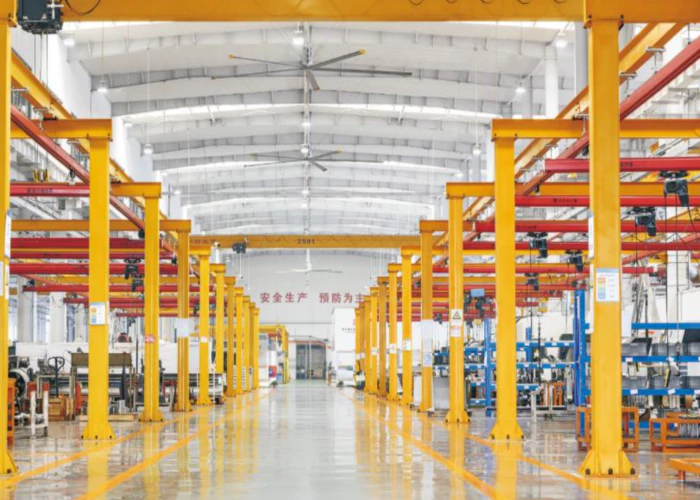
I could write specs all day, but I’d rather you see the build quality for yourself. We’ve digitized our production floor so you can walk through it virtually.
The “trick” that most printers (and even some OEMs) miss is the side-loading factor. Trucks rarely back up perfectly straight. They come in at an angle, which puts a massive lateral force on the extended cylinder rod. If your internal guide rings are the standard narrow type, the rod acts like a lever, crushing the seal and scoring the barrel. We use extra-wide, composite guide rings that distribute this load over a much larger surface area. It’s a simple geometric change that doubles the lifespan of the cylinder in the field.
The Engineering Fight: Vibration vs. The Weld
Let’s talk about vibration. A paver is essentially a giant vibrator designed to compact asphalt. That vibration travels through the chassis and right into the hydraulic components. We’ve seen threaded cylinder caps vibrate loose in the middle of a job—absolute nightmare. That is why we advocate for a fully welded construction for push roller cylinders.
But not just any weld. We use a specialized deep-penetration welding process on high-strength alloy steel (typically 27SiMn or Q345D). This ensures that the base of the cylinder doesn’t fatigue and crack under the millions of micro-cycles it experiences. Furthermore, the rod isn’t just standard chrome. Given the gritty environment of road construction (bitumen, sand, gravel), we use a hard chrome plating that is polished to a specific roughness (Ra 0.2) to hold just enough oil film to lubricate the wiper seal without letting dirt in.

Strategic Analysis: The Push Roller Cylinder Landscape
We don’t just sell parts; we solve downtime problems. In the Dutch market, where efficiency is king, you need to know exactly what you are buying. Here is a SWOT analysis of our Impact-Resistant Push Roller Cylinders:
Strengths
- Impact Damping: Internal cushioning design reduces shock to the paver frame.
- Side-Load Defense: Wide guide rings prevent rod binding during angled truck docking.
- Weld Integrity: 100% UT tested welds eliminate fatigue failure risks.
Weaknesses
- Weight: Robust alloy steel construction makes them heavier than cheap replacements.
- Cost: Premium seals and plating increase upfront investment (but lower TCO).
Opportunities
- Infrastructure Renewal: Heavy ongoing maintenance on the A1, A2, and A12 highways.
- Retrofits: Upgrading older Vogele and Dynapac fleets to modern reliability standards.
Threats
- Inferior Copies: Visual lookalikes that lack proper heat treatment and guide geometry.
- Raw Material Volatility: Fluctuations in global steel and nickel prices.
Case Study: Keeping the Asphalt Flowing in Brabant
We recently worked with a mid-sized paving contractor based in North Brabant (let’s call them “Van Dam Wegenbouw”). They were running a fleet of feeders and pavers on a tight schedule for a provincial road widening project. They faced a recurring issue: the push roller cylinders on their material transfer vehicle (MTV) were bending.
The dump truck drivers, under time pressure, were docking hard and fast. The standard OEM cylinders couldn’t handle the shock load, leading to bent rods and immediate seal failure. They were changing cylinders every three weeks. It was costing them a fortune in parts and lost hours.
The Solution:
We engineered a “Shock-Proof” retrofit kit. We increased the rod diameter by 5mm (without changing the mounting pin size) and installed our wide-band composite guide rings. We also upgraded the rod seal to a heavy-duty polyurethane that resists extrusion under shock pressure.
The Result:
The new cylinders absorbed the punishment. Six months later, Van Dam reported zero failures. The maintenance chief told me, “I don’t wince anymore when I hear a truck hit the rollers.”
What Our Partners Say
“The side-loading on our projects is terrible because of the narrow lanes. These cylinders with the wider guides actually stay straight. A solid upgrade.”
– Pieter J., Site Foreman, Eindhoven
“We used to buy cheap replacements, but the downtime killed us. The Ever Power units cost a bit more, but they last the whole season.”
– Lars v.d. Berg, Fleet Manager
“Shipping to Rotterdam was fast, and the technical drawing they sent matched our machine perfectly. No headaches.”
– Sander K., Procurement Officer
Technical Specifications: Built to Take a Hit
We believe in transparency. A hydraulic cylinder is a precision instrument, even if it’s covered in asphalt. Here are the specs that make our Push Roller Cylinders stand out.
| Feature | Specification Details |
|---|---|
| Application | Push Roller Extension / Truck Docking |
| Cylinder Type | Double-Acting Piston / Welded Body |
| Tube Material | High-Strength Alloy Steel (27SiMn / Q345D) |
| Rod Coating | Hard Chrome Plating (>25µm) / Optional Nickel-Chrome |
| Guide System | Extra-Wide Phenolic/Composite Guide Rings (Side-Load Resistant) |
| Seals | Hallite / Merkel (Heavy Duty Wipers for Asphalt Grit) |
| Working Pressure | 210 Bar (Nominal) / 350 Bar (Shock Load) |
Beyond the Paver: Where Else Does This Tech Work?
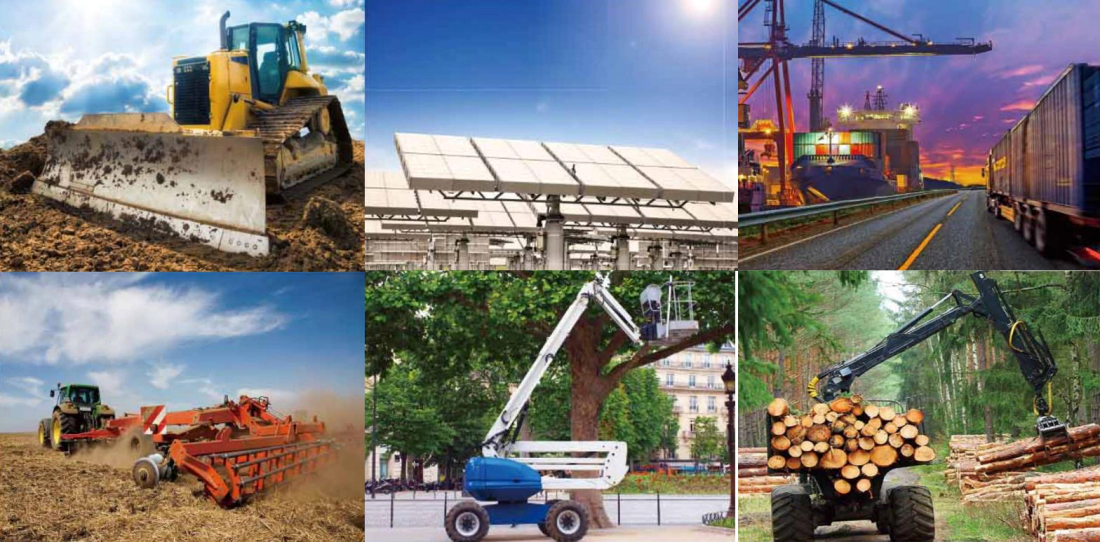
The technology we developed for surviving the “truck impact” isn’t limited to pavers. Any machine that interacts with another heavy vehicle benefits from this design. We’ve successfully applied these principles to:
- ✔
Material Transfer Vehicles (MTVs): The docking impact here is frequent and heavy. Our cylinders keep the spacing bar precise.
- ✔
Road Wideners: The push bar cylinders on these machines face similar side-loads and vibration.
- ✔
Loading Ramp Cylinders: For low-loaders and heavy haulage trailers, where sudden impact loads are common.
Customization: We Speak “Retrofit”
Here is the situation: You have a 10-year-old paver. The OEM part is obsolete or costs a fortune and takes 12 weeks to arrive. We can fix that. We specialize in reverse engineering.
We don’t need a CAD file. Send us the damaged cylinder, or even just a sketch with the pin dimensions, stroke, and retracted length. We can fabricate a drop-in replacement that is likely stronger than the original. We can also adjust port locations to make hose routing easier for your mechanics.
From the Shop Floor: Frequently Asked Questions
Why do my paver push roller cylinders leak after only a few months of operation?
It is almost always due to the side-loading caused by truck misalignment. When a dump truck backs in at an angle, it forces the rod against the gland. Our cylinders use extra-wide guide rings to absorb this side load, preventing the seal distortion that causes leaks.
Can these cylinders withstand the impact of a fully loaded dump truck docking too hard?
Yes, that is exactly what they are designed for. We use high-strength alloy steel and a specialized damping design to absorb that initial kinetic shock, protecting both the cylinder internals and the paver chassis from damage.
How fast can you deliver custom replacement cylinders to a site in the Netherlands?
We know that a stopped paver costs money. For custom orders, we typically look at a 15-20 day production cycle, with expedited air freight options to Amsterdam Schiphol or sea freight to Rotterdam available.
Do you use specific chrome plating for the damp Dutch climate?
Absolutely. Standard chrome is often too porous for the salty, wet air near the Dutch coast. We recommend a double-layer nickel-chrome plating which provides a much superior barrier against corrosion and pitting.
What information do I need to get a price quote for a retrofit?
Just send us the pin diameters, the retracted length, and the stroke. If you have the old part number from your Vogele or Dynapac manual, that helps, but we can reverse engineer from basic measurements.
Is truck impact destroying your hydraulics?
Don’t let shock loads stop the job. Upgrade to our impact-resistant cylinders.