The Foundation of Safety: Why Heavy-Duty Outrigger Cylinders Are the Only Thing Between You and Disaster
You know the feeling. You are sitting in the cab of a 200-ton mobile crane, you have the main boom extended, and you are about to lift a pre-cast concrete slab. You look at the load moment indicator, but really, your gut is feeling the stability of the machine. In that moment, the entire weight of the machine, the counterweight, and the load isn’t resting on the tires—it is resting on four columns of oil inside your outrigger cylinders.
In my 18+ years of engineering hydraulic systems for the construction sector, I have seen more “near misses” than I care to admit, and sadly, a few failures. Most of the time, it wasn’t the boom that failed; it was the stabilization system. The outrigger cylinder (or vertical jack cylinder) is the unsung hero of the job site. It takes the most abuse, sits closest to the mud and grit, and bears the static load for hours on end. (We’ve seen operators leave cranes set up for days on sinking Dutch polder soil, wondering why the seals blew out).
We realized early on that standard “ag-grade” cylinders just don’t cut it for modern telescopic cranes. The impact loads when the pad hits the ground, the lateral stress when the chassis flexes… it requires a different beast. That is why we moved to 42CrMo alloy steel and forged trunnion mounts. It’s about building a cylinder that doesn’t just lift; it endures.
But before I get too deep into the metallurgy, I want you to see exactly how we build these giants. We believe in total transparency.
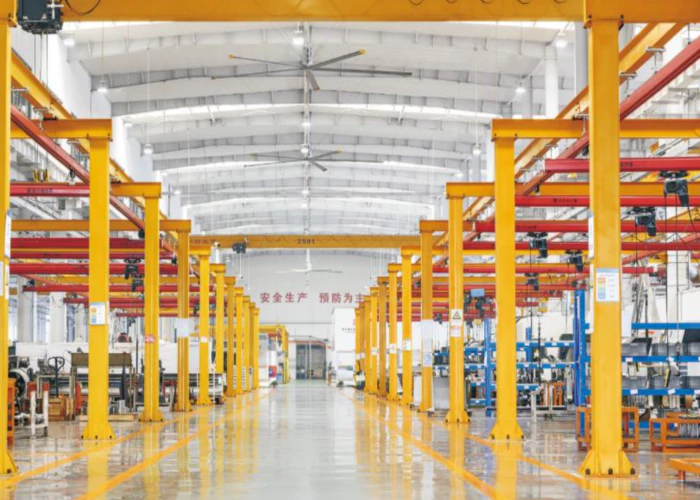
🏭 Step Inside Our Production Facility
Don’t just take my word for it. Inspect our welding stations and chrome plating baths right now from your screen.
The “Forged” Difference: Why Welding Is Not Enough
Here is a trade secret that some manufacturers gloss over: the weakest point of a vertical outrigger cylinder is the connection between the barrel and the mounting ear (trunnion). On cheaper units, this is a welded plate. When a crane operates, it doesn’t just push down; it rocks. This rocking motion creates massive side-loads and torque on that connection point.
In our experience, welded plates eventually develop fatigue cracks. Once that crack starts, it’s a ticking time bomb. We solved this by using one-piece forged trunnions. By forging the steel, we align the grain structure of the metal to flow around the corner, making it exponentially stronger than a weld bead ever could be. It costs us more to produce, sure, but I sleep better knowing that when a client in Utrecht is lifting a 40-ton generator, the cylinder mount won’t shear off.
Then there is the issue of Impact Loading. When you are setting up on uneven ground, the cylinder often takes a sudden hit as it finds its footing. Standard ST52 steel is too soft; it can deform (mushroom) at the rod end. We use 42CrMo (Chromium-Molybdenum) steel for the rod and critical stress points. This material has high toughness and impact resistance. It’s the same steel used in heavy-duty truck axles, adapted for hydraulic precision.

Technical Specifications: Built for Dutch Soil
The Netherlands presents a unique challenge: the soil. It is soft, often wet, and prone to shifting. This means the cylinders need to handle constant micro-adjustments and higher-than-average lateral forces as the ground settles.
| Feature | Our High-Performance Spec | Field Advantage |
|---|---|---|
| Cylinder Type | Double-Acting, Heavy Duty Piston | Power up/down control for precise leveling on uneven terrain. |
| Rod Material | 42CrMo (Quenched & Tempered) | Resists bending and impact damage from site debris. |
| Mounting Style | Forged Trunnion / Ball Joint Base | Eliminates weld fatigue; ball joint adapts to ground slope. |
| Surface Coating | Hard Chrome (>50μm) + Nickel Underlayer | Maximum corrosion protection against wet/salty Dutch coastal air. |
| Locking Valve | Integrated Dual Pilot Check Valve | Zero-leak guarantee; holds the crane level even if a hose bursts. |
| Static Load | Tested to 1.5x Rated Capacity | Safety factor engineered for shock loads and wind gusts. |
🇳🇱 Client Success Story: The Wind Farm Specialist
The Client: “Noord-Holland Crane Services” (Name changed for privacy), a specialized company maintaining wind turbines along the windy coast of Den Helder.
The Challenge: Their fleet of 100-ton mobile cranes was facing a specific issue: Trunnion Ovalization. The constant high-wind battering caused the crane chassis to rock slightly, even when leveled. Over time, the mounting pins were eating into the welded trunnion mounts of the OEM cylinders. This “slop” made the machines feel unstable and failed safety inspections.
The Solution: We supplied a custom set of Forged Trunnion Outrigger Cylinders. We used 42CrMo material and increased the bearing surface area of the trunnion by 15%. We also integrated a specialized spherical bearing at the rod end to better accommodate the flex of the crane mats on the sandy soil.
The Result: The “wobble” was eliminated. The fleet manager reported that after 24 months of continuous service in salt-air environments, the chrome was pristine, and the trunnion measurements showed zero deformation. They have since retrofitted three more machines with our cylinders.
Feedback from the Field
★★★★★
“The integrated check valves on these cylinders are top notch. We had a hose failure last week on site in Rotterdam, and the outrigger didn’t drop a millimeter. Saved the lift.”
— Pieter J., Site Supervisor, Rotterdam
★★★★★
“We retrofitted an older Liebherr with Ever Power cylinders. The fit was perfect. The forged mounts look much stronger than the originals.”
— Martijn B., Maintenance Mechanic, Tilburg
★★★★★
“Delivery to the Netherlands was faster than expected. We got the customs paperwork handled smoothly and the crates were sturdy.”
— Sarah V., Logistics Coordinator, Amsterdam
Where Else Do We Apply This Technology?
While mobile cranes are the primary users of these high-load vertical cylinders, the technology—specifically the impact resistance and holding capability—is applicable across the board.
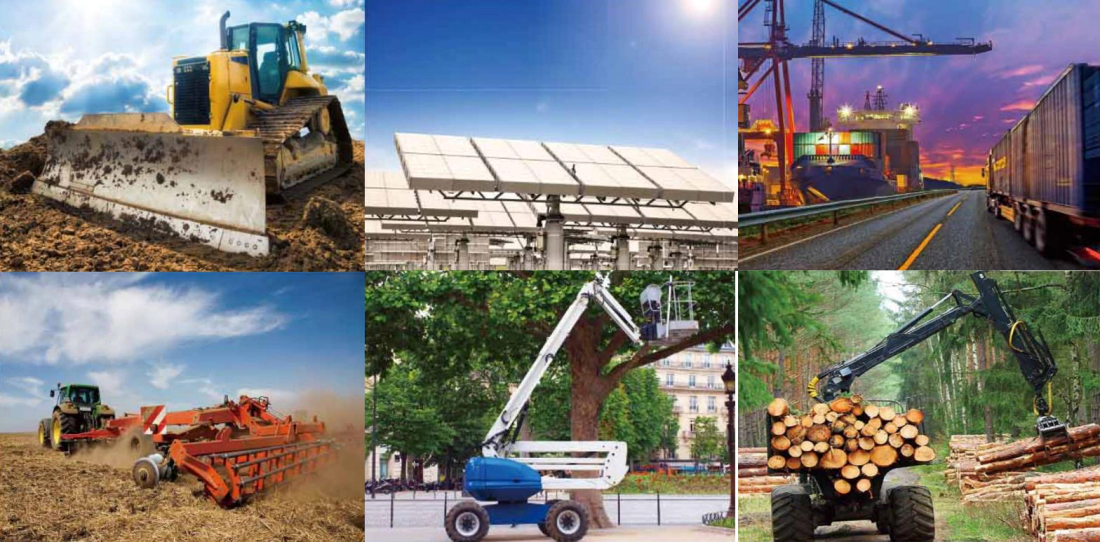
- Concrete Pump Trucks: These machines pulse rhythmically as they pump. The outriggers need to be incredibly rigid to prevent that pulse from turning into a bounce. Our 42CrMo rods are perfect here.
- Aerial Ladder Fire Trucks: Lives depend on stability here. We manufacture outrigger cylinders with redundant sealing systems specifically for emergency rescue vehicles where failure is not an option.
- Mobile Drilling Rigs: Used often in Dutch foundation work. These rigs exert massive downward pressure. The outrigger cylinders act as the anchor against this force.
Customization: We Don’t Just Sell, We Engineer
Here is the reality of the equipment market: A 10-year-old crane might not have OEM parts available anymore, or the OEM parts are ridiculously expensive and take 12 weeks to arrive.
We fill that gap. We can reverse-engineer your existing outrigger cylinder from a drawing or a sample. Need to change the port location to avoid a new chassis modification? We can do that. Need to upgrade from a standard rod to a 42CrMo rod because you are working in harsher conditions? We can do that too. Our factory is set up for flexible manufacturing, meaning we can run a batch of 4 or a batch of 400.
Strategic Product Analysis (SWOT)
We believe in honest engineering. Here is a breakdown of how our forged outrigger cylinders stack up in the current market.
💪 Strengths
- Durability: Forged trunnions eliminate the most common failure point (cracking).
- Material: 42CrMo withstands impact loads better than standard carbon steel.
- Safety: Zero-leak integrated valves prevent drift.
🔻 Weaknesses
- Weight: Heavy-duty construction adds slightly to the machine’s gross weight.
- Cost: Forging processes are more expensive than simple welding.
🚀 Opportunities
- Replacement Market: Aging European crane fleets need high-quality retrofits.
- Energy Sector: Wind and solar installations require stable, heavy-lifting gear.
⚠️ Threats
- Cheap Imports: Low-grade steel cylinders flooding the market at unsafe prices.
- Raw Material Costs: Fluctuations in alloy steel prices.
Let’s Talk Shop: Common Questions
Why do my outrigger cylinders leak when I leave the crane parked overnight?
This is called “drift” or “settling.” It usually means the internal piston seal is bypassing oil, or the pilot-operated check valve (the holding valve) has contamination in the seat. Replacing the cylinder with one featuring high-grade polyurethane seals and a zero-leak valve block is the permanent fix.
Can you ship replacement outrigger cylinders to the Port of Rotterdam fast?
Yes, we prioritize logistics for our Dutch clients. We ship regularly to Rotterdam and Amsterdam. For urgent “crane down” situations, air freight is available, while sea freight offers a cost-effective solution for fleet restocking.
Is 42CrMo steel really necessary for a standard mobile crane outrigger?
For light duty, maybe not. But for modern long-boom cranes? Absolutely. 42CrMo has much higher yield strength than standard ST52. This means it resists bending when the outrigger hits uneven ground or takes a shock load, preventing the rod from jamming.
What does it cost to replace a set of forged trunnion cylinders?
It depends on the bore size and stroke length. However, because we manufacture directly, our prices are typically 20-30% lower than buying OEM-branded parts from the dealer. Use the quote button for an exact figure.
Do you make custom cylinders for older Liebherr or Tadano cranes?
Yes, we specialize in retrofitting. We can reproduce the exact dimensions of cylinders for older Liebherr, Tadano, Grove, or Demag machines, often upgrading the internal seals and materials to modern standards.
Secure Your Stance on Any Ground
Don’t let worn mounts or bent rods compromise your lift. Upgrade to Forged 42CrMo reliability.
Fast Shipping to Netherlands • OEM Quality Specs