The Invisible Hand: Precision Flow Control Booster Cylinders for Perfect Asphalt Distribution
There is a subtle art to laying a perfect mat of asphalt, especially when you are dealing with the porous asphalt (ZOAB) we use so heavily here in the Netherlands. Everyone looks at the big screed cylinders, but the real magic happens in the flow control. You know the feeling—you are running the augers, and you need just a whisper more material on the left side. You tap the control for the flow gate, and… nothing. You tap it again, and suddenly it jumps open, dumping a pile of mix that causes a segregation spot. In my 18+ years of crawling over pavers, from the A2 highway projects to small municipal bike paths, I’ve seen this “stick-slip” issue ruin more bonuses than bad weather.
The problem is rarely the operator. It’s the cylinder. Specifically, it’s using a standard, heavy-friction cylinder for a job that requires surgical precision. Flow control and booster cylinders operate under what we call “light load, high frequency.” They don’t need to lift a house; they need to move instantly and smoothly. Most OEM parts, and certainly the cheap aftermarket ones, use seals that are too tight, causing hysteresis. That’s why we re-engineered our Flow Control Assist Cylinders using 27SiMn alloy steel and specialized low-friction sealing profiles. We wanted to build a cylinder that acts like an extension of the operator’s nervous system.
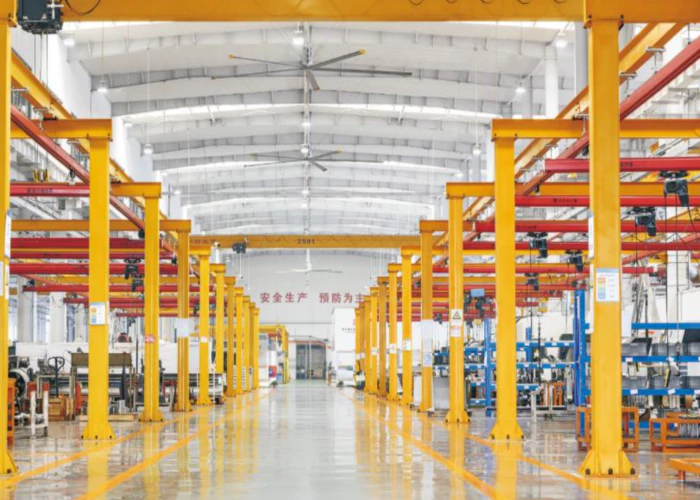
We believe in showing, not just telling. Before we get into the metallurgy, why don’t you take a walk through our production floor? You can see exactly how we hone our tubes for that low-friction finish.
The trick to a great booster cylinder isn’t just making it strong; it’s making it sensitive. We use a specialized 27SiMn tubing, which allows us to keep the walls thinner and the unit lighter without sacrificing burst pressure safety. But the real game-changer is the seal interface. We utilize PTFE-loaded bronze composite seals that offer almost zero static friction. This means when the computer (or your finger) says “move 2mm,” it moves exactly 2mm. No jumping, no shuddering. Just smooth, linear flow control.
The Engineering Reality: Why “Light Load” is Harder than Heavy Load
It sounds counterintuitive, right? Surely lifting a 4-ton screed is harder than moving a 50kg flow gate? Not hydraulically. When you have a heavy load, the pressure is always high, which helps energize the seals. With these light-load booster cylinders, the pressure can be very low. If the seal relies solely on pressure to flare out and seal, it will leak at low pressure. If you pre-load the seal too much to stop the leak, you create friction.
We’ve seen so many failures in the rainy Dutch autumns where moisture gets past a loose wiper seal, corrodes the rod, and then tears up the main seal. That’s why we combine our low-friction internal seals with a double-lip wiper and a high-grade hard chrome plating on the rod. We polish the rod to a mirror finish (Ra < 0.2µm) to ensure the seal glides effortlessly. This reduces the “breakout force” needed to start the movement, giving you that buttery smooth control over the asphalt mix.

Strategic Analysis: The Booster Cylinder Landscape
We are transparent about where we fit in the market. We aren’t the cheapest option you’ll find on Alibaba, but we aren’t charging OEM “box prices” either. Here is a SWOT breakdown of upgrading to our Precision Booster series:
Strengths
- Precision Control: Near-zero stick-slip for accurate material metering.
- Weight Saving: 27SiMn construction reduces unsprung weight.
- Corrosion Defense: Chrome plating tested for damp European climates.
Weaknesses
- Seal Delicacy: Low-friction seals are more sensitive to contamination than standard rough seals.
- Cost: Higher processing cost due to precision honing requirements.
Opportunities
- Automation: Perfect fit for modern pavers with automated material feed sensors.
- Retrofit Market: Upgrading older machines to compete with newer, smoother pavers.
Threats
- Supply Chain: Fluctuations in high-grade seal availability (Merkel/Hallite).
- Cheap Copies: Visual lookalikes that lack the internal honing quality.
Case Study: Solving “The Wave” in Flevoland
Let’s look at a real-world scenario. A paving contractor based in Flevoland (let’s call them “Dutch Pave Masters”) was working on a long stretch of provincial road. They were using a highly automated material transfer system, but they kept getting a “wave” pattern in the asphalt supply pile in front of the screed. The sensors were sending the signal to open the gates, but the gates were lagging.
The delay was caused by the friction in the original flow control cylinders. By the time the cylinder overcame its own internal friction to open, the sensor was already screaming for “full flow,” causing a surge. Then it would slam shut. It was oscillating.
The Solution:
We replaced the four main flow gate cylinders with our Low-Friction Booster Series. We used a composite guide ring and a low-hysteresis piston seal. We also slightly adjusted the port size to allow for smoother fluid entry.
The Result:
The system stabilized instantly. The gates began to “flutter” gently, making micro-adjustments exactly as the computer intended, rather than jerking open and closed. The material head in front of the screed remained perfectly constant, resulting in a flawless mat density.
Voices from the Field
“I used to fight the flow gates all day. It was tap-tap-BANG. With these new cylinders, I can just nudge the switch, and it responds. Makes my day a lot less stressful.”
– Henk d. J., Paver Operator, Utrecht
“We work in the rain a lot. The rust on the old rods was killing the seals. The chrome on these Ever Power units seems much thicker. No pitting so far.”
– Marco V., Equipment Mechanic
“Great response time on the quote. I sent a photo of the old part, and they identified it and offered a better version for a fair price.”
– Anouk B., Procurement Manager
Technical Specifications: Precision in Numbers
We don’t deal in guesswork. Here are the hard specs for our booster and flow control line. Note the focus on material quality and seal technology.
| Feature | Specification Details |
|---|---|
| Application | Flow Gate / Auger Lift / Hopper Wing Assist |
| Tube Material | 27SiMn (High Strength, Thin Wall Capable) |
| Rod Surface | Hard Chrome (>25µm), Ra < 0.2µm |
| Seal Technology | Low-Friction PTFE/Bronze (Merkel/Hallite) |
| Working Pressure | 160 Bar – 210 Bar |
| Temperature Range | -20°C to +120°C (Standard) / +200°C (Viton Option) |
| Mounting | Clevis / Eye / Custom Trunnion |
Beyond the Flow Gate: Where Else Does Precision Matter?
The technology inside these booster cylinders isn’t limited to just one spot on the paver. Any application that requires fine adjustment without heavy lifting is a candidate for this “Low Friction, High Response” design.

- ✔
Auger Tunnel Adjustment: Moving the tunnel shields requires smooth action to avoid jamming against the mix.
- ✔
Operator Control Consoles: Hydraulic height adjustment for the operator station needs to be smooth, not jerky.
- ✔
Road Milling Machines: Scraper plate cylinders often face similar “light load” issues where vibration causes seal wear.
Customization: We Engineer for Your Fleet
Here is the situation we see all the time: You have a reliable paver that is 10 years old. The OEM wants a fortune for a replacement cylinder, or worse, the part is obsolete. That is where we step in. We don’t just pull boxes off a shelf; we engineer solutions.
You can send us the physical unit, or just a sketch with the pin diameters, retracted length, and stroke. We can reverse engineer it, often improving on the original design by using modern seal materials that weren’t available when the machine was built. We can adjust port angles to make hose routing easier, or add protective bellows if you are working in particularly sandy environments.
Expert Talk: Frequently Asked Questions
Why does my paver flow gate cylinder move in jerky, unpredictable steps?
It is usually the dreaded “stick-slip” phenomenon. Standard seals have high breakout friction, meaning the cylinder waits for pressure to build and then jumps. Our low-friction seals eliminate this for smooth flow.
How quickly can you ship custom booster cylinders to Rotterdam or Amsterdam?
We understand that downtime on a paving project is a disaster. For custom orders, we generally look at 15-20 days of production, with expedited air freight directly to Schiphol or sea freight to Rotterdam.
Is 27SiMn steel really better than standard ST52 for light-load cylinders?
Yes, absolutely. 27SiMn has significantly higher tensile strength, allowing us to use thinner walls to reduce weight without sacrificing durability, which improves the response speed of the hydraulic system.
Can you replicate an obsolete booster cylinder from an old Dynapac or Vogele paver?
That is our specialty. Just send us the old unit or the basic pin-to-pin dimensions and stroke. We reverse engineer it, often upgrading the seals to modern standards while keeping the fit perfect.
Do your cylinders come with a warranty against seal leakage in wet climates?
We stand behind our build quality. We offer a 12-month warranty, and our chrome plating is specifically tested to resist the damp, salty air common in Dutch coastal regions.
Is erratic material flow ruining your mat quality?
Don’t let stick-slip compromise your paving. Upgrade to precision hydraulics.