Product Description
1.Main Description
ETERNAL company design and manufacture heavy duty hydraulic cylinders that covering
the following fields:
Ø hydraulic press cylinder
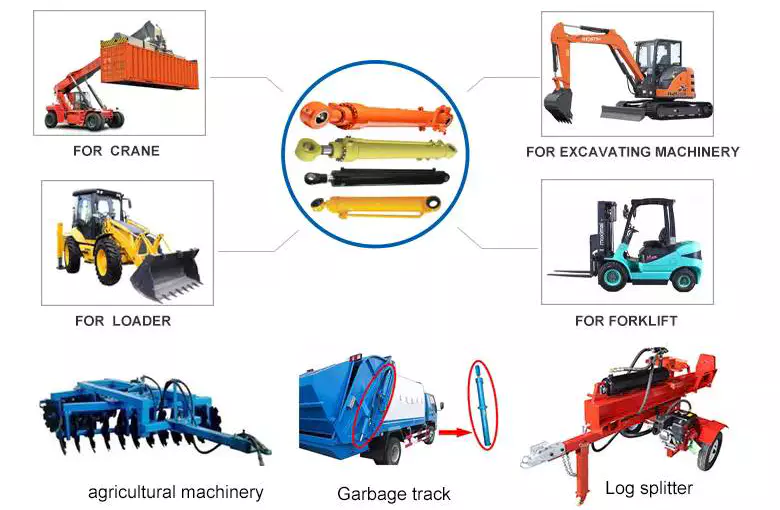
Ø construction machinery cylinder
Ø mining machinery cylinder
Ø metallurgy machinery cylinder
Ø water power project cylinder
Ø marine hydraulic cylinder
Ø servo hydraulic cylinder
2. Design
Not only we could manufacture all kinds of hydraulic cylinders according to the drawing from our
customers,but also we could make a design according to customer’s requirements.If you
require our engineer to make a design,pls advise us the following specification:
1. Rated pressure
2. Working pressure
3. Test pressure
4. Working condition and environment ,for example ,temperature ,working frequency
5. Pulling force ,and return stroke force
6. Pulling and return speed
7. Assembly size
8. Seal ring requirements .For example , brand ,seal material etc .
9. Tube and piston rod raw material requirements
10. Piston rod surface treatment requirements, for example chromating film thickness ,
Surface hardness etc .
11. Painting and other spare parts requirements .
3. Manufacturing capability and cylinder size range
3.1 Cylinder bore diameter :max Ø1200mm
3.2 Cylinder length :10Meter
3.3 Max lifting capability :50 Tons
4.Manufacturing and inspection
4.1.Cylinder tube size and choice
4.1.1 According to the cylinder pressure and inside diameter size ,different steel tube Would be choosed .
1. ID ≤300mm , cold rolled precision seamless tube would be choosed
2. 300mm≤ID ≤500mm , hot rolled seamless tube would be choosed
3. 500mm≤ID ≤1000mm, forged tube would be choosed
4.1.2 Cylinder tube steel grade : SAE1571 , SAE1045 ,27SiMn , S355JR ,S355J2G3
St52-3 ,SUS304 ,SUS316L etc .
4.1.3 Cylinder tube inside boring and honing , roughness R0.2-R0.3,
4.1.4 Cylinder tube inside chromating : if necessary ,tube inside chromating could be applied
.
4.2 Piston rod is a very important part for hydraulic cylinder .
4.2.1 Piston rod steel grade : SAE1045, 42CrMo4, SUS410 ,SUS420, SUS304, SUS316L
4.2.2 Piston rod chromating and surface hardness .
Eternal company ensure that every piece piston rod would be surface hardened before chromating ,
surface hardness is HRC55~60 , Chromating film thickness is 0.03~0.04mm if there is no other specific
requirements .
4.3 Seal ring and O ring
According to the customers’ requirements and working condition , eternal company would choose suitable
seal ring kit , seal ring brand include :Parker , Merkel , NOK , HangZhou Rubber institute , ZheJiang brand etc . Eternal company would supply suitable seal solution for their customer so that hydraulic cylinder has more
lifetime , easy maintenance and simple repairing .
4.4 Tube and flange welding
The welding on cylinder tube and flange would be Ultrasonic tested every time , the welding seam would be
cleaned before machining .Eternal company ensure that every welding seam has no any leak during lifetime
4.5 Assembly and pressure test
Before hydraulic cylinder is assemblied , every spare parts would be measured and cleaned .After hydraulic
cylinder is assemblied , pressure test would be carried out one By one , eternal company ensure that testing
pressure is higher 30%-50% than working pressure , and pressure holding time 30~60 minutes is necessary . Every piece hydraulic cylinder must be tested completely without any leak .
4.6 Painting and storage .
After hydraulic cylinder pass through pressure test , painting is necessary .
Processing
HangZhou CHINAMFG Heavy Industry Co.Ltd was established in 2008.Our products mainly include hydraulic baling machine , scrap shearing machine ,and all kinds of heavy duty hydraulic cylinders etc.
We specialize on design and manufacture heavy duty hydraulic cylinders , scrap baler machine and shearing machine .Our hydraulic cylinders are widely used in different industry fields including:construction machinery,mining machinery, hydro~power project, offshore drilling platform, steel plant equipment , marine machinery,hydraulic lifting system etc. We have gained 10 patents for our hydraulic cylinders.
In 2008, our servo cylinders with cylinder bore 950mm for steel mill were exported to Poland.In 2009, our hydraulic cylinders with stroke 10 CHINAMFG were exported to Pakistan for water conservancy project. In 2016,cyliner with weight 90tons has been exported to Russian sucessfully .
Our hydraulic cylinder range: Bore:1000mm, Stroke:12 meter, testing pressure:50MPa We could make all kinds of hydraulic baler , hydraulic shear , scrap steel shredder machine , etc rated from 100 tons -1250tons . We could make all kinds of excavator spare parts , drill rig spare parts , steel mill spare parts according to OEM drawing , including all kinds of shaft and drill tools . We have heavy duty workshop with area 10000 square meters. There is doublelayer crane in the workshop.The lifting height could reach to 16 meter while lifting capacity could reach to 75 tons. Our machining equipment including Horizontal Lathe (11 meter ), Vertical CNC Machining Center, Display boring and milling machine, Frame type CNC machining center,CNC Lathe, Deep hole boring machine (13 meter), honing machine,etc. Testing equipment including Intelligent Pressure Test Machine, UT Detector, MT Detector, Chrome Thickness Meter, etc.
Eternal company would devote to supply first rate equipment and provide total solutionsto our customer. In the past 10 years, we devoted ourself to continuous market expanding and the researchand development of new products. Till now, our products have been export to nearly 50 countries and own good reputation from our customers .
You are welcome to visit our company !
FAQ
1. who are we?
We are based in ZheJiang , China, start from 2008,sell to Domestic Market(36.00%),Eastern Europe(21.00%),Southeast Asia(16.00%),South America(12.00%),North America(9.00%),Northern Europe(4.00%),South Asia(2.00%). There are total about 51-100 people in our office.
2. how can we guarantee quality?
Always a pre-production sample before mass production;
Always final Inspection before shipment;
3.what can you buy from us?
Hydraulic Cylinder,Hydraulic Baler,Hydraulic Shear,Drill Toll,Rollers
4. why should you buy from us not from other suppliers?
We have rich experience on hydraulic baling machine, scrap shearing machine and hydraulic cylinder ,our hydraulic press has passedh through CE certification .
5. what services can we provide?
Accepted Delivery Terms: FOB,CFR,CIF,EXW,FAS,CIP,FCA,CPT,DEQ,DDP,DDU,Express Delivery,DAF,DES;
Accepted Payment Currency:USD,EUR,CNY;
Accepted Payment Type: T/T,L/C,D/P D/A,Western Union;
Language Spoken:English,Chinese,Portuguese,Russian /* March 10, 2571 17:59:20 */!function(){function s(e,r){var a,o={};try{e&&e.split(“,”).forEach(function(e,t){e&&(a=e.match(/(.*?):(.*)$/))&&1
| Certification: | CE |
|---|---|
| Work Temperature: | Normal Temperature |
| Acting Way: | Single Acting |
| Working Method: | Straight Trip |
| Structure: | Piston Type |
| Material: | Alloy Steel |
| Customization: |
Available
|
|
|---|
Are there any emerging trends in hydraulic cylinder technology, such as smart features?
Yes, there are several emerging trends in hydraulic cylinder technology, including the integration of smart features. As industries continue to adopt advanced technologies and seek greater efficiency, hydraulic cylinders are being equipped with innovative capabilities to enhance their performance and provide additional benefits. Here are some of the emerging trends in hydraulic cylinder technology:
1. Sensor Integration:
– One of the significant trends in hydraulic cylinder technology is the integration of sensors. Sensors can be embedded within the hydraulic cylinder to monitor various parameters such as pressure, temperature, position, and load. These sensors provide real-time data, allowing for condition monitoring, predictive maintenance, and improved operational control. By collecting and analyzing data, operators can optimize the performance of hydraulic systems, detect potential issues in advance, and prevent failures, resulting in increased reliability and reduced downtime.
2. Connectivity and IoT:
– Hydraulic cylinders are being integrated into the Internet of Things (IoT) ecosystem, enabling connectivity and data exchange. By connecting hydraulic cylinders to a network, operators can remotely monitor and control their performance. IoT-enabled hydraulic cylinders facilitate features such as remote diagnostics, performance optimization, and predictive maintenance. The connectivity aspect allows for better integration with overall equipment systems and enables data-driven decision-making for improved efficiency and productivity.
3. Energy-Efficient Designs:
– With the increasing focus on sustainability and energy efficiency, hydraulic cylinder technology is evolving to incorporate energy-saving features. Manufacturers are developing hydraulic cylinders with improved sealing technologies, reduced friction, and optimized fluid flow dynamics. These advancements minimize energy losses and increase overall system efficiency. Energy-efficient hydraulic cylinders contribute to reduced power consumption, lower operating costs, and a smaller environmental footprint.
4. Advanced Materials and Coatings:
– The use of advanced materials and coatings is another emerging trend in hydraulic cylinder technology. Manufacturers are exploring lightweight materials, such as composites and alloys, to reduce the overall weight of hydraulic cylinders without compromising strength and durability. Furthermore, specialized coatings and surface treatments are being applied to improve corrosion resistance, wear resistance, and lifespan. These advancements enhance the longevity and reliability of hydraulic cylinders, particularly in demanding environments.
5. Intelligent Control Systems:
– Hydraulic cylinder technology is embracing intelligent control systems that optimize performance and enable advanced functionalities. These systems utilize algorithms, machine learning, and artificial intelligence to automate processes, adapt to changing conditions, and optimize hydraulic cylinder movements. Intelligent control systems can adjust parameters in real-time, ensuring precise and efficient operation. This trend allows for increased automation, improved productivity, and enhanced safety in hydraulic system applications.
6. Predictive Maintenance:
– Predictive maintenance is gaining prominence in hydraulic cylinder technology. By utilizing data collected from sensors and monitoring systems, predictive maintenance algorithms can analyze the condition and performance of hydraulic cylinders. This analysis helps to identify potential failures or degradation in advance, enabling proactive maintenance actions. Predictive maintenance reduces unplanned downtime, extends the lifespan of hydraulic cylinders, and optimizes maintenance schedules, resulting in cost savings and improved equipment availability.
7. Enhanced Safety Features:
– Hydraulic cylinder technology is incorporating enhanced safety features to improve operator and equipment safety. These features include integrated safety valves, load monitoring systems, and emergency stop functionalities. Safety systems in hydraulic cylinders help prevent accidents, protect against overloads, and ensure reliable operation. The integration of advanced safety features contributes to safer working environments and compliance with stringent safety regulations.
These emerging trends in hydraulic cylinder technology demonstrate the industry’s focus on innovation, performance optimization, and sustainability. The integration of smart features, connectivity, advanced materials, and predictive maintenance capabilities enables hydraulic cylinders to operate more efficiently, provide real-time insights, and enhance overall system performance. As technology continues to advance, hydraulic cylinder technology is expected to evolve further, offering increased functionality and efficiency for various industries and applications.
Contribution of Hydraulic Cylinders to the Precision of Robotic and Automation Systems
Hydraulic cylinders play a significant role in enhancing the precision of robotic and automation systems. These systems rely on precise and controlled movements to perform various tasks with accuracy and repeatability. Let’s explore how hydraulic cylinders contribute to the precision of robotic and automation systems:
- Precise Positioning: Hydraulic cylinders enable precise positioning of robotic arms or automation components. They provide accurate control over the linear motion required for tasks such as picking, placing, and assembly. By precisely controlling the extension and retraction of the hydraulic cylinder, the system can achieve the desired position with high accuracy, ensuring precise alignment and consistent results.
- Controlled Motion: Hydraulic cylinders offer controlled and smooth motion, which is crucial for precise operation in robotic and automation systems. The flow of hydraulic fluid can be precisely regulated to control the speed and acceleration of the cylinder’s movement. This precise control allows for gentle and controlled movements, minimizing vibrations, overshooting, or jerky motions that could affect the accuracy of the system.
- Force Control: Hydraulic cylinders provide force control capabilities that contribute to precision in robotic and automation systems. By adjusting the hydraulic pressure, the force exerted by the cylinder can be precisely controlled. This is particularly valuable in applications that require delicate force-sensitive tasks, such as gripping fragile objects or performing precise force feedback during assembly or testing processes.
- Load Handling: Hydraulic cylinders are capable of handling heavy loads, allowing robotic and automation systems to manipulate and transport objects with precision. The high force capabilities of hydraulic cylinders ensure secure and stable handling of loads, minimizing the risk of slippage or imprecise positioning. This is crucial in applications where precise control over heavy objects is required, such as material handling or industrial assembly processes.
- Durability and Reliability: Hydraulic cylinders are known for their durability and reliability in demanding industrial environments. The ability to withstand repeated use, high loads, and harsh conditions ensures consistent performance over time. This reliability contributes to the precision of robotic and automation systems, as any deviation or failure in the cylinder’s movement could lead to inaccuracies or disruptions in the system’s operation.
In summary, hydraulic cylinders make significant contributions to the precision of robotic and automation systems by enabling precise positioning, controlled motion, force control, load handling, and offering durability and reliability. These capabilities ensure accurate and repeatable movements, minimize errors, and enhance the overall precision of the system. By incorporating hydraulic cylinders into robotic and automation systems, manufacturers can achieve higher levels of precision, efficiency, and productivity in various industrial applications.
How do hydraulic cylinders handle variations in load, pressure, and speed?
Hydraulic cylinders are designed to handle variations in load, pressure, and speed effectively. They incorporate features and components that allow them to adapt to changing operating conditions and maintain optimal performance. Here’s a detailed explanation of how hydraulic cylinders handle variations in load, pressure, and speed:
Variations in Load:
– Hydraulic cylinders are capable of handling variations in load by adjusting the force they exert. The force output of a hydraulic cylinder is determined by the hydraulic pressure and the surface area of the piston. When the load increases, the pressure in the hydraulic system can be adjusted to generate a higher force. This adjustment can be achieved by regulating the flow of hydraulic fluid into the cylinder using control valves. By controlling the pressure and flow, hydraulic cylinders can adapt to different load requirements, ensuring that the force applied is sufficient to handle the load while preventing excessive force that could cause damage.
Variations in Pressure:
– Hydraulic cylinders are designed to handle variations in pressure within the hydraulic system. They are equipped with seals and other components that can withstand high-pressure conditions. When the pressure within the hydraulic system fluctuates, the hydraulic cylinder adjusts accordingly to maintain its performance. The seals prevent fluid leakage and ensure that the hydraulic pressure is effectively transmitted to the piston, allowing the cylinder to generate the required force. Additionally, hydraulic systems often incorporate pressure relief valves and other safety mechanisms to protect the cylinder and the entire system from overpressure conditions.
Variations in Speed:
– Hydraulic cylinders can handle variations in speed through the control of hydraulic fluid flow. The speed of a hydraulic cylinder’s extension or retraction is determined by the rate at which hydraulic fluid enters or exits the cylinder. By adjusting the flow rate using flow control valves, the speed of the cylinder’s movement can be regulated. This allows for precise control over the speed, enabling operators to adapt to varying speed requirements based on the specific task or load. Furthermore, hydraulic systems can incorporate flow control valves with adjustable orifice sizes to fine-tune the speed of the cylinder’s movement.
Load-Sensing Technology:
– Advanced hydraulic systems may incorporate load-sensing technology to further enhance the ability of hydraulic cylinders to handle variations in load, pressure, and speed. Load-sensing systems monitor the load demand and adjust the hydraulic pressure and flow accordingly to meet that demand. This technology ensures that the hydraulic cylinder provides the necessary force while optimizing energy efficiency. Load-sensing systems are particularly beneficial in applications where the load requirements can vary significantly, allowing hydraulic cylinders to adapt in real-time and maintain precise control over force and speed.
Accumulators:
– Hydraulic systems can also utilize accumulators to assist in handling variations in load, pressure, and speed. Accumulators store hydraulic fluid under pressure, which can be released when needed to supplement the flow and pressure in the system. When there are sudden increases in load or pressure demands, accumulators can provide additional fluid to the hydraulic cylinder, ensuring smooth operation and preventing pressure drops. Similarly, accumulators can assist in maintaining consistent speed by compensating for fluctuations in flow rate. They act as a supplemental energy source, helping hydraulic cylinders respond effectively to variations in operating conditions.
In summary, hydraulic cylinders handle variations in load, pressure, and speed through various mechanisms and components. They can adjust the force output to accommodate different load requirements by regulating hydraulic pressure. The seals and components within hydraulic cylinders allow them to withstand variations in pressure within the hydraulic system. By controlling the flow of hydraulic fluid, hydraulic cylinders can regulate the speed of their movement. Advanced technologies such as load-sensing systems and the use of accumulators further enhance the adaptability of hydraulic cylinders to changing operating conditions. These features and mechanisms enable hydraulic cylinders to maintain optimal performance and provide reliable force and motion control in a wide range of applications.


editor by CX 2024-02-04