Product Description
Product Description
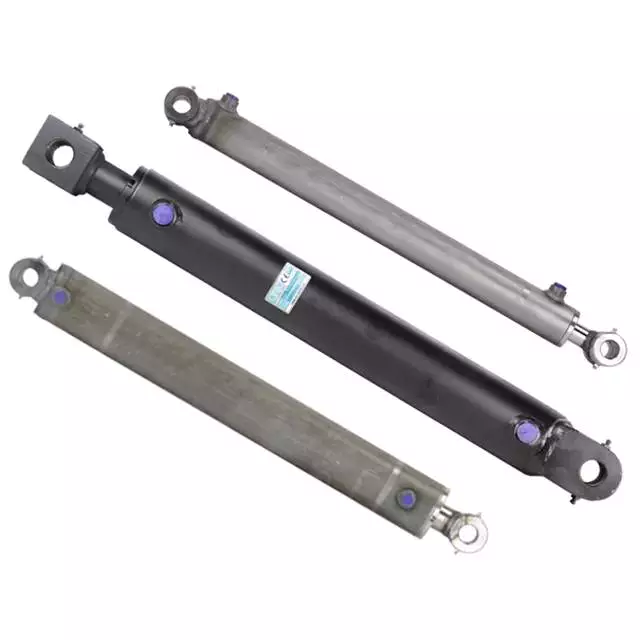
ROD: Steel 1045, rod with 28-32 HRC hardness, 0.001″ chrome thickness ASTM B117-18 salt spray testing up to 96 hours.
TUBE: Precision honed steel for extended seal life.
GLAND: Ductile Iron ASTM A536 65-45-12.
PISTON: Ductile Iron ASTM A536 65-45-12, for increased durability.
BASE END/ROD CELVIS: Casting-steel welding with tube,pins and clips included.
PORTS: Standard SAE(NPT Available CHINAMFG request).
PIN: Steel, zinc plated.
SEALS: Top quality, North American Seals.
CONSTRUCTIN: Heavy Duty welded construction
PAINT: High quality paint for corrosion resistance up to 360 hours. (Standard color: Black).
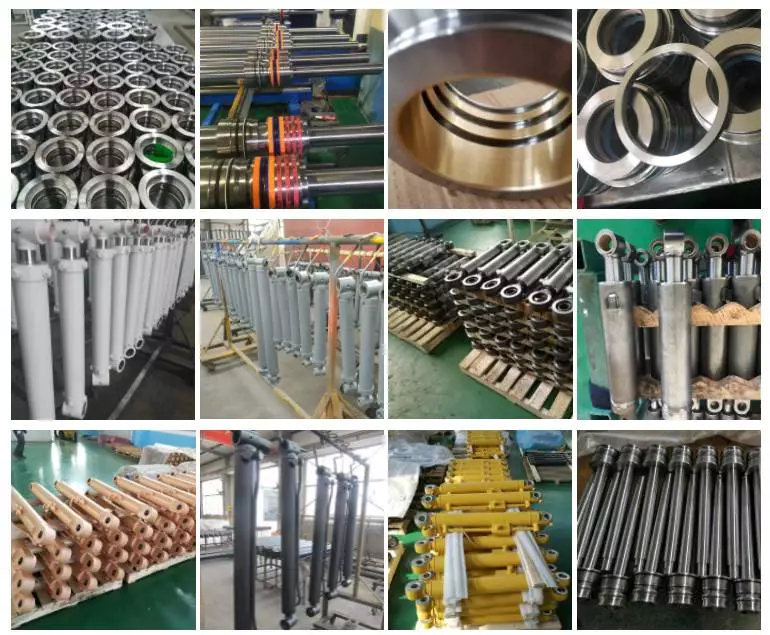
Detailed Photos
Cylinder Advantages:
1. High Durability: The hydraulic cylinder is designed to withstand high pressure and heavy loads, ensuring long-lasting performance in even the most demanding applications.
2. Customizable Options: Our hydraulic cylinders can be customized to fit your specific needs and requirements, including bore sizes, stroke lengths, and mounting options.
3. Efficient Operation: The hydraulic cylinder provides efficient power transfer, allowing for smooth and precise movement of heavy equipment and machinery.
4. Low Maintenance: The hydraulic cylinder is designed for easy maintenance and repair, with minimal downtime required for servicing.
5. Wide Range of Applications: Our hydraulic cylinders can be used in a variety of industries, including construction, agriculture, mining, and transportation.
6. Quality Assurance: Our hydraulic cylinders are manufactured to strict quality standards, ensuring reliable and consistent performance.
7. Competitive Pricing: We offer competitive pricing on our hydraulic cylinders, making them a cost-effective solution for your equipment needs.
In summary, our hydraulic cylinders provide high durability, customizable options, efficient operation, low maintenance, a wide range of applications, quality assurance, and competitive pricing, making them an excellent choice for your equipment needs.
About US
HangZhou LD Cylinder Co., Ltd. was founded in 1988, LD covers an area of 380,000sq.ft with more than 150 workers.Through the construction of modern factories, enterprises have realized the transformation from traditional manufacturing to a new model of intelligent manufacturing.
LD application of highly intelligent system software, advanced process flow, automated production lines, innovative technology research and development design, It makes LD developed into a high-tech professional production of hydraulic cylinder Company.
FAQ
Q1. What is LD product’s quality assurance?
A1:100% inspection for each product before shipping with inspection rereport for tracking.
Q2: How long is the warranty on LD products?
A2: The warranty is 2 years for general products since the date of shipment.
Q3: How LD deal with the quality problem during warranty period?
A3: 1. LD will take the corresponding cost caused by customer local reparing.
2. LD will provide the product by free if the repair cost is higher than the product value, but the freight involved shall be borne by the customer side.
Q4: How to ensure the order can be shipped on time?
A4: LD will send the “production schedule” every week after receiving customers’ orders. If any delays, LD will inform customers 3 weeks in advance, so as to facilitate the customer to arrange the schedule.
Q5: Does LD offer delivery service?
A5: Yes. LD has deep cooperation with logistics companies all over the world to provide customers with quick and convenient “Door-to- Door services”,including sea, air and express.
Q6: How LD control the product quality?
A6:1. Raw materials: We will test the material of each batch of raw materials we receive, and the piston rod will be tested with salt spray. This is to ensure that the material of our products meets the requirements at the beginning.
2. Processing: We have the leading machining equipment, and obtained ISO9001 certification.
3. Welding: Our factory is equipped with welding robots, and has obtained the AWS certification.
4. Assembly pressure test: 100% testing with OQC report for cHangZhou. The seals we use are: Hallite, Aston and Gapi.
| Certification: | ISO9001 |
|---|---|
| Pressure: | Medium Pressure |
| Work Temperature: | Normal Temperature |
| Acting Way: | Double Acting |
| Working Method: | Straight Trip |
| Adjusted Form: | Regulated Type |
| Samples: |
US$ 299/Piece
1 Piece(Min.Order) | |
|---|
| Customization: |
Available
|
|
|---|
What role do hydraulic cylinders play in optimizing power distribution and efficiency?
Hydraulic cylinders play a significant role in optimizing power distribution and efficiency in various applications. They are widely used in industries such as construction, manufacturing, agriculture, and transportation, where efficient power transmission and precise control are essential. Here’s a detailed explanation of the role hydraulic cylinders play in optimizing power distribution and efficiency:
1. Power Transmission:
– Hydraulic cylinders serve as a means of power transmission in hydraulic systems. They convert the hydraulic fluid’s pressure and flow into linear mechanical force, allowing for controlled movement of loads. Hydraulic cylinders efficiently transmit power from an energy source, such as a hydraulic pump, to the working components of the system. The ability to transmit power over long distances with minimal energy losses makes hydraulic cylinders an efficient choice for various applications.
2. High Power Density:
– Hydraulic cylinders offer high power density, meaning they can generate significant force relative to their size. This characteristic enables compact and lightweight hydraulic systems while delivering substantial power output. Hydraulic cylinders can produce high forces even at low operating speeds, making them suitable for heavy-duty applications. The high power density of hydraulic cylinders contributes to the optimization of power distribution by maximizing the force output while minimizing the system’s overall size and weight.
3. Load Handling and Control:
– Hydraulic cylinders provide precise load handling and control capabilities, contributing to power distribution optimization. By adjusting the flow of hydraulic fluid to the cylinder, operators can control the speed, force, and direction of the cylinder’s movement. This level of control allows for accurate positioning and smooth operation of loads, reducing energy waste and improving overall system efficiency. Hydraulic cylinders enable precise load handling and control, leading to optimal power distribution and improved energy efficiency.
4. Variable Force and Speed:
– Hydraulic cylinders offer the advantage of variable force and speed control. By regulating the flow of hydraulic fluid, the force exerted by the cylinder can be adjusted as needed. This flexibility enables hydraulic systems to adapt to different load requirements, optimizing power distribution. Hydraulic cylinders can operate at varying speeds, allowing for efficient power distribution across different stages of an operation. The ability to vary force and speed according to the application’s demands enhances energy efficiency and overall system performance.
5. Energy Recovery:
– Hydraulic cylinders can contribute to energy efficiency through energy recovery mechanisms. In certain applications, hydraulic systems utilize accumulators to store and release energy. Hydraulic cylinders can store energy during deceleration or when the load is lowering, and then release it to assist in subsequent movements. This energy recovery process reduces the overall energy consumption of the system, optimizing power distribution and improving efficiency. The ability to recover and reuse energy enhances the sustainability and cost-effectiveness of hydraulic systems.
6. Integrated Control Systems:
– Hydraulic cylinders can be integrated into advanced control systems, such as servo control or proportional control systems. These systems utilize electronic feedback, sensors, and control algorithms to optimize power distribution and efficiency. By continuously monitoring and adjusting the flow of hydraulic fluid, the control systems ensure that the cylinder operates at the most efficient operating point, minimizing energy losses and maximizing power distribution. Integrated control systems enhance the overall energy efficiency of hydraulic systems and contribute to power optimization.
7. System Efficiency Improvement:
– Hydraulic cylinders, when combined with other components in a hydraulic system, contribute to overall system efficiency improvement. The integration of efficient hydraulic pumps, valves, and actuators helps minimize energy losses, pressure drops, and heat generation. By optimizing the design and configuration of the hydraulic system, including the selection of appropriate cylinder sizes, operating pressures, and control strategies, power distribution can be optimized, leading to improved energy efficiency. Proper system design and component selection are critical for achieving optimal power distribution and efficiency.
In summary, hydraulic cylinders play a crucial role in optimizing power distribution and efficiency in various applications. They enable efficient power transmission, offer high power density, provide precise load handling and control, allow for variable force and speed control, facilitate energy recovery, can be integrated into advanced control systems, and contribute to overall system efficiency improvement. By leveraging the capabilities of hydraulic cylinders, industries can achieve better power utilization, reduced energy consumption, and improved system performance.
Customization of Hydraulic Cylinders for Marine and Offshore Applications
Yes, hydraulic cylinders can be customized for use in marine and offshore applications. These environments present unique challenges, such as exposure to corrosive saltwater, high humidity, and extreme operating conditions. Customization allows hydraulic cylinders to meet the specific requirements and withstand the harsh conditions encountered in marine and offshore settings. Let’s delve into the details of how hydraulic cylinders can be customized for marine and offshore applications:
- Corrosion Resistance: Marine and offshore environments expose hydraulic cylinders to corrosive elements, such as saltwater. To mitigate corrosion, hydraulic cylinders can be customized with materials and surface treatments that provide enhanced corrosion resistance. For example, cylinders can be constructed from stainless steel or coated with protective layers like chrome plating or specialized coatings to withstand the corrosive effects of saltwater.
- Sealing and Environmental Protection: Hydraulic cylinders for marine and offshore applications require robust sealing systems to prevent water ingress and protect internal components. Customized sealing solutions, such as high-quality seals, wipers, and gaskets, can be employed to ensure effective sealing and resistance to water, debris, and contaminants. Additionally, hydraulic cylinders can be designed with protective features like bellows or boots to shield vulnerable areas from environmental elements.
- High-Pressure and Shock Resistance: Marine and offshore operations may involve high-pressure hydraulic systems and encounters with dynamic loads or shocks. Customized hydraulic cylinders can be engineered to withstand these demanding conditions. They can be designed with reinforced construction, thicker walls, and specialized components to handle high-pressure applications and absorb shock loads, ensuring reliable performance and durability.
- Temperature and Fluid Compatibility: Marine and offshore applications can expose hydraulic cylinders to extreme temperature variations and specific fluid requirements. Customization allows the selection of materials, seals, and fluids compatible with the anticipated temperature range and the specific fluid being used. Hydraulic cylinders can be tailored to maintain optimal performance and reliability under challenging temperature conditions and with the designated fluid type.
- Mounting and Integration: Customized hydraulic cylinders can be designed to facilitate easy integration and mounting within marine and offshore machinery. Mounting options can be tailored to suit the available space and structural requirements of the equipment. Additionally, customized hydraulic cylinder designs can incorporate features for easy maintenance, accessibility, and connection to the hydraulic system, ensuring convenient installation and serviceability in marine and offshore applications.
In summary, hydraulic cylinders can be customized to meet the unique demands of marine and offshore applications. Customization enables the integration of corrosion-resistant materials, robust sealing systems, high-pressure and shock-resistant designs, temperature and fluid compatibility, as well as optimized mounting and integration features. By tailoring hydraulic cylinders to the specific requirements of marine and offshore environments, reliable performance, extended service life, and efficient operation can be achieved in these challenging operating conditions.
What are the common signs of wear or leakage that indicate hydraulic cylinder issues?
Hydraulic cylinders are critical components in hydraulic systems, and wear or leakage can lead to performance issues and potential system failures. It is important to be aware of the common signs that indicate hydraulic cylinder problems. Here’s a detailed explanation of the common signs of wear or leakage that indicate hydraulic cylinder issues:
1. Fluid Leakage:
– Fluid leakage is one of the most obvious signs of hydraulic cylinder problems. If you notice hydraulic fluid leaking from the cylinder, it indicates a seal failure or damage to the cylinder. Leaking fluid may be visible around the rod, piston, or cylinder body. It is important to address fluid leakage promptly as it can lead to a loss of system efficiency, contamination of the surrounding environment, and potential damage to other system components.
2. Reduced Performance:
– Wear or internal damage to the hydraulic cylinder can result in reduced performance. You may notice a decrease in the cylinder’s force output, slower operation, or difficulty in extending or retracting the cylinder. Reduced performance can be indicative of worn seals, damaged piston or rod, internal leakage, or contamination within the cylinder. Any noticeable decrease in the cylinder’s performance should be inspected and addressed to prevent further damage or system inefficiencies.
3. Abnormal Noise or Vibrations:
– Unusual noise or vibrations during the operation of a hydraulic cylinder can indicate internal wear or damage. Excessive noise, knocking sounds, or vibrations that are not typical for the system may suggest problems such as worn bearings, misalignment, or loose internal components. These signs should be investigated to identify the source of the issue and take appropriate corrective measures.
4. Excessive Heat:
– Overheating of the hydraulic cylinder is another sign of potential issues. If the cylinder feels excessively hot to the touch during normal operation, it may indicate problems such as internal leakage, fluid contamination, or inadequate lubrication. Excessive heat can lead to accelerated wear, reduced efficiency, and overall system malfunctions. Monitoring the temperature of the hydraulic cylinder is important to detect and address potential problems.
5. External Damage:
– Physical damage to the hydraulic cylinder, such as dents, scratches, or bent rods, can contribute to wear and leakage issues. External damage can compromise the integrity of the cylinder, leading to fluid leakage, misalignment, or inefficient operation. Regular inspection of the cylinder’s external condition is essential to identify any visible signs of damage and take appropriate actions.
6. Seal Failure:
– Hydraulic cylinder seals are critical components that prevent fluid leakage and maintain system integrity. Signs of seal failure include fluid leakage, reduced performance, and increased friction during cylinder operation. Damaged or worn seals should be replaced promptly to prevent further deterioration of the cylinder’s performance and potential damage to other system components.
7. Contamination:
– Contamination within the hydraulic cylinder can cause wear, damage to seals, and overall system inefficiencies. Signs of contamination include the presence of foreign particles, debris, or sludge in the hydraulic fluid or visible damage to seals and other internal components. Regular fluid analysis and maintenance practices should be implemented to prevent contamination and address any signs of contamination promptly.
8. Irregular Seal Wear:
– Hydraulic cylinder seals can wear over time due to friction, pressure, and operating conditions. Irregular seal wear patterns, such as uneven wear or excessive wear in specific areas, may indicate misalignment or improper installation. Monitoring the condition of the seals during regular maintenance can help identify potential issues and prevent premature seal failure.
It is important to address these common signs of wear or leakage promptly to prevent further damage, ensure the optimal performance of hydraulic cylinders, and maintain the overall efficiency and reliability of the hydraulic system. Regular inspection, maintenance, and timely repairs or replacements of damaged components are key to mitigating hydraulic cylinder issues and maximizing system longevity.

editor by CX 2023-11-06