Product Description
Model Number: ISO219-40-150
valve:QF-2C
Material: Steel 37Mn
new seamless steel gas cylinder for N2,O2
Industrial nitrogen Gas
Pressure: High
Place of Origin: China (Mainland)
Brand Name: DSW
Thickness of seamless:5.7mm
weight of seamless: 47to 50kg
working pressure:150bar
test pressure: 250bar
TP:250KG/CM2
PW:150KG/CM2
| 40L and 50L medical oxygen cylinders |
|||||||
| Type | (mm) Outside Diameter |
(L) Water Capacity |
(mm)
Height |
(Kg) Weight(Without valve,cap) |
(Mpa) Working Pressure |
(mm) Design Wall Thickness |
Material Grades |
| ISO232-40-150 | 219 | 40 | 1167 | 43 | 200 | 5.2 | 37Mn |
| ISO232-47-150 | 47 | 1351 | 49 | ||||
| ISO232-50-150 | 50 | 1430 | 51.6 | ||||
| ISO232-40-200 | 232 | 40 | 1156 | 44.9 | 200 | 5.2 | 34CrMo4 |
| ISO232-46.7-200 | 46.7 | 1333 | 51 | ||||
| ISO232-47-200 | 47 | 1341 | 51.3 | ||||
| ISO232-50-200 | 50 | 1420 | 54 | ||||
| EN232-40-210 | 232(TPED) | 40 | 1156 | 44.9 | 230 | 5.8 | 34CrMo4 |
| EN232-46.7-210 | 46.7 | 1333 | 51 | ||||
| EN232-47-210 | 47 | 1341 | 51.3 | ||||
| EN232-50-210 | 50 | 1420 | 54 | ||||
| EN232-40-230 | 40 | 1156 | 44.9 | 230 | 5.8 | 34CrMo4 | |
| EN232-46.7-230 | 46.7 | 1333 | 51 | ||||
| ISO232-47-230 | 47 | 1341 | 51.3 | ||||
| ISO232-50-230 | 50 | 1420 | 54 | ||||
| ISO267-40-150 | 267 | 40 | 922 | 43.3 | 150 | 5.8 | 37Mn |
| ISO267-50-150 | 50 | 1119 | 51.3 | ||||
100% new high quality seamless steel pipe from Bao Shan Iron co.,ltd (Baosteel).
Total 5 working line make 3000pcs per day for oxygen gas cylinder, argon gas cylinder, helium gas cylinder, Nitrogen gas cylinder , Co2 gas cylinder, N2O gas cylinder..etc
China top 1 advanced heat treatment machine. And China top 1 internal polishing machine to make high purity gas cylinder with 99.999% oxygen gas, helium gas, N2O gas and argon gas.
100% Hydrostatic prssure test and leakage test to keep the quality
Advanced automatic spraying working line make the spraying at high top quality , no any bubble , without shrinkage and distoration .
Japan imported shoulder marking machine make it the most qualified ones .
DSW seamless gas cylinder have nice appearance shoulders because we use shape-correction machine treatment make the cylinder shoulder most beautiful shape which other supplier can’t be compared.
Laboratory test standard ISO9809-3 and ISO9809-1, DOT-3AA, EN1964,GB5099 ..etc
Specification
| RECORD OF HYDROSTATIC TESTS ON CYLINDERS TIME ≥ 60S |
||||||||
| S.N | Serial No. | The weight without valve&cap(kg) | Volumetric Capacity(L) | Total expansion(ml) | Permanent expansion(ml) | Percent of Permanent to totalexpanison(%) | Test Pressure 250Bar | Lot and Batch No. |
| 401 | 2070968 057 | 48.6 | 40.0 | 200.3 | 2.6 | 1.3 | 250 | 2070968 |
| 402 | 2070968 058 | 48.3 | 40.0 | 204.2 | 2.3 | 1.1 | 250 | 2070968 |
| 403 | 2070968 059 | 48.2 | 40.1 | 205.1 | 2.6 | 1.3 | 250 | 2070968 |
| 404 | 2070968 060 | 48.5 | 40.1 | 195.2 | 2.6 | 1.3 | 250 | 2070968 |
| 405 | 2070968 061 | 48.2 | 40.1 | 205.1 | 2.7 | 1.3 | 250 | 2070968 |
| 406 | 2070968 062 | 48.6 | 40.0 | 206.2 | 2.2 | 1.1 | 250 | 2070968 |
| 407 | 2070968 063 | 48.3 | 40.3 | 193.9 | 2.2 | 1.1 | 250 | 2070968 |
| 408 | 2070968 064 | 48.0 | 40.1 | 200.1 | 2.9 | 1.4 | 250 | 2070968 |
| 409 | 2070968 065 | 48.4 | 40.0 | 205.2 | 2.9 | 1.4 | 250 | 2070968 |
| 410 | 2070968 066 | 47.9 | 40.1 | 200.1 | 2.6 | 1.3 | 250 | 2070968 |
| 411 | 2070968 067 | 47.9 | 40.2 | 201.0 | 2.2 | 1.1 | 250 | 2070968 |
| 412 | 2070968 068 | 48.7 | 40.0 | 200.3 | 3.0 | 1.5 | 250 | 2070968 |
| 413 | 2070968 069 | 48.3 | 40.2 | 201.0 | 2.8 | 1.4 | 250 | 2070968 |
| 414 | 2070968 070 | 48.2 | 40.1 | 197.2 | 2.5 | 1.3 | 250 | 2070968 |
| 415 | 2070968 071 | 47.9 | 40.0 | 206.2 | 2.6 | 1.3 | 250 | 2070968 |
| 416 | 2070968 072 | 48.5 | 40.4 | 193.8 | 3.0 | 1.5 | 250 | 2070968 |
| 417 | 2070968 073 | 49.0 | 40.0 | 201.3 | 3.0 | 1.5 | 250 | 2070968 |
| 418 | 2070968 074 | 49.2 | 40.1 | 201.1 | 2.3 | 1.1 | 250 | 2070968 |
| 419 | 2070968 075 | 48.3 | 40.2 | 196.0 | 2.3 | 1.2 | 250 | 2070968 |
| 420 | 2070968 076 | 47.7 | 40.2 | 198.0 | 2.3 | 1.2 | 250 | 2070968 |
| 421 | 2070968 077 | 48.2 | 40.2 | 198.0 | 2.3 | 1.2 | 250 | 2070968 |
| 422 | 2070968 078 | 48.5 | 40.3 | 201.8 | 2.3 | 1.1 | 250 | 2070968 |
| 423 | 2070968 079 | 49.2 | 40.1 | 194.2 | 2.7 | 1.4 | 250 | 2070968 |
| 424 | 2070968 080 | 48.5 | 40.4 | 200.7 | 3.0 | 1.5 | 250 | 2070968 |
| 425 | 2070968 081 | 48.2 | 40.1 | 197.2 | 2.3 | 1.2 | 250 | 2070968 |
| 426 | 2070968 082 | 48.3 | 40.0 | 200.3 | 2.7 | 1.3 | 250 | 2070968 |
| 427 | 2070968 083 | 48.5 | 40.3 | 197.9 | 3.0 | 1.5 | 250 | 2070968 |
| 428 | 2070968 084 | 48.3 | 40.1 | 200.1 | 2.3 | 1.1 | 250 | 2070968 |
| 429 | 2070968 085 | 48.6 | 40.1 | 194.2 | 2.3 | 1.2 | 250 | 2070968 |
| 430 | 2070968 086 | 48.5 | 40.1 | 199.1 | 2.6 | 1.3 | 250 | 2070968 |
| 431 | 2070968 087 | 48.4 | 40.1 | 199.1 | 2.9 | 1.5 | 250 | 2070968 |
| 432 | 2070968 088 | 48.1 | 40.2 | 203.9 | 2.3 | 1.1 | 250 | 2070968 |
| 433 | 2070968 089 | 48.6 | 40.2 | 198.0 | 3.0 | 1.5 | 250 | 2070968 |
| 434 | 2070968 090 | 48.0 | 40.2 | 201.0 | 2.5 | 1.2 | 250 | 2070968 |
| 435 | 2070968 091 | 49.6 | 40.0 | 206.2 | 3.0 | 1.5 | 250 | 2070968 |
| 436 | 2070968 092 | 48.5 | 40.1 | 197.2 | 2.3 | 1.2 | 250 | 2070968 |
| 437 | 2070968 093 | 48.1 | 40.1 | 197.2 | 2.3 | 1.2 | 250 | 2070968 |
| 438 | 2070968 094 | 48.0 | 40.1 | 197.2 | 2.2 | 1.1 | 250 | 2070968 |
| 439 | 2070968 095 | 48.1 | 40.1 | 197.2 | 2.9 | 1.5 | 250 | 2070968 |
| 440 | 2070968 096 | 48.3 | 40.1 | 199.1 | 2.3 | 1.2 | 250 | 2070968 |
| 441 | 2070968 097 | 48.1 | 40.2 | 203.0 | 2.4 | 1.2 | 250 | 2070968 |
| 442 | 2070968 098 | 48.6 | 40.1 | 199.1 | 2.6 | 1.3 | 250 | 2070968 |
| 443 | 2070968 099 | 48.5 | 40.2 | 198.0 | 2.3 | 1.2 | 250 | 2070968 |
| 444 | 2070968 100 | 48.4 | 40.1 | 202.1 | 2.4 | 1.2 | 250 | 2070968 |
| 445 | 2070968 101 | 48.7 | 40.0 | 204.2 | 2.3 | 1.1 | 250 | 2070968 |
| 446 | 2070968 102 | 49.2 | 40.0 | 204.2 | 3.0 | 1.5 | 250 | 2070968 |
| 447 | 2070968 103 | 48.1 | 40.2 | 200.0 | 2.6 | 1.3 | 250 | 2070968 |
| 448 | 2070968 104 | 48.0 | 40.1 | 202.1 | 3.0 | 1.5 | 250 | 2070968 |
| 449 | 2070968 105 | 48.3 | 40.1 | 196.2 | 2.4 | 1.2 | 250 | 2070968 |
| 450 | 2070968 106 | 48.8 | 40.0 | 206.2 | 2.2 | 1.1 | 250 | 2070968 |
| Material: | Steel |
|---|---|
| Usage: | Oxygen Gas and Nitrogen Cylinder |
| Structure: | Gas – Liquid Damping Cylinder |
| Power: | Hydraulic |
| Standard: | Standard |
| Pressure Direction: | Single-acting Cylinder |
| Customization: |
Available
|
|
|---|
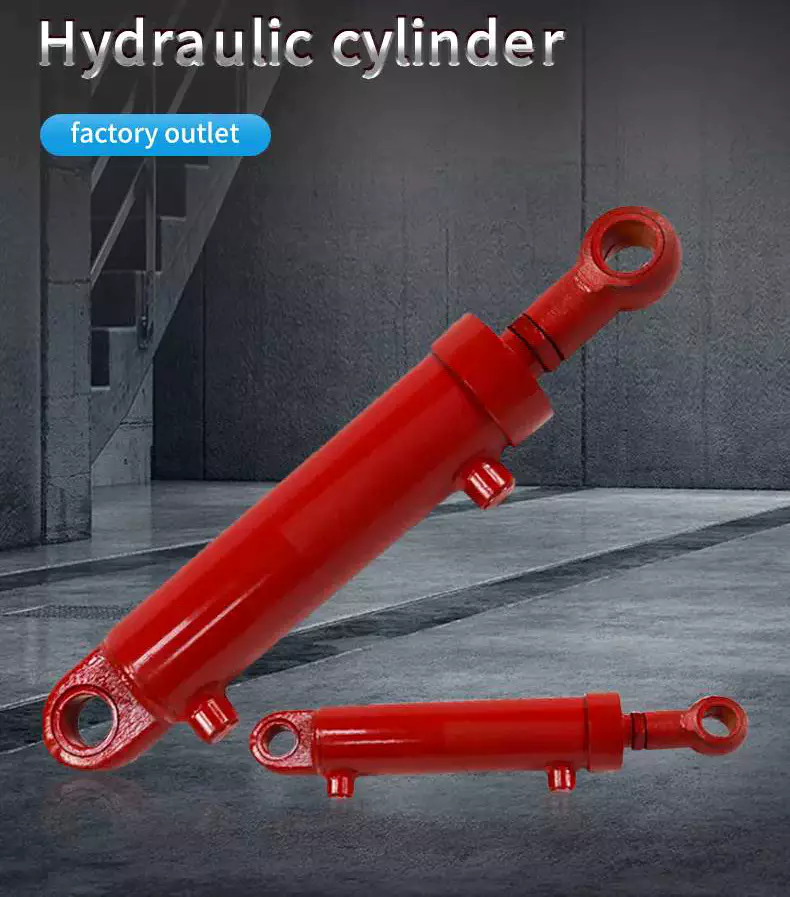
How do hydraulic cylinders ensure smooth and consistent movement in heavy machinery?
Hydraulic cylinders play a vital role in ensuring smooth and consistent movement in heavy machinery. Their design and operation allow for precise control over the motion of heavy loads, resulting in efficient and reliable performance. Here’s a detailed explanation of how hydraulic cylinders contribute to smooth and consistent movement in heavy machinery:
1. Hydraulic Fluid and Pressure:
– Hydraulic cylinders operate by utilizing hydraulic fluid, typically oil, to transmit force and motion. The fluid is pressurized by a hydraulic pump, creating a force that acts on the piston inside the cylinder. The pressure of the hydraulic fluid can be precisely controlled, allowing for smooth and gradual movement of heavy machinery. The fluid’s incompressibility ensures that the force is evenly distributed, resulting in consistent and predictable motion.
2. Piston and Cylinder Design:
– Hydraulic cylinders are designed with precision to ensure smooth movement. The piston and cylinder bore are machined to tight tolerances, reducing friction and minimizing internal leakage. This precise fit between the piston and cylinder walls helps maintain consistent motion without jerks or sudden changes in speed. Additionally, the use of high-quality seals and lubrication further enhances the smooth operation of the cylinder.
3. Control Valves and Flow Control:
– Hydraulic systems incorporate control valves that regulate the flow of hydraulic fluid into and out of the cylinder. These valves allow for precise control over the speed and direction of the cylinder’s movement. By adjusting the flow rate, operators can achieve smooth and controlled motion of heavy machinery, avoiding sudden starts or stops. Flow control valves also enable speed adjustment, ensuring consistent movement even under varying loads or operating conditions.
4. Cushioning and Damping:
– Hydraulic cylinders can be equipped with cushioning mechanisms to absorb shock and minimize impacts during the movement of heavy machinery. Cushioning is achieved by incorporating specialized valves or adjustable orifices in the cylinder, which restrict the flow of hydraulic fluid near the end of the stroke. This gradual deceleration helps prevent sudden jolts or vibrations, maintaining smooth and consistent movement while reducing stress on the machinery and its components.
5. Load Balancing:
– Hydraulic cylinders can be designed and arranged in a system to balance the load and distribute forces evenly. By utilizing multiple cylinders in parallel or series configurations, heavy machinery can achieve balanced movement, preventing uneven stress and ensuring smooth operation. Load balancing also helps minimize the risk of component failure and enhances the overall stability and longevity of the machinery.
6. Feedback and Control Systems:
– Advanced hydraulic systems incorporate feedback sensors and control systems to monitor and adjust the movement of heavy machinery. These sensors provide real-time information about the position, speed, and force exerted by the hydraulic cylinders. The control system processes this data and adjusts the flow of hydraulic fluid accordingly to maintain smooth and consistent movement. By continuously monitoring and regulating the cylinder’s operation, feedback and control systems contribute to precise and reliable motion control.
7. Maintenance and Servicing:
– Regular maintenance and servicing of hydraulic cylinders are essential to ensure their smooth and consistent movement in heavy machinery. Proper lubrication, inspection of seals, and replacement of worn-out components help maintain optimal performance. Preventive maintenance practices, such as filter replacements and fluid analysis, also contribute to the longevity and reliability of hydraulic systems, ensuring consistent movement over time.
In summary, hydraulic cylinders ensure smooth and consistent movement in heavy machinery through the use of hydraulic fluid and pressure, precise piston and cylinder design, control valves and flow control, cushioning and damping mechanisms, load balancing, feedback and control systems, and regular maintenance and servicing. By leveraging these features, hydraulic cylinders provide the necessary force and control to handle heavy loads while maintaining precise and reliable motion, enhancing the overall performance and productivity of heavy machinery in various industrial applications.
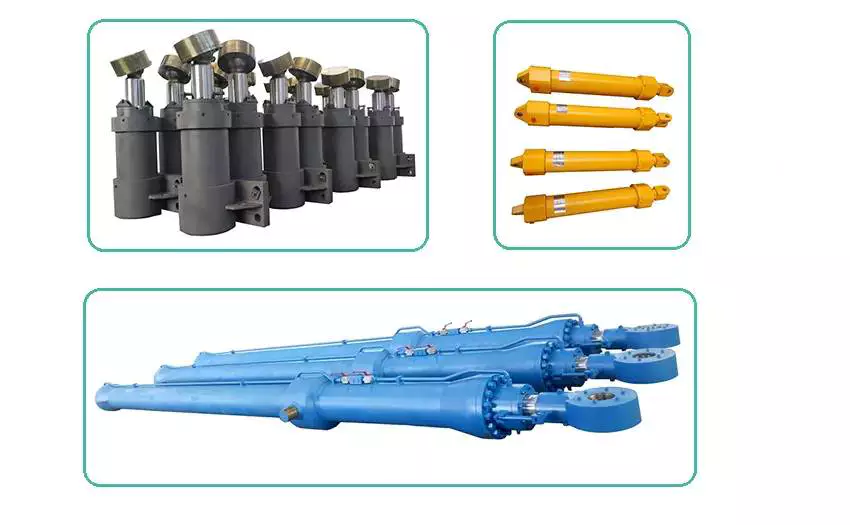
Contribution of Hydraulic Cylinders to the Efficiency of Agricultural Tasks like Plowing
Hydraulic cylinders play a significant role in enhancing the efficiency of agricultural tasks, including plowing. By providing power, control, and versatility, hydraulic cylinders enable agricultural machinery to perform tasks more effectively and with greater precision. Let’s explore how hydraulic cylinders contribute to the efficiency of plowing and other agricultural tasks:
- Powerful Force Generation: Hydraulic cylinders are capable of generating high forces, making them ideal for tasks that require substantial power, such as plowing. The hydraulic system provides pressurized fluid to the cylinders, which convert this hydraulic energy into mechanical force. This force is then utilized to drive plow blades through the soil, overcoming resistance and facilitating efficient soil penetration.
- Adjustable Working Depth: Hydraulic cylinders allow for easy and precise adjustment of plow working depth. By controlling the extension or retraction of the hydraulic cylinder, the depth of the plow blades can be adjusted according to soil conditions, crop requirements, or the farmer’s preferences. This adjustability enhances efficiency by ensuring optimal soil tillage and minimizing unnecessary energy expenditure.
- Responsive Control: Hydraulic systems offer highly responsive control, enabling farmers to make quick adjustments during plowing operations. Hydraulic cylinders respond rapidly to changes in hydraulic pressure and valve settings, allowing for immediate modifications in the plow’s position, depth, or angle. This responsiveness enhances efficiency by facilitating on-the-go adjustments based on soil variations, obstacles, or changing field conditions.
- Implement Versatility: Hydraulic cylinders enable the attachment of various implements to agricultural machinery, expanding their functionality and versatility. In the case of plowing, hydraulic cylinders allow for the attachment and detachment of plow blades or other tillage implements. This versatility enables farmers to adapt their equipment to different soil types, field sizes, or specific plowing requirements, enhancing efficiency by maximizing the utility of the machinery.
- Efficient Time Management: Hydraulic cylinders contribute to time efficiency in agricultural tasks like plowing. With hydraulic systems, farmers can operate plows at higher speeds while maintaining control and precision. The responsive nature of hydraulic cylinders allows for efficient turning, maneuvering, and repositioning of plows, minimizing downtime and optimizing field coverage. This time efficiency translates into increased productivity and reduced overall operational costs.
In summary, hydraulic cylinders significantly contribute to the efficiency of agricultural tasks like plowing. Through powerful force generation, adjustable working depth, responsive control, implement versatility, and efficient time management, hydraulic systems equipped with cylinders enhance the performance and productivity of agricultural machinery. These contributions allow farmers to accomplish plowing tasks more effectively, optimize field operations, and achieve improved overall efficiency in their agricultural practices.
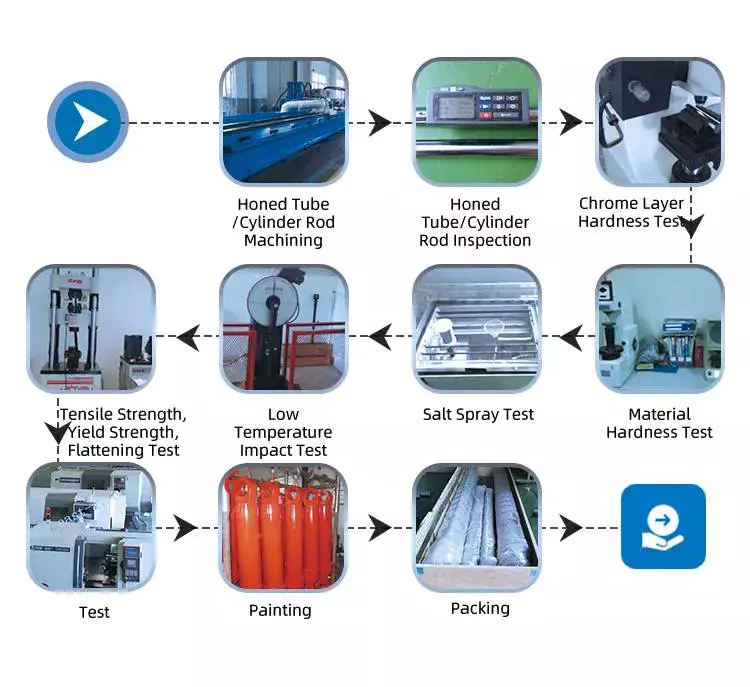
How do manufacturers ensure the quality and compatibility of hydraulic cylinders?
Manufacturers employ various measures to ensure the quality and compatibility of hydraulic cylinders, ensuring that they meet industry standards, performance requirements, and the specific needs of their customers. Here’s a detailed explanation of the methods and practices used by manufacturers to ensure the quality and compatibility of hydraulic cylinders:
1. Design and Engineering:
– Manufacturers employ skilled engineers and designers who have expertise in hydraulic systems and cylinder design. They use advanced design software and tools to create hydraulic cylinders that meet the desired specifications and performance requirements. Through careful analysis and simulation, manufacturers can ensure that the cylinders are designed to function optimally and provide the necessary force, stroke length, and reliability.
2. Material Selection:
– High-quality materials are crucial for the durability, performance, and compatibility of hydraulic cylinders. Manufacturers carefully select materials such as steel or other alloys based on their strength, corrosion resistance, and suitability for hydraulic applications. They source materials from reputable suppliers and perform quality checks to ensure that the materials meet the required standards and specifications.
3. Quality Control:
– Manufacturers implement robust quality control processes throughout the production of hydraulic cylinders. This includes rigorous inspections and tests at various stages of manufacturing, from raw material inspection to final assembly. Quality control personnel perform dimensional checks, surface finish inspections, and functional tests to verify that the cylinders meet the specified tolerances, performance criteria, and compatibility requirements.
4. Testing and Validation:
– Hydraulic cylinders undergo testing and validation procedures to ensure their performance, reliability, and compatibility. Manufacturers conduct various tests, such as pressure testing, leakage testing, load testing, and endurance testing. These tests simulate real-world operating conditions and verify that the cylinders can withstand the expected loads, pressures, and environmental factors. Additionally, manufacturers may perform compatibility testing to ensure that the cylinders can integrate seamlessly with other hydraulic system components.
5. Compliance with Standards:
– Manufacturers adhere to industry standards and regulations to ensure the quality and compatibility of hydraulic cylinders. They follow standards such as ISO 9001 for quality management systems and ISO 6020/2 or ISO 6022 for hydraulic cylinders. Compliance with these standards ensures that the manufacturing processes, quality control measures, and product performance meet internationally recognized benchmarks.
6. Certification and Accreditation:
– Manufacturers may obtain certifications and accreditations from recognized organizations to demonstrate their commitment to quality and compatibility. Certifications such as ISO certifications or third-party certifications provide assurance to customers that the hydraulic cylinders have undergone rigorous evaluations and meet specific quality and compatibility standards.
7. Customer Collaboration:
– Manufacturers actively engage with customers to understand their specific requirements and ensure compatibility. They work closely with customers to gather application-specific details, such as operating conditions, load requirements, and environmental factors. This collaborative approach allows manufacturers to customize hydraulic cylinders and provide solutions that are perfectly matched to the customer’s needs, ensuring compatibility and optimal performance.
8. Continuous Improvement:
– Manufacturers are committed to continuous improvement in their processes and products. They invest in research and development to incorporate the latest technologies, materials, and manufacturing techniques. By staying updated with industry advancements, manufacturers can enhance the quality, performance, and compatibility of their hydraulic cylinders over time.
By implementing effective design and engineering practices, selecting high-quality materials, conducting rigorous quality control, testing and validation procedures, complying with industry standards, obtaining certifications, collaborating with customers, and embracing continuous improvement, manufacturers ensure the quality and compatibility of hydraulic cylinders. These measures help to deliver reliable, high-performance cylinders that meet the diverse needs of industries and applications.

editor by CX 2023-12-06