Among every mechanical system that keeps an agricultural multi-purpose mobile service vehicle productive through a full working season, the telescopic arm hydraulic cylinder carries a disproportionate share of the operational risk. It is the component that determines whether a boom sprayer arm holds its programmed height while the vehicle crosses uneven ground, whether a mobile service crane reaches over a combine header to lift a 380 kg gearbox in the middle of a field, and whether a telescopic work platform positions a technician within safe reach of an irrigation pivot tower at 4.5 meters. When the cylinder performs correctly, it is invisible. When it develops internal leakage — the dominant failure mode in agricultural service conditions — it becomes the reason a spray pass has to be repeated, a field repair takes three hours instead of one, or a season-critical maintenance window is missed entirely. This article examines the engineering decisions behind double-acting multi-stage welded telescopic hydraulic cylinders designed specifically for agricultural mobile service vehicle boom arm duty, covering material selection, structural design logic, the sealing architecture that defeats internal leakage, and the custom manufacturing capability that allows these cylinders to be engineered precisely to the load and environment of each application rather than approximated from catalog stock.
Why Double-Acting Multi-Stage Design Is the Correct Configuration for Agricultural Boom Arms
The core mechanical challenge of any telescopic boom arm on an agricultural service vehicle is straightforward to state and surprisingly difficult to solve well: the operator needs the arm to retract into a short, transport-compatible package while extending to a working reach that may be three, four, or even five times that retracted length — all under load, in both directions, with the precision needed for repeatable task positioning. A single-stage cylinder that could achieve this stroke would have a retracted length that violates road transport height limits and shifts the vehicle’s center of gravity to the point of instability. Multi-stage telescopic cylinders solve this by nesting concentric tube stages, each extending sequentially under hydraulic pressure, so the retracted length equals approximately the length of the longest individual stage. This fundamental packaging advantage is the reason every boom sprayer, orchard platform, and field service crane in serious agricultural use is built around a telescopic cylinder design rather than a single-stage unit.
The double-acting designation adds a layer of functionality that transitions the cylinder from a passive lift actuator to an active positioning device. Single-acting cylinders extend under pressure and retract by gravity — which means retraction force depends entirely on the weight of the boom structure and its load, and any external force opposing retraction (wind drag at road speed, inertial loads from terrain shock, asymmetric load distribution) either slows retraction or prevents it entirely. In agricultural service vehicles where the boom arm carries sprayer components, work baskets, or crane loads that apply lateral forces at the cylinder tip, this passive retraction limitation creates operational hazards and unreliable positioning. Double-acting operation sends pressurized oil to both the extend and retract chambers under operator control, delivering positive, metered force in both directions regardless of the load condition. The practical result is a boom arm that moves where the operator commands, holds where the operator stops it, and retracts with positive force even against adverse aerodynamic and inertial loads during field transit.
The welded structural design choice — in preference to tie-rod or flanged construction — governs the long-term dimensional stability of the cylinder in agricultural duty conditions that are genuinely punishing for mechanical assemblies. A tie-rod cylinder holds its end caps in position through the clamping force of four or more threaded rods torqued against the cap faces. Under the vibration spectrum generated by agricultural field travel — typically 5–50 Hz broadband with shock pulses at headland turns and field boundary crossings — those threaded connections progressively lose preload. The consequence in a telescopic cylinder is end-cap micro-displacement that propagates into stage misalignment: when the barrel and stage tubes are no longer truly concentric, the piston seal contacts the bore wall unevenly, generating a high-stress zone at one angular position that initiates seal extrusion and accelerated wear. Full-penetration welding of the barrel body, end caps, and port block eliminates every threaded structural joint in the pressure boundary, making the cylinder body monolithic and immune to vibration-induced displacement. Post-weld heat treatment at the correct temperature for 27SiMn material normalizes residual welding stresses, preventing dimensional creep during first-season service under cyclic load.
27SiMn Alloy Steel and Hard Chrome Plating: The Material Foundation for Field Durability
The rod and tube material selection for a medium-load agricultural telescopic cylinder is where engineering judgment separates cylinders that survive three seasons from those that require rebuild after eighteen months. 27SiMn, specified under China’s GB/T 3077 standard, is a silicon-manganese alloyed structural steel that achieves tensile strength of 980–1,080 MPa and yield strength of 835–930 MPa in the quench-and-tempered condition, with elongation of 12–14% and sufficient Charpy impact energy to remain ductile at operating temperatures as low as −20°C without protective measures. The silicon content at 1.0–1.4% provides solid-solution strengthening and oxidation resistance that persists through the heat treatment cycle. The manganese content at 1.1–1.4% refines the austenite grain during heat treatment, which improves both toughness and fatigue resistance — critical properties for a stage tube that experiences cyclic bending loads at every extend-and-retract cycle over a multi-thousand-hour service life. The yield-to-tensile ratio of 27SiMn, approximately 0.85–0.92 depending on heat treatment parameters, provides the plastic energy absorption reserve that prevents brittle fracture under the unexpected overload events — a boom arm catching on a tree branch, a sudden terrain drop at extended reach — that are a routine part of agricultural field operations rather than edge cases to be designed around.
Hard chrome plating serves two distinct and equally important functions on the rod and outer tube surfaces of a telescopic cylinder intended for chemical-environment agricultural service. The tribological function requires maintaining a surface hardness of HRC 68–72 at a plating thickness of 0.03–0.05 mm, providing the hard, low-friction running interface against which the seal lip maintains its pressure boundary with minimum abrasive wear. The thickness control is as important as the hardness target: plating below 0.03 mm does not provide adequate corrosion resistance in aggressive fertilizer and pesticide spray environments, while plating above 0.05 mm accumulates internal tensile stress that initiates micro-cracking under flexural loading — cracks that provide pathways for corrosion attack of the substrate steel. After plating, the rod surface is ground and polished to a roughness of Ra ≤ 0.2 µm. This specific roughness target is not arbitrary: below Ra 0.1 µm, the surface is so smooth that the hydrodynamic lubricating oil film between the seal lip and rod breaks down under low-speed movement, increasing adhesive wear; above Ra 0.4 µm, asperity contact during seal travel generates abrasive particles that circulate in the hydraulic fluid and contaminate the entire circuit. The 0.1–0.2 µm band is the functional optimum, and achieving it consistently requires controlled process conditions at every production step from turning through honing to chrome application and final grinding.
Technical Specifications
| Parameter | Standard Specification | Custom Capability |
|---|---|---|
| Action Type | Double-Acting | Single-acting on request |
| Cylinder Type | Welded Multi-Stage Telescopic | 2 – 5 stage configurations |
| Bore Diameter | 63 – 200 mm | Up to 320 mm on special order |
| Extended Stroke | 500 – 3,000 mm | Up to 5,000 mm available |
| Rated Working Pressure | 16 – 25 MPa | Up to 35 MPa high-pressure build |
| Hydrostatic Test Pressure | 1.5× rated working pressure | Per customer spec / EN 13135 / ISO 10100 |
| Rod / Barrel Material | 27SiMn (GB/T 3077) | 42CrMo, 40Cr, EN19 on request |
| Rod Surface | Hard chrome 0.03–0.05 mm, Ra ≤ 0.2 µm | Electroless nickel, HVOF thermal spray |
| Piston Seal System | PU lip seal + PTFE-loaded guide ring | FKM, HNBR, low-temp compound |
| Operating Temperature | -20°C to +80°C | -40°C to +120°C with spec seal stack |
| Load Class | Medium (FM class) | Light / Heavy class per application |
| Mounting Options | Clevis, trunnion, flange, foot | OEM CAD drawing accepted and manufactured to |
| Port Thread Standard | BSPP / NPT / Metric | SAE, JIC, custom per hydraulic schematic |
Internal Leakage in Telescopic Cylinders: The Silent Failure Mode and the Sealing Strategy That Stops It
Internal leakage in a double-acting telescopic cylinder is the cross-stage bypass of pressurized hydraulic oil past the piston seal assembly from the high-pressure chamber to the low-pressure chamber, without that oil exiting the cylinder externally. Because it leaves no visible trace — no oil film on the rod, no puddle under the machine, no obvious diagnostic signal — it accumulates undetected until the functional consequence is impossible to ignore. The operational signature is specific and recognizable in retrospect: a loaded boom arm holds its commanded height for thirty seconds before drifting, then twenty seconds at the same load on the next work cycle, then ten seconds three weeks later. The drift rate accelerates as the piston seal erodes, the bypass clearance grows, and the leakage volume per unit time increases nonlinearly. By the time the operator identifies the pattern as a cylinder problem rather than a control valve issue, the seal assembly has typically been operating in a degraded state for 100–300 hours — a period during which the pressurized fluid bypassing the eroded seal lip has been hydraulically lapping the seal contact face on the bore wall, complicating what would otherwise be a straightforward seal replacement into a bore resizing or tube replacement job.
The root causes of piston seal degradation in agricultural telescopic cylinders fall into three categories, each requiring a different mitigation in the cylinder design. Abrasive contamination ingress — fine silica particles from field soil dust, grit from unpaved road travel, and crop debris — enters through the wiper seal and circulates as an abrasive slurry in the hydraulic fluid. The mitigation is a high-retention wiper seal made from a hard polyurethane compound at the rod gland, combined with a rated hydraulic filter on the vehicle circuit return line at 10 µm beta ratio 1000 or better. Thermal degradation of seal elastomers — driven by fluid temperature exceeding the seal material’s continuous service limit — causes progressive loss of seal lip compliance and sealing contact stress. The mitigation is material selection matched to the actual operating temperature of the hydraulic system, not the ambient temperature, which may be 25–35°C higher than ambient in a high-duty-cycle vehicle circuit. Mechanical overload damage from pressure spikes — common in agricultural hydraulic circuits where control valves close rapidly against moving loads — causes seal lip extrusion into the clearance gap between the piston and bore wall, which plastically deforms the lip geometry and creates a permanent bypass pathway even at normal operating pressure. The mitigation is an accumulator in the hydraulic circuit to absorb pressure spikes, combined with a seal lip geometry that includes a back-up anti-extrusion ring.
The composite wear-resistant seal stack specified for these agricultural telescopic cylinders addresses all three root causes in a single assembly. The primary pressure boundary element is a polyurethane lip seal with Shore A hardness of 92–95 — firm enough to maintain sealing contact under pressure spikes reaching 1.5× rated pressure without permanent plastic deformation, yet sufficiently compliant to track the micro-bore runout of the stage tube under bending loads during partial-extension duty. Behind the PU lip, a PTFE-loaded guide ring containing 15–25% glass fiber fill provides the load-bearing support function that prevents the PU lip from making eccentric contact with the bore wall under off-axis loading, while simultaneously reducing the friction force transmitted to the lip seal to a level that prevents adhesive wear at low-speed movements. The glass fiber fill maintains the guide ring’s dimensional stability across the temperature cycling range of -20°C to +80°C, preventing the cold-temperature shrinkage that creates a bypass clearance around an unfilled PTFE guide ring in winter field conditions. The complete assembly, installed in a cylinder with bore surface finish at Ra ≤ 0.4 µm and a chrome-plated rod at Ra ≤ 0.2 µm, demonstrates mean-time-between-seal-replacement intervals of 2,500–3,500 hours in properly maintained hydraulic systems running ISO VG 46 fluid — substantially longer than the 800–1,200 hours typical of standard NBR seal configurations in equivalent agricultural service.
Agricultural Application Scenarios
Self-Propelled Boom Sprayer Lift Systems
Large self-propelled boom sprayers operating across grain, cotton, and specialty vegetable farms require cylinders that repeatedly raise and lower wing boom assemblies weighing 3,000–6,000 kg combined while maintaining spray height within ±25 mm of target across uneven terrain. The double-acting configuration provides metered height control in both lift and lower directions regardless of the boom’s asymmetric load distribution. The multi-stage geometry compresses the full 1.8–3.5 meter stroke into a retracted package that keeps the machine within road transport height limits. With seasonal operating hours of 300–500 per unit in chemical-rich spray environments, the chrome surface and composite seal stack directly determine whether the cylinder reaches the following season without a rebuild.
Orchard and Vineyard Harvest Platforms
Telescopic work platforms on orchard and vineyard harvest vehicles must position workers within canopy height bands that vary by 0.5–1.5 meters across the same orchard block, with different varieties and training systems requiring different target heights even on the same day. A three-stage cylinder provides the granular height adjustment needed without requiring multiple setpoints or mechanical locks. The medium load class accommodates one or two workers and harvest equipment, while the compact retracted length allows operation in the narrow row spacing of established plantings — as tight as 2.8 meters between vine rows in high-density vineyard systems — without sacrificing platform reach height at the open headland end.
Mobile Field Service and Repair Cranes
Multi-purpose field service vehicles equipped with a telescopic crane boom use these cylinders as the primary extension actuator. The ability to retract to a transport-compatible length while extending to reach over a combine header height — typically 4.2–5.5 meters at full extension for header removal — and lift components in the 200–500 kg range defines the telescopic cylinder’s role in this application. The welded construction’s vibration resistance is particularly relevant here, since field service vehicles often travel 30–50 km between service calls on unpaved tracks, accumulating vibration exposure between every lifting job that would progressively loosen a tie-rod cylinder structure over a season.
Irrigation Infrastructure Maintenance Vehicles
Center-pivot and lateral-move irrigation systems spanning hundreds of hectares require periodic bearing replacement, nozzle adjustment, and gearbox servicing at span heights of 3.5–6 meters along the pivot arm. Mobile maintenance vehicles with telescopic boom work platforms allow single-operator maintenance without portable scaffold or aerial work platform rental, reducing both cost and response time for irrigation downtime events. The double-acting cylinder’s ability to position a work basket precisely at a specific tower height — and hold that position without drift while the technician applies fastener torque or hydraulic pressure — is the functional requirement that makes the cylinder specification critical rather than merely adequate.
Manufacturing Capability and Custom Engineering: What the Production Chain Actually Delivers
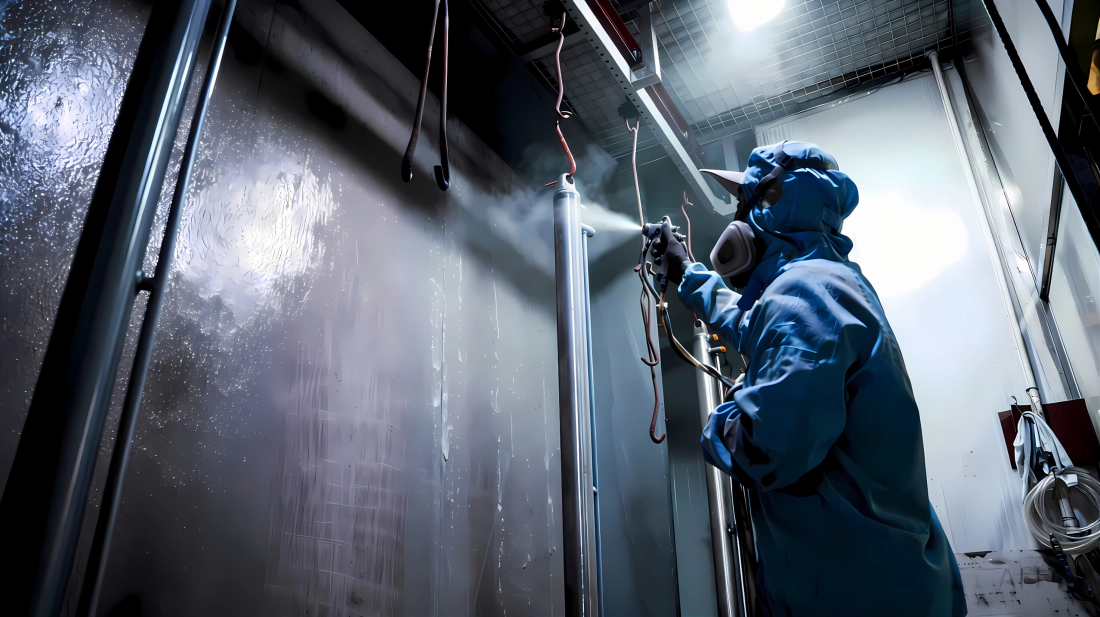
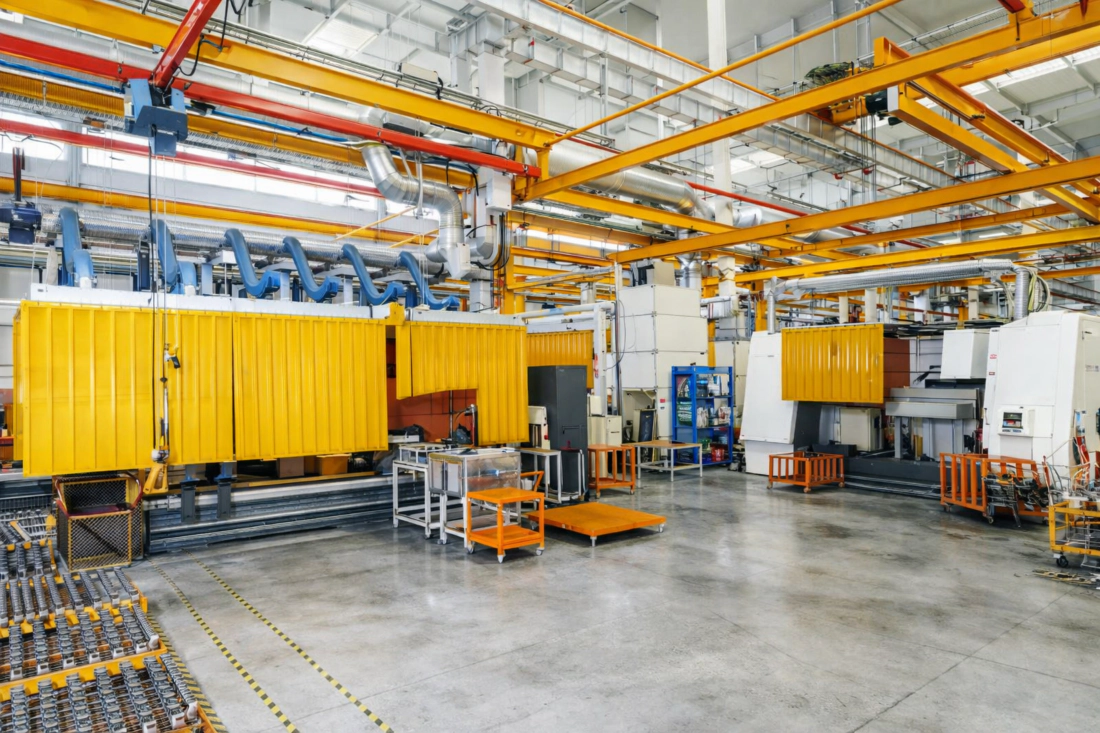
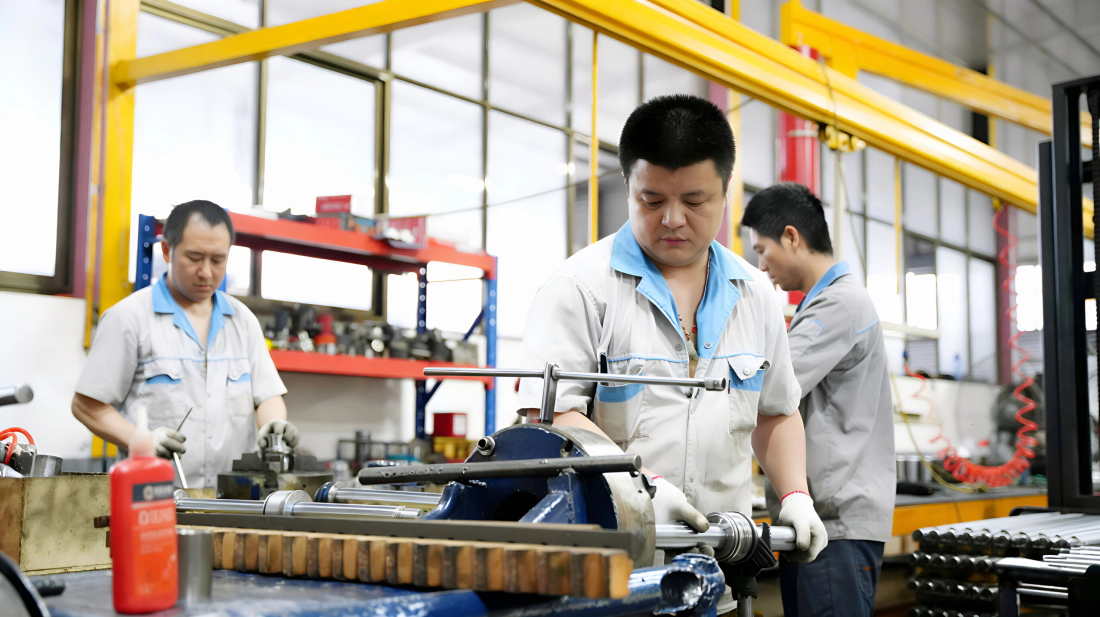
The manufacturing infrastructure supporting agricultural telescopic cylinder production at our facility controls every dimension that affects cylinder performance, from the raw material mill certificate to the final hydrostatic test data sheet. Deep-hole boring machines with L/D ratios up to 40:1 produce the cylinder barrel and stage tube bores in single-setup operations, eliminating the concentricity error that accumulates when bore production is split across multiple machine setups. Post-boring, the bores are processed on skiving-and-roller-burnishing lines that achieve bore surface finish to Ra ≤ 0.4 µm and bore roundness within IT7 tolerance across the full bore length — the surface condition that delivers the longest service life for hydraulic seals without the heat generation of conventional cylindrical grinding. Every bore is measured with air gauging equipment after finishing: diameter, taper, and roundness at multiple stations along the bore length, confirming tolerance compliance at every unit rather than at statistical sample intervals. Stage tube outer diameters receive the same attention — ground and polished to the tolerance required for consistent seal contact in the assembled multi-stage stack.
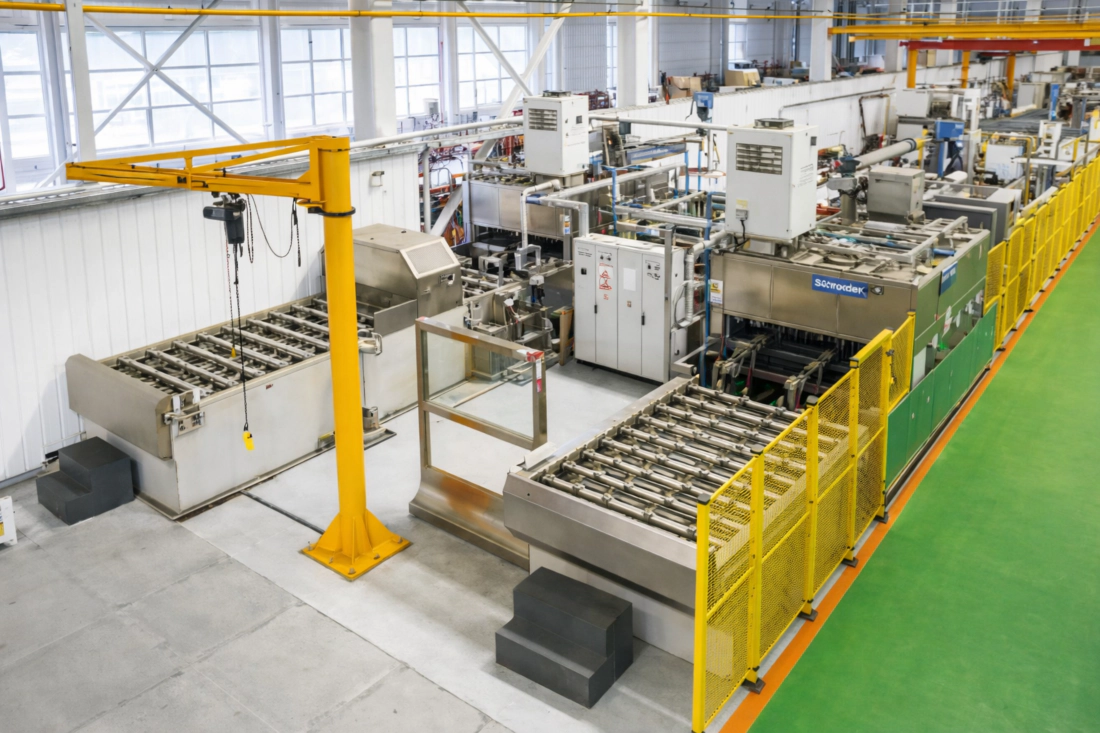
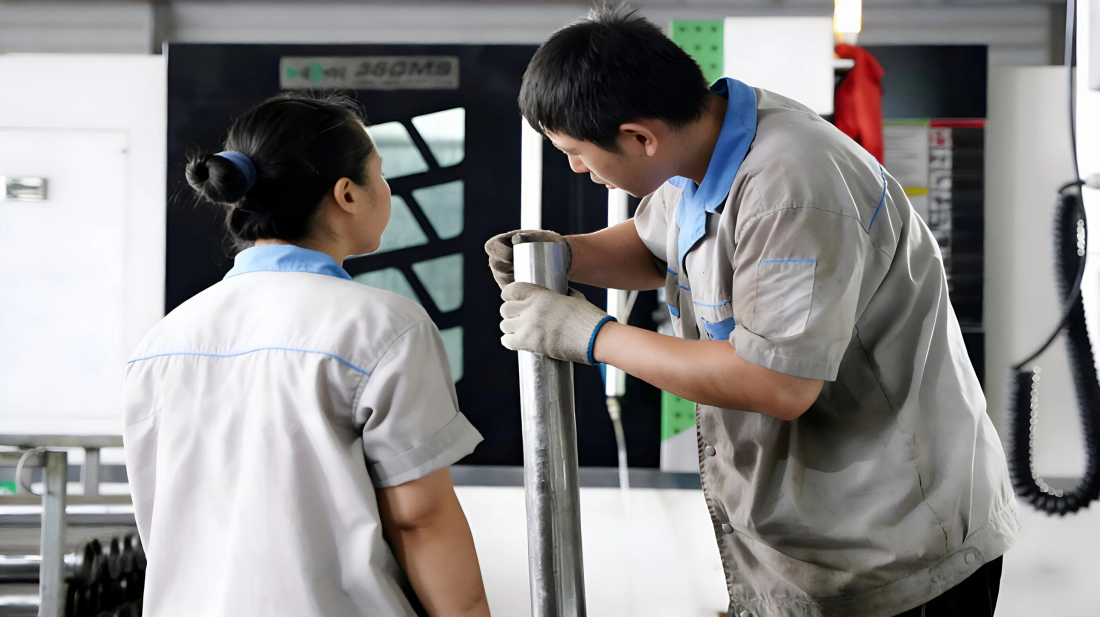
Robotic MIG and TIG welding stations with documented Welding Procedure Specifications produce the barrel-to-end-cap, barrel-to-port-block, and stage-guide-band welds that define the structural integrity of every cylinder body. Interpass temperature limits are monitored continuously during welding, and weld wire traceability links every production lot to the heat of filler material used. Stress relief heat treatment of welded assemblies is conducted in controlled-atmosphere furnaces at temperatures and hold times appropriate for 27SiMn material, confirmed by calibrated thermocouple records that become part of the traceability documentation for each production batch. The chrome plating shop maintains bath chemistry through automated monitoring, with X-ray fluorescence measurement of plating thickness on 100% of production rods after plating — not at sample intervals — and dimensional measurement of the plated rod diameter confirming compliance with the tolerance that governs seal fit. Hydrostatic pressure testing at 1.5× rated working pressure with a 30-minute hold and internal leakage measurement against specified limits closes the production verification chain before any cylinder leaves the facility.
Custom engineering at Ever Power begins when a customer shares the load data, vehicle frame constraints, duty cycle, and operating environment that define the cylinder’s real application. The application engineering team works from that input to derive the cylinder specification rather than select from a catalog: bore and rod diameter sized to the actual force requirements with safety factors reflecting the duty class, buckling resistance calculated for the worst-case partial-extension cantilever condition, seal material selected to match the confirmed hydraulic fluid type and operating temperature range, and port configuration coordinated with the vehicle’s hydraulic system flow rate and pressure profile. Sample cylinders for prototype fitment are typically completed within 15–25 working days from approved drawing release. Production volume deliveries include full traceability documentation packages — material certificates, welding inspection records, hydrostatic test reports, dimensional inspection reports — compatible with the CE (PED), AS/NZS, and ANSI market certification requirements of agricultural equipment OEMs shipping globally. Production volumes from single-unit prototypes to annual programs exceeding 10,000 cylinders are accommodated within a mixed-model scheduling system that allows multiple cylinder variants for the same vehicle platform to be produced in consolidated runs, reducing per-unit tooling changeover cost.
18+
Years of hydraulic cylinder engineering and production
50+
Countries supplied with custom cylinder configurations
100%
Hydrostatic test and plating thickness verified on every unit
What Customers Report from Actual Field Operation
Self-Propelled Boom Sprayer
“We had been pulling the boom lift cylinders from both of our self-propelled sprayers every 18 months — internal leakage showed up as positional drift during spray passes at first, then escalated to the point where the boom would not hold at all under static load with the valve closed. After switching to the double-acting telescopic units with the composite seal package, we completed two consecutive full seasons without a single cylinder maintenance event. The boom holds its programmed height within sensor tolerance at every pass. The precision agriculture application rate data improved noticeably — you can actually quantify the cylinder’s influence through the uniformity numbers.”
— Operations Manager, Western Australia broad-acre grain farm (4,500 ha under cultivation)
Multi-Purpose Field Service Vehicle
“Our service vehicles run in sugarcane harvest conditions year-round — extreme fine dust from the cutting operation, continuous fertilizer water contact, and ambient temperatures above 38°C through harvest season. We needed a manufacturer who could specify the correct seal material for those conditions and supply documentation compatible with our own export compliance requirements. The engineering support we received was methodical and detailed from the first message. Cylinder serial number 001 from the first production batch has now accumulated more than 3,200 hours in our most demanding vehicle, with zero hydraulic cylinder maintenance interventions in that time.”
— Fleet Engineering Director, São Paulo-based agricultural machinery manufacturer
Vineyard Maintenance Platform Vehicle
“We supply telescopic maintenance platform vehicles to vineyard and orchard operators across Central Europe. The cylinder specification requirements for CE-marked equipment are not negotiable — DIN dimensional tolerances, material certificates traceable to heat number, hydrostatic test records, and weld inspection documentation all have to be in place before the product leaves the factory. This manufacturer met every one of those requirements on the first production batch with zero nonconformances. The documentation package they deliver is detailed enough to include directly in our CE technical file without additional preparation or translation on our side.”
— Procurement Lead, Baden-Württemberg agricultural machinery distributor
Frequently Asked Questions
What type of telescopic hydraulic cylinder works best for boom arm extension on agricultural multi-purpose service vehicles that operate daily in dusty and chemically exposed field conditions?
A double-acting welded multi-stage telescopic hydraulic cylinder with 27SiMn piston rods, hard chrome plating to 0.03–0.05 mm at Ra ≤ 0.2 µm, and a composite polyurethane-plus-PTFE seal stack delivers the best performance combination for agricultural service vehicle boom arms in chemical and abrasive field environments. The double-acting configuration provides positive force control in both extend and retract directions; the welded structure resists vibration-induced joint loosening across rough terrain transit; the chrome surface provides corrosion resistance against fertilizer and pesticide chemical contact; and the composite seal system extends service intervals significantly beyond what standard NBR seals can sustain in this operating environment.
How much does a custom double-acting telescopic hydraulic cylinder cost for a farm service vehicle, and what factors most affect the price when sourcing from a Chinese manufacturer?
Custom double-acting telescopic cylinder pricing depends primarily on bore diameter, number of stages, total extended stroke, material grade, surface treatment type, seal specification, and order volume. Cylinders sourced from qualified Chinese manufacturers with integrated in-house machining, honing, welding, and chrome plating consistently deliver lower unit cost than European or North American alternatives with comparable performance specifications. Submitting your specific bore size, working pressure, stroke requirement, and annual volume to an engineering team produces an accurate quotation — catalog range estimates for custom configurations are rarely useful as a budget basis because the cost variation between a 2-stage 80 mm bore unit and a 4-stage 160 mm bore unit with FKM seals spans a very wide range.
Which hydraulic cylinder seal material is most effective at preventing internal leakage in 27SiMn telescopic cylinders on Chinese agricultural machinery working through hot summer seasons above 38°C ambient?
For sustained high-temperature agricultural duty in China’s major grain and cotton producing regions — Henan, Xinjiang, Shandong, and Heilongjiang during peak summer heat — polyurethane primary seals backed by glass-fiber-filled PTFE guide rings outperform NBR alternatives in both initial leakage rate and long-term service life. Polyurethane maintains its sealing contact geometry and lip contact stress under the thermal expansion differentials that cause NBR to creep and lose preload against the bore wall at sustained temperatures above 60°C fluid temperature. For hydraulic systems where fluid temperature consistently exceeds 80°C — common near engine compartment routing or in high-duty-cycle circuit configurations — FKM (Viton) primary seals extend the operational range to 120°C+ and are available as a custom specification option.
Where can I find a reliable Chinese hydraulic cylinder supplier offering fully traceable custom welded telescopic cylinders with CE-compatible documentation for agricultural equipment export programs?
Qualified Chinese hydraulic cylinder manufacturers for agricultural export programs should demonstrate an ISO-certified quality management system, in-house hydrostatic pressure testing to 1.5× working pressure, 100% plating thickness verification by XRF measurement, material certificate issuance per heat number (traceable to mill), welding inspection records per approved WPS/PQR, and dimensional inspection documentation on a per-unit or per-batch basis. Our facility provides all of these consistently, and we have established supply relationships with agricultural equipment OEMs whose products carry CE (PED), Australian (AS/NZS 3788), and North American (ASABE S230) market certifications. Send your documentation checklist directly to our export engineering team to confirm package compatibility before the quotation stage — it is faster and more definitive than generalizing from our standard offering description.
How do I diagnose whether the internal leakage in my agricultural service vehicle’s boom cylinder is caused by worn piston seals or actual scoring damage to the cylinder barrel bore?
A static pressure-hold test under rated load is the primary diagnostic: fully extend the cylinder under the intended load, close the control valve, and measure the positional drift rate over 60 seconds. Steady, continuous drift at a consistent rate indicates piston seal bypass. Erratic or position-dependent drift that varies with cylinder rotation suggests barrel bore scoring or out-of-roundness. On disassembly, the seal condition reveals the root cause: extrusion marks on the lip perimeter indicate historic pressure spike overload; uniform circumferential abrasive wear without extrusion marks indicates normal end-of-life seal replacement; scoring grooves on the seal OD surface or bright abrasive tracks on the chrome rod indicate contamination entry past the wiper seal. Barrel bore inspection at the piston contact band — where a polished ring of 20–40 mm width should appear on a correctly running cylinder — distinguishes normal contact from scoring damage that requires bore honing or tube replacement before a new seal can perform correctly.
When is the best time to get a quote for a custom telescopic hydraulic cylinder from a Chinese manufacturer — before or after the agricultural service vehicle frame design is finalized?
Engaging a cylinder manufacturer during the vehicle frame concept phase — before the cylinder mounting envelope and port locations are committed to the structural design — consistently produces lower-cost, better-performing results than specifying a cylinder after the frame is finalized. Early engagement allows the cylinder’s retracted length, mounting lug geometry, and port orientation to be optimized simultaneously with the structural frame layout, preventing the costly compromises that occur when a cylinder is retrofitted into a space designed around different assumptions. It also allows the hydraulic system designer to confirm that the bore diameter and working pressure of the proposed configuration are compatible with the pump flow rate, circuit pressure, and control valve sizing — integration mismatches that are inexpensive to correct at the specification stage and very expensive to correct at the prototype stage. Our engineering team accepts early-stage inquiries with only load estimates and vehicle duty cycle data, and can develop the cylinder specification iteratively as the vehicle design progresses.