Product Description
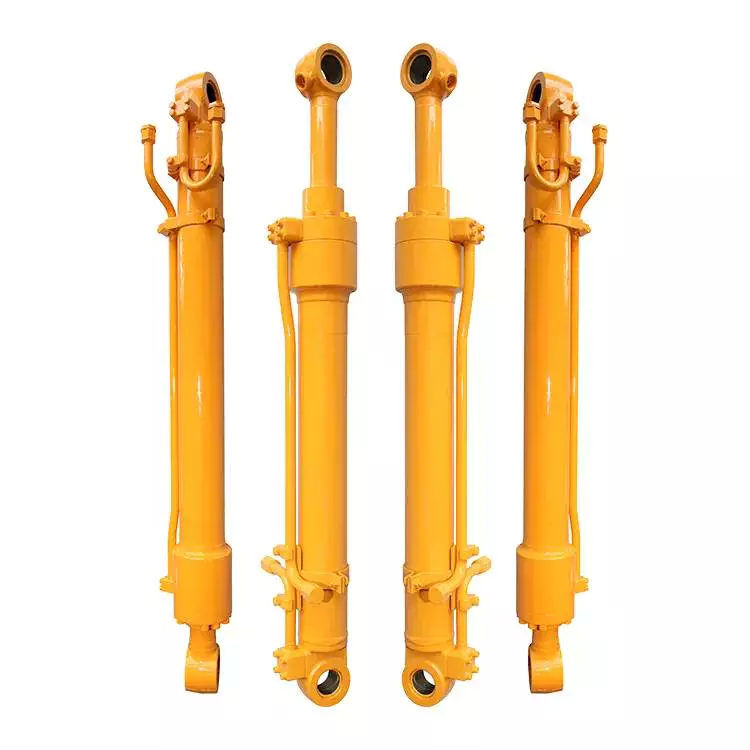
Hydraulic Breaker Cylinder Head Furukawa F27 F30 F35 F45 Hydraulic Hammer Parts Cylinder
| Part Name | Breaker Cylinder |
| Part Model | F35 |
| Material | Cr40 or Cr42 |
| Size | Standard |
| With Parts | Cylinder Assembly |
| Feature | Durable |
| Brand | Xihu (West Lake) Dis.an or as Required |
| Certification | ISO 9000, CE |
| Application | Hydraulic Breaker Hammer |
| MOQ | 1 Sets |
| Supply Ability | 10000 Pcs/Months |
| Warranty | 3 Months |
| Other Brand | Furukawa, Soosan, Montabert, Atlas Copco, Krupp |
| Port | HangZhou Xihu (West Lake) Dis. |
| Delivery Time | 3-7 Days |
Related Models
| HB-0.5G | HB-10G | HB-40G | HB-4R | F-2 | F-11 | F-27 | FX-25 | FX-360 |
| HB-1G | HB-15G | HB-50G | HB-100 | F-3 | F-12 | F-30 | FX-35 | FX-470 |
| HB-2G | HB-18G | HB-05R | HB-200 | F-4 | F-17 | F-35 | FX-45 | FXJ-175 |
| HB-3G | HB-20G | HB-1R | HB-300 | F-5 | F-19 | F-45 | FX-55 | FXJ-275 |
| HB-5G | HB-30G | HB-2R | HB-400 | F-6 | F-20 | F-70 | FX-65 | FXJ-375 |
| HB-8G | HB-35G | HB-3R | F-1 | F-9 | F-22 | FX-15 | FX-220 | FXJ-475 |
We can provide other hydraulic breaker parts(more than these)
| Hammer Parts | Main Body | Back Head | Charging Valve | Cylinder | Seal Retainer |
| Socket Plug | Piston | Adapter | Valve | Valve Plug | Valve Sleeve |
| Front Head | Grease Nipple | Rod Pin | Stop Pin | Rubber Plug | Front Head Pin |
| Ring Bush | Thrust Bush | Upper Bush | Front Cover | Tool Bush | Lower Bush |
| Rod Moil Point | Chisel | Washer | Through Bolt | Side Rod | Hex Nut |
| Air Check Valve | Valve Adjuster | Accumulator | Accumulator Body | Accumulator Cover | Socket Bolt |
| Charging V/V | Diaphragm | Seal Kit | O-Ring Seal | Gas Seal | Step Seal |
| Buffer Seal | Dust Seal | U-Packing | Back-up ring | Side Bolt | Upper Cushion |
| Down Cushion | Tool Set | N2 Gas Charging Set | N2 Gas Cylinder | B-3way valve assy |
Detailed Images
We Can Provide Following Hydraulic Breaker Models
| Atlas | MB 700 MB 750 DP, MB 1000 DP, MB 1200, MB 1500, MB 1600, MB 1700, HB 2000, HB 2200, HB 2500, HB 3000, HB 3100, HB 3500, HB 3600, HB 4100, HB 4700, HB 5800, HB 7000, HB 10000, SB 302, SB450, SB 452, SB 552, EC 135T, EC 140T | ||||||||
| Krupp | HM60 HM75 HM85 HM90 HM100 HM110 HM130 HM135 HM170 HM185 HM190 HM200 HM220 HM230 HM300 HM301 HM305 HM400 HM401 HM550 HM560 HM580 HM720 HM711 HM702 HM705 HM710 HM720 HM780 HM800 HM900 HM901 HM902 HM1000 HM1200 HM1300 HM1500 HM1800 HM2000 HM2100 HM2200 HM2500 | ||||||||
| FURUKAWA | HB100 HB200 HB700 HB1G HB2G HB2.5G HB3G HB5G HB8G HB10G HB15G HB20G HB30G HB40G HB50G HB1200 F1 F2 F3 F4 F5 F6 F9 F12 F19 F22 F27 F35 F45 F70 FXJ125 FXJ175 FXJ225 FXJ275 FXJ375 FXJ475 | ||||||||
| SOOSAN | SH200 SH400 SH700 SH18G SH20G SH30G SH35G SH40G SB30 SB35 SB40 SB43 SB45 SB50 SB60 SB70 SB81 SB100 SB121 SB131 SB151 | ||||||||
| N.P.K | H-08X H1XA H2XA H4X H5X H6X H7X H8XA H9X H10X H11X H12X H16X H18X H-20X H25X E12X E15X E18X E106 E200 E201 E202 E203 E204 E205 E208 E210 E212 E213 E215 E216 E218 E220 E224 E225 E240 GH8 GH9 GH10 GH12 GH15 GH18 | ||||||||
| HANWOO | RHB301 RHB302V RHB303V RHB304 RHB305V RHB306 RHB308 RHB309 RHB313 RHB320 RHB321 RHB322 RHB323V RHB325 RHB326 RHB328 RHB330 RHB332 RHB335 RHB340 RHB350 | ||||||||
| RAMMER | S21 S20 S24 S22 S23D30 S24 S25 S26S50 S29 S52 S54D60 S55 S56D70 S82 S83D110 S84 S86 E63 E64 E66 E68 CHINAMFG G90 G100 G110 G120 | ||||||||
| INDECO | MES121/150 MES180/181/200 MES300/301/350/351 MES451/521/550/HB5 MES601/621/650 MES601/621/650 HB8 MES1200/HB12 MES1500/HB19 MES1750/1800 MES2000/HB27 MES2500 MES3000 MES3500 MES4000 MES5000 MES7000 MES8500 MES12000 | ||||||||
| MONTABERT | BRH40 BRH75 BRH76 BRH90 BRH91 BRH125 BRH250 BRH270 BRH501 BRH570 BRH620 BRH625 BRH750 M900 BRH1100 V300 V700 V900 V1200 V1600 V32 V43 V45 V53 V55 | ||||||||
| STANLEY | MB105 MB125 MB156 MB250 MB256 M350 MB356 MB506 MB550 MB656 MB675 MB695 MB800 MB856 MB875 MB1500 MB1550 MB1950 MB1975 MB2950 MB2975 MB3950 | ||||||||
| TOKU/TOYO | TNB08M TNB1M TNB1E TNB2M TNB2E TNB3M TNB3E TNB4E TNB4M TNB5M TNB5E TNB6M TNB6E TNB6B TNB7M TNB7B TNB7E TNB8A TNB10E TNB13A TNB13E TNB14B TNB14D TNB15E TNB16E TNB22E TNB23E TNB30E TNB31E TNB38E TNB100 TNB141 TNB150 TNB151 TNB190 TNB220 TNB230 TNB310 TNB400 THBB71 THBB101 THBB301 THBB401 THBB801 THBB1101 THBB1400 THBB1600 THBB2000 THBB3000 | ||||||||
| OKADA | UB2 UB4 UB5 UB7 UB8A UB8A1 UB8A2 UB10 UB11A UB11A1 UB11A2 UB14A2 UB17 OUB301 OUB301A OUB302 OUB302A OUB304 OUB305 OUB305A OUB306 OUB308 OUB308A OUB309 OUB310 OUB312 OUB312A OUB312B OUB316 OUB318 OUB310 OUB312 OUB316 OUB318 OUB512 UB5 UB8/UB7 UB11 UB14 UB17 UB23 TOP25 TOP30 TOP35 TOP40 TOP45 TOP60 TOP90 TOP100 TOP200 TOP205 TOP210 TOP250 TOP300 TOP400 TOP800 | ||||||||
| KWANGLIM | SG200 SG300 SG350 SG400 SG600 SG800 SG1200 SG1800 SG2100 SG2500 SG2800 SG3200/3300 SG5000 | ||||||||
| DAEMO | S150 S500 S700 S900 S1300 S1800 S2000 S2200 S2300 S2500 S3000 S3600 S4500 DMB10 DMB20 DMB30 DMB40 DMB50 DMB70 DMB90 DMB140 DMB180 DMB210 DMB230 DMB250 DMB300 DMB360 DMB450 DMB800 Alicon B70 B90 B140 B210 B230 B250 B360 B450 B600 B800 | ||||||||
| DAINONG | D20 D25 D30 D40 D50 D55 D60 D70 D90 D110 D130 D160 D200 K20 K25 K30 K50 K80 K120 | ||||||||
| MSB | MS200 MS220 MS225 MS250 MS300 MS400 MS450 MS500 MS520 MS550 MS600 MS700 MS800 MS900 MS1000 XIHU (WEST LAKE) DIS.20 XIHU (WEST LAKE) DIS.30 XIHU (WEST LAKE) DIS.-0 XIHU (WEST LAKE) DIS.50 XIHU (WEST LAKE) DIS.55 XIHU (WEST LAKE) DIS.100 XIHU (WEST LAKE) DIS.120 XIHU (WEST LAKE) DIS.180 XIHU (WEST LAKE) DIS.200 XIHU (WEST LAKE) DIS.210 XIHU (WEST LAKE) DIS.250 XIHU (WEST LAKE) DIS.300 XIHU (WEST LAKE) DIS.350 XIHU (WEST LAKE) DIS.500 MS35AT MS45AT MS55AT MS75AT | ||||||||
| General | GB1T GB2T GB3T GB4T GB5T GB6T GB8F GB8T GB11T GB14T GB8AT GB170E GB220E GB290E GB300E GB320E GB400E GB526E | ||||||||
| COMET | CM20 CM30 CM50 CM80 CM90 CM100 CM120 CM130 CM140 CM180 CM185 CM195 CM200 | ||||||||
| HangZhou | DYB500 DYB600 DYB800 | ||||||||
Comapny Profile
HangZhou Xihu (West Lake) Dis.an Machinery Equipment Co., Ltd.
HangZhou Xihu (West Lake) Dis.an Machinery Equipment Co., Ltd Specialized in hydraulic seals and seal kits for hydraulic hammer rock breaker, hydraulic excavator, wheel loader, and CHINAMFG backhoe loader. And, Our Company also supply Engine Parts, hydraulic piston pump and hydraulic travel motor, Swing motor assembly and hydraulic component parts, electric parts, etc. Hydraulic hammer breaker parts with piston, cylinder, chisel, through bolt, side bolt, top bush, front head bushing, accumulator, valve, etc. We always try our best for all our customers and make it better and better. Welcome!
Packing&Shipping
Certifications
FAQ
Q1. How many days for the delivery time ?
It is about 3-7 working days after the order confirmation.
Q2. What kind of payments you accept?
Now we accept T/T, L/C or Western Union, other terms also could be negotiated, Recommended Trade Assurance to guarantee buyer’s property.
Q3. Are you able to manufacturing products according to customer’s design?
Sure, we have made many special orders from oversea for 15 years. So we have enough ability to deal with any cases. OEM certificate is available to provided.
Q4. What’s your advantages in the machinery manufacturing industry?
Fast delivery time, High quality products, Best customer service, Adopting the latest production technology.
Q5. Which countries have you been exported recently?
Canada, Australia, Peru, Egypt, Brazil, Mexico, South Africa, etc.
Q6. Are you sure that your product will fit my breaker hammer?
We have different brand hydraulic breaker hammer parts. Show me your model number or how many tons excavator, and we can give you best match products.
Q7. How about the packing of the goods?
Standard export package, wood cases, or as customers’ demands.
| After-sales Service: | Online Service |
|---|---|
| Warranty: | 3 Months |
| Type: | Breaker Cylinder |
| Application: | Hydraulic Breaker |
| Certification: | CE, ISO9001: 2000 |
| Condition: | New |
| Customization: |
Available
|
|
|---|
Can hydraulic cylinders be retrofitted onto existing equipment for improved functionality?
Yes, hydraulic cylinders can be retrofitted onto existing equipment to enhance functionality and performance. Retrofitting hydraulic cylinders onto existing machinery or equipment offers several benefits, including increased power, improved control, enhanced precision, and versatility. Here’s a detailed explanation of how hydraulic cylinders can be retrofitted onto existing equipment for improved functionality:
1. Increased Power:
– Retrofitting hydraulic cylinders allows for the addition of hydraulic power to the existing equipment. By integrating hydraulic cylinders, the equipment can generate higher forces and handle heavier loads. This increased power enables the equipment to perform tasks that were previously challenging or impossible. For example, a retrofit hydraulic cylinder on a crane can enhance its lifting capacity and enable it to handle heavier loads more efficiently.
2. Improved Control:
– Hydraulic cylinders provide precise control over the motion and positioning of equipment. By retrofitting hydraulic cylinders, operators gain better control over the speed, force, and direction of movement. The addition of hydraulic control valves and a hydraulic power unit allows for fine-tuning of the equipment’s operation. Improved control facilitates safer and more efficient operation, reducing the risk of damage and improving overall productivity.
3. Enhanced Precision:
– Retrofitting hydraulic cylinders onto existing equipment can significantly improve precision and accuracy. Hydraulic systems offer precise control over movement, enabling smooth and controlled motion. This enhanced precision is beneficial in applications where precise positioning or repetitive movements are required. For instance, retrofitting hydraulic cylinders onto a robotic arm can enhance its accuracy and repeatability, making it more suitable for tasks that demand high precision.
4. Versatility and Adaptability:
– Retrofitting hydraulic cylinders can increase the versatility and adaptability of existing equipment. Hydraulic systems can be easily integrated with various types of machinery, allowing for the utilization of hydraulic power across different applications. The modular nature of hydraulic components facilitates the retrofitting process, enabling the equipment to perform a broader range of tasks. This versatility is particularly advantageous in industries where equipment needs to adapt to changing operational requirements.
5. Retrofit Kits and Customization:
– Manufacturers often provide retrofit kits that include all the necessary components for integrating hydraulic cylinders onto existing equipment. These kits typically consist of hydraulic cylinders, mounting brackets, hoses, fittings, control valves, and other required accessories. Retrofit kits simplify the retrofitting process and ensure compatibility between the hydraulic components and the existing equipment. Additionally, manufacturers can offer customization options to tailor the retrofit solution to specific equipment and application needs.
6. Cost-Effective Solution:
– Retrofitting hydraulic cylinders onto existing equipment can be a cost-effective solution compared to purchasing new machinery. By leveraging the existing equipment’s structural framework and mechanical components, the overall cost of upgrading can be reduced. Retrofitting also minimizes downtime since the equipment does not need to be completely replaced. Furthermore, the improved functionality and performance resulting from the retrofit can lead to increased productivity and cost savings in the long run.
7. Professional Installation and Expertise:
– Retrofitting hydraulic cylinders onto existing equipment often requires professional installation and expertise. Working with experienced hydraulic system integrators or manufacturers ensures proper installation, compatibility, and optimal performance of the retrofit solution. These professionals can assess the existing equipment, recommend suitable hydraulic components, and carry out the retrofitting process efficiently. Their knowledge and expertise contribute to the successful integration of hydraulic cylinders and the overall improvement of equipment functionality.
In summary, hydraulic cylinders can indeed be retrofitted onto existing equipment to improve functionality. This retrofitting process offers advantages such as increased power, improved control, enhanced precision, versatility, cost-effectiveness, and access to retrofit kits and customization options. By retrofitting hydraulic cylinders, existing equipment can be upgraded to meet evolving operational needs, extend its lifespan, and enhance overall performance.
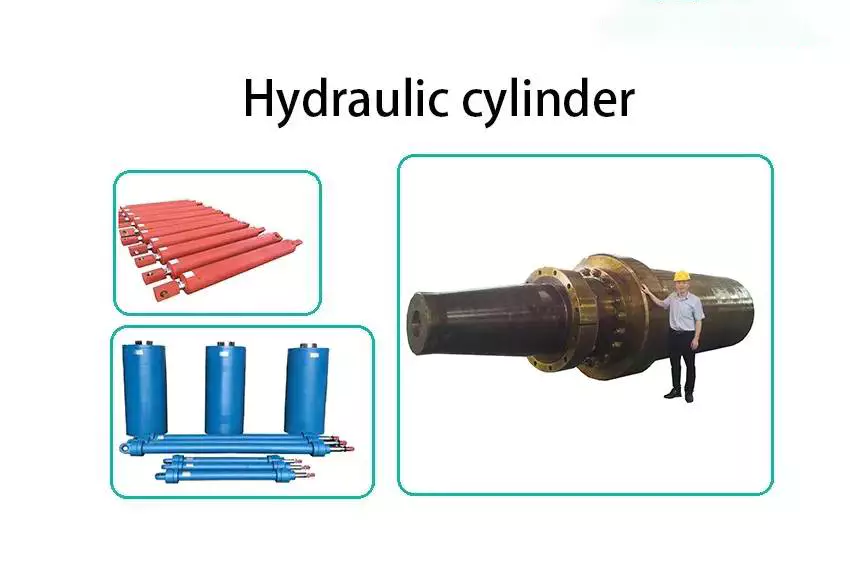
Adaptation of Hydraulic Cylinders for Medical Equipment and Aerospace Applications
Hydraulic cylinders have the potential to be adapted for use in medical equipment and aerospace applications, offering unique advantages in these industries. Let’s explore how hydraulic cylinders can be adapted for these specialized fields:
- Medical Equipment: Hydraulic cylinders can be adapted for various medical equipment applications, including hospital beds, patient lifts, surgical tables, and rehabilitation devices. Here’s how hydraulic cylinders are beneficial in medical equipment:
- Positioning and Adjustability: Hydraulic cylinders provide precise and smooth movement, allowing for accurate positioning and adjustments of medical equipment. This is crucial for ensuring patient comfort, proper alignment, and ease of use.
- Load Handling: Hydraulic cylinders offer high force capabilities, enabling the safe handling of heavy loads in medical equipment. They can support the weight of patients, facilitate smooth transitions, and provide stability during procedures.
- Controlled Motion: Hydraulic cylinders provide controlled and stable motion, which is essential for delicate medical procedures. The ability to adjust speed, position, and force allows for precise and controlled movements, minimizing patient discomfort and ensuring accurate treatment.
- Durability and Reliability: Hydraulic cylinders are designed to withstand rigorous use and demanding environments, making them suitable for medical equipment applications. Their durability and reliability contribute to the long-term performance and safety of medical devices.
- Aerospace Applications: Hydraulic cylinders can also be adapted for aerospace applications, where lightweight yet robust systems are essential. Here’s how hydraulic cylinders are advantageous in aerospace:
- Flight Control Systems: Hydraulic cylinders play a critical role in aircraft flight control systems, including ailerons, elevators, rudders, and landing gear. They provide precise and reliable actuation, allowing pilots to control the aircraft’s movements with accuracy and responsiveness.
- Weight Optimization: Hydraulic cylinders can be designed using lightweight materials, such as aluminum alloys or composite materials, to reduce overall weight. This weight optimization is crucial in aerospace applications to enhance fuel efficiency, payload capacity, and aircraft performance.
- Shock and Vibration Resistance: Aerospace environments involve significant shock and vibration forces. Hydraulic cylinders can be engineered to withstand these dynamic loads while maintaining performance and reliability, ensuring consistent operation even under extreme conditions.
- Space Constraints: Hydraulic cylinders can be designed to fit within the space constraints of aircraft or spacecraft. Their compact size and flexible mounting options allow for efficient integration into the limited available space.
In summary, hydraulic cylinders can be adapted for use in medical equipment and aerospace applications, leveraging their precise positioning, load handling capabilities, controlled motion, durability, and reliability. In medical equipment, hydraulic cylinders enable comfortable patient positioning, smooth transitions, and controlled movements during procedures. In aerospace, hydraulic cylinders provide precise actuation, weight optimization, shock and vibration resistance, and space-efficient solutions. By adapting hydraulic cylinders to these specialized fields, manufacturers can meet the unique requirements and enhance the performance of medical equipment and aerospace systems.
How do hydraulic cylinders handle variations in load and pressure during operation?
Hydraulic cylinders are designed to handle variations in load and pressure during operation, making them versatile and efficient in various applications. Hydraulic systems use the principle of transmitting force through incompressible fluid to generate linear motion. Here’s a detailed explanation of how hydraulic cylinders handle variations in load and pressure:
1. Load Handling:
– Hydraulic cylinders are capable of handling different loads by utilizing the principle of Pascal’s law. According to Pascal’s law, when pressure is applied to a fluid in a confined space, the pressure is transmitted equally in all directions. In a hydraulic cylinder, the force applied to the piston results in an equal force output at the rod end of the cylinder. The size of the piston and the pressure exerted determine the force generated by the cylinder. Therefore, hydraulic cylinders can handle a wide range of loads by adjusting the pressure applied to the fluid.
2. Pressure Compensation:
– Hydraulic systems incorporate pressure compensation mechanisms to handle variations in pressure during operation. Pressure compensating valves or regulators are often used to maintain a consistent pressure in the hydraulic system, regardless of load changes. These valves automatically adjust the flow rate or pressure to ensure stable and controlled operation of the hydraulic cylinder. By compensating for pressure variations, hydraulic cylinders can maintain a consistent force output and prevent damage or instability due to excessive pressure.
3. Control Valves:
– Control valves play a crucial role in managing variations in pressure and load during hydraulic cylinder operation. Directional control valves, such as spool valves or poppet valves, control the flow of hydraulic fluid into and out of the cylinder, enabling precise control of the cylinder’s extension and retraction. By adjusting the position of the control valve, the speed and force exerted by the hydraulic cylinder can be regulated to match the load and pressure requirements of the application. Control valves allow for efficient handling of variations in load and pressure by providing fine-tuned control over the hydraulic system.
4. Accumulators:
– Hydraulic accumulators are often used to handle fluctuations in pressure and load. Accumulators store hydraulic fluid under pressure, which can be released or absorbed as needed to compensate for sudden changes in load or pressure. When the load on the hydraulic cylinder decreases, the accumulator releases stored fluid to maintain pressure and prevent pressure spikes. Conversely, when the load on the cylinder increases, the accumulator absorbs excess fluid to maintain system stability. By utilizing accumulators, hydraulic cylinders can effectively handle variations in load and pressure, ensuring smooth and controlled operation.
5. Feedback and Control Systems:
– Advanced hydraulic systems may incorporate feedback and control systems to monitor and adjust the operation of hydraulic cylinders in real-time. Position sensors or pressure sensors provide feedback on the cylinder’s position, force, and pressure, allowing the control system to make continuous adjustments to optimize performance. These systems can automatically adapt to variations in load and pressure, ensuring precise control and efficient operation of the hydraulic cylinder.
6. Design Considerations:
– Proper design considerations, such as selecting the appropriate cylinder size, piston diameter, and rod diameter, are essential for handling variations in load and pressure. The design should account for the maximum anticipated load and pressure conditions to ensure the hydraulic cylinder operates within its specified range. Additionally, the selection of suitable seals, materials, and components that can withstand the anticipated load and pressure variations is crucial for maintaining the reliability and longevity of the hydraulic cylinder.
By utilizing the principles of hydraulic systems, incorporating pressure compensation mechanisms, employing control valves and accumulators, and implementing feedback and control systems, hydraulic cylinders can effectively handle variations in load and pressure during operation. These features and design considerations allow hydraulic cylinders to adapt and perform optimally in a wide range of applications and operating conditions.


editor by CX 2023-10-31