Stop the Drift: High-Precision Slewing Hydraulic Cylinders for Telescopic Crane Rotation in the Netherlands
You know that sinking feeling when you are operating a telescopic boom, fully extended to 40 meters, trying to position a glass pane on a façade in downtown Amsterdam, and the rotation feels… mushy? That slight hesitation before the swing engages, or worse, the boom drifting a few centimeters when the valve is closed? In my 18 years of troubleshooting hydraulic systems, nothing frustrates a crane operator more than a slewing cylinder that lacks “bite.” It isn’t just about annoyance; it’s a safety hazard, especially when you are dealing with the notorious crosswinds we get off the North Sea.
The slewing mechanism (or swing circuit) is the heartbeat of the crane’s positioning system. Most people focus on the main lift cylinder, but if you can’t rotate precisely, you can’t place the load. We’ve seen too many OEM cylinders that perform beautifully on a factory test bench but start leaking internally after six months of heavy cycling in wet, sandy construction sites. That’s why we take a different approach with our double-acting piston slewing cylinders. We focus heavily on the fit tolerance between the piston and the barrel—we are talking about clearances that would make a watchmaker sweat—because that is where your control comes from.
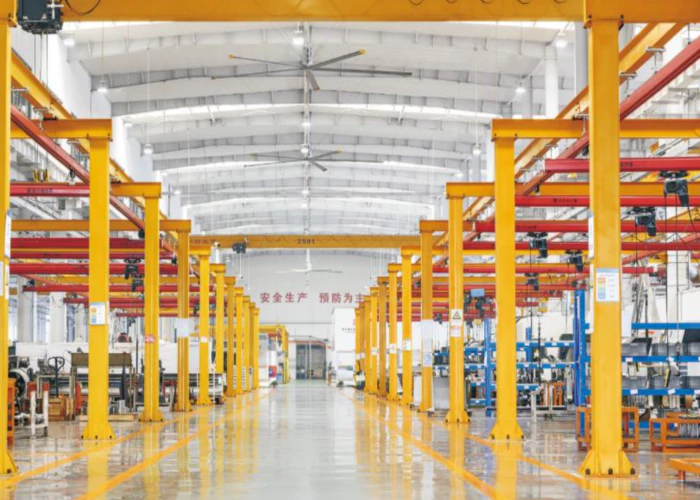
Don’t just take my word for it—step onto our production floor.
I always tell my clients, “You wouldn’t buy a car without looking under the hood.” The same goes for hydraulics. We’ve digitized our entire facility so you can see exactly how we machine our alloy steel barrels and manage our chrome plating baths.
Why “Good Enough” Alloy Steel Fails in Dutch Weather
Let’s talk metallurgy for a minute. The standard ST52 steel is fine for many applications, but for a slewing cylinder that drives a rack-and-pinion or a crank mechanism, the side loads can be deceptive. When you start the swing, the inertia of that long boom puts a massive lateral force on the rod and the gland. We strictly use high-grade welded alloy steel constructions, often upgrading to 27SiMn or modified 42CrMo for the rod, because rigidity is everything. If the rod bends even a fraction of a degree under load, you destroy the wiper seal. Once that seal is gone, the water gets in.
And speaking of water—working in the Netherlands means working in moisture (let’s be honest, it’s raining half the time). The chrome plating on our rods isn’t just for shine. We use a multi-layer chrome process that achieves a hardness of HV800 minimum. Most printers don’t realize that standard single-layer chrome has micro-cracks. Salt moisture penetrates these cracks, rusts the steel underneath, and pops the chrome off like bad paint. We’ve seen this happen on excavators near the Rotterdam port within a year. Our process seals the substrate first, ensuring that even if you are operating on a barge, the cylinder rod remains smooth. Smooth rod equals long seal life; it’s that simple.
SWOT Analysis: The Engineering Reality
Every engineering choice has a trade-off. We don’t believe in hiding the ball. When we designed this specific line of slewing cylinders for the European market, we had to balance weight against durability. Here is how our product stacks up in the current landscape:
Strengths (Internal)
- Zero Internal Leakage: Custom-profiled piston seals hold the boom angle without drift for hours.
- Welded Reliability: Full penetration welds on the base eliminate fatigue cracking common in threaded designs.
- Corrosion Resistance: 48-hour salt spray test passed (NSS rating 9).
Weaknesses (Internal)
- Weight: Our reinforced barrel walls add about 8% more weight than standard lightweight cylinders.
- Lead Time: Custom plating processes add 3 days to standard production schedules.
Opportunities (External)
- Urban Renewal Projects: High demand for compact cranes in tight Dutch city centers requires precise slewing.
- Green Energy: Maintenance cranes for wind turbines need high-stability components.
Threats (External)
- Seal Counterfeits: Low-quality seal kits entering the market that look identical to premium brands but fail under pressure.
- Raw Material Fluctuation: Rising costs of Nickel and Chromium affecting global pricing.
Case Study: Precision Glass Installation in Windy Utrecht
Let me share a story about a client, “Van Dijkstra Lifting Solutions” (name changed for privacy), based near Utrecht. They specialize in high-rise glazing—installing massive glass panels on skyscrapers. They were using a 60-ton telescopic crane, but they had a major problem: the boom swing had “dead spots.” When the operator tried to make a micro-adjustment to align the glass with the frame, the boom wouldn’t move, so he’d give it a bit more stick, and suddenly—whoosh—it would jump 10 degrees. You can imagine the panic when you have a €50,000 piece of glass dangling in the wind.
We diagnosed the issue as “stick-slip” caused by friction in the original cylinder’s gland and poor low-speed lubricity.
The Solution:
We retrofitted their slewing mechanism with our Low-Friction Series Slewing Cylinder. We utilized a specialized PTFE-bronze composite seal profile that reduces breakout friction by 60%. We also honed the barrel to a mirror finish (Ra 0.2) to ensure the oil film was perfectly maintained even at near-zero speeds.
The Result:
The “jumpiness” vanished. The operator could now feather the rotation control, moving the boom literally millimeters at a time. Van Dijkstra reported a 30% reduction in installation time per panel because they weren’t fighting the machine anymore.
What The Industry Says
“We retrofitted three of our older Liebherr cranes with these slewing cylinders. The drift issue we had for years is gone. Solid build quality.”
– Hendrik V., Fleet Manager, Rotterdam
“The chrome plating really holds up. Usually, we see pitting after the first winter near the coast, but these rods are still pristine.”
– Bram de J., Heavy Machinery Repair, Amsterdam
“Technical support actually knows what they are talking about. I asked about port configuration and got a drawing back in an hour.”
– Lucas M., Procurement Officer, Eindhoven
Technical Specifications: Beneath the Surface
The devil is in the details (or the tolerances, as we say). A slewing cylinder isn’t just a push-pull device; it is a holding device. Here is exactly what goes into our Dutch-market-ready units.

| Feature | Specification / Standard |
|---|---|
| Cylinder Type | Double-Acting Piston (Rack & Pinion Compatible) |
| Tube Material | St52 / 27SiMn (Honed to Ra 0.2-0.4μm) |
| Rod Material | 42CrMo4, Quenched & Tempered, Chrome Plated (25-30μm) |
| Working Pressure | 210 Bar (Continuous) / 350 Bar (Peak) |
| Seal Configuration | Merkel/Hallite Compact Slide Ring (Low Friction) |
| Positioning Accuracy | ± 0.5mm (Stroke Dependent) |
| Mounting Style | Spherical Bearing / Trunnion / Custom Flange |
Where Else Do These Work? (Beyond the Crane)
While we optimized these for telescopic cranes, the physics of “high torque, low speed, precise hold” applies to a lot of heavy iron. I’ve helped integrate these same cylinders into diverse machinery across the Benelux region.

- ➤
Aerial Work Platforms: When you have two guys in a basket 30 meters up fixing a streetlight, the basket rotation needs to be silky smooth. Jerky movements there are terrifying.
- ➤
Forestry Loaders: In the timber industry, the grapple needs to swing fast but stop instantly. Our cushioned swing cylinders absorb that inertial shock.
- ➤
Concrete Pump Trucks: The placing boom requires constant, minute adjustments. Internal leakage here means concrete ends up on the wrong spot.
Customization: We Build What You Draw (Or We Draw It For You)
Most suppliers just want to sell you Part Number X123. But what if your mounting ears are worn and you need an oversized pin hole? Or what if you need the ports rotated 90 degrees to clear a new hose routing? That’s where the “Application Engineer” part of my job comes in. We love the weird stuff.
Our factory is set up for flexible manufacturing. We can do a production run of 500 units for an OEM, but we can also do a “batch of one” for a critical repair job. We control the welding, the machining, and the assembly in-house.
Talking Shop: Frequently Asked Questions
My crane boom drifts to the left when holding a load—is it the slewing cylinder?
It’s the classic symptom. While it could be the counterbalance valve bypassing, 9 times out of 10, when we tear these units down, we find the piston seal has been nibbled away, allowing oil to bypass internally. A simple pressure test can confirm this, and if it’s the cylinder, our low-leakage replacement will fix that drift instantly.
What is the delivery cost and timeline for shipping cylinders to Rotterdam or Amsterdam?
Since the Netherlands is a major logistics hub, we have excellent shipping routes. Typically, for a custom batch, production takes 15-20 days, and sea freight to Rotterdam is efficient. For urgent repairs, we can air freight smaller cylinders to Schiphol. Contact us for a precise DDP (Delivered Duty Paid) quote to your door.
Which hydraulic fluid is best for these slewing cylinders in cold Dutch winters?
Good question. The oil viscosity matters a lot for smooth slewing. We generally test our seals with ISO VG 46, which is a great all-rounder. However, if you are operating in the northern provinces during a freeze, an ISO VG 32 might prevent that sluggish morning start-up. Just make sure your system is flushed clean before switching.
How do you prevent the chrome rod from rusting in salty coastal air?
Standard chrome isn’t enough near the North Sea. We use a double-layer technique often called “Duplex” plating, or in extreme cases, a Nickel-Chrome base. The nickel layer seals the steel against moisture penetration, while the chrome provides the hard wear surface. It significantly extends the life of the rod against pitting.
Can you manufacture a slewing cylinder based on a drawing from an obsolete crane model?
Absolutely. That is our specialty. If you have the old part number, a drawing, or even just the physical cylinder (which you can measure or ship to us), we can reverse engineer it. We often improve the design by using modern sealing materials that weren’t available when the crane was first built.
Ready to restore precision to your fleet?
Don’t let a drifting boom compromise your safety or reputation.