Lug Mount Hydraulic Cylinders: The Backbone of Centerline Stability
When you need rigid mounting without the bulk of a flange. Built for the long haul.
I’ve been crawling around industrial machinery for nearly two decades now, and if there is one thing that separates a well-designed machine from a maintenance nightmare, it is how the force gets transferred to the frame. Everyone talks about pressure ratings and seals, but they forget the mount. This is where the Lug Mount Hydraulic Cylinder really shines, and frankly, it doesn’t get the credit it deserves. Unlike a clevis or trunnion that allows the cylinder to pivot (which is great if you need it, but terrible if you don’t), a lug mount is all about rigidity. It’s designed to be bolted down hard, usually parallel to the centerline of the actuator. I remember back in ’08, we had a client with a baling press that kept blowing rod seals every three months. Why? Because they were using a slightly off-center foot mount, creating a bending moment every time the ram extended. We swapped it for a Centerline Lug Mount, which put the mounting bolts in shear rather than tension and kept the force vector perfectly straight. The result? They haven’t replaced a seal in that machine since. It’s these “boring” engineering choices that save you thousands in downtime.
The trick with lug mounts—and most printers or generic catalog suppliers don’t realize this—is the weld integrity. A lug isn’t just a block of steel stuck to the side of a tube. It effectively becomes part of the pressure vessel. When the cylinder is under 3000 PSI of pressure, the tube actually expands microscopically (breathing). If the lug weld is too rigid or has poor penetration, that expansion cycle will crack the weld at the toe. We use a specific pre-heat process and often employ Centerline Lugs (where the lugs are welded to the head and cap, not the tube) to avoid distorting the barrel. This ensures that the piston can travel the full length of the stroke without hitting a “tight spot” caused by weld shrinkage. It’s a small detail, but when you are running a high-speed cycle, it’s the difference between a smooth operation and a jerky, chattering mess.
The Engineering Core: Why Geometry Matters
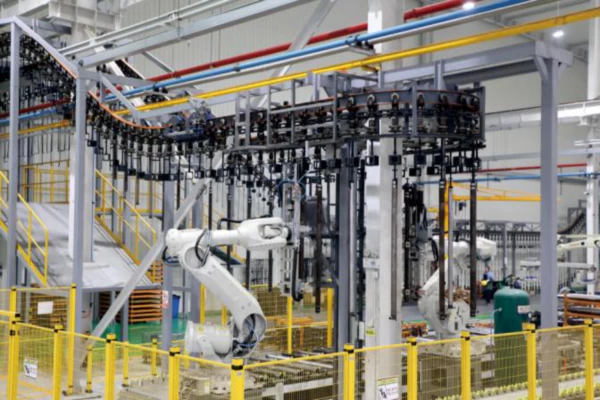
Our certified welding bay, where lugs are fused with deep penetration techniques.
When we spec these out, we look at two distinct styles: Side Lugs (Foot Mounts) and Centerline Lugs. Side lugs are easier to install because you just bolt them to a flat surface, but they create that nasty offset moment I mentioned earlier. Centerline lugs are rectangular tabs machined onto the head and cap that align with the rod axis. They require a slot or a keyed surface in your machine frame, but they are mechanically superior. For materials, we don’t mess around with mild steel for the lugs. We typically use ST52-3 or Q355D forged blocks because they offer excellent weldability without becoming brittle. One thing to watch out for is the “keyway.” In really heavy-duty applications (like shearing machines), we recommend machining a keyway on the bottom of the lug. This takes the shear load off the bolts. If you rely solely on bolt friction to hold a 50-ton cylinder in place, gravity and vibration will eventually prove you wrong.
| Technical Feature | Standard Spec (Ever Power) | The “Old Pro” Insight |
|---|---|---|
| Mounting Style | Centerline Lugs / Side Lugs (MS2) | Always go Centerline if you can. It saves your rod bearings from side-load wear. |
| Lug Material | Forged Steel (Weldable) | Cast iron lugs crack. We only use forged steel for shock resistance. |
| Weld Type | Full Penetration Groove Weld | No fillet welds here. The lug needs to be one with the head/cap. |
| Keyways | Optional Shear Keys | Highly recommended for pressures over 2000 PSI to save your bolts. |
| Bore Range | 40mm to 500mm | We can go bigger, but 500mm covers 99% of press applications. |
SWOT Analysis: Is Lug Mount Right for You?
I’m a straightforward guy. Lug mounts are fantastic, but they aren’t a magic wand. You need to know the trade-offs before you design your machine around them.
Strengths
- Stability: Centerline lugs offer the best linear force transfer, period.
- Compactness: Lower profile than flange mounts in many orientations.
- Simplicity: Easy to access bolts for maintenance (unlike some trunnion mounts).
Weaknesses
- Alignment: Requires precise machining of the mating frame. No room for error.
- Shear Load: Bolts are vulnerable if shear keys aren’t used.
Opportunities
- Retrofits: Easy to upgrade older machines with custom-spaced lugs.
- Automation: Integrating position sensors into lug-mounted cylinders for smart presses.
Threats
- Vibration: High-frequency vibration can loosen lug bolts if not properly torqued/locked.
- Frame Flex: If the machine frame isn’t rigid, it will twist the cylinder at the lugs.
Where We See Them Shine

You see Lug Mount Hydraulic Cylinders everywhere in the Metal Forming Industry. Punch presses, shears, and bending brakes almost exclusively use this style because the cylinder needs to be rigidly attached to the frame to ensure the die hits the same spot every time. Another huge area is Plastic Injection Molding. The injection unit cylinders often use centerline lugs to push the screw forward. Why? because if that cylinder is even slightly misaligned, the screw binds in the barrel, and you’ve just ruined a $50,000 component. We also see them in Civil Engineering, specifically on lock gates and bridge actuators, where the cylinder lays flat and pushes horizontally. The lugs allow the cylinder to be supported along its length, preventing sagging.
Trend Analysis: Smarter, Faster, Stronger
The trend we are seeing lately is “Hybrid Mounting.” Engineers are combining lugs with a front flange pilot. The pilot takes the alignment load, and the lugs take the tension load. It’s the best of both worlds. Also, there is a push for **Self-Lubricating Bushings** inside the bolt holes of the lugs (for pivot lug applications). This reduces maintenance for machines that are buried deep inside a plant where a grease gun rarely reaches. And of course, **Smart Cylinders**—we are drilling the rods to accept linear transducers, turning these rugged iron blocks into precision servo-actuators.
Case Study: The Vibrating Screen Fix
Client: Midwest Aggregate & Mining | Location: Wisconsin, USA
The Challenge: A large quarry operation was using standard tie-rod cylinders to adjust the angle of their vibrating shaker screens. The constant vibration (we’re talking high-frequency shaking 24/7) was causing the tie-rods to stretch and loosen, leading to catastrophic failure every 4 months. The downtime was costing them $12,000 an hour in lost production.
Our Solution: We engineered a custom **Centerline Lug Mount Cylinder**.
1. **Construction:** Switched to a fully welded body with heavy-duty forged lugs welded directly to the head and cap.
2. **Mounting:** Designed a “keyed” lug system where the lugs sat in a machined groove on the shaker frame, taking the shear load off the bolts.
3. **Locking:** Used Stage 8 locking fasteners for the lug bolts to mechanically prevent them from backing out under vibration.
The Result: The new cylinders have been running for 18 months without a single failure. The maintenance crew calls them “the anvils” because they just sit there and take the beating.
“We tried Loctite, we tried welding the nuts… nothing worked until Ever Power redesigned the mount. The keyed lug idea was genius.”
— Jim R., Plant Maintenance Lead
“I was worried about the lead time for a custom build, but they expedited the welding process and got it here in 4 weeks.”
— Sarah L., Operations Manager
“Finally, a cylinder that doesn’t leak. It’s boring, and in my line of work, boring is profitable.”
— Dave K., Procurement Specialist
Factory Direct: We Build What You Draw
Look, anyone can sell you a generic cylinder. But when you need a lug mount, you usually need specific hole spacing to match your existing holes. We get it. We have CNC machining centers that allow us to customize the lug dimensions, hole diameter, and position to within 0.05mm. We don’t just “make it fit”—we make it right. We pressure test every single unit to 1.5x working pressure, checking for any deformation in the barrel near the lugs (a common failure point in cheap cylinders). If it passes our test bench, it will survive your factory floor.
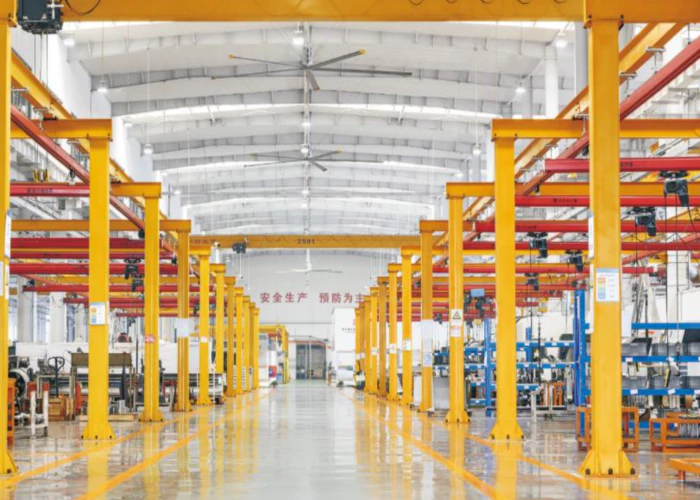
Step Inside Our Welding Bay
We believe in transparency. Walk through our factory virtually and see how we weld these heavy-duty lugs.
👉 Click here to visit our VR Factory
No safety glasses required. Just pure engineering.
FAQ: Questions We Get From The Field
What is the real difference between centerline lugs and side lugs for stability?
It is night and day, honestly. Centerline lugs place the mounting points directly in line with the piston rod, meaning the force is transmitted straight through the cylinder axis. Side lugs, which look like little feet on the side, introduce a bending moment (torque) every time the cylinder pushes. If you have high pressure or long strokes, centerline lugs are the only way to avoid seal wear caused by the rod bowing.
How much does a custom lug mount cylinder cost for a 50-ton press application?
Pricing varies based on the bore size and stroke, but for a heavy-duty industrial press application, you are typically looking at $800 to $1,500 per unit. The cost is driven by the welding labor—lugs require full-penetration welds to ensure they don’t shear off under that 50-ton load. It is cheaper than a flange mount but more expensive than a simple clevis.
Can you ship replacement lug mount cylinders to manufacturing plants in Mexico or Canada?
Yes, we ship to Mexico and Canada weekly. Since lug dimensions (the hole spacing and width) are critical for drop-in replacements, we usually ask for a quick sketch or the OEM part number. We handle the NAFTA/USMCA paperwork so your maintenance team isn’t stuck waiting on customs clearance.
Why are my lug mount cylinder bolts shearing off during high-speed cycles?
We see this a lot in injection molding. It is usually because the bolts are taking shear load, which they hate. The lug holes should be dowel-pinned for alignment, or you should use a ‘keyed’ lug design where a block on the machine frame takes the force, and the bolts just hold it down. Relying solely on bolt friction for a lug mount is a recipe for broken bolts.
Do you offer self-aligning bearings in the lugs for misalignment compensation?
We can, but it is rare for standard lugs. Usually, we use a spherical rod eye on the rod end to handle misalignment. If the lugs themselves need to pivot, we would typically design a trunnion mount instead. However, for custom jobs, we can machine the lugs to accept spherical bearings if your frame flex is extreme.
Ready to Lock In Your Linear Motion?
Stop dealing with wobbly cylinders. Let’s spec a lug mount that fits perfectly.