AGC / Main Roll Force Cylinders: Where Micron Tolerances Meet Massive Tonnage
There is a very specific, expensive sound a rolling mill makes when the Automatic Gauge Control (AGC) system starts hunting. It’s a rhythmic thrumming that tells any experienced engineer that the hydraulic cylinders are fighting the control loop. In my eighteen years of walking the floors of hot strip mills and cold reversing stands—from the humid coasts of Brazil to the icy industrial heartland of Russia—I’ve learned that the AGC / Main Roll Force Cylinder is the single most critical component for product quality. If your cylinder has high hysteresis (friction), you can have the best computer algorithms in the world, but you will still get gauge bands on your coil. Most printers and procurement managers see a massive steel block and assume it’s just a “pusher.” They don’t realize that inside that block is a servo-hydraulic system that needs to respond in milliseconds to force changes of 2,000 tons. The trick isn’t generating the force; anyone can build a jack. The trick is moving that force 5 microns in 10 milliseconds without overshooting. We’ve seen mills losing yield simply because their seal configuration created too much “stick-slip,” turning their precision machine into a blunt instrument.
👀 Inspect Our Precision Manufacturing
Don’t rely on a brochure. Walk through our clean-room assembly area and heavy honing workshop right now—virtually.
🚀 PARTICIPE DO TOUR VIRTUAL DA FÁBRICA
See how we achieve Ra 0.1 surface finishes.
The Engineering Reality: Hysteresis is the Enemy
Let’s get technical about what actually kills performance in a Main Roll Force Cylinder. It’s rarely a structural failure of the shell; it’s the friction characteristics. In a high-speed mill, the cylinder is constantly dithering—making microscopic adjustments to maintain the roll gap. If you use standard heavy-duty seals, the “breakaway friction” is high. The control system sends a signal, pressure builds, nothing happens… and then bang, the cylinder jumps. That jump puts a wave in your steel. In our experience, achieving “Servo Quality” performance requires a completely different approach to tribology. We don’t just use standard chrome rods. We grind the rod, plate it, and then super-finish it to a mirror-like Ra 0.1µm. We use hydrostatic bearing designs in some ultra-high-precision applications where the piston literally floats on a film of oil, eliminating metal-to-metal contact. This reduces friction to near zero, allowing the AGC system to react instantly.
Fluid compatibility is another massive headache. Many modern mills run fire-resistant fluids like Water Glycol (HFC) or Polyol Ester (HFDU). Water glycol is particularly aggressive—it has the lubricity of, well, water. It attacks standard polyurethanes and can cause corrosion on the rod if there is even a pinhole in the plating. We engineer specific seal profiles using PTFE-Bronze composites or specialized EPDM compounds that can survive the chemical attack while maintaining the low-friction properties required for gauge control.
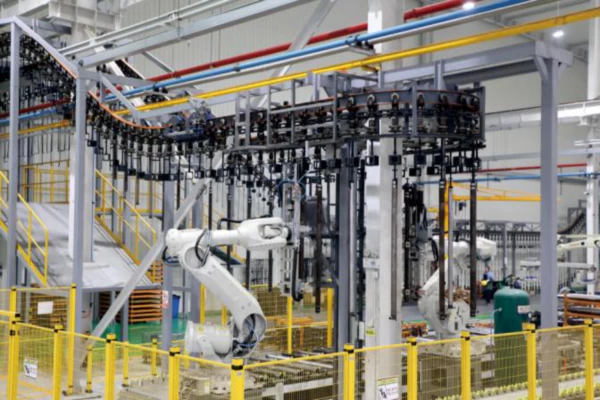
Our clean-room assembly is vital; even a 5-micron particle can score a servo-quality rod.
Technical Specs: The Difference Between “Heavy Duty” and “Mill Duty”
I often have to explain to purchasing departments why a mill cylinder costs three times as much as a press cylinder. It comes down to the materials and the safety factors. A standard cylinder uses a welded tube. An AGC / Main Roll Force Cylinder is typically machined from a solid forged block of 42CrMo4 steel. There are no welds to fatigue under the billion cycles of shock loading a mill sees. We also integrate linear position sensors (LDTs) directly into the core of the cylinder, protected from the heat and scale of the mill environment. Below is a comparison of what you might find on the shelf versus what we engineer for the stand.
| Feature / Component | Standard Industrial Cylinder | Ever Power Mill-Duty Cylinder |
|---|---|---|
| Corpo cilíndrico | Welded ST52 Tube | Solid Forged 42CrMo4 Block (Zero Welds) |
| Revestimento de haste | Cromo padrão (20µm) | Laser Cladding / Ceramic (Ceraplate) >100µm |
| Tecnologia de Vedação | Standard U-Cup (High Friction) | Servo-Step Seals (Low Friction PTFE) |
| Position Feedback | None / External | Integrated Magnetostrictive (Sony/Balluff) |
| Pressão de operação | 210 Bar | 280 Bar continuous / 400 Bar Peak |

Whether it’s the roughing stand or the finishing mill, precision dictates yield.
Application Scenarios: Hot Strip vs. Cold Rolling
The environment dictates the design. In a Hot Strip Mill (HSM), the enemy is scale and cooling water. The cylinder is constantly bombarded with high-pressure descaling water mixed with abrasive iron oxide. If the rod wiper fails, that slurry enters the cylinder and destroys the bearings in hours. For these applications, we utilize a double-wiper system with a brass scraper ring to physically knock off the scale before it reaches the primary seal. Contrast this with a Cold Rolling Mill (CRM), where cleanliness is paramount, and the forces are higher. Here, the focus is on extreme stiffness. Any “softness” in the hydraulic column due to ballooning of the cylinder walls will translate into gauge variation. We design our CRM cylinders with extra-thick walls to minimize expansion under load (compliance), ensuring that when the servo valve says “move,” the roll gap moves exactly that amount.
Case Study: The “Gauge Banding” Nightmare in Brazil
Client: Metalúrgica São Paulo (Brazil)
O desafio: A 4-High Cold Reversing Mill was experiencing persistent gauge variation (banding) on their automotive-grade steel coils. The AGC system was hunting, unable to hold the setpoint. The OEM cylinders had high stick-slip friction, and the maintenance team was changing servo valves, thinking that was the issue. Downtime was costing them roughly $20,000 per shift in downgraded material.
Nossa solução: We pulled the cylinders and tested them. The break-away pressure was 15 bar—way too high. The seals had swollen due to an incompatible fluid additive. We manufactured custom AGC Hydraulic Cylinders with a proprietary low-friction PTFE/Bronze seal configuration and optimized the guide bands for better side-load resistance. We also integrated a higher resolution Sony Magnescale probe directly into the cylinder rod.
O resultado: The stick-slip vanished. Break-away pressure dropped to 1.5 bar. Gauge tolerance improved from +/- 6 microns to +/- 2 microns. The mill speed was increased by 15% because the control loop was stable. The Plant Director told us it was the best ROI they had seen in five years.
Strategic Analysis: The State of Mill Hydraulics (SWOT)
Pontos fortes (internos)
In-house deep hole drilling and laser cladding capabilities allow us to control the quality of large-bore forged cylinders that others have to outsource.
Pontos fracos (internos)
Our rigorous testing protocols (static hold for 24 hours at 1.5x pressure) mean our lead times are rarely “off-the-shelf.” We trade speed for perfection.
Oportunidades (externas)
Industry 4.0: Mills are demanding “Smart Cylinders” with built-in pressure, temperature, and vibration sensors for predictive maintenance.
Ameaças (externas)
Low-cost refurbishment shops use standard seal kits that look compatible but fail under HFC fluid conditions, giving the industry a bad name.
Trend Watch: Laser Cladding & Digitalization
The days of simple hard chrome are numbered in severe applications. The biggest trend we are driving is the use of Laser Cladding (or High-Velocity Oxygen Fuel – HVOF) for piston rods. This creates a metallurgical bond that is impervious to peeling and offers corrosion resistance 10x that of chrome. It’s expensive, but when you calculate the cost of a roll change delay, it’s cheap. Furthermore, digitalization is real. We are shipping more cylinders with embedded IO-Link sensors that tell the PLC not just where the cylinder is, but how it feels (temperature, vibration). This allows maintenance teams to schedule a swap before a failure stops the line.
Factory & Customization: We Rebuild the Giants
Let’s be honest, you don’t always need a brand-new cylinder. A 10-ton forged AGC block is a massive asset. We run a dedicated refurbishment line where we take your battered, leaking cylinders, strip them down, bore out the damage, and manufacture oversized pistons to fit. We can reverse engineer obsolete cylinders from mills built in the 1970s (We stick to the original dimensions, but upgrade the internal sealing technology). Whether you need a short-stroke “pancake” capsule or a long-stroke bending cylinder, we have the machinery to handle it.
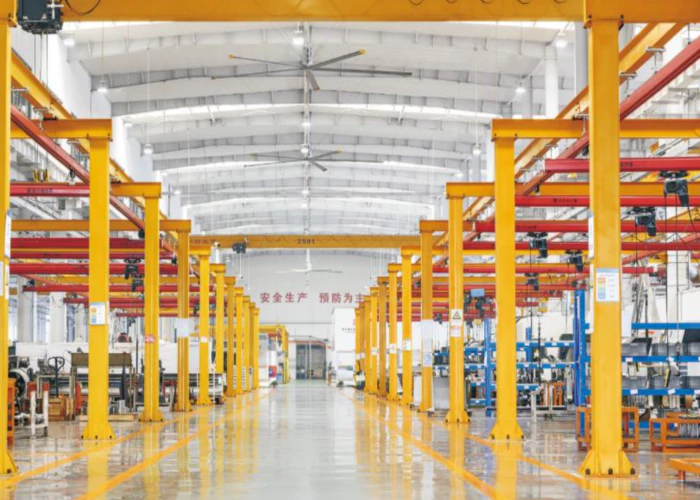
Every mill cylinder undergoes high-pressure cycling to simulate actual rolling conditions.
O que diz a indústria
“We struggled with seal life on our Edger cylinders for years. Ever Power recommended a switch to a specific glass-filled PTFE seal. We went from 3 months life to 18 months. Incredible.”
— Klaus M., Maintenance Lead, Germany
“Fast response time. When our coiler mandrel cylinder failed, they expedited a repair and had it back to us in 5 days. Saved our production schedule.”
— John D., Mill Superintendent, Ohio, USA
“The Ceraplate coating they applied to our descaling area cylinders is tough as nails. No pitting, no rust, even with the water blasting it 24/7.”
— Li Wei, Equipment Engineer, China
FAQ: Conversations from the Shop Floor
We hear these questions every week. Here are the straight answers.
Why is my AGC cylinder oscillating (hunting)?
Oscillation usually comes from high seal friction (stick-slip) or air in the system. If the seal friction is too high, the servo valve overcompensates. You likely need low-friction seals or a check on your servo tuning.
Can you repair a scored cylinder rod from a rolling mill?
Yes, depending on depth. For mill cylinders, we often grind down the damage and apply laser cladding to restore the dimension. It results in a surface harder and better than the original.
What is the cost of a custom rolling mill cylinder?
It varies wildly based on size and complexity (e.g., integrated sensors). A small bending cylinder might be $2,000, while a large AGC capsule could be $20,000+. We need specs to quote accurately.
Which hydraulic fluid is best for rolling mills?
Most mills use fire-resistant fluids like Water Glycol (HFC) or Polyol Ester (HFDU) for safety. However, your seals MUST be compatible. Never put standard NBR seals in a system running Phosphate Ester.
Where can I find a hydraulic cylinder supplier near me for urgent repairs?
We operate globally. For urgent mill breakdowns, we can often air-freight replacement parts or prioritize manufacturing. We ship directly to mill sites in the USA, Europe, and Asia.
How do I extend the life of my roll-bending cylinders?
Keep the oil clean! Particle contamination is the #1 killer. Also, ensure your roll chocks are properly lubricated so they don’t transfer excessive side loads to the cylinder rod.
Mill Downtime is Not an Option
Your gauge control depends on your hydraulics. Let’s make sure they are up to the task.