AGC / Main Roll Force Cylinders: Where Micron Tolerances Meet Massive Tonnage
There is a very specific, expensive sound a rolling mill makes when the Automatic Gauge Control (AGC) system starts hunting. It’s a rhythmic thrumming that tells any experienced engineer that the hydraulic cylinders are fighting the control loop. In my eighteen years of walking the floors of hot strip mills and cold reversing stands—from the humid coasts of Brazil to the icy industrial heartland of Russia—I’ve learned that the AGC / Main Roll Force Cylinder is the single most critical component for product quality. If your cylinder has high hysteresis (friction), you can have the best computer algorithms in the world, but you will still get gauge bands on your coil. Most printers and procurement managers see a massive steel block and assume it’s just a “pusher.” They don’t realize that inside that block is a servo-hydraulic system that needs to respond in milliseconds to force changes of 2,000 tons. The trick isn’t generating the force; anyone can build a jack. The trick is moving that force 5 microns in 10 milliseconds without overshooting. We’ve seen mills losing yield simply because their seal configuration created too much “stick-slip,” turning their precision machine into a blunt instrument.
👀 Inspect Our Precision Manufacturing
Don’t rely on a brochure. Walk through our clean-room assembly area and heavy honing workshop right now—virtually.
🚀 ENTRA NEL TOUR DELLA FABBRICA VR
See how we achieve Ra 0.1 surface finishes.
La realtà ingegneristica: l'isteresi è il nemico
Let’s get technical about what actually kills performance in a Main Roll Force Cylinder. It’s rarely a structural failure of the shell; it’s the friction characteristics. In a high-speed mill, the cylinder is constantly dithering—making microscopic adjustments to maintain the roll gap. If you use standard heavy-duty seals, the “breakaway friction” is high. The control system sends a signal, pressure builds, nothing happens… and then botto, the cylinder jumps. That jump puts a wave in your steel. In our experience, achieving “Servo Quality” performance requires a completely different approach to tribology. We don’t just use standard chrome rods. We grind the rod, plate it, and then super-finish it to a mirror-like Ra 0.1µm. We use hydrostatic bearing designs in some ultra-high-precision applications where the piston literally floats on a film of oil, eliminating metal-to-metal contact. This reduces friction to near zero, allowing the AGC system to react instantly.
Fluid compatibility is another massive headache. Many modern mills run fire-resistant fluids like Water Glycol (HFC) or Polyol Ester (HFDU). Water glycol is particularly aggressive—it has the lubricity of, well, water. It attacks standard polyurethanes and can cause corrosion on the rod if there is even a pinhole in the plating. We engineer specific seal profiles using PTFE-Bronze composites or specialized EPDM compounds that can survive the chemical attack while maintaining the low-friction properties required for gauge control.
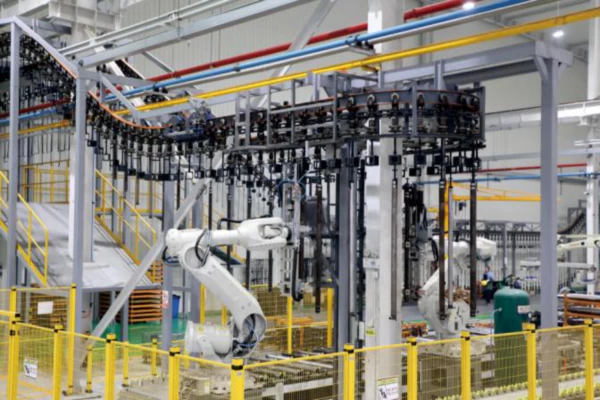
Our clean-room assembly is vital; even a 5-micron particle can score a servo-quality rod.
Specifiche tecniche: la differenza tra "Heavy Duty" e "Mill Duty"
I often have to explain to purchasing departments why a mill cylinder costs three times as much as a press cylinder. It comes down to the materials and the safety factors. A standard cylinder uses a welded tube. An AGC / Main Roll Force Cylinder is typically machined from a solid forged block of 42CrMo4 steel. There are no welds to fatigue under the billion cycles of shock loading a mill sees. We also integrate linear position sensors (LDTs) directly into the core of the cylinder, protected from the heat and scale of the mill environment. Below is a comparison of what you might find on the shelf versus what we engineer for the stand.
| Caratteristica/Componente | Cilindro industriale standard | Cilindro per impieghi gravosi Ever Power |
|---|---|---|
| Corpo del cilindro | Tubo ST52 saldato | Solid Forged 42CrMo4 Block (Zero Welds) |
| Rivestimento delle aste | Cromo standard (20µm) | Rivestimento laser / Ceramica (Ceraplate) >100µm |
| Tecnologia di sigillatura | Coppa a U standard (attrito elevato) | Guarnizioni Servo-Step (PTFE a basso attrito) |
| Feedback di posizione | Nessuno / Esterno | Integrated Magnetostrictive (Sony/Balluff) |
| Pressione di esercizio | 210 bar | 280 Bar continui / 400 Bar di picco |

Whether it’s the roughing stand or the finishing mill, precision dictates yield.
Application Scenarios: Hot Strip vs. Cold Rolling
The environment dictates the design. In a Hot Strip Mill (HSM), the enemy is scale and cooling water. The cylinder is constantly bombarded with high-pressure descaling water mixed with abrasive iron oxide. If the rod wiper fails, that slurry enters the cylinder and destroys the bearings in hours. For these applications, we utilize a double-wiper system with a brass scraper ring to physically knock off the scale before it reaches the primary seal. Contrast this with a Cold Rolling Mill (CRM), where cleanliness is paramount, and the forces are higher. Here, the focus is on extreme stiffness. Any “softness” in the hydraulic column due to ballooning of the cylinder walls will translate into gauge variation. We design our CRM cylinders with extra-thick walls to minimize expansion under load (compliance), ensuring that when the servo valve says “move,” the roll gap moves exactly that amount.
Case Study: The “Gauge Banding” Nightmare in Brazil
Client: Metalúrgica São Paulo (Brazil)
La sfida: A 4-High Cold Reversing Mill was experiencing persistent gauge variation (banding) on their automotive-grade steel coils. The AGC system was hunting, unable to hold the setpoint. The OEM cylinders had high stick-slip friction, and the maintenance team was changing servo valves, thinking that was the issue. Downtime was costing them roughly $20,000 per shift in downgraded material.
La nostra soluzione: We pulled the cylinders and tested them. The break-away pressure was 15 bar—way too high. The seals had swollen due to an incompatible fluid additive. We manufactured custom AGC Hydraulic Cylinders con una configurazione proprietaria di tenuta in PTFE/bronzo a basso attrito e fasce di guida ottimizzate per una migliore resistenza ai carichi laterali. Abbiamo anche integrato una sonda Sony Magnescale ad alta risoluzione direttamente nello stelo del cilindro.
Il risultato: The stick-slip vanished. Break-away pressure dropped to 1.5 bar. Gauge tolerance improved from +/- 6 microns to +/- 2 microns. The mill speed was increased by 15% because the control loop was stable. The Plant Director told us it was the best ROI they had seen in five years.
Analisi strategica: lo stato dell'idraulica dei mulini (SWOT)
Punti di forza (interni)
In-house deep hole drilling and laser cladding capabilities allow us to control the quality of large-bore forged cylinders that others have to outsource.
Debolezze (interne)
Our rigorous testing protocols (static hold for 24 hours at 1.5x pressure) mean our lead times are rarely “off-the-shelf.” We trade speed for perfection.
Opportunità (esterne)
Industry 4.0: Mills are demanding “Smart Cylinders” with built-in pressure, temperature, and vibration sensors for predictive maintenance.
Minacce (esterne)
Low-cost refurbishment shops use standard seal kits that look compatible but fail under HFC fluid conditions, giving the industry a bad name.
Trend Watch: Rivestimento laser e digitalizzazione
I giorni della semplice cromatura dura sono contati nelle applicazioni più gravose. La tendenza più importante che stiamo promuovendo è l'uso del Laser Cladding (o High-Velocity Oxygen Fuel – HVOF) per le bielle. Questo crea un legame metallurgico resistente alla pelatura e offre una resistenza alla corrosione 10 volte superiore a quella del cromo. È costoso, ma se si calcola il costo di un ritardo nel cambio cilindro, è economico. Inoltre, la digitalizzazione è una realtà. Stiamo distribuendo più cilindri con sensori IO-Link integrati che comunicano al PLC non solo Dove il cilindro è, ma come ci si sente (temperatura, vibrazioni). Ciò consente ai team di manutenzione di programmare una sostituzione prima che un guasto arresti la linea.
Fabbrica e personalizzazione: ricostruiamo i giganti
Let’s be honest, you don’t always need a brand-new cylinder. A 10-ton forged AGC block is a massive asset. We run a dedicated refurbishment line where we take your battered, leaking cylinders, strip them down, bore out the damage, and manufacture oversized pistons to fit. We can reverse engineer obsolete cylinders from mills built in the 1970s (We stick to the original dimensions, but upgrade the internal sealing technology). Whether you need a short-stroke “pancake” capsule or a long-stroke bending cylinder, we have the machinery to handle it.
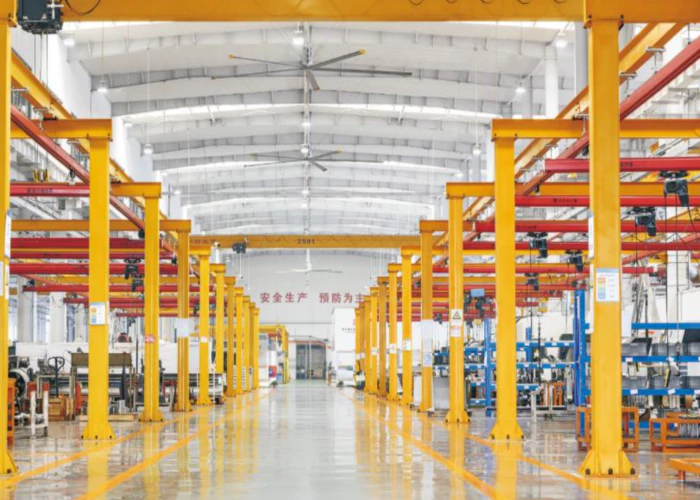
Ogni cilindro del laminatoio è sottoposto a cicli ad alta pressione per simulare le reali condizioni di laminazione.
Cosa dice l'industria
"Abbiamo lottato per anni con la durata delle guarnizioni dei nostri cilindri Edger. Ever Power ci ha consigliato di passare a una guarnizione specifica in PTFE caricato a fibra di vetro. Siamo passati da 3 mesi a 18 mesi di durata. Incredibile."
— Klaus M., Responsabile della manutenzione, Germania
"Tempi di risposta rapidi. Quando il cilindro del mandrino del nostro avvolgitore si è rotto, hanno accelerato la riparazione e ce l'hanno restituito in 5 giorni. Ci hanno salvato la produzione."
— John D., Sovrintendente del mulino, Ohio, USA
"Il rivestimento Ceraplate che hanno applicato ai cilindri della nostra area di disincrostazione è resistente come l'acciaio. Nessuna corrosione, nessuna ruggine, anche con un getto d'acqua continuo."
— Li Wei, Ingegnere delle attrezzature, Cina
FAQ: Conversazioni dal reparto produttivo
Ci sentiamo ripetere queste domande ogni settimana. Ecco le risposte dirette.
Perché il cilindro del mio AGC oscilla (pendola)?
Le oscillazioni sono solitamente causate da un elevato attrito delle guarnizioni (stick-slip) o da aria nel sistema. Se l'attrito delle guarnizioni è eccessivo, la servovalvola sovracompensa. Probabilmente sono necessarie guarnizioni a basso attrito o una verifica della messa a punto del servo.
È possibile riparare un'asta di cilindro rigata proveniente da un laminatoio?
Sì, a seconda della profondità. Per i cilindri di fresatura, spesso ripariamo il danno e applichiamo un rivestimento laser per ripristinarne la dimensione. Il risultato è una superficie più dura e di qualità migliore rispetto all'originale.
Qual è il costo di un cilindro di laminazione personalizzato?
Varia notevolmente in base alle dimensioni e alla complessità (ad esempio, sensori integrati). Un piccolo cilindro di curvatura potrebbe costare $2.000, mentre una grande capsula AGC potrebbe costare più di $20.000. Abbiamo bisogno delle specifiche per un preventivo accurato.
Quale fluido idraulico è migliore per i laminatoi?
La maggior parte degli impianti utilizza fluidi ignifughi come acqua e glicole (HFC) o estere di poliolo (HFDU) per motivi di sicurezza. Tuttavia, le guarnizioni DEVONO essere compatibili. Non installare mai guarnizioni NBR standard in un impianto che utilizza estere di fosfato.
Dove posso trovare un fornitore di cilindri idraulici vicino a me per riparazioni urgenti?
Operiamo a livello globale. In caso di guasti urgenti agli impianti, spesso possiamo spedire i pezzi di ricambio per via aerea o dare priorità alla produzione. Spediamo direttamente agli impianti negli Stati Uniti, in Europa e in Asia.
Come posso prolungare la durata dei miei cilindri di piegatura a rulli?
Mantenete l'olio pulito! La contaminazione da particelle è la causa scatenante del #1. Assicuratevi inoltre che i cunei di supporto siano adeguatamente lubrificati in modo che non trasferiscano carichi laterali eccessivi allo stelo del cilindro.
I tempi di inattività del mulino non sono un'opzione
Il controllo del manometro dipende dal sistema idraulico. Assicuriamoci che sia all'altezza del compito.