Rolling Mill Machine Hydraulic Cylinders: The Pulse of High-Speed Steel Production
There is a specific rhythm to a rolling mill floor—the thrum of the motors, the hiss of descaling water, and the immense, shuddering force as a slab enters the bite. In my eighteen years dealing with mill hydraulics, from the hot strip mills of Pennsylvania to the precision foil mills in Germany, I’ve learned that the Siłownik hydrauliczny maszyny walcowniczej is the component that keeps that rhythm from turning into a breakdown. Whether we are talking about Automatic Gauge Control (AGC) cylinders, roll bending, or shifting cylinders, these actuators operate in what I call “hydraulic hell.” They face high-frequency oscillation, fire-resistant fluids that offer terrible lubricity, and radiant heat that can cook a standard seal in hours. Most printers and procurement managers look at the tonnage rating and move on, but they don’t see the hysteresis (stick-slip) causing gauge bands on the coil. If your AGC cylinder has high friction, your control loop fights the mechanics, and you end up with off-spec steel. It’s that simple. We’ve seen mills lose thousands of dollars an hour because a $50 seal couldn’t handle the dither frequency.
👀 Inspect Our Heavy-Duty Production Line
Don’t rely on brochures. Walk through our honing workshop and clean-room assembly area right now—virtually.
🚀 WEŹ UDZIAŁ W WYCIECZCE VR FABRYCZNEJ
See how we achieve micron-level tolerances.
The Engineering Reality: Hysteresis is the Enemy
Let’s get technical about what actually matters in a Siłownik hydrauliczny maszyny walcowniczej. In an AGC application, the cylinder might be making adjustments of 5 to 10 microns, dozens of times a second. If you have “stiction” (static friction) in the seals, the servo valve opens, pressure builds, but the cylinder doesn’t move… until it jumps. That jump creates a ripple in the steel sheet. In our experience, standard heavy-duty industrial cylinders are useless here. You need “Servo Quality” actuators. This means we treat the rod surface differently. We don’t just chrome it; we grind it, plate it, and then super-finish it to Ra 0.1 or better. We also design hydrostatic bearings for the piston rod in some high-speed applications to eliminate metal-to-metal contact.
Another massive headache is the fluid. Most rolling mills run Water Glycol (HFC) or Polyol Ester (HFDU) for fire safety. Water glycol is particularly nasty—it has low lubricity and attacks standard polyurethane seals. We have to engineer specific seal profiles using PTFE-Bronze composites or specialized EPDM compounds that can survive the chemical attack while maintaining low friction. If you put a standard earthmoving seal kit in a mill cylinder running water glycol, you’ll be changing it next Tuesday.
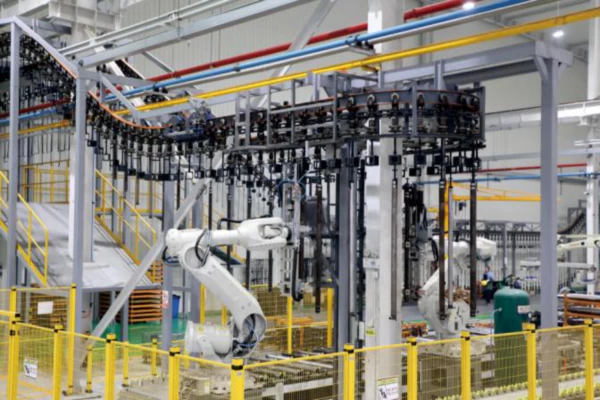
Our clean assembly room, where AGC cylinders are built to prevent microscopic contamination.
Technical Specs: The Difference Between “Heavy Duty” and “Mill Duty”
I’ve argued with accountants for years about why mill cylinders cost more. It’s the materials. A standard cylinder uses a welded tube. A Siłownik hydrauliczny maszyny walcowniczej often requires a solid forged block for the body to withstand the shock loading of a cobble event without cracking. The fatigue life requirements are infinite. Below is a comparison of what you get off the shelf versus what we engineer for the mill stand.
| Funkcja / Komponent | Standard Industrial Cylinder | Ever Power Mill-Duty Cylinder |
|---|---|---|
| Korpus cylindra | Welded ST52 Tube | Solid Forged 42CrMo4 Block (No Welds) |
| Powłoka prętowa | Standardowy chrom (20µm) | Laser Cladding / Ceramic (Ceraplate) >100µm |
| Technologia uszczelniania | Standard U-Cup (High Friction) | Servo-Step Seals (Low Friction PTFE) |
| Informacja zwrotna o pozycji | Brak / Zewnętrzny | Integrated Magnetostrictive (0.001mm resolution) |
| Ciśnienie robocze | 210 barów | 280 Bar continuous / 400 Bar Peak |

From the Roughing Stand to the Downcoiler, every actuator is critical.
Diverse Environments: Hot Strip vs. Cold Rolling
Not all mills are the same. In a Hot Strip Mill (HSM), the enemy is scale and water. The cooling water sprays are constant, and the mill scale is incredibly abrasive. Here, the rod wiper is the most important seal in the cylinder. We often use a double-wiper system with a brass scraper to knock off the heavy scale before it hits the soft elastomer. In a Cold Rolling Mill (CRM), cleanliness and precision are king. The forces are higher, but the environment is cleaner. Here, the focus is on the integrated linear transducer (LDT). If the sensor vibrates loose or loses signal due to shock, the mill trips. We use specialized shock-mounted housings for our sensors that can withstand 50g impact loads, keeping the mill running when others would fault out.
Case Study: The “Gauge Banding” Nightmare
Client: Apex Steel & Alloy (India)
Wyzwanie: A 6-High Cold Reversing Mill was experiencing persistent gauge variation (banding) on their automotive-grade steel coils. The AGC system was hunting, unable to hold the setpoint. The OEM cylinders had high stick-slip friction, and the maintenance team was changing servo valves, thinking that was the issue. Downtime was costing them roughly $15,000 per shift in downgraded material.
Nasze rozwiązanie: We analyzed the failed cylinders. The seals had swollen due to incompatible fluid additives, increasing friction. We manufactured custom Rolling Mill Machine Hydraulic Cylinders with a proprietary low-friction PTFE/Bronze seal configuration and optimized the guide bands for better side-load resistance. We also integrated a higher resolution Sony Magnescale probe directly into the cylinder rod.
Wynik: The stick-slip vanished. Gauge tolerance improved from +/- 5 microns to +/- 2 microns. The mill speed was increased by 12% because the control loop was stable. The Plant Director, Mr. Sharma, told us, “It’s like a new machine.”
Strategic Analysis: The State of Mill Hydraulics (SWOT)
Mocne strony (wewnętrzne)
In-house deep hole drilling and laser cladding capabilities allow us to control the quality of long-stroke bending cylinders that others outsource.
Słabości (wewnętrzne)
Our rigorous testing protocols (static hold for 24 hours) mean our lead times are rarely “off-the-shelf.” We trade speed for perfection.
Możliwości (zewnętrzne)
Industry 4.0: Mills are demanding “Smart Cylinders” with built-in pressure and temperature sensors for predictive maintenance.
Zagrożenia (zewnętrzne)
Low-cost refurbishment shops using inferior seal kits that look compatible but fail under HFC fluid conditions.
Trend Watch: Laser Cladding & Digitalization
The days of simple hard chrome are numbered in severe applications. The biggest trend we are driving is the use of Laser Cladding (or High-Velocity Oxygen Fuel – HVOF) for piston rods. This creates a metallurgical bond that is impervious to peeling and offers corrosion resistance 10x that of chrome. It’s expensive, but when you calculate the cost of a roll change delay, it’s cheap. Furthermore, digitalization is real. We are shipping more cylinders with embedded IO-Link sensors that tell the PLC not just where the cylinder is, but how it feels (temperature, vibration). This allows maintenance teams to schedule a swap before a failure stops the line.
Factory & Customization: We Rebuild the Giants
Let’s be honest, you don’t always need a brand-new cylinder. A 5-ton bending cylinder block is a massive asset. We run a dedicated refurbishment line where we take your battered, leaking cylinders, strip them down, bore out the damage, and manufacture oversized pistons to fit. We can reverse engineer obsolete cylinders from mills built in the 1970s (We stick to the original specs but upgrade the seals). Whether you need a 20mm stroke AGC capsule or a 6-meter-long walking beam furnace cylinder, we have the machinery to handle it.
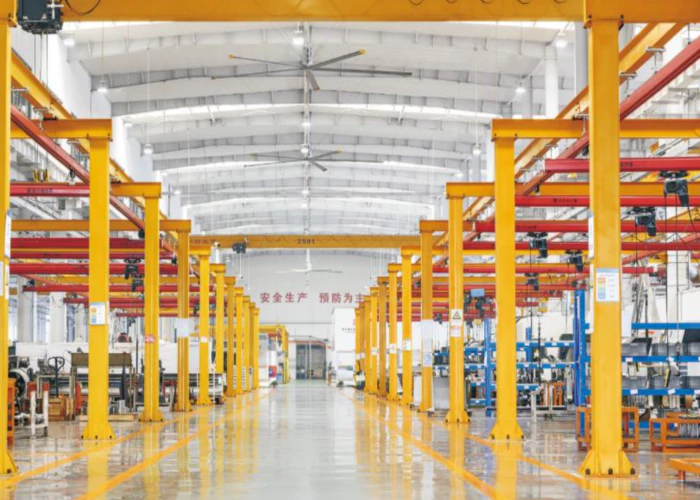
Every mill cylinder undergoes high-pressure cycling to simulate actual rolling conditions.
Co mówi branża
“We struggled with seal life on our Edger cylinders for years. Ever Power recommended a switch to a specific glass-filled PTFE seal. We went from 3 months life to 18 months. Incredible.”
— Klaus M., Maintenance Lead, Germany
“Fast response time. When our coiler mandrel cylinder failed, they expedited a repair and had it back to us in 5 days. Saved our production schedule.”
— John D., Mill Superintendent, Ohio, USA
“The Ceraplate coating they applied to our descaling area cylinders is tough as nails. No pitting, no rust, even with the water blasting it 24/7.”
— Li Wei, Equipment Engineer, China
FAQ: Conversations from the Shop Floor
We hear these questions every week. Here are the straight answers.
Why is my AGC cylinder oscillating (hunting)?
Oscillation usually comes from high seal friction (stick-slip) or air in the system. If the seal friction is too high, the servo valve overcompensates. You likely need low-friction seals or a check on your servo tuning.
Can you repair a scored cylinder rod from a rolling mill?
Yes, depending on depth. For mill cylinders, we often grind down the damage and apply laser cladding to restore the dimension. It results in a surface harder and better than the original.
What is the cost of a custom rolling mill cylinder?
It varies wildly based on size and complexity (e.g., integrated sensors). A small bending cylinder might be $2,000, while a large AGC capsule could be $20,000+. We need specs to quote accurately.
Which hydraulic fluid is best for rolling mills?
Most mills use fire-resistant fluids like Water Glycol (HFC) or Polyol Ester (HFDU) for safety. However, your seals MUST be compatible. Never put standard NBR seals in a system running Phosphate Ester.
Where can I find a hydraulic cylinder supplier near me for urgent repairs?
We operate globally. For urgent mill breakdowns, we can often air-freight replacement parts or prioritize manufacturing. We ship directly to mill sites in the USA, Europe, and Asia.
How do I extend the life of my roll-bending cylinders?
Keep the oil clean! Particle contamination is the #1 killer. Also, ensure your roll chocks are properly lubricated so they don’t transfer excessive side loads to the cylinder rod.
Mill Downtime is Not an Option
Your gauge control depends on your hydraulics. Let’s make sure they are up to the task.