Rolling Mill Machine Hydraulic Cylinders: The Pulse of High-Speed Steel Production
There is a specific rhythm to a rolling mill floor—the thrum of the motors, the hiss of descaling water, and the immense, shuddering force as a slab enters the bite. In my eighteen years dealing with mill hydraulics, from the hot strip mills of Pennsylvania to the precision foil mills in Germany, I’ve learned that the Rolling Mill Machine Hydraulic Cylinder is the component that keeps that rhythm from turning into a breakdown. Whether we are talking about Automatic Gauge Control (AGC) cylinders, roll bending, or shifting cylinders, these actuators operate in what I call “hydraulic hell.” They face high-frequency oscillation, fire-resistant fluids that offer terrible lubricity, and radiant heat that can cook a standard seal in hours. Most printers and procurement managers look at the tonnage rating and move on, but they don’t see the hysteresis (stick-slip) causing gauge bands on the coil. If your AGC cylinder has high friction, your control loop fights the mechanics, and you end up with off-spec steel. It’s that simple. We’ve seen mills lose thousands of dollars an hour because a $50 seal couldn’t handle the dither frequency.
👀 Inspect Our Heavy-Duty Production Line
Don’t rely on brochures. Walk through our honing workshop and clean-room assembly area right now—virtually.
See how we achieve micron-level tolerances.
Realita Rekayasa: Histeresis adalah Musuh
Let’s get technical about what actually matters in a Rolling Mill Machine Hydraulic Cylinder. In an AGC application, the cylinder might be making adjustments of 5 to 10 microns, dozens of times a second. If you have “stiction” (static friction) in the seals, the servo valve opens, pressure builds, but the cylinder doesn’t move… until it jumps. That jump creates a ripple in the steel sheet. In our experience, standard heavy-duty industrial cylinders are useless here. You need “Servo Quality” actuators. This means we treat the rod surface differently. We don’t just chrome it; we grind it, plate it, and then super-finish it to Ra 0.1 or better. We also design hydrostatic bearings for the piston rod in some high-speed applications to eliminate metal-to-metal contact.
Another massive headache is the fluid. Most rolling mills run Water Glycol (HFC) or Polyol Ester (HFDU) for fire safety. Water glycol is particularly nasty—it has low lubricity and attacks standard polyurethane seals. We have to engineer specific seal profiles using PTFE-Bronze composites or specialized EPDM compounds that can survive the chemical attack while maintaining low friction. If you put a standard earthmoving seal kit in a mill cylinder running water glycol, you’ll be changing it next Tuesday.
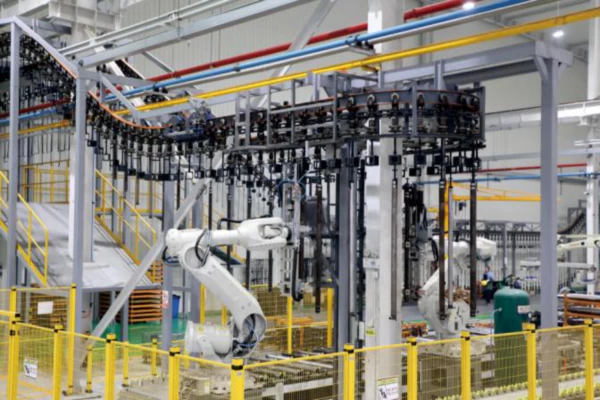
Our clean assembly room, where AGC cylinders are built to prevent microscopic contamination.
Spesifikasi Teknis: Perbedaan Antara “Heavy Duty” dan “Mill Duty”
I’ve argued with accountants for years about why mill cylinders cost more. It’s the materials. A standard cylinder uses a welded tube. A Rolling Mill Machine Hydraulic Cylinder often requires a solid forged block for the body to withstand the shock loading of a cobble event without cracking. The fatigue life requirements are infinite. Below is a comparison of what you get off the shelf versus what we engineer for the mill stand.
| Fitur / Komponen | Silinder Industri Standar | Silinder Tugas Berat Ever Power |
|---|---|---|
| Badan Silinder | Tabung ST52 yang Dilas | Solid Forged 42CrMo4 Block (No Welds) |
| Pelapisan Batang | Krom Standar (20µm) | Pelapisan Laser / Keramik (Ceraplate) >100µm |
| Teknologi Penyegelan | Cangkir U Standar (Gesekan Tinggi) | Segel Servo-Step (PTFE Gesekan Rendah) |
| Umpan Balik Posisi | Tidak ada / Eksternal | Integrated Magnetostrictive (0.001mm resolution) |
| Tekanan Operasi | 210 Bar | Tekanan kontinu 280 Bar / Tekanan puncak 400 Bar |

From the Roughing Stand to the Downcoiler, every actuator is critical.
Diverse Environments: Hot Strip vs. Cold Rolling
Not all mills are the same. In a Hot Strip Mill (HSM), the enemy is scale and water. The cooling water sprays are constant, and the mill scale is incredibly abrasive. Here, the rod wiper is the most important seal in the cylinder. We often use a double-wiper system with a brass scraper to knock off the heavy scale before it hits the soft elastomer. In a Cold Rolling Mill (CRM), cleanliness and precision are king. The forces are higher, but the environment is cleaner. Here, the focus is on the integrated linear transducer (LDT). If the sensor vibrates loose or loses signal due to shock, the mill trips. We use specialized shock-mounted housings for our sensors that can withstand 50g impact loads, keeping the mill running when others would fault out.
Case Study: The “Gauge Banding” Nightmare
Client: Apex Steel & Alloy (India)
Tantangannya: A 6-High Cold Reversing Mill was experiencing persistent gauge variation (banding) on their automotive-grade steel coils. The AGC system was hunting, unable to hold the setpoint. The OEM cylinders had high stick-slip friction, and the maintenance team was changing servo valves, thinking that was the issue. Downtime was costing them roughly $15,000 per shift in downgraded material.
Solusi Kami: We analyzed the failed cylinders. The seals had swollen due to incompatible fluid additives, increasing friction. We manufactured custom Rolling Mill Machine Hydraulic Cylinders dengan konfigurasi segel PTFE/Perunggu gesekan rendah eksklusif dan pita pemandu yang dioptimalkan untuk ketahanan beban samping yang lebih baik. Kami juga mengintegrasikan probe Sony Magnescale resolusi tinggi langsung ke dalam batang silinder.
Hasilnya: The stick-slip vanished. Gauge tolerance improved from +/- 5 microns to +/- 2 microns. The mill speed was increased by 12% because the control loop was stable. The Plant Director, Mr. Sharma, told us, “It’s like a new machine.”
Analisis Strategis: Kondisi Hidraulik Pabrik (SWOT)
Kekuatan (Internal)
In-house deep hole drilling and laser cladding capabilities allow us to control the quality of long-stroke bending cylinders that others outsource.
Kelemahan (Internal)
Our rigorous testing protocols (static hold for 24 hours) mean our lead times are rarely “off-the-shelf.” We trade speed for perfection.
Peluang (Eksternal)
Industry 4.0: Mills are demanding “Smart Cylinders” with built-in pressure and temperature sensors for predictive maintenance.
Ancaman (Eksternal)
Low-cost refurbishment shops using inferior seal kits that look compatible but fail under HFC fluid conditions.
Tren Terkini: Pelapisan Laser & Digitalisasi
Era penggunaan krom keras sederhana akan segera berakhir untuk aplikasi yang berat. Tren terbesar yang kami dorong adalah penggunaan Laser Cladding (atau High-Velocity Oxygen Fuel – HVOF) untuk batang piston. Ini menciptakan ikatan metalurgi yang tahan terhadap pengelupasan dan menawarkan ketahanan korosi 10 kali lipat dibandingkan krom. Memang mahal, tetapi jika Anda menghitung biaya penundaan penggantian rol, itu jauh lebih murah. Selain itu, digitalisasi adalah kenyataan. Kami mengirimkan lebih banyak silinder dengan sensor IO-Link tertanam yang memberi tahu PLC tidak hanya Di mana silindernya memang begitu, tetapi bagaimana rasanya (suhu, getaran). Hal ini memungkinkan tim pemeliharaan untuk menjadwalkan penggantian sebelum terjadi kerusakan yang menghentikan jalur produksi.
Pabrik & Kustomisasi: Kami Membangun Kembali Para Raksasa
Let’s be honest, you don’t always need a brand-new cylinder. A 5-ton bending cylinder block is a massive asset. We run a dedicated refurbishment line where we take your battered, leaking cylinders, strip them down, bore out the damage, and manufacture oversized pistons to fit. We can reverse engineer obsolete cylinders from mills built in the 1970s (We stick to the original specs but upgrade the seals). Whether you need a 20mm stroke AGC capsule or a 6-meter-long walking beam furnace cylinder, we have the machinery to handle it.
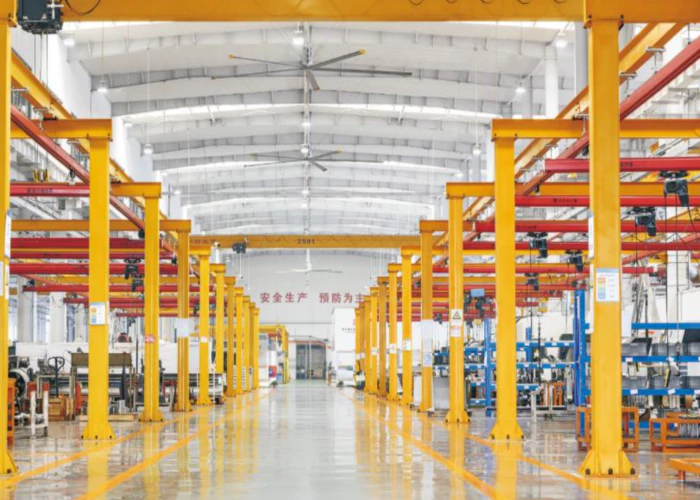
Setiap silinder mesin penggiling menjalani siklus tekanan tinggi untuk mensimulasikan kondisi penggilingan yang sebenarnya.
Apa Kata Industri
“Kami berjuang dengan masa pakai segel pada silinder Edger kami selama bertahun-tahun. Ever Power merekomendasikan penggantian ke segel PTFE berisi serat kaca tertentu. Masa pakainya meningkat dari 3 bulan menjadi 18 bulan. Luar biasa.”
— Klaus M., Kepala Pemeliharaan, Jerman
“Waktu respons yang cepat. Ketika silinder mandrel penggulung kami rusak, mereka mempercepat perbaikan dan mengembalikannya kepada kami dalam waktu 5 hari. Menyelamatkan jadwal produksi kami.”
— John D., Kepala Pabrik, Ohio, AS
“Lapisan Ceraplate yang mereka aplikasikan pada silinder area penghilangan kerak kami sangat kuat. Tidak ada pengikisan, tidak ada karat, bahkan dengan semprotan air terus-menerus selama 24/7.”
— Li Wei, Insinyur Peralatan, Tiongkok
Tanya Jawab: Percakapan dari Lapangan Produksi
Kami mendengar pertanyaan-pertanyaan ini setiap minggu. Berikut adalah jawaban langsungnya.
Mengapa silinder AGC saya berosilasi (bergetar)?
Osilasi biasanya disebabkan oleh gesekan seal yang tinggi (stick-slip) atau adanya udara dalam sistem. Jika gesekan seal terlalu tinggi, katup servo akan melakukan kompensasi berlebihan. Kemungkinan Anda memerlukan seal dengan gesekan rendah atau perlu memeriksa penyetelan servo Anda.
Bisakah Anda memperbaiki batang silinder yang tergores dari mesin penggiling?
Ya, tergantung kedalamannya. Untuk silinder pabrik, kami sering mengikis bagian yang rusak dan menerapkan pelapisan laser untuk mengembalikan dimensinya. Hasilnya adalah permukaan yang lebih keras dan lebih baik daripada aslinya.
Berapakah biaya pembuatan silinder mesin penggilingan khusus?
Harganya sangat bervariasi tergantung ukuran dan kompleksitasnya (misalnya, sensor terintegrasi). Silinder lentur kecil mungkin berharga $2.000, sedangkan kapsul AGC besar bisa berharga $20.000+. Kami membutuhkan spesifikasi untuk memberikan penawaran harga yang akurat.
Cairan hidrolik mana yang terbaik untuk pabrik penggilingan?
Sebagian besar pabrik menggunakan cairan tahan api seperti Water Glycol (HFC) atau Polyol Ester (HFDU) untuk alasan keamanan. Namun, segel Anda HARUS kompatibel. Jangan pernah memasang segel NBR standar pada sistem yang menggunakan Phosphate Ester.
Di mana saya bisa menemukan pemasok silinder hidrolik di dekat saya untuk perbaikan mendesak?
Kami beroperasi secara global. Untuk kerusakan pabrik yang mendesak, kami sering kali dapat mengirimkan suku cadang pengganti melalui pengiriman udara atau memprioritaskan produksi. Kami mengirimkan langsung ke lokasi pabrik di AS, Eropa, dan Asia.
Bagaimana cara memperpanjang umur pakai silinder pembengkok rol saya?
Jaga kebersihan oli! Kontaminasi partikel adalah penyebab kerusakan #1. Selain itu, pastikan penyangga rol Anda dilumasi dengan benar agar tidak mentransfer beban samping yang berlebihan ke batang silinder.
Penghentian Operasi Pabrik Bukanlah Pilihan
Kontrol pengukur Anda bergantung pada sistem hidrolik Anda. Mari kita pastikan sistem tersebut mampu menjalankan tugasnya dengan baik.