AGC / Main Roll Force Cylinders: Where Micron Tolerances Meet Massive Tonnage
There is a very specific, expensive sound a rolling mill makes when the Automatic Gauge Control (AGC) system starts hunting. It’s a rhythmic thrumming that tells any experienced engineer that the hydraulic cylinders are fighting the control loop. In my eighteen years of walking the floors of hot strip mills and cold reversing stands—from the humid coasts of Brazil to the icy industrial heartland of Russia—I’ve learned that the AGC / Main Roll Force Cylinder is the single most critical component for product quality. If your cylinder has high hysteresis (friction), you can have the best computer algorithms in the world, but you will still get gauge bands on your coil. Most printers and procurement managers see a massive steel block and assume it’s just a “pusher.” They don’t realize that inside that block is a servo-hydraulic system that needs to respond in milliseconds to force changes of 2,000 tons. The trick isn’t generating the force; anyone can build a jack. The trick is moving that force 5 microns in 10 milliseconds without overshooting. We’ve seen mills losing yield simply because their seal configuration created too much “stick-slip,” turning their precision machine into a blunt instrument.
👀 Inspect Our Precision Manufacturing
Don’t rely on a brochure. Walk through our clean-room assembly area and heavy honing workshop right now—virtually.
🚀 ENTRAR AL TOUR DE LA FÁBRICA DE REALIDAD VIRTUAL
See how we achieve Ra 0.1 surface finishes.
La realidad de la ingeniería: la histéresis es el enemigo
Let’s get technical about what actually kills performance in a Main Roll Force Cylinder. It’s rarely a structural failure of the shell; it’s the friction characteristics. In a high-speed mill, the cylinder is constantly dithering—making microscopic adjustments to maintain the roll gap. If you use standard heavy-duty seals, the “breakaway friction” is high. The control system sends a signal, pressure builds, nothing happens… and then estallido, the cylinder jumps. That jump puts a wave in your steel. In our experience, achieving “Servo Quality” performance requires a completely different approach to tribology. We don’t just use standard chrome rods. We grind the rod, plate it, and then super-finish it to a mirror-like Ra 0.1µm. We use hydrostatic bearing designs in some ultra-high-precision applications where the piston literally floats on a film of oil, eliminating metal-to-metal contact. This reduces friction to near zero, allowing the AGC system to react instantly.
Fluid compatibility is another massive headache. Many modern mills run fire-resistant fluids like Water Glycol (HFC) or Polyol Ester (HFDU). Water glycol is particularly aggressive—it has the lubricity of, well, water. It attacks standard polyurethanes and can cause corrosion on the rod if there is even a pinhole in the plating. We engineer specific seal profiles using PTFE-Bronze composites or specialized EPDM compounds that can survive the chemical attack while maintaining the low-friction properties required for gauge control.
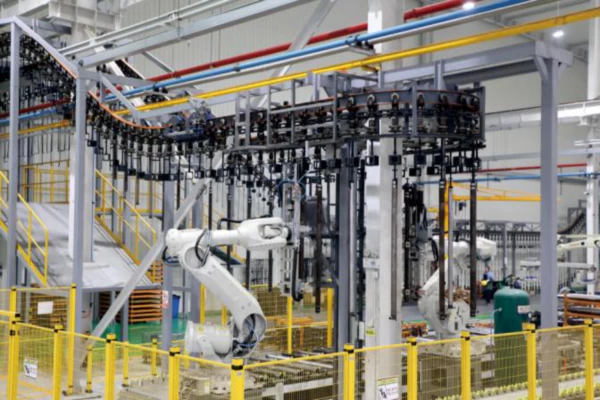
Our clean-room assembly is vital; even a 5-micron particle can score a servo-quality rod.
Especificaciones técnicas: La diferencia entre "trabajo pesado" y "trabajo de fábrica"
I often have to explain to purchasing departments why a mill cylinder costs three times as much as a press cylinder. It comes down to the materials and the safety factors. A standard cylinder uses a welded tube. An AGC / Main Roll Force Cylinder is typically machined from a solid forged block of 42CrMo4 steel. There are no welds to fatigue under the billion cycles of shock loading a mill sees. We also integrate linear position sensors (LDTs) directly into the core of the cylinder, protected from the heat and scale of the mill environment. Below is a comparison of what you might find on the shelf versus what we engineer for the stand.
| Característica/Componente | Cilindro industrial estándar | Cilindro para trabajo pesado Ever Power |
|---|---|---|
| Cuerpo del cilindro | Tubo ST52 soldado | Solid Forged 42CrMo4 Block (Zero Welds) |
| Recubrimiento de varillas | Cromo estándar (20 µm) | Revestimiento láser / Cerámica (Ceraplate) >100 µm |
| Tecnología de sellado | Copa en U estándar (alta fricción) | Sellos Servo-Step (PTFE de baja fricción) |
| Comentarios sobre la posición | Ninguno / Externo | Integrated Magnetostrictive (Sony/Balluff) |
| Presión de operación | 210 bares | 280 bar continuos / 400 bar pico |

Whether it’s the roughing stand or the finishing mill, precision dictates yield.
Application Scenarios: Hot Strip vs. Cold Rolling
The environment dictates the design. In a Hot Strip Mill (HSM), the enemy is scale and cooling water. The cylinder is constantly bombarded with high-pressure descaling water mixed with abrasive iron oxide. If the rod wiper fails, that slurry enters the cylinder and destroys the bearings in hours. For these applications, we utilize a double-wiper system with a brass scraper ring to physically knock off the scale before it reaches the primary seal. Contrast this with a Cold Rolling Mill (CRM), where cleanliness is paramount, and the forces are higher. Here, the focus is on extreme stiffness. Any “softness” in the hydraulic column due to ballooning of the cylinder walls will translate into gauge variation. We design our CRM cylinders with extra-thick walls to minimize expansion under load (compliance), ensuring that when the servo valve says “move,” the roll gap moves exactly that amount.
Case Study: The “Gauge Banding” Nightmare in Brazil
Client: Metalúrgica São Paulo (Brazil)
El desafío: A 4-High Cold Reversing Mill was experiencing persistent gauge variation (banding) on their automotive-grade steel coils. The AGC system was hunting, unable to hold the setpoint. The OEM cylinders had high stick-slip friction, and the maintenance team was changing servo valves, thinking that was the issue. Downtime was costing them roughly $20,000 per shift in downgraded material.
Nuestra solución: We pulled the cylinders and tested them. The break-away pressure was 15 bar—way too high. The seals had swollen due to an incompatible fluid additive. We manufactured custom AGC Hydraulic Cylinders Con una configuración patentada de sello de PTFE/bronce de baja fricción y bandas guía optimizadas para una mayor resistencia a la carga lateral. También integramos una sonda Sony Magnescale de mayor resolución directamente en el vástago del cilindro.
El resultado: The stick-slip vanished. Break-away pressure dropped to 1.5 bar. Gauge tolerance improved from +/- 6 microns to +/- 2 microns. The mill speed was increased by 15% because the control loop was stable. The Plant Director told us it was the best ROI they had seen in five years.
Análisis estratégico: el estado de la hidráulica de los molinos (FODA)
Fortalezas (Internas)
In-house deep hole drilling and laser cladding capabilities allow us to control the quality of large-bore forged cylinders that others have to outsource.
Debilidades (internas)
Our rigorous testing protocols (static hold for 24 hours at 1.5x pressure) mean our lead times are rarely “off-the-shelf.” We trade speed for perfection.
Oportunidades (Externas)
Industry 4.0: Mills are demanding “Smart Cylinders” with built-in pressure, temperature, and vibration sensors for predictive maintenance.
Amenazas (externas)
Low-cost refurbishment shops use standard seal kits that look compatible but fail under HFC fluid conditions, giving the industry a bad name.
Tendencias: Revestimiento láser y digitalización
Los días del cromo duro simple están contados en aplicaciones severas. La principal tendencia que impulsamos es el uso de revestimiento láser (o combustible de oxígeno de alta velocidad, HVOF) para vástagos de pistón. Esto crea una unión metalúrgica resistente al desprendimiento y ofrece una resistencia a la corrosión diez veces mayor que la del cromo. Es caro, pero si se calcula el costo de un retraso en el cambio de rodillo, es barato. Además, la digitalización es una realidad. Estamos enviando más cilindros con sensores IO-Link integrados que le indican al PLC no solo dónde el cilindro es, pero Cómo se siente (temperatura, vibración). Esto permite a los equipos de mantenimiento programar un cambio antes de que una falla detenga la línea.
Fábrica y personalización: reconstruimos a los gigantes
Let’s be honest, you don’t always need a brand-new cylinder. A 10-ton forged AGC block is a massive asset. We run a dedicated refurbishment line where we take your battered, leaking cylinders, strip them down, bore out the damage, and manufacture oversized pistons to fit. We can reverse engineer obsolete cylinders from mills built in the 1970s (We stick to the original dimensions, but upgrade the internal sealing technology). Whether you need a short-stroke “pancake” capsule or a long-stroke bending cylinder, we have the machinery to handle it.
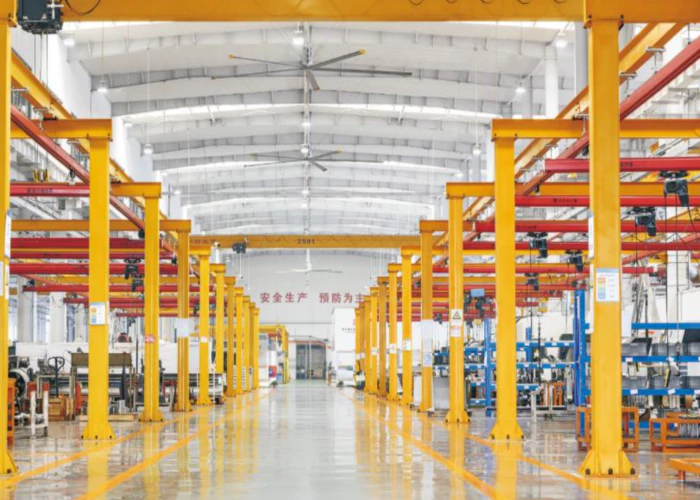
Cada cilindro del molino se somete a un ciclo de alta presión para simular las condiciones de laminación reales.
Lo que dice la industria
Tuvimos problemas con la vida útil del sello de nuestros cilindros Edger durante años. Ever Power recomendó cambiar a un sello de PTFE reforzado con fibra de vidrio. Pasamos de 3 meses a 18 meses de vida útil. ¡Increíble!
— Klaus M., Jefe de Mantenimiento, Alemania
Tiempo de respuesta rápido. Cuando falló el cilindro del mandril de nuestra bobinadora, nos lo repararon rápidamente y nos lo devolvieron en 5 días. Salvaron nuestro cronograma de producción.
— John D., Superintendente de fábrica, Ohio, EE. UU.
El recubrimiento Ceraplate que aplicaron a los cilindros de nuestra zona de desincrustación es extremadamente resistente. No se pica ni se oxida, incluso con chorro de agua constante.
— Li Wei, ingeniero de equipos, China
Preguntas frecuentes: Conversaciones desde el taller
Escuchamos estas preguntas todas las semanas. Aquí están las respuestas directas.
¿Por qué mi cilindro AGC oscila (se mueve)?
La oscilación suele deberse a una alta fricción en los sellos (stick-slip) o a aire en el sistema. Si la fricción es demasiado alta, la servoválvula sobrecompensa. Probablemente necesite sellos de baja fricción o revisar el ajuste del servo.
¿Es posible reparar un vástago de cilindro rayado procedente de un laminador?
Sí, dependiendo de la profundidad. En el caso de los cilindros de fresado, solemos rectificar el daño y aplicar un revestimiento láser para restaurar la dimensión. Esto da como resultado una superficie más dura y de mejor calidad que la original.
¿Cuál es el costo de un cilindro de laminación personalizado?
Varía mucho según el tamaño y la complejidad (p. ej., sensores integrados). Un cilindro de flexión pequeño podría tener un valor de $2000, mientras que una cápsula AGC grande podría tener un valor de $20 000 o más. Necesitamos las especificaciones para cotizar con precisión.
¿Qué fluido hidráulico es mejor para los trenes de laminación?
La mayoría de las plantas utilizan fluidos ignífugos como el glicol de agua (HFC) o el éster de poliol (HFDU) por motivos de seguridad. Sin embargo, sus sellos DEBEN ser compatibles. Nunca instale sellos de NBR estándar en un sistema que utilice éster de fosfato.
¿Dónde puedo encontrar un proveedor de cilindros hidráulicos cerca de mí para reparaciones urgentes?
Operamos a nivel mundial. Para averías urgentes en las plantas, a menudo enviamos piezas de repuesto por avión o priorizamos la fabricación. Realizamos envíos directos a plantas en EE. UU., Europa y Asia.
¿Cómo puedo extender la vida útil de mis cilindros curvadores?
¡Mantenga el aceite limpio! La contaminación por partículas es la causa principal del #1. Además, asegúrese de que sus cuñas antivuelco estén bien lubricadas para que no transfieran cargas laterales excesivas al vástago del cilindro.
El tiempo de inactividad del molino no es una opción
El control de su medidor depende de su sistema hidráulico. Asegurémonos de que esté a la altura.