There is a specific kind of silence that happens inside the cutterhead chamber of a Tunnel Boring Machine (TBM) when the main drive is shut down. It’s heavy. You are standing in front of a 400-ton steel face that wants nothing more than to rotate due to gravity and unbalanced muck weight. I’ve spent enough time in hyperbaric interventions to know that the only thing standing between the maintenance crew and a catastrophic rotation event is the cutterhead locking cylinder system. It’s not the biggest cylinder on the machine—propulsion cylinders claim that title—but it is, without a doubt, the most critical for human safety.
In our 18 years of engineering hydraulic solutions for underground construction, we’ve seen too many operators rely on the main drive brakes alone. Brakes wear out. Hydraulics leak. That is why the industry has shifted (painfully slowly in some sectors) towards dedicated hydraulic locking pins with mechanical fail-safes. We aren’t just pushing a pin into a slot; we are engaging a locking wedge that physically prevents retraction even if every hose on the machine bursts. Most printers (or manufacturers) don’t realize that the vibration during boring can rattle a standard hydraulic lock loose. That’s why we build ours differently, using 42CrMo alaşımlı çelik and high-grade nickel plating to survive the hellish environment of the plenum.
👀 Step Inside Our High-Precision Workshop
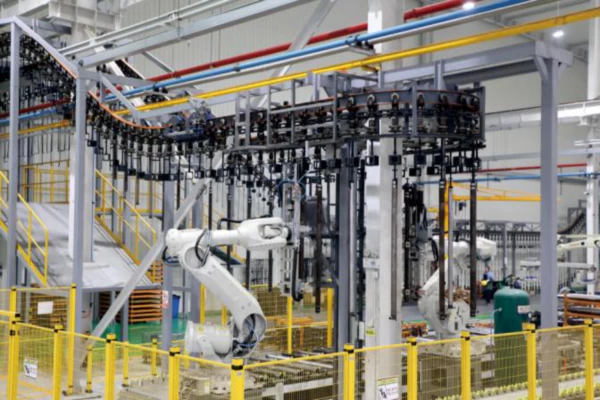
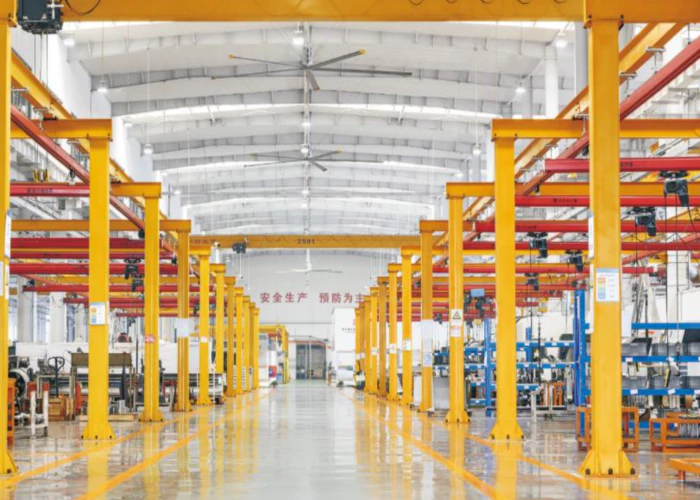
Safety starts with the weld quality and the steel grade. We don’t hide our process. We invite you to take a Virtual Reality tour of our facility to see exactly how we machine these safety-critical locking cylinders.
The “Unbalanced Load” Problem
Let’s talk physics for a second. When a TBM stops to change disc cutters, the cutterhead is rarely perfectly balanced. You might have a dense pocket of rock on one side, or more wear plates on the other. This creates massive residual torque. The moment the main drive breaks, release to allow for inching or positioning, that head wants to spin.
Standard hydraulic cylinders are great for linear motion, but they suffer from “drift” over time due to internal seal bypass. If you are changing a cutter in a confined space for six hours, a 5mm drift in the cylinder can translate to a dangerous movement at the periphery of the cutterhead. This is where the mechanical locking structure comes in. We engineer an internal “shot-bolt” or a segmented latch mechanism inside the cylinder. Once the rod extends into the cutterhead locking ring, a secondary mechanism engages. It’s a literal steel wedge. At that point, you could drain the oil tank, and that cylinder isn’t moving. It provides “infinite” holding time.
Material Science: Why 42CrMo and Nickel?
We used to see locking pins made of standard 45# carbon steel. In dry tunnels, maybe that’s okay. But modern TBMs are diving under sea channels and through water-bearing karstic limestone. The environment in the plenum is 100% humidity, hot, and often acidic or saline. Standard chrome plating pits and peels in these conditions.
We switched to 42CrMo (Chromium-Molybdenum) steel for the rod and the barrel. This alloy offers exceptional toughness and high yield strength, meaning the pin won’t shear off if the cutterhead jolts unexpectedly. But the real trick is the surface treatment. We utilize a Yüksek Fosforlu Nikel Kaplama instead of standard hard chrome for the rod. Nickel is non-porous and acts as a barrier seal against corrosion. It ensures that when you need to retract that pin after three weeks of maintenance, it actually moves, rather than being rusted solid to the housing.
Technical Specifications: The Safety Baseline
We don’t play games with safety specs. Below is the configuration for our “High-Safety” series locking cylinders, designed to fit most major TBM brands (Robbins, Herrenknecht, CREG).
| Özellik | Teknik Özellik Detayları |
|---|---|
| Silindir Tipi | Double-Acting with Mechanical Lock |
| Material (Rod/Body) | 42CrMo (Sertleştirilmiş ve Temperlenmiş) |
| Yüzey İşlem | Electroless Nickel Plating (>40μm) |
| Shear Strength | Designed to withstand >500kNm Torque |
| Kilitleme Mekanizması | Internal Segmented Latch or External Shot-Bolt |
| Konum Algılama | Integrated Inductive Proximity Switches (IP68) |
| Çalışma Basıncı | Rated 25 MPa / Peak 35 MPa |
Application Scenarios: Where Safety Meets Mud
The primary home for these cylinders is the Cutterhead Drive Housing. Usually, there are 2 to 4 units distributed around the ring gear. When the TBM stops for maintenance, the operator rotates the head until the locking holes align. The cylinders extend, the pins engage the ring gear, and the mechanical lock clicks in. Only then does the “Safe to Enter” light turn green.

We also see modified versions of these locking cylinders used in Segment Erector Arms. The erector needs to hold heavy concrete segments in precise positions while they are bolted. A loss of hydraulic pressure here could drop a 5-ton segment. The mechanical locking feature ensures that once the grip is taken, it holds until positively released.
SWOT Analysis: The Mechanical Lock Advantage
To be completely transparent with you—because over-engineering costs money—here is how this technology stacks up.
Güçlü Yönler
- Fail-Safe: Holds load even with 0 hydraulic pressure.
- Corrosion: Nickel plating outperforms chrome in tunnels.
- Strength: 42CrMo resists high shear forces.
Zayıflıklar
- Karmaşıklık: More internal parts than a standard cylinder.
- Maliyet: Higher upfront investment for the locking mechanism.
Fırsatlar
- Retrofitting older TBMs to meet new safety regulations.
- Expansion into shield stabilization during shut-downs.
Tehditler
- Budget cuts are leading to the usage of standard (unsafe) cylinders.
- Lack of maintenance training on locking mechanisms.
Customer Success Story: The Kuala Lumpur Metro
A few years back, we supplied the locking systems for a project in **Kuala Lumpur (KVMRT)**. The geology was highly karstic limestone—lots of cavities and uneven ground. The TBMs were vibrating heavily during boring, and the maintenance intervals were frequent. The contractor was using OEM cylinders that relied purely on hydraulic check valves. They noticed that during long interventions (12+ hours), the cutterhead would “creep” about 5 degrees due to internal valve leakage. It scared the living daylights out of the crew.
They contacted us for a retrofit solution. We designed a set of custom 42CrMo cylinders with an integrated mechanical wedge lock. The installation required no modification to the drive housing. After installation, the “creep” phenomenon disappeared instantly. The maintenance lead told us, “It’s the first time in months the guys feel safe going into the chamber without constantly watching the reference marks.” That peace of mind is what we sell.
Voice of the Underground
“The mechanical click when that lock engages is the best sound in the world. You know you’re solid.”
– Ahmed S., TBM Pilot, Malaysia
“Ever Power’s nickel plating holds up. Our old pins were rusted into the bores after the first 500m. These are still shiny at 2km.”
– Klaus M., Mechanical Super, Germany
“We needed a custom shear rating for a larger diameter head. They calculated it and built it. No fuss.”
– Liu W., Project Manager, China
Trend Analysis: Smart Safety
The trend is moving towards Integrated Safety Monitoring. It’s no longer enough for the pin to lock; the machine needs to *know* it’s locked. We are seeing a high demand for cylinders with dual redundant proximity switches—one to confirm the pin is extended, and a second to confirm the mechanical lock is engaged. This data feeds directly into the TBM’s PLC, preventing the main drive from starting if the lock isn’t fully retracted or preventing man-lock entry if the pin isn’t fully engaged.
Customization: We Build What You Need
Every TBM is different. A 6m EPB machine needs a different locking force than a 14m Slurry Shield. We specialize in custom fabrication. You give us the shear load requirements and the mounting dimensions, and we engineer the cylinder to fit. We can even integrate specific hydraulic valve blocks (like counterbalance valves) directly onto the cylinder body to save space in the cramped drive area.
Sıkça Sorulan Sorular (SSS)
Safety is not the place for uncertainty. Here are the answers to the most common questions about TBM locking cylinders.
Why is a mechanical lock necessary on a TBM hydraulic cylinder?
Hydraulics are great for moving loads, but terrible for holding them indefinitely. Internal leakage or a burst hose means pressure drops. A mechanical lock physically wedges the piston, ensuring the cutterhead cannot rotate even if all hydraulic pressure is lost. It’s a life-safety requirement.
What is the lead time for custom 42CrMo locking cylinders?
Because these are safety-critical components often requiring custom forging and nickel plating, we usually look at a 25 to 35-day production cycle. We prioritize these orders because we know a down TBM costs thousands per hour.
Can you retrofit locking cylinders onto older Robbins or Herrenknecht machines?
Yes, we do this often. We reverse-engineer the mounting footprint of your existing setup but upgrade the internals to our modern 42CrMo mechanical locking design. It’s a great way to improve the safety rating of an older machine.
Why do you recommend nickel plating over hard chrome for tunneling?
Chrome is hard, but it’s porous. In the high-humidity, acidic atmosphere of a TBM plenum, nickel provides a superior chemical barrier against corrosion, preventing the rod pitting that destroys seals and causes pins to seize.
How do you test the holding force of the lock before shipping?
We don’t just test pressure; we test load. We place the cylinder in a static load frame and apply physical force against the mechanical lock (without hydraulic pressure) to 150% of the rated holding capacity to ensure it won’t slip.
Don’t Gamble with Crew Safety
Upgrade to 42CrMo Mechanical Locks. Secure the head, save the project.