Why standard hydraulics bow out under demolition loads, and how extended guides keep you in the game.
Let’s talk about the most abused component on your excavator. No, it’s not the bucket teeth—it’s the Auxiliary Arm Cylinder that powers your breaker, crusher, or thumb. If you’ve been in the earthmoving game as long as I have (coming up on two decades now, time flies), you know the scenario: You’re hammering away at reinforced concrete, the debris is flying, the vibration is rattling your teeth, and suddenly… pop. A seal blows, or worse, the rod looks like a banana. Most printers and parts suppliers don’t realize that an auxiliary cylinder isn’t just pushing; it’s wrestling. It deals with high-frequency shock waves and massive eccentric “side loads” that standard agricultural cylinders simply can’t handle.
In our experience, the failure almost always stems from lateral movement. When that hydraulic breaker twists, the cylinder rod wants to twist with it. If your cylinder guide (the bushing in the head) is too short, the rod bends. It’s simple physics. That’s why we engineered our heavy-duty line specifically for these Excavator Attachment applications. We use 27SiMn çeliği for the barrel—it’s tougher than standard ST52—and crucially, we utilize an “Extended Guide” design. It adds weight, sure, but it provides the leverage support needed to keep that rod straight when the going gets rough.
👀 Take a Look Inside Our Shop
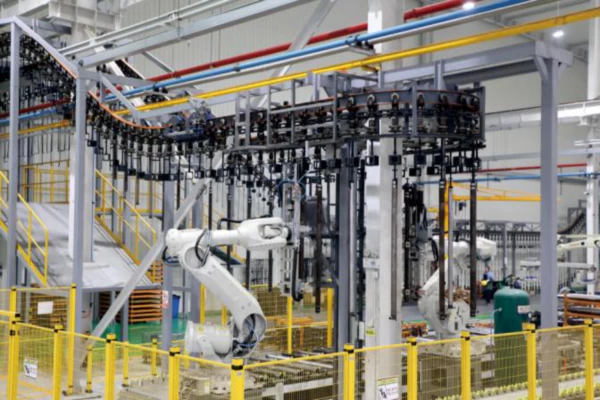
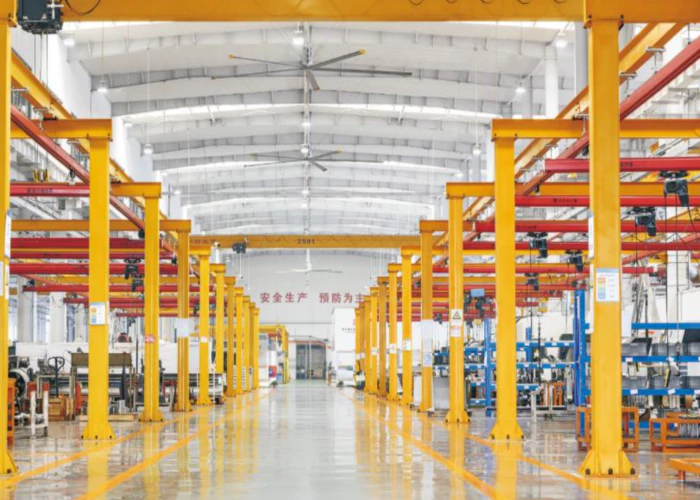
We believe in transparency. We don’t just import boxes; we machine the barrels and weld the ports right here. We’ve set up a full VR tour so you can inspect our welding robots and chrome plating tanks from your phone.
Walk through the factory floor here:
The Engineering Behind the Muscle
It’s easy to paint a cylinder yellow and call it “heavy duty,” but the specs tell the real story. The environment for an auxiliary arm cylinder involves two main enemies: Dust Ve Shock. When a breaker hits rock, the hydraulic system experiences pressure spikes that can exceed 400 bar in milliseconds. A standard welded cylinder made of 1045 steel will eventually fatigue and balloon at the weld seam.
This is why we standardized on 27SiMn (Silikon-Mangan) steel for our barrel construction. It offers a yield strength significantly higher than standard structural steels, allowing the cylinder to absorb those shock waves without permanent deformation. But the real magic is in the gland (the head). We design our auxiliary cylinders with an Extended Guide Bushing. By increasing the distance between the rod wiper and the internal rod bearing, we distribute the side-loading forces over a larger area. Think of it like holding a heavy shovel—hands apart gives you control; hands together breaks your wrist. The same logic applies to preventing rod deflection.
| Özellik | Standart Piyasa Spesifikasyonu | Our “Demolition Ready” Spec |
|---|---|---|
| Varil Malzemesi | 1020 / ST52 Steel | 27SiMn (Yüksek Çekme Mukavemeti) |
| Guide Design | Standard Length | Extended Guide (+30% bearing area) |
| Çubuk Kaplama | Tek Krom (20μm) | Çift Krom Kaplama + Parlatma (30-50μm) |
| Foklar | Standart NBR | High-Temp PU + Anti-Dust Wiper |
| Operation | Static / Low Cycle | High Freq. Reversal + Impact |
Not Just for Breakers
While hydraulic breakers are the most common culprit for cylinder abuse, our Double-Acting Piston Cylinders are designed for the full range of “violent” attachments. We see these installed on demolition shears (cutting steel beams puts immense torque on the mounting pins), rotating pulverizers, and stone grapples.

A specific trend we’ve noticed is in the recycling sector. Sorting grabs thousands of times a day. It’s not the heavy load that kills the cylinder there; it’s the frequency. The heat buildup burns out standard seals. For these high-cycle applications, we swap the standard guide bands for low-friction composite rings that can handle the heat without swelling. It’s these small tweaks—things you won’t find in a catalog—that make the difference between a 3-month lifespan and a 3-year lifespan.
Case Study: The Brazilian Quarry Challenge
Müşteri: “Mineração Rocha Dura” – A granite quarry operator in Brazil.
Sorun: They were using a 35-ton excavator with a secondary crusher attachment. The fine granite dust was mixing with the humidity to form a grinding paste. Their OEM cylinders were leaking every 200 hours because the dust was scoring the rods. Worse, the vibration was causing the gland nuts to back off.
Çözümümüz: Özel bir tasarım geliştirdik. 27SiMn Auxiliary Cylinder with:
- ✅ Sızdırmazlık: Replaced standard wipers with a heavy-duty metallic scraper ring to shave the rod clean.
- ✅ Locking: Used a set-screw locking mechanism on the gland nut to prevent vibration loosening.
- ✅ Rod: Applied a 50-micron double-chrome layer for extra hardness.
Sonuç: The new cylinders have been running for 1,500+ hours with zero leaks. The maintenance manager sent us photos of the rods—still mirror-smooth.
What the Field Says
“We broke three rods in a month on our shear. Ever Power suggested the extended guide design. It looked a bit longer, but it bolted right on and hasn’t bent yet.”
— Mark D., Demolition Contractor, USA
“The pricing was fair, but the knowledge was better. They knew exactly why my seals were failing in the rock dust.”
— Pierre L., Equipment Rental, France
“Delivery to Australia was surprisingly fast. The crates were solid, with no shipping damage. Will buy again.”
— Sarah K., Purchasing Manager, Australia
Stratejik Analiz (SWOT)
Güçlü Yönler
- Superior 27SiMn material vs standard steel.
- The extended guide design eliminates rod bending.
- Deep understanding of demolition environments.
- Full customization capability.
Zayıflıklar
- Slightly heavier due to reinforced design.
- Higher initial cost than “farm-grade” cylinders.
- Requires precise mounting measurements.
Fırsatlar
- Growing urban recycling/demolition market.
- Demand for “Smart Cylinders” with pressure sensors.
- Replacement market for failing OEM units.
Tehditler
- Cheap, low-quality imports flooding the market.
- Supply chain volatility for raw steel.
- Electric actuators (though not powerful enough yet).
Where is the Tech Going?
The future of Excavator Auxiliary Cylinders is getting smarter and tighter. We are seeing a trend towards higher system pressures—moving from 3500 PSI to 5000+ PSI (350 bar)—to pack more crushing force into a smaller package. This demands even better seals and tighter machining tolerances. Furthermore, we are starting to prototype cylinders with integrated linear position sensors. Imagine your excavator knowing exactly where the breaker tip is in 3D space, preventing it from hitting the cab or digging too deep. That’s the next frontier, and we are already testing solutions for it.
If You Can Sketch It, We Can Build It
Here’s the thing about aftermarket attachments: they are rarely standard. You might have a 20-year-old shear where the mounting ears are worn, or you need to retrofit a new thumb to an old stick. Off-the-shelf parts won’t fit. We specialize in custom solutions. You send us the dimensions (or the broken part), and we engineer a replacement that fits perfectly but performs better. We control the chrome plating, the welding, and the testing in-house.
Sıkça Sorulan Sorular (SSS)
Why do the seals on my excavator breaker auxiliary cylinder fail so quickly in dusty environments?
It is almost always a wiper issue. Standard wiper seals act like sponges for fine silica dust, dragging it right into the gland. For demolition work, we recommend upgrading to a double-lip polyurethane wiper or even a metallic scraper ring that physically shaves the dust off the chrome rod before it retracts. It costs a few dollars more but saves thousands in downtime.
What is the price range for a custom 27SiMn auxiliary arm cylinder for a 20-ton excavator?
Pricing varies wildly based on the stroke length and the specific mounting style (trunnion vs. clevis), but generally, a high-quality welded 27SiMn cylinder will cost between $400 and $1,200. Be careful with cheaper options; they usually use standard pipe instead of high-tensile steel, which balloons under pressure spikes.
Can you manufacture a replacement cylinder for a specific brand of demolition shear or crusher?
Yes, we do this daily. We can build direct replacements for attachments from brands like NPK, Allied, or Genesis. We just need the critical dimensions—pin diameter, closed center-to-center length, and port locations. We can often improve on the OEM design by adding a longer guide bushing to resist side-loading.
How does the extended guide design prevent the cylinder rod from bending during side loading?
Great question. When an attachment twists, it puts lateral force on the rod. If the distance between the piston wear band and the gland bushing is too short, the rod acts like a lever and bends. By extending the guide (the head of the cylinder), we increase the bearing surface area, spreading that load out and keeping the rod straight.
What is the typical lead time for a custom-welded auxiliary cylinder if my machine is down?
We know that a parked excavator burns money. For custom designs where we need to engineer it from scratch, our lead time is typically 3 to 4 weeks. However, for standard sizes or emergency repairs where you have the specs ready, we can often expedite production to get it shipped in under 15 days.
Stop Replacing Bent Rods
Your attachment deserves a cylinder that can fight back. Let’s build it.