The Safety Pin That Matters: Why Your Quick Coupler Cylinder Needs 42CrMo Guts
We’ve seen too many dropped buckets. Here is how we engineer the lock that keeps your site safe.
If you have spent any time in the cab of a 20-ton excavator, you know that sound—the sickening clunk when a bucket isn’t seated right. But it’s the silence after a bucket unexpectedly detaches that really keeps site managers awake at night. The Excavator Quick Coupler Locking Cylinder is arguably the most critical safety component on the entire stick, yet most printers and parts suppliers treat it like a generic commodity. “It pushes a pin, what’s the big deal?” they ask. Well, the big deal is that this cylinder lives in a constant bath of abrasive slurry, getting hammered by shock loads every time you break rock. In our experience, stock cylinders made from standard mild steel just don’t have the backbone for modern demolition work.
We realized years ago that the failure point isn’t usually the hydraulic pressure; it’s the physical bending of the rod or the barrel deformation when the coupler takes a lateral hit. That is why we stopped using standard ST52 for these units and moved to 42CrMo çelik for the critical stress components. It’s overkill for a door hinge, sure, but for holding a 2-ton breaker hammer over a trench? It’s mandatory. The trick isn’t just making it strong; it’s making it “mud-proof” because once that grit gets past the wiper, your locking pressure is gone (and so is your safety factor).
👀 Sadece benim sözlerime inanmayın
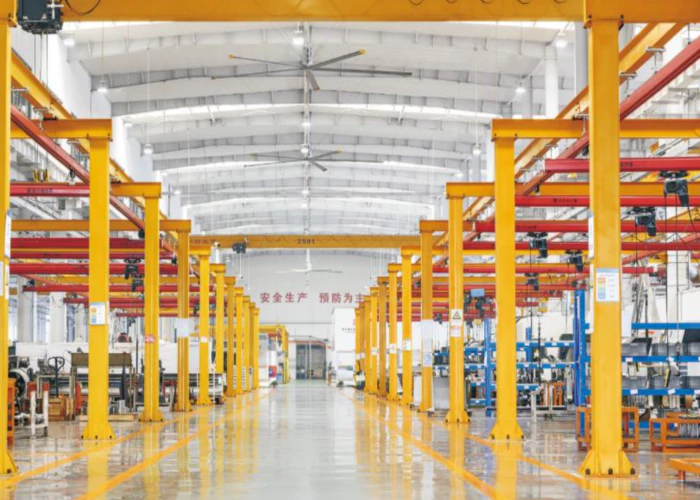
We are proud of our dust-free assembly lines (a rarity in this heavy industry). We’ve digitized the whole shop floor so you can inspect our honing machines and pressure test benches from your phone.
Hemen şimdi tesisimize gelin:
The “Black Box” of the Hitch: Technical Specs
Let’s get technical for a minute. The primary function of the Quick Coupler Locking Cylinder is to extend and retract the locking wedge or pin. Sounds simple. However, the environment is hostile. We are talking about a Çift Etkili Piston design that needs to hold pressure indefinitely. If the pressure drops, the lock opens. To combat this, we integrate pilot-operated check valves directly into the cylinder port. This creates a “hydraulic lock”—meaning even if your main hose gets sliced by rebar, the oil in the cylinder is trapped, and the wedge stays put.

The material choice is where most manufacturers cut corners. Standard cylinders often use 1045 steel. We use 42CrMo (Krom-Molibden) steel for the rod and often the barrel. Why? Impact resistance. When you are using a hydraulic breaker, the vibration travels straight through the coupler into the cylinder rod. 42CrMo absorbs this shock without micro-cracking. Additionally, the chrome plating isn’t your standard decorative finish. We use a multi-layer chrome process, often exceeding 30 microns, specifically to resist the “sandpaper effect” of silica dust found in trenching mud.
| Özellik | Standart Piyasa Spesifikasyonu | Our Heavy-Duty Coupler Spec |
|---|---|---|
| Çubuk Malzemesi | CK45 / 1045 Steel | 42CrMo (High Tensile) |
| Safety Mechanism | External Check Valve (Optional) | Integrated Pilot Check Valve |
| Sızdırmazlık Sistemi | Standart NBR | Anti-Mud Composite (PU + PTFE) |
| Çalışma Basıncı | 210 Bar | 350 Bar (En Yüksek Basınç 400 Bar) |
| Korozyon Direnci | Single Chrome | Double Chrome + Salt Spray Test |
More Than Just Digging Dirt
The application of these cylinders has evolved. It used to be just for swapping buckets (from digging to grading). Now, we see these Quick Coupler Cylinders on tilt-rotators and complex demolition rigs. The stress on the cylinder is totally different when you are running a hydraulic shear or a pulverizer. The twisting moments are immense.

In wet environments—like dredging or canal work—the “Anti-Mud” capability becomes the hero. Standard seals act like sponges for dirty water. Once that water mixes with your hydraulic oil, you get that milky emulsion that destroys pumps. We design the gland nut (the cylinder head) with a tighter tolerance and a secondary debris scraper that physically shaves the rod clean before it retracts. It’s a small detail, but it prevents the entire hydraulic system from being contaminated.
Case Study: The Quarry Breaker Challenge
Müşteri: “IronRock Mining Services” – A mid-sized contractor in Western Australia.
Sorun: They were running a fleet of 45-ton excavators equipped with heavy hydraulic breakers. The constant high-frequency vibration was causing the OEM coupler cylinders to fail internally. The check valves were vibrating loose, causing the buckets to rattle and the safety pins to disengage partially. They were replacing cylinders every 400 hours.
Çözümümüz: Özel bir tasarım geliştirdik. Welded Body Locking Cylinder.
- ✅ Güncelleme: Switched the rod material to induction-hardened 42CrMo4.
- ✅ Innovation: Integrated a cartridge-style check valve that was thread-locked and mechanically secured against vibration.
- ✅ Foklar: Utilized a heavy-duty buffer seal to absorb pressure spikes from the hammer.
Sonuç: The new cylinders have surpassed 2,500 hours of operation with zero failures. The maintenance manager, a tough bloke named Dave, told us, “It’s the first time I haven’t had to worry about a bucket dropping on my guys.” (We take that as a high compliment).
Voice from the Field
“The fitment was exact for our Cat 320 couplers. Usually, aftermarket parts require a hammer to install, but these slid right in.”
– Sarah J., Fleet Manager, UK
“We work in swamp land. The mud seals on these cylinders are the only ones that keep the water out. Great product.”
– Mike T., Owner-Operator, Florida
“Fast quote, fast shipping. The 42CrMo rod is noticeably stronger than the stock ones we pulled out.”
– Lars E., Equipment Dealer, Sweden
Strategic Analysis: The Ever Power Cylinder (SWOT)
Güçlü Yönler
- Superior 42CrMo metallurgy.
- Proprietary anti-mud sealing technology.
- Integrated safety check valve standard.
- Custom fitment for any coupler brand.
Zayıflıklar
- Higher cost than generic mild steel units.
- Heavier weight (due to reinforced walls).
- Lead time for highly custom one-offs.
Fırsatlar
- Stricter safety regulations globally (ISO 13031).
- Market shift towards fully automatic couplers.
- Integration of smart sensors for lock confirmation.
Tehditler
- Influx of low-grade, cheap copies.
- Supply chain volatility for chrome plating chemicals.
- Evolution of non-hydraulic mechanical locks.
Future Trends: The “Smart” Cylinder
We are already seeing the next generation of Quick Coupler Cylinders on the drawing board. The industry is moving toward “Smart Locking.” This involves embedding magnetic field sensors or inductive proximity switches directly into the cylinder wall. Why? So the operator has a green light on the dashboard confirming the wedge is 100% engaged. No more visual checks from the cab (which are often blocked by the boom anyway). We are currently prototyping these smart cylinders to interface with 3D machine control systems.
Built to Your Print (Or Your Scrap)
Here is the thing: we know you might not have the original engineering drawings. Maybe the manufacturer went bust, or the manual is lost in the mud. That’s fine. We specialize in reverse engineering. Send us the old, leaking cylinder, or even just the critical dimensions (Pin Diameter, Pin Center-to-Center, Port Size), and we will draft a CAD model for your approval before we cut a single piece of steel. Customization isn’t a hassle for us; it’s our daily bread.
Sıkça Sorulan Sorular (SSS)
What is the cost of a custom replacement quick coupler cylinder for a 30-ton excavator?
It really depends on the specific dimensions and the safety check valves required, but generally, for a high-grade 42CrMo unit, you aren’t looking at cheap eBay prices. We focus on safety. A typical heavy-duty locking cylinder might range between $300 to $800, depending on volume and specs. The best way is to send us a photo of your old unit for an exact quote.
Why is my quick hitch cylinder leaking hydraulic fluid after only three months of digging in mud?
We see this constant battle with mud. Standard wiper seals often fail to scrape off dried clay, which then gets pulled into the rod seal, destroying it. Our cylinders use a double-lip polyurethane wiper specifically designed to handle dried ‘cement-like’ mud, keeping the internal oil clean.
Can you manufacture a locking cylinder that fits a Miller or Hill Tefra quick coupler system?
Yes, we certainly can. We manufacture direct replacement cylinders for major coupler brands, including Miller, Hill, Cat, and Strickland. We just need the pin-to-pin measurements and the port locations to ensure a drop-in fit that often exceeds the OEM steel specifications.
What happens if the hydraulic hose bursts while the bucket is in the air?
This is the nightmare scenario, right? That is why our cylinders come equipped with an integrated safety check valve (pilot-operated check valve). Even if the hose is severed, the valve traps the oil in the chamber, mechanically locking the cylinder in the ‘clamped’ position so the bucket doesn’t drop.
Do you ship these excavator attachment cylinders to contractors in Australia or Canada?
Absolutely. A huge chunk of our business is exporting to rugged terrains like the Australian Outback and the Canadian oil sands. We understand the logistics and crate them heavily to survive the journey.
Secure Your Hitch Before It’s Too Late
Don’t let a $500 cylinder cost you a $50,000 accident. Let’s talk specs.