If you have ever stood under the boom of a 56-meter concrete pump while it’s pushing a stiff mix, you know the feeling. The whole structure pulses. It whips. It groans. For the operator on the remote control, it’s just another Tuesday, but for the Boom Luffing Cylinder (or Variable Amplitude Cylinder) holding up that multi-ton steel arm, it is absolute torture. I’ve been analyzing hydraulic failures in construction machinery for nearly two decades, and I can tell you this: standard cylinders do not survive the “concrete whip.” The cyclic vibration caused by the piston pump sends shockwaves straight into the cylinder mounting ears, turning microscopic inclusions in the steel into catastrophic cracks.
Most printers and parts suppliers treat a boom cylinder like a static prop—something that just holds weight. They don’t account for the dynamic side-loading that happens when the wind picks up or the boom is fully extended horizontally. We’ve learned (sometimes the hard way) that using standard ST52 steel for these applications is a recipe for failure. That is why our Concrete Pump Boom Cylinders are engineered exclusively with 27SiMn (Silicon-Manganese) alloy steel and feature “Heavy-Duty Reinforced Ears.” It’s about fatigue life, plain and simple. If you want your boom to stay in the air, you need steel that can flex without breaking.
👀 Verify Our Production Quality
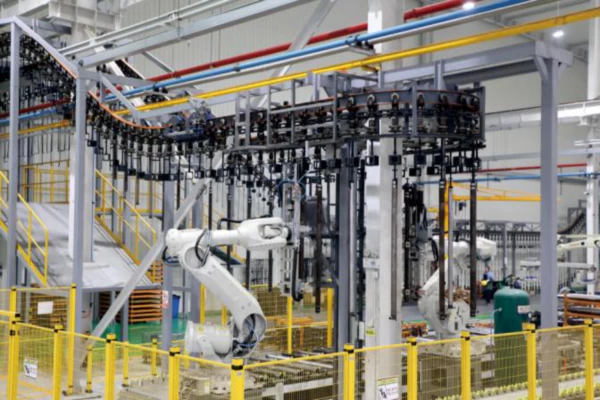
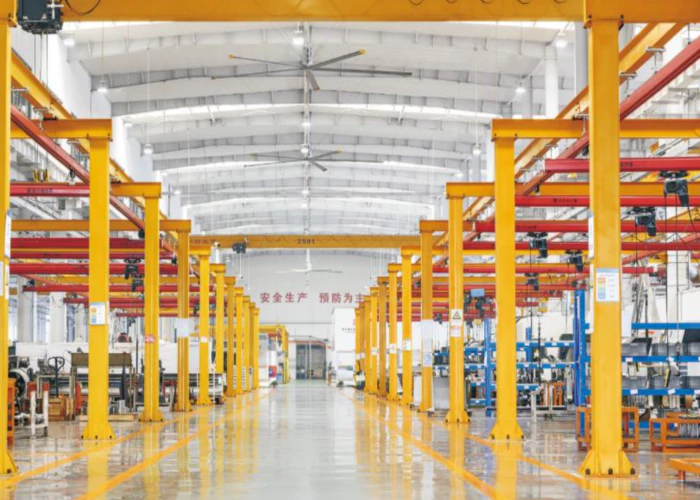
We don’t hide our process. We’ve digitized our entire workshop so you can inspect the welding robots and pressure testing benches that ensure these cylinders are safe for high-altitude work.
Step inside the factory right now:
The “Cracked Ear” Syndrome: Engineering the Solution
Let’s get technical. The primary failure mode for boom cylinders isn’t seal leakage (though that happens); it’s structural failure at the Trunnion or Clevis (Ear). The concrete pump generates a rhythmic pulse (usually 20-30 strokes per minute). This pulse creates a high-frequency vibration that travels up the boom. When the boom is extended, the cylinder rod acts as a dampener for this massive lever arm.
To combat this, we utilize 27SiMn-stål for the barrel and the rod. Compared to standard carbon steel, 27SiMn has a significantly higher yield strength (≥ 835 MPa) and better toughness. This allows the cylinder to absorb the shock loads without plastic deformation. But material alone isn’t enough. We design our cylinders with End-Position Cushioning. As the boom reaches full extension or retraction, a built-in hydraulic throttle slows the piston down, preventing that metal-on-metal “bang” that shatters welds. We also use an enlarged, forged ear design rather than a simple welded plate, distributing the stress over a larger area.
| Särdrag | Standardersättning | Our Heavy-Duty Boom Spec |
|---|---|---|
| Pipanmaterial | ST52 / 1020 Steel | 27SiMn (High Tensile Alloy) |
| Mounting Ears | Standard Welded Plate | Forged & Reinforced Clevis |
| Dämpning | None (Hard Stop) | Integrated Adjustable Cushioning |
| Stångplätering | Enkel krom (20 μm) | Double Chrome (30-50μm) |
| Arbetstryck | 25 MPa | 35 MPa (Peak 40 MPa) |
Where Does This Cylinder Live?
This cylinder is the muscle behind the Concrete Pump Truck Boom. Whether it’s a 38-meter city pump or a massive 63-meter unit used for bridge construction, the luffing cylinder is what unfolds and holds the arm segments.
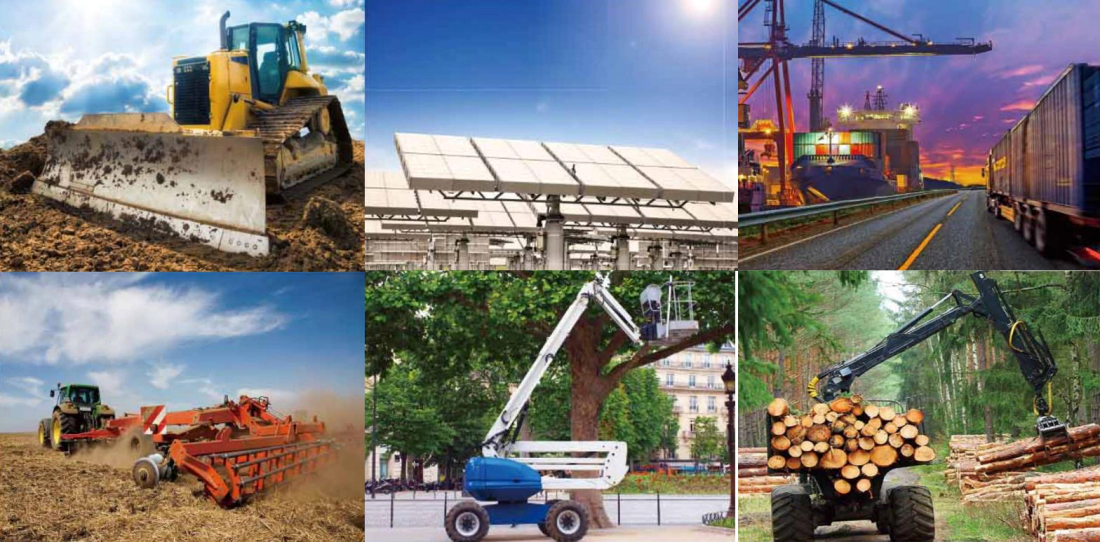
The environment is harsh. Cement dust is highly abrasive and alkaline. It settles on the extended rod, and if the wiper seal isn’t top-notch, it gets pulled into the cylinder, destroying the main seals. We use a double-lip wiper made from hydrolysis-resistant polyurethane to keep the chemical slurry out. Furthermore, in high-rise applications, the wind load on the boom creates a twisting force. Our Double-Acting Piston Design with extra-wide guide bands helps resist this side-loading, keeping the rod centered and the seals intact.
Case Study: The Istanbul Bridge Project
Klient: “Bosphorus Construction Group” – A major infrastructure contractor in Turkey.
Huvudvärken: They were pouring piers for a new viaduct using 56-meter boom pumps. The wind coming off the strait was causing the booms to sway violently. Their OEM cylinders (made of standard ST52) were developing hairline cracks at the rod-eye welds every 3 to 4 months. Safety inspectors threatened to shut down the site.
Vår lösning: Vi konstruerade en specialanpassad Reinforced 27SiMn Luffing Cylinder.
- ✅ Upgrade: Switched the material to quenched and tempered 27SiMn.
- ✅ Design: Increased the ear thickness by 25% and used a full-penetration weld process.
- ✅ Damping: Optimized the cushioning port to soften the “whip” effect of the boom movement.
Resultatet: The retrofitted pumps completed the 18-month project without a single cylinder structural failure. The maintenance chief, Mr. Demir, told us, “The booms just feel stiffer. Less bounce, less worry.”
Voices from the Pour
“We used to have to re-weld cylinder mounts constantly. Since switching to the forged-ear design from Ever Power, we haven’t touched a welder to a boom in a year.”
— Mike T., Fleet Manager, Chicago
“The cushioning works. You don’t hear that metal clunk when the operator slams the stick open. Saves my pins.”
— Carlos R., Pump Operator, Brazil
“I was worried about fitment on our older Sany truck, but they nailed the dimensions. Dropped right in.”
— Ahmed K., Workshop Lead, Dubai
Strategisk analys (SWOT)
Styrkor
- 27SiMn material offers superior fatigue resistance.
- Reinforced forged ears prevent structural cracking.
- Integrated cushioning protects the entire boom structure.
- High-pressure sealing prevents “boom drift.”
Svagheter
- Högre kostnad än generiska cylindrar i mjukt stål.
- Heavier weight due to reinforced components.
- Requires precise counterbalance valve tuning.
Möjligheter
- Booming infrastructure markets require high-rise pumping.
- Eftermontering av äldre fordonsflottor för bättre säkerhetsefterlevnad.
- Expansion into “Smart Boom” sensor integration.
Hot
- Low-quality, unsafe imitations are flooding the market.
- Fluctuating alloy steel prices.
- Stricter weight regulations on road-going trucks.
Future Trends: The Lightweight Giant
The concrete industry is in a constant battle with weight limits. Operators want longer booms on lighter chassis. This creates a paradox for cylinder design: we need to be stronger but lighter. The trend is moving towards Ultra-High Strength Steels and hollow-rod technology to shave off kilograms. We are also seeing the integration of Linear Position Sensors inside the cylinder to enable “Active Damping” systems, where the computer automatically counteracts the boom bounce. We are currently prototyping these smart cylinders for the next generation of pumps.
Tailored to Your Reach
Here is the deal: No two pump trucks are exactly the same after a few years of service. Modifications happen. We specialize in Anpassad tillverkning. You don’t need a part number. Send us the cylinder dimensions, the boom section it belongs to (1st, 2nd, etc.), and the operating pressure. We will build a replacement that fits perfectly and is tougher than the original. We control the heat treatment, the welding, and the testing in-house.
Vanliga frågor (FAQ)
Why do the mounting ears on my concrete pump boom cylinders keep cracking after only a year of use?
We see this all the time, and it’s usually not a pressure issue—it’s a vibration fatigue issue. When you are pumping concrete at 40 meters out, the “whip” effect creates massive oscillating side-loads on the clevis. Standard steel ears just fatigue and snap. We solve this by using forged 27SiMn reinforced ear mounts that are specifically heat-treated to handle that cyclic stress without crystallizing.
Is end cushioning really necessary for a luffing cylinder on a smaller 30-meter pump truck?
Absolutely, and here is why: even on a smaller boom, the inertia is huge. Without hydraulic cushioning at the end of the stroke, the boom slams into the stop, sending a shockwave right through the chassis. Over time, this loosens every pin and bolt on your rig. Our integrated cushioning acts like a hydraulic brake, slowing the piston down in the last few centimeters to save your machine.
How much does a custom replacement boom cylinder cost for a Putzmeister or Schwing truck?
It depends on the specific section (1st, 2nd, or 3rd arm) and the bore size, but generally, a high-spec 27SiMn replacement will run between $800 and $2,500. While you might find cheaper mild steel units, they won’t last a season in high-volume pumping. We focus on “cost per cubic meter pumped,” where our cylinders always win out.
Can you manufacture a replacement cylinder if I don’t have the original part number or drawings?
Yes, we do this daily. Since pump trucks are often modified or are older legacy models, the part numbers are often gone. We just need the physical dimensions: Pin Diameter, Closed Center-to-Center length, and the Stroke. A few photos of the port orientation help too. We can reverse engineer it and usually upgrade the seals to a modern spec.
What is the typical lead time for a custom-welded boom cylinder if my truck is down?
We know a parked pump truck costs you a fortune. For custom welded designs using 27SiMn, we typically look at 3 to 4 weeks for production to ensure the welding stress relief and chrome plating are done right. However, for urgent breakdown situations, we have an expedited track that can sometimes ship in under 18 days.
Stop the Whip. Pump with Confidence.
Don’t let a cracked ear ground your fleet. Upgrade to Reinforced 27SiMn Cylinders.