We’ve been in this game long enough to know that there is one sound you never want to hear on a job site: the slow, creaking groan of a hydraulic arm drifting downward when it’s supposed to be rock solid. It keeps site managers up at night. In my 18+ years of troubleshooting fluid power systems, I’ve seen perfectly good machines grounded because a standard cylinder couldn’t hold pressure overnight. Most printers and purchasing managers think a cylinder is just a tube that pushes, but when you are holding a 50-ton bridge section or elevating a worker 100 feet in the air, you need more than just a seal—you need a guarantee. That is where the Locking Hydraulic Cylinder comes in. It is not just a component; it is your primary insurance policy against seal bypass, hose rupture, and the relentless pull of gravity.
The misconception I see constantly is that people think “counterbalance valves” are the same as “locking cylinders.” They aren’t. A valve is external; a true locking solution is integral. Whether we are talking about a pilot-operated check valve built directly into the cylinder cap (to minimize leak points) or a robust mechanical interference lock that physically jams the rod in place, the goal is zero movement. We’ve seen applications where a customer tried to save $200 by using a standard cylinder with an external lock valve, only to have the hard line vibrate loose and drop the load. It’s a painful lesson. The trick is understanding exactly how you need to lock it—fluid or metal?
Under the Hood: How We Defeat Drift
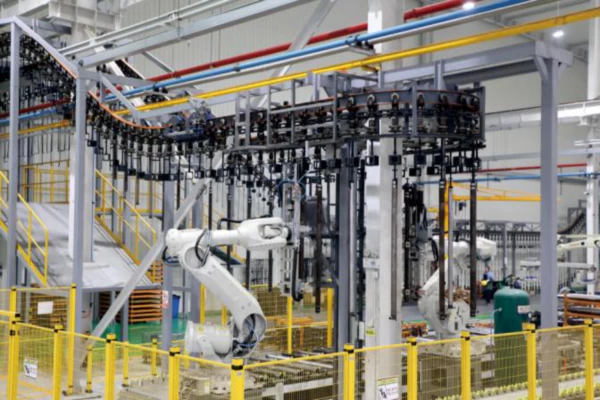
Our precision assembly line where locking mechanisms are tested for holding pressure.
Let’s get technical for a moment (but I’ll keep it practical). There are generally three ways we engineer a Locking Hydraulic Cylinder. The most common is the **Fluid Lock**, using dual pilot-operated check valves (often called a P.O. Check). This traps oil in the chamber. It’s effective, but it relies on the piston seal being perfect. If the seal weeps, the cylinder creeps.
For critical safety—like maintenance stands for aircraft—we move to **Mechanical Locks**. This is where we machine a groove into the rod or use a segmented collet (bear-loc style). When the cylinder reaches its stroke, a spring forces a wedge into place, mechanically locking the rod to the barrel. Hydraulic pressure is required to *unlock* it. This means if you lose all hydraulic power, the cylinder stays locked. It’s failsafe. We also use **Internal Oil Circuit Locks** for compact spaces, where the valving is machined directly into the cylinder head to prevent external tampering.
| Locking Type | Technical Principle | Insikten från det "gamla proffset" |
|---|---|---|
| Pilot Operated Check (Fluid) | Traps oil in the chamber; opens only with pilot pressure. | Good for general stabilizers. Cheap, but dependent on seal health. |
| Mechanical Wedge/Collet | Physical metal interference engages when pressure drops. | The gold standard for safety. If the hose blows, this doesn’t budge. |
| Segment Lock (Grooved) | Segments engage into rod grooves at specific positions. | Great for end-of-stroke locking, like landing gear or outriggers. |
| Bear-Loc (Infinite) | Friction interference fit on the rod. | Locks anywhere in the stroke. Infinite adjustability but pricier. |
SWOT Analysis: Is Locking Tech Right for Your Rig?
Every component has a trade-off. As an engineer, I look at the balance sheet of performance versus complexity. Here is how locking cylinders stack up in the modern market.
Styrkor
- Säkerhet: Prevents catastrophic failure from hose bursts.
- Stabilitet: Eliminates “spongy” feel in outriggers.
- Compliance: Often required by ISO/OSHA for man-lifting equipment.
Svagheter
- Kosta: Significantly higher manufacturing cost than standard cylinders.
- Komplexitet: More internal parts (springs, wedges) that can eventually wear.
Möjligheter
- Automatisering: Integrating position sensors with locks for “Smart Safety” systems.
- Infrastruktur: Growing demand in aging bridge repair equipment.
Hot
- Electromechanical: Screw jacks are becoming competitive in lower-force applications.
- Underhåll: Poor oil quality can jam sensitive check valves.
Where We See Them Shine (And Why)

The classic use case is, of course, the Crane Outrigger. You simply cannot have a 100-ton crane sitting on a cylinder that might leak down 5mm over an hour; that changes the center of gravity and can tip the whole rig. But we are seeing interesting applications in Amusement Rides. Those lap bars? They often use redundant hydraulic locking cylinders. If the power goes out, the bar must stay locked. We also supply these for Hazardous Material Containment doors. When a blast door needs to seal a chemical testing chamber, it uses a mechanical locking cylinder to ensure the seal remains tight even if the facility loses power.
Trend Analysis: Smart Locking
The trend I’m watching closely is the integration of “Lock Status Sensors.” It’s no longer enough for the cylinder to be locked; the machine’s PLC needs to know it’s locked. We are now embedding inductive proximity switches inside the locking mechanism. This provides a “Proof of Lock” signal. The machine won’t allow the boom to extend until it gets that green light from the stabilizer cylinder. It’s moving from passive safety to active, intelligent safety.
Case Study: The High-Wind Bridge Project
Klient: Strait Crossings Maintenance Ltd. | Plats: Coastal United Kingdom
Utmaningen: The client operates a specialized under-bridge inspection unit (a negative-reach platform). The environment is brutal—salt spray and high winds. They were using standard cylinders with external counterbalance valves. However, wind buffeting was causing pressure spikes that would “burp” the valves, causing the platform to jitter and drift. The operators felt unsafe, and productivity plummeted because they had to constantly re-level the platform.
Vår lösning: We replaced the main extension actuators with Custom Mechanical Locking Cylinders.
1. **Mechanism:** We utilized an internal “finger-lock” collet system that mechanically engages the rod when hydraulic pressure is neutralized.
2. **Material:** We upgraded the rod to 17-4PH stainless steel to survive the salt air without pitting (which ruins seals).
3. **Integration:** We built the valve porting directly into the barrel to eliminate external hoses that were vibrating in the wind.
Resultatet: The platform became rigid. The mechanical lock eliminated the “sponge” effect of the hydraulic fluid. Operator confidence soared, and inspection times were cut by 20%.
“The difference in stability is night and day. Even in 30-knot gusts, the platform feels like it’s bolted to concrete. The guys actually want to go out now.”
— Ian M., Site Operations Lead
“Ever Power engineered the retrofit to fit our existing mounting pins. Saved us weeks of fabrication work.”
— Sarah Jenkins, flottchef
“We looked at OEM replacements, but the lead time was 12 weeks. Ever Power delivered these custom units in 4 weeks. Unbelievable service.”
— David R., Procurement Director
Factory Direct: Precision is Our Product
You can’t just buy a safety-critical cylinder from a catalog and hope it fits. We offer full customization. If you need a mechanical lock that engages only at the top 10% of the stroke, we can machine that. If you need a pilot ratio of 10:1 to work with your specific low-pressure control circuit, we can calibrate that. We pressure test every locking cylinder to 1.5x operating pressure and perform a 15-minute static holding test to ensure zero drift before it ever enters a crate.
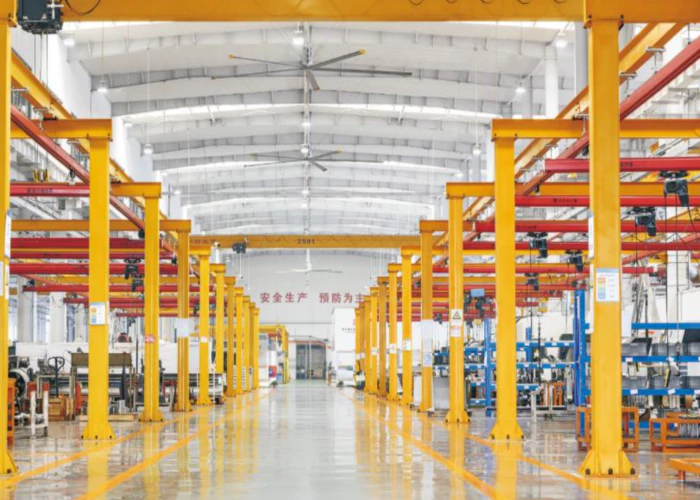
See Where We Build The Safety
We believe in total transparency. Walk through our testing bays and see the locking mechanisms being assembled.
👉 Klicka här för att besöka vår VR-fabrik
No hard hat required. Experience the quality virtually.
FAQ: Your Questions, Answered Honestly
What is the primary safety difference between a pilot-operated check valve and a mechanical locking cylinder?
This is the million-dollar question we get asked on site visits all the time. A pilot-operated check valve locks the fluid, which is great, but if a hose bursts or a seal fails, you can still see movement. A mechanical locking cylinder uses a physical metal-to-metal interference—like a wedge or a segment lock—that physically prevents the rod from retracting even if you cut every hose on the machine. For personnel safety, mechanical is king.
How much does a custom locking hydraulic cylinder cost for a crane outrigger application?
It varies based on tonnage, but to give you a ballpark for budgeting, a standard outrigger locking cylinder usually lands between $400 and $1,200 per unit. If you need complex internal mechanical locks for a high-capacity mobile crane, that price can go up. Send us your load charts, and we can give you an exact number in 24 hours.
Can you manufacture replacement locking cylinders for aerial work platforms in Europe or North America?
Yes, we ship globally every week. Since AWP safety standards (like ANSI and EN280) are strict, we build our replacements to meet or exceed those OEM specifications. We just need the pin-to-pin dimensions and the valve block configuration to get a replacement shipped out to your maintenance depot.
Why is my locking hydraulic cylinder shuddering when lowering the load?
That is likely ‘chatter’ caused by the pilot ratio. If the pilot pressure is fighting against the back pressure created by the load, the check valve opens and closes rapidly. We usually fix this by adjusting the pilot ratio or adding a flow control valve to the return line to keep positive pressure on the pilot piston. It’s a tuning issue, not necessarily a broken part.
Do you offer locking cylinders that can hold position at any point in the stroke?
We sure do. While many mechanical locks only engage at the full extension or retraction, we offer infinite position locking cylinders. These use a friction-style interference lock that clamps the rod wherever it stops. It is perfect for applications like adjustable work platforms where you need rigidity at weird heights.
Don’t Leave Safety to Chance
Gravity is patient. Your cylinders need to be stronger. Let’s build a solution that never lets go.