Flange Hydraulic Cylinders: The Anchor of Precision
When centerline alignment isn’t just a suggestion—it’s a requirement.
I’ve spent nearly two decades crawling around inside hydraulic presses and injection molding machines, and if there is one thing that keeps me up at night, it’s side-loading. You walk into a plant, hear that groaning noise, and you just know the cylinder rod is fighting the mounting geometry. This is exactly why the Flange Hydraulic Cylinder is the unsung hero of the industrial world. Unlike pivot mounts (like clevises or trunnions) that allow the cylinder to follow the arc of the load, a flange mount says, “I am staying right here, and I am moving in a perfectly straight line.” In our experience, engineers often default to pivot mounts because they are forgiving of bad frame alignment. But when you need rigidity—when you are pushing a die together with 500 tons of force—forgiveness isn’t what you want. You want absolute, unshakable stability. The flange mount transfers the force directly along the centerline of the cylinder into the machine frame, minimizing the bending moment that destroys rod bearings.
Most printers (I mean, purchasing managers) look at a flange cylinder and just see a metal plate welded to a tube. But there is a lot of nuance there. Is it a Rectangular Head Flange (MF1) or a Cap Rectangular Flange (MF2)? Or maybe a circular MF5? The choice dictates how the stress flows through the bolts. I’ve seen setups where a front flange was used for a heavy pulling application, and the bolts eventually stretched and sheared because they were constantly in tension. It’s these little details—knowing when to put the flange on the head versus the cap—that separate a machine that runs for ten years from one that breaks down every six months. The trick is understanding that the flange isn’t just a bracket; it’s an integral part of the pressure vessel structure.
The Engineering Core: Why Flanges Work
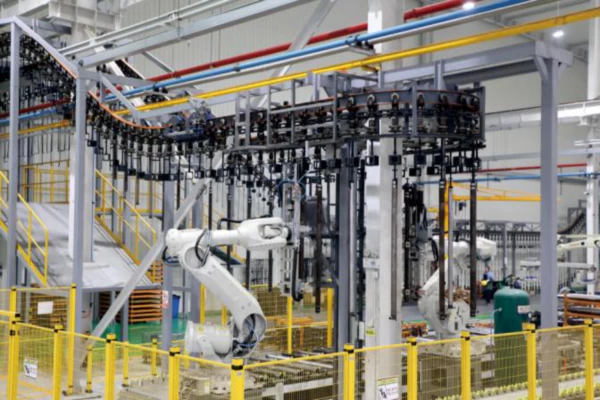
Our dedicated CNC machining center for milling high-tolerance flange pilots.
Let’s get into the meat. The critical feature of any high-quality Flange Hydraulic Cylinder isn’t the bolt holes; it’s the “pilot” or “spigot.” This is a machined raised ring (or recess) on the back of the flange face. In a proper installation, you bore a matching hole in your machine frame. The pilot fits tightly into that hole. Why does this matter? Because bolts have clearance. If you rely on the bolts to hold the cylinder’s weight and alignment, gravity and vibration will eventually cause it to slip by that 0.5mm clearance. That slip is enough to ruin your wiper seal. The pilot takes the shear load, while the bolts just handle the tension. We standardly machine our pilots to an f7 or h7 tolerance, ensuring a fit so tight you almost get a suction pop when you install it.
| Technical Feature | Standardspecifikation (Ever Power) | Engineering Insight |
|---|---|---|
| Flange Material | Q355D / ST52-3 Forged Steel | Forged allows for better grain flow than plate steel, resisting cracking under shock loads. |
| Pilot Tolerance | ISO f7 / h7 | Crucial for centerline alignment. Without this, you are just guessing. |
| Monteringsstilar | Front (Head), Rear (Cap), Mid-Body | Mid-body flanges (trunnion style) balance the weight but are harder to mount. |
| Stångbeläggning | Hard Chrome / Nickel-Chrome | Standard 20 micron chrome is fine, but for presses, we go deeper. |
| Tryckklassning | 210 Bar / 350 Bar (Heavy Duty) | Flange thickness increases exponentially with pressure rating to prevent bowing. |
SWOT Analysis: Is Flange Mount Right for You?
I’m not going to sell you a Ferrari to drive to the grocery store. Flange cylinders are premium components, but they have limitations. You need to know if your machine frame is rigid enough to handle them.
Styrkor
- Rigidity: Offers the most rigid connection possible between cylinder and load.
- Compactness: Requires less length than clevis mounts (no pin-to-pin distance waste).
- Force Transfer: Direct centerline force transfer minimizes frame twisting.
Svagheter
- Alignment Sensitivity: Zero tolerance for misalignment. If the guided load isn’t perfectly parallel, the cylinder binds.
- Installation: Harder to install; requires precise machining of the mounting surface.
Möjligheter
- Automatisering: Ideal for high-speed automated lines where vibration loosens pin-style mounts.
- Eftermonteringar: Upgrading tie-rod cylinders to welded flange units for leak reduction.
Hot
- Elektriska ställdon: Electric ballscrews also use flange mounts and are competing in lower-force applications.
- Frame Flex: If the machine frame flexes under load, it can snap the cylinder flange bolts.
Where We See Them Shine
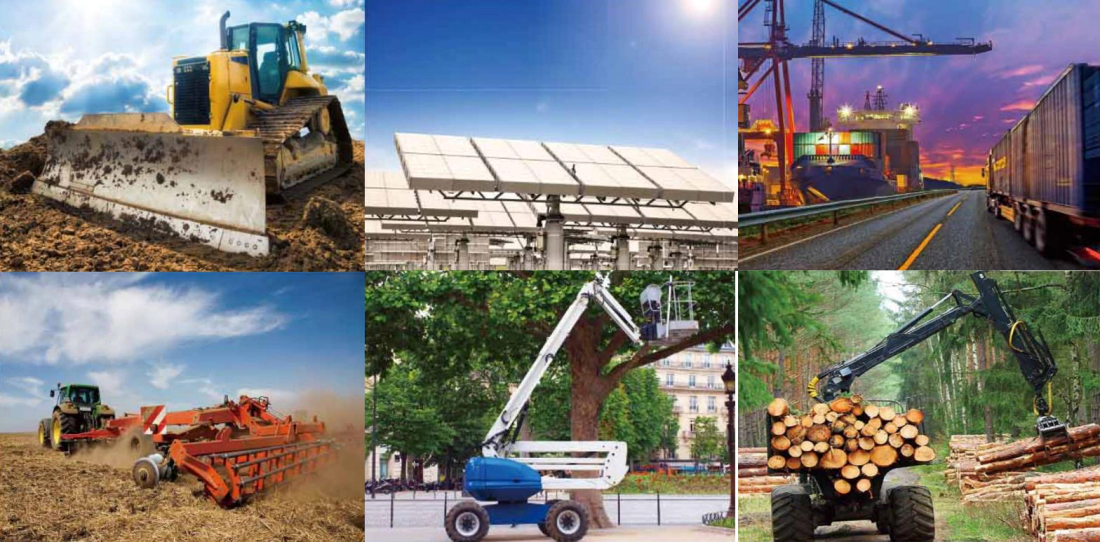
You won’t find many flange cylinders on a backhoe loader digging a ditch. But walk into a factory, and they are everywhere. **Plastic Injection Molding Machines** use massive rear-flange cylinders to clamp the mold shut. The precision is non-negotiable there; if the platen tilts, you get “flash” on the plastic parts. We also see them heavily utilized in **Vertical Hydraulic Presses**. In a press, the ram moves straight up and down. A flange mount at the head allows the cylinder to hang vertically, with the flange supporting the weight of the cylinder body. It’s elegant and efficient. Another big user is the **Machine Tool Industry**—clamps and work-holding fixtures often use compact flange cylinders because they can be tucked away inside the casting.
Trend Analysis: Smarter & Stronger
The boring metal flange is getting a tech upgrade. We are seeing a huge demand for “Smart Flanges.” We are now machining ports directly into the flange face to accept pressure transducers or proximity switches. This eliminates external plumbing and protects the sensors from damage. Also, material science is pushing us towards higher tensile steels for the flange itself, allowing us to make the footprint smaller without sacrificing bolt-holding strength. Compact power is the name of the game in 2025.
Case Study: The Michigan Stamping Problem
Klient: Apex Automotive Stamping | Plats: Detroit, Michigan, USA
Utmaningen: Apex was running a high-speed transfer line stamping car door panels. Their existing tie-rod cylinders (foot-mounted) were constantly loosening up due to the intense shock vibration of the punch. Every time a cylinder shifted, the automation timing went off, causing a jam. They were losing about $8,000 an hour in downtime, not to mention the maintenance crew was getting tired of re-torquing bolts every shift.
Vår lösning: We engineered a custom **Heavy-Duty Rear Flange Cylinder**.
1. **Mounting:** We switched to a rear flange design (MF2) that bolted directly to the press bulkhead, parallel to the force vector.
2. **Bolting:** We specified Class 12.9 socket head cap screws and machined a tight-tolerance pilot ring to take the shear load.
3. **Cushioning:** We added aggressive deceleration cushioning to the cap end to absorb the shock of the return stroke.
Resultatet: The cylinders have been installed for 14 months with zero alignment issues. The rigid flange mount absorbed the vibration that was rattling the old tie-rods apart.
“I was skeptical that changing the mount would fix a vibration problem, but the flange cylinder is rock solid. It hasn’t moved a micron.”
— Mike T., Maintenance Lead
“Ever Power’s team caught a dimension error in our original drawing regarding the pilot hole. Saved us from scrapping the mounting plate.”
— Sarah J., Project Engineer
“We needed these fast for a holiday shutdown install. They air-freighted the custom units in 4 weeks. Impressive.”
— Dave R., Plant Manager
Factory Direct: We Machine, We Weld, We Test
You can’t just buy a reliable flange cylinder off a shelf at a hardware store. The alignment requirements mean they are almost always built to order. We have our own CNC milling centers dedicated to facing flanges. This ensures that the mounting face is perfectly perpendicular to the bore axis. If that face is off by even 0.1 degrees, your rod bends. We don’t take that risk. We also offer custom bolt patterns. Need a weird 5-bolt pattern to match a 1980s Japanese press? We can program it and drill it.
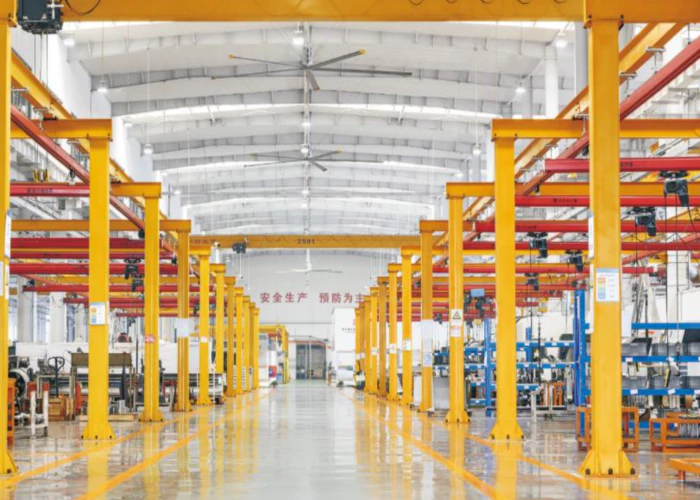
Step Inside Our Machining Center
We believe in transparency. Walk through our factory virtually and see how we machine these heavy-duty flanges.
👉 Klicka här för att besöka vår VR-fabrik
No hard hat required. Just pure engineering.
FAQ: Frågor vi får från fältet
How do I determine if a front flange or rear flange mount is better for my press application?
It really comes down to whether you are pushing or pulling. If your primary load is in extension (pushing), a rear flange is usually better because the cylinder body is in compression, which is naturally stable. However, if space is tight behind the cylinder, or if you are pulling a mold open, a front flange (head mount) might be the only option. Just remember, front flanges put the mounting bolts in tension during extension, so you need to spec those bolts carefully.
What is the typical lead time for a custom flange-mounted cylinder shipment to California?
For custom specs shipped to the West Coast, we typically look at a 4 to 5-week turnaround from drawing approval to delivery. We understand that machine downtime costs a fortune, so we do offer expedited air freight services for breakdown situations that can cut shipping time to just a few days.
Why is the pilot ring on the flange mount so critical for installation alignment?
Most people ignore this, but the pilot (or spigot) is doing the heavy lifting. The mounting bolts are there to clamp the flange, but the pilot ring takes the shear load. If you rely solely on the bolts to hold the center line, the cylinder will eventually shift under load, leading to side-loading and seal failure. Always machine your mating plate to fit that pilot tight.
Can you manufacture flange cylinders with high-temperature seals for steel mills?
Absolutely. For steel mill environments where radiant heat is an issue, we swap standard Polyurethane for Viton (FKM) or PTFE seals that handle up to 200°C. We can also add water-cooled jackets to the barrel if the ambient temp is extreme.
How much does a heavy-duty flange hydraulic cylinder cost compared to a standard tie rod?
A robust flange-mount cylinder (mill type) will generally cost 20% to 30% more than a standard agricultural tie-rod cylinder. The extra cost goes into the machined steel flanges and the heavy-wall tubing, but the lifespan in a high-cycle industrial application is easily triple that of a tie-rod unit.
Need to Lock In Your Alignment?
Stop dealing with wobbly cylinders. Let’s spec a flange mount that stays put.