Excavator Boom Cylinders: The Muscle That Matters
Let’s be honest: when you’re staring at a wall of granite or a swampy foundation trench, nobody cares about the paint job on the machine. You care about breakout force and holding power. The Excavator Boom Cylinder is arguably the most stressed hydraulic component on the entire job site. It carries the weight of the arm, the bucket, and the payload, all while subjected to shock loads that would snap a lesser piece of steel in half. In my 18 years of analyzing hydraulic failures (and trust me, I’ve seen some catastrophic ones), the boom cylinder is usually the first victim of poor maintenance or under-engineering. Most printers and procurement managers see a cylinder as a commodity—a tube is a tube, right? Wrong. The difference between a cylinder that lasts 500 hours and one that lasts 10,000 hours is in the microstructure of the rod plating and the geometry of the buffer seals.
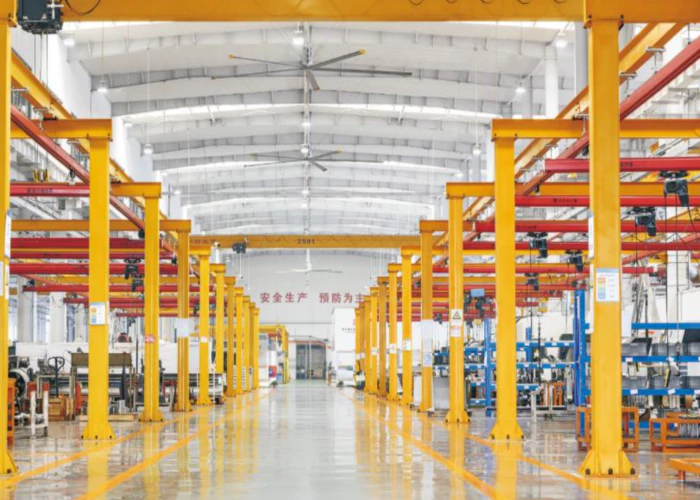
We don’t hide behind stock photos or generic promises. We believe in radical transparency regarding our manufacturing capabilities. Before we dive into the metallurgy, take a virtual walk through our facility. You can see the honing machines and the welding robots right now from your phone.
See Where The Power Is Built
Step inside our digital twin factory and inspect our production line.
The Engineering Reality: Why Boom Cylinders Fail
The boom cylinder sits in the “danger zone.” Unlike the bucket cylinder, which is often curled in and protected, the boom cylinder is exposed. We’ve seen rods pitted by falling rocks, scored by contaminated oil, and bent by operators using the boom as a crane (we know you do it, just don’t tell the safety officer). The real enemy, however, is hydraulic shock. When a bucket hits bedrock, the pressure spike travels instantly back to the cylinder. If the port relief valves aren’t fast enough, the cylinder barrel balloons. This is why we insist on using high-tensile ST52 or 27SiMn steel for our barrels, rather than standard mild steel.
Another critical factor is “Drift.” You park the machine, come back in the morning, and the bucket is on the ground. That’s internal leakage. In our experience, this is almost always caused by the degradation of the main piston seal. We use a specialized 5-piece seal arrangement with a glass-filled nylon backup ring. Why? Because under high heat and pressure, standard rubber extrudes like toothpaste. The glass-nylon prevents that extrusion, keeping the seal tight even when the hydraulic oil hits 80°C (176°F).
Customization: We Don’t Just Stock, We Build
Many suppliers try to sell you a “universal” cylinder. There is no such thing. A 20-ton CAT needs different damping characteristics than a 20-ton Komatsu. We specialize in reverse engineering. If you have an obsolete machine or a custom long-reach excavator, we don’t say “no.” We take your dimensions—pin diameter, stroke, closed length—and we build a unit that often exceeds the OEM specs.
One area where we really shine is the cushioning system. Boom cylinders need aggressive cushioning at the bottom of the stroke to prevent the piston from hammering the gland. We machine custom tapered spears that progressively restrict oil flow, bringing the massive weight of the boom to a soft stop. It sounds like a small detail, but it saves your welds from fatigue cracking.
Trend Analysis: The Future of Digging
The industry is shifting. We are seeing a massive move towards “Smart” Cylinders. Operators want to know exactly where their bucket is without relying on external GPS sensors that get knocked off. We are now integrating magnetostrictive linear position sensors directly inside the cylinder rod. This gives the flight computer real-time data on the boom angle, enabling semi-autonomous digging.
Another trend is Weight Reduction. Every kilo of steel in the cylinder is a kilo less payload in the bucket. We are experimenting with ultra-high-strength hollow rods and friction welding techniques to shave weight without sacrificing buckling strength. If you aren’t looking at power-to-weight ratios, you’re already behind the curve.
Built for the Toughest Jobs on Earth
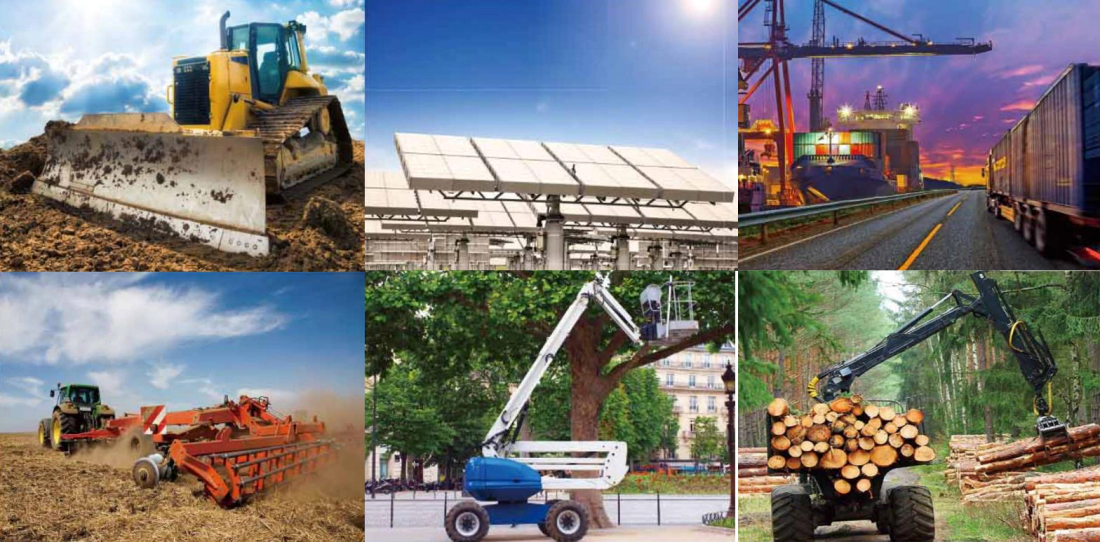
It’s not just about digging dirt. Our cylinders are found in the most punishing environments imaginable. Demolition shears require cylinders that can cycle thousands of times a day with massive pressure spikes. Forestry machines need cylinders that resist sap and debris. And Brytning… well, mining destroys everything eventually, but our cylinders fight back longer. We use specific wiper seals for each environment—brass scrapers for ice, double-lip polyurethane for dust.
Tekniska specifikationer
| Särdrag | Standardspecifikation | Prestandafördel |
|---|---|---|
| Pipanmaterial | ST52 / 27SiMn Honed Tube | High yield strength resists ballooning under pressure spikes (400 Bar+). |
| Stångmaterial | 42CrMo4 Induction Hardened | Hardened surface prevents rock dings; core remains ductile to resist snapping. |
| Tätningssystem | Hallite / Nok / Parker | Zero-leakage technology with high thermal stability (-40°C to +120°C). |
| Plätering | Hard Chrome (30-50 micron) | Micro-crack chrome retains oil for lubrication while resisting corrosion. |
| Svetsning | Submerged Arc / Friction Welding | Ensures the port blocks and eyelets don’t shear off under load. |
Case Study: Surviving the Iron Ore Dust
Klient: RedRock Excavation Services
Plats: Pilbara Region, Western Australia
Industri: Open-pit Iron Ore Mining
Utmaningen: RedRock was running a fleet of 85-ton excavators. The local environment is brutal—temperatures hit 50°C, and the iron ore dust is incredibly abrasive. Their existing OEM boom cylinders were failing every 2,500 hours. The dust was adhering to the oil on the rod, bypassing the wiper seal, and turning the hydraulic fluid into a grinding paste. Downtime was costing them $15,000 per hour.
Vår lösning: We didn’t just replace the cylinder; we re-engineered the defense system.
1. Rod Coating: We switched to a High-Velocity Oxygen Fuel (HVOF) ceramic coating, which is harder than the iron ore dust.
2. Seal Logic: We installed a double-lip aggressive scraper seal made of H-PU (Hydrolysis-Resistant Polyurethane) to physically shear the dust cake off the rod.
3. Bearing: We upgraded the eye bushings to a maintenance-free composite to handle the lack of greasing discipline.
Resultatet: The new cylinders have clocked 8,000 hours and are still dry. The hydraulic oil analysis shows a 90% reduction in particulate contamination.
“We tried three different suppliers before Ever Power. They were the only ones who actually looked at the dust samples and changed the seal material. The cylinders are bulletproof.”
— Mike D., Fleet Maintenance Superintendent
“I was worried about shipping times to Australia, but they air-freighted the first unit in 5 days. Saved our quarterly production targets.”
— Sarah Jenkins, Procurement Lead
“The cushioning on these cylinders is way smoother than the stock ones. My operators noticed it immediately—less banging when the boom drops.”
— Tom “Macca” McDonald, Senior Operator
FAQ: Frågor vi får från fältet
How much does it cost to replace a boom cylinder on a 20-ton excavator in North America?
Why is my excavator boom cylinder drifting down when the machine is turned off?
Can you ship custom heavy-duty boom cylinders to mining sites in Australia or Canada?
What is the best rod plating for excavators working in coastal or saltwater environments?
How do I measure an excavator boom cylinder for a replacement quote?