Bulldozer Ripper Hydraulic Cylinders: When the Rock Fights Back
There is a specific vibration you feel in the seat of a D9 or D10 dozer when the shank hits solid blue granite. It rattles your teeth, but more importantly, it sends a massive shockwave straight back through the linkage and into the Bulldozer Ripper Hydraulic Cylinder. In my eighteen years of engineering hydraulic systems for heavy iron, I have learned that the ripper cylinder is the most abused component on the entire machine. It isn’t just lifting; it’s acting as a dynamic brace against the entire crust of the earth. Most folks in procurement look at the static pressure rating and think, “Yeah, that’ll hold.” But they don’t realize that when a ripper skips over a rock shelf and slams back down, the pressure spike can momentarily triple the rated capacity. This is where standard seals blow out and where cheap welds crack. We’ve seen it a thousand times: a shiny new aftermarket cylinder failing in under 200 hours because the manufacturer didn’t account for the “water hammer” effect created by hard ground impact. The trick isn’t just making the walls thicker; it’s about the metallurgy of the rod and the damping characteristics of the piston design.
👀 See Where The Muscle Is Made
Words are cheap. Steel is real. Step onto our production floor virtually and inspect our honing machines and pressure test bays yourself.
🚀 GÅ MED PÅ RUNDTUR I VR-FABRIKEN
No hard hat required.
The Physics of Failure: Why Generic Cylinders Die Young
Let’s talk about what actually kills a Bulldozer Ripper Hydraulic Cylinder. It’s rarely the main hydraulic pressure. It’s the side-load and the debris. When you are ripping on a slope or turning while the shank is buried (which, I know, operators aren’t *supposed* to do, but let’s be real, they do), the rod acts like a lever. If the guide bushing (the gland) is too short or made of standard grey iron, it deforms. Once it deforms, the seal loses compression on one side, and you get that dreaded weeping oil. In our experience, the only way to combat this is by using extended, high-tensile bronze-composite guide rings that distribute that side-load over a larger surface area. Furthermore, think about where these cylinders sit—right at the back, exposed to falling rocks and flying shale. If the piston rod isn’t induction hardened to at least HRC 55, a rock strike will leave a dent. That dent passes through the wiper seal, tears it, and sucks dirt into the system on the retraction stroke. It’s a death spiral for the hydraulic system.
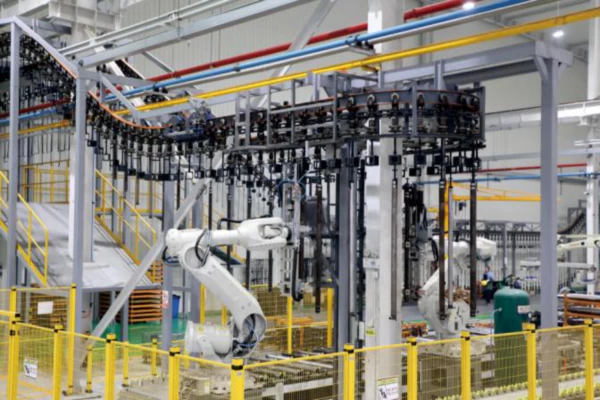
Our testing facility simulates high-frequency shock loads to ensure welds hold up in the field.
Deep Dive: Specs That Actually Matter
I often see spec sheets that list “Paint Color” before they list “Yield Strength.” That drives me crazy. For a ripper application, you need to be looking at the material grade of the tube and the plating technology on the rod. We’ve moved away from standard hard chrome for our extreme-duty line and often suggest a Nickel-Chrome or even ceramic coating options for clients working in corrosive or highly abrasive environments (like salt mines). Below is a comparison of what you typically find on the shelf versus what we engineer for longevity.
| Funktion / Komponent | Standard Aftermarket Spec | Ever Power “Ripper-Ready” Spec |
|---|---|---|
| Cylinderrörsmaterial | ST52 (Standard Carbon Steel) | 27SiMn or 42CrMo (High Tensile Alloy) |
| Stångplätering | Single Layer Chrome (20µm) | Double Chrome (>40µm) or Ceramic Coating |
| Tätningskonfiguration | Single Lip U-Cup (NBR) | Buffer Ring + Double Lip Wiper (Polyurethane/PTFE) |
| Mounting Eyes | Welded Tube ends | One-piece forged ends (Eliminates weld fatigue) |
| Testtryck | 1.25x Rated Pressure | 1.5x Rated Pressure + Impulse Testing |
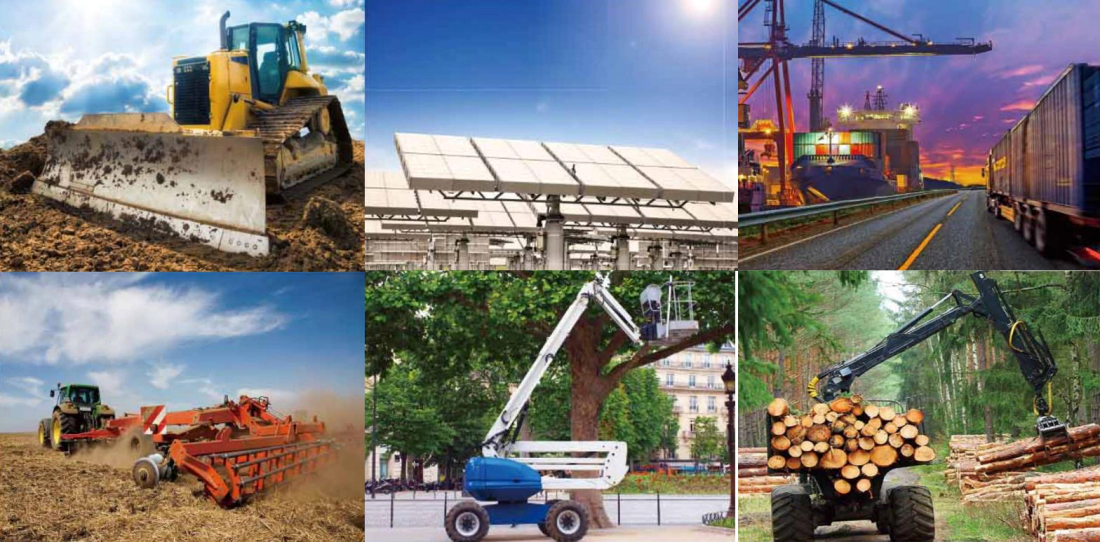
From frozen permafrost to jagged limestone, the application dictates the seal choice.
The Real World: Where Theory Meets Mud
These cylinders don’t live in a lab. They live in the permafrost of Siberia, the iron ore mines of Pilbara, and the road construction sites of Texas. One scenario most printers don’t realize is the heat generation in a Bulldozer Ripper Hydraulic Cylinder. Because the stroke is short and frequent (dithering) while the operator tries to find purchase in the rock, the oil in that specific circuit doesn’t circulate back to the tank to cool down as often as the lift circuit. This localized heat build-up can cook standard Nitrile seals until they are as brittle as glass. For these high-cycle applications, we mandate the use of high-temp Fluorocarbon (Viton) or specialized carboxylated nitrile (XNBR) seals that can handle temps up to 120°C without losing elasticity.
Case Study: The “Shale Breaker” Dilemma
Client Profile: Apex Quarry Operations (Nevada, USA)
Utmaningen: Apex was running a fleet of CAT D11s to rip through hard, calcified shale. The vibration was so intense that the gland nuts on their OEM cylinders were backing off, causing massive oil geysers. They were tightening them weekly, but the threads eventually stripped. Downtime was costing them roughly $8,000 per hour in lost production.
Lösningen: We didn’t just sell them a replacement; we re-engineered the locking mechanism. We designed a custom Bulldozer Ripper Hydraulic Cylinder with a “super-bolt” multi-jackbolt tensioner system on the gland, along with a secondary set screw lock. We also increased the rod diameter by 10mm to increase stiffness and reduce the vibration amplitude.
Resultatet: Since the installation 18 months ago, not a single gland has loosened. The maintenance manager, Rick, told us over a beer that he finally gets to sleep through the night without worrying about a graveyard shift breakdown call. They have since retrofitted their entire fleet with our custom units.
SWOT Analysis: The State of Hydraulic Manufacturing
Styrkor (interna)
- Vertical integration allows us to control steel quality from raw tube to finished product.
- Deep database of seal failure modes from 18 years of field data.
Svagheter (interna)
- Custom engineering takes time; we cannot ship a bespoke cylinder in 24 hours.
- Premium materials mean we are rarely the “lowest bidder” on price.
Möjligheter (extern)
- Integration of smart sensors (IoT) for predictive maintenance.
- Growing demand for remanufacturing/repairing large cylinders instead of scrapping.
Hot (externt)
- Influx of low-grade steel cylinders that look identical but fail under load.
- Volatile raw material costs (Nickel/Chrome) affecting pricing.
Future Trends: Smart Steel
The industry is changing. We used to just build “dumb” muscle, but now, the trend is moving towards “smart” cylinders. We are seeing more requests for Bulldozer Ripper Hydraulic Cylinders with integrated Linear Displacement Transducers (LDTs). These sensors tell the dozer’s computer exactly how deep the ripper is, allowing for automated grade control and preventing the operator from ripping too deep and stalling the machine. Another trend is the move towards maintenance-free spherical bearings. The old grease-nipple days are fading; self-lubricating composite bearings are becoming the standard because, let’s face it, nobody greases the machine as often as the manual says they should.
Customization: We Build What You Need, Not What We Have
You might have an older Komatsu D155 or a modified CAT D9 with a custom shank setup. The OEM might have discontinued the part, or their lead time is six months. This is where our custom service shines. We can reverse-engineer a cylinder from a simple drawing or even a physical sample. We can beef up the wall thickness, change the port orientation to protect hoses from rockfall, or upgrade the rod material. We treat every order as a project, not a transaction.
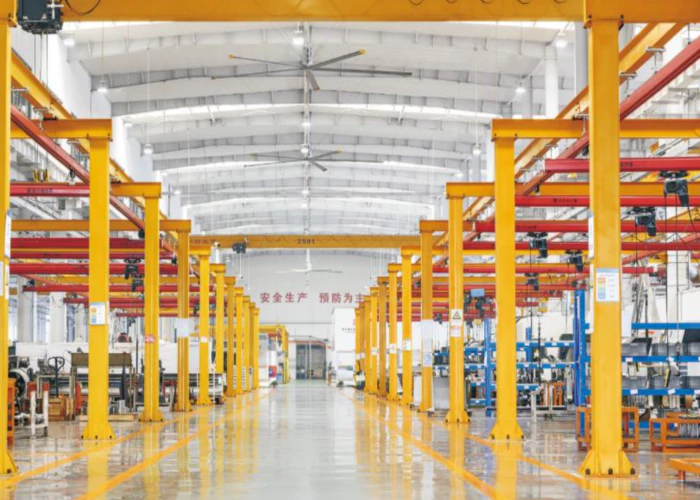
Our welding robots ensure deep penetration and consistent bead quality, critical for preventing fatigue cracks.
Voices From The Site (Testimonials)
“The ripper cylinders on our D375 were leaking constantly. Ever Power suggested a double-wiper seal kit. Simple fix, but nobody else suggested it. Running dry for 2,000 hours now.”
— Sarah J., Fleet Manager, Western Australia
“I needed a custom-length cylinder for a modified road ripper. They sent me a drawing in 24 hours, and the part arrived in Texas 3 weeks later. Perfect fit.”
— Mike T., Construction Owner, USA
“Quality steel. You can tell by the weight and the machining finish. These aren’t cheap knock-offs. Highly recommended for mining apps.”
— Johan V., Maintenance Lead, South Africa
Vanliga frågor: Svåra frågor vi får
We believe in straight answers. Here is what we hear most often on the phone.
Why is my ripper cylinder leaking oil from the rod seal?
Leakage usually happens because the rod surface is damaged (scores or dents) or the wiper seal failed, letting dirt in. If the rod is bent, it will also distort the seal, causing an immediate leak.
How much does a replacement cylinder for a CAT D8 cost?
It varies by model and steel prices, but typically a high-quality aftermarket ripper cylinder ranges from $1,500 to $4,000. Be wary of anything cheaper; they likely cut corners on chrome thickness.
Can you manufacture a cylinder based on my old, broken one?
Absolutely. We often do ‘reverse engineering.’ You send us the specs or the unit itself, and we build a new one with modern seal upgrades that often outperform the original.
Var kan jag hitta en leverantör av hydraulcylindrar nära mig?
While we manufacture centrally to ensure quality control, we ship globally with DDP (Delivered Duty Paid) terms. This means we handle the customs and delivery right to your door, often faster than local shops.
What is the best plating for cylinders in salt mines?
Standard chrome will pit in salt. We recommend Double Chrome plating or a Ceramic coating (Ceraplate) which offers superior corrosion resistance against salt and chemical attack.
When should I rebuild vs replace my hydraulic cylinder?
If the barrel is scored deeply or the mounting eyes are cracked, replace it. It’s safer. If it’s just a leaking seal and the metal is sound, a rebuild kit is the way to go.
Need to Keep Your Dozer Moving?
Don’t let a blown seal stop a million-dollar project. Talk to our engineers today.