Welded Hydraulic Cylinders: When Failure Is Not an Option
Compact. Rugged. Built for the dirt, not the showroom.
We remember standing in a mud pit in Western Australia about ten years ago, looking at a shattered tie-rod cylinder on a mining loader. The operator was screaming, the foreman was calculating the downtime costs (it was about $5,000 an hour), and I was just thinking: “Why on earth did they spec a tie-rod cylinder for this beast?” It’s a common mistake I’ve seen time and time again. In the world of heavy hydraulics, where vibration, dirt, and massive pressure spikes are just a regular Tuesday, the Сварной гидравлический цилиндр is the undisputed king. Unlike its bolted-together cousins that tend to stretch and leak when the going gets tough, a welded cylinder is essentially a fused, single-piece pressure vessel. It’s designed to take a beating.
Here is the thing most printers—oops, I mean component buyers—don’t realize: the magic isn’t just in the weld itself; it’s in the space savings. Because we weld the end cap directly to the barrel and usually thread the gland into the rod end, we eliminate the bulky square end-plates and the four long bolts (tie-rods) running the length of the unit. This means a welded cylinder can fit into much tighter spaces inside a boom or a frame. In my experience, this compact design is why you see them exclusively on excavators, bulldozers, and high-pressure presses. You simply cannot get the same force-to-size ratio with any other design. But, and there is always a “but,” manufacturing these requires a level of precision that separates the pros from the garage shops. If that weld porosity is off by even a fraction, you’ve got a high-pressure fountain on your hands.
The Anatomy of Toughness: Specs That Matter
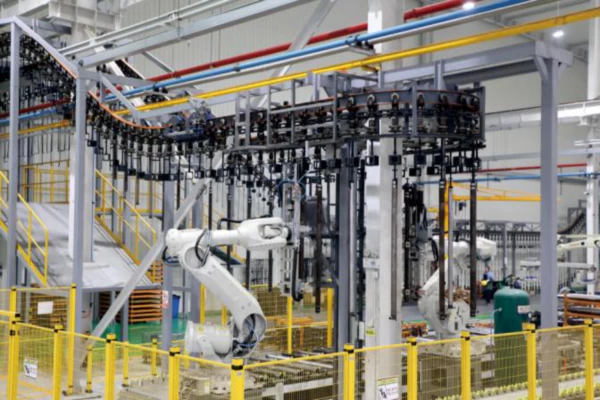
Our automated welding station ensures consistent penetration on every barrel.
When we engineer these, we aren’t using a standard water pipe. We typically use ST52 or 27SiMn cold-drawn seamless steel tubes. Why? Because the hoop stress at 5,000 PSI is terrifying. The end cap is usually welded using a submerged arc process or rigorous MIG process to ensure deep penetration. One feature we’ve been pushing lately is the “inertia-welded” rod eye, which creates a bond stronger than the parent material. But let’s be real—the Achilles heel of the welded cylinder is serviceability. You can’t just unbolt it with a wrench in the field (unless you have a very specific gland tool and a lot of muscle). However, we design ours with a threaded gland that *can* be removed without cutting, provided you have the torque bench.
| Особенность | Стандартная комплектация (Ever Power) | The “Old Pro” Take |
|---|---|---|
| Barrel Strength | Yield Strength > 520 MPa | Tie-rods stretch. Welded barrels don’t. It’s that simple. |
| Compactness | ~20% smaller OD than Tie-Rod | Crucial when you are trying to stuff a cylinder inside a telescopic boom. |
| Номинальное давление | Standard 3000 PSI / Max 5000+ PSI | We test them to 1.5x working pressure. If it doesn’t burst on our bench, it won’t on your site. |
| Shock Resistance | High (Rigid Construction) | Perfect for hydraulic breakers and shears where vibration kills bolts. |
| Maintenance | Threaded Gland / Wire Ring | Harder to open than a tie-rod, but you do it way less often. |
SWOT Analysis: Is Welded Right for You?
Before you sign the PO, you need to look at the strategic fit. Welded cylinders are the heavyweights, but they aren’t for everyone (light industrial automation usually prefers tie-rods). Here is how I break it down for my clients.
Сильные стороны
- Долговечность: No tie-rod stretch or bolt fatigue.
- Profile: Streamlined body fits where others can’t.
- Hygiene: Smoother exterior is easier to wash down (less debris trapping).
Слабости
- Repairability: Requires specialized tools to disassemble.
- Расходы: Slightly higher manufacturing cost due to welding/NDT testing.
Возможности
- Настройка: Easier to add custom ports and valve blocks directly to the barrel.
- Материалы: Moving to higher yield steels to reduce weight on mobile cranes.
Угрозы
- Poor Welding: Cheap imports with bad weld penetration are giving the tech a bad name.
- Contamination: Weld spatter inside the tube (if not cleaned properly) kills seals instantly.
Where We See Them Shine (The Real World)
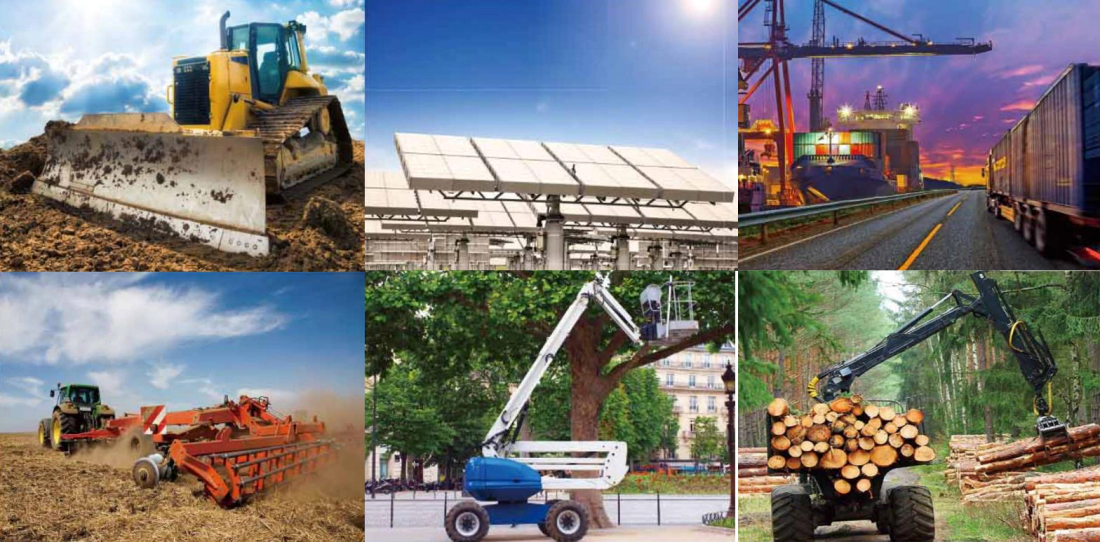
You won’t find a welded cylinder on a light packaging machine. You find them where the work is dirty and dangerous. **Excavators and Bulldozers** are 99% welded cylinders because of the impact loads when a bucket hits granite. We also see massive usage in **Offshore Marine Equipment**. Saltwater corrosion eats tie-rod bolts for breakfast, but a painted, smooth welded cylinder survives much longer. Another growing sector is **Waste Management**—garbage trucks use them because the compaction cycle involves massive pressure spikes that would stretch a standard cylinder apart.
Trend Analysis: Smarter, Harder, Faster
The cylinder industry moves slow, but we are seeing shifts. The biggest trend is **Integrated Position Sensing**. We are now drilling the piston rods of welded cylinders to accept magnetostrictive sensors. This turns a “dumb” muscle into a “smart” actuator that can tell the machine computer exactly where it is. Also, friction welding is replacing traditional MIG welding for rod eyes, creating a bond that is actually stronger than the steel itself. If you aren’t asking for these upgrades, you might be buying 1990s technology.
Case Study: The Outback Crusher
Клиент: RedRock Mining Solutions | Расположение: Pilbara Region, Australia
The Headache: RedRock was running a mobile rock crusher in 45°C (113°F) heat. The OEM tie-rod cylinders on the feed hopper were failing every 3 weeks. The vibration from the crusher was loosening the tie-rod nuts, causing the cylinders to rack and twist, blowing the seals. Dust was getting into the gaps, grinding the rods. They were losing $20,000 a week in downtime.
Наше решение: We engineered a custom **Heavy-Duty Welded Cylinder**.
1. **Construction:** Replaced the tie-rod design with a fully welded barrel made from ST52.3 steel.
2. **Mounting:** Switched from standard clevis to **Spherical Bearings** to absorb the vibration and misalignment.
3. **Sealing:** Installed a high-temp Viton/PTFE seal kit and a double-lip wiper to keep the fine red dust out.
Результат: The new cylinders have been running for 14 months without a leak. The maintenance team actually forgot about them because they stopped breaking.
“We tried Loctite, we tried welding the nuts on the old cylinders… nothing worked. Ever Power’s welded units just laughed at the vibration.”
— Mick D., Site Maintenance Lead
“I was worried about the lead time for a custom build, but they got them to Perth in 5 weeks. Saved our quarterly production targets.”
— Sarah T., Procurement Manager
“The upgraded seals paid for themselves in the first month. No more oil puddles under the hopper.”
— Greg R., Operations Director
Factory Direct: We Build What You Draw (Or We Draw It For You)
Look, anyone can buy a container of cheap cylinders and resell them. We don’t do that. We have our own CNC machining centers, friction welders, and honing machines. This means if you need a welded cylinder with a 400mm stroke, a 60mm bore, and a port at exactly 45 degrees to clear a bracket, we can build it. We pressure test every single weld. No batch testing. If it leaks, it doesn’t leave the shop. We offer custom paint (epoxy, polyurethane) because we know salt air is nasty.
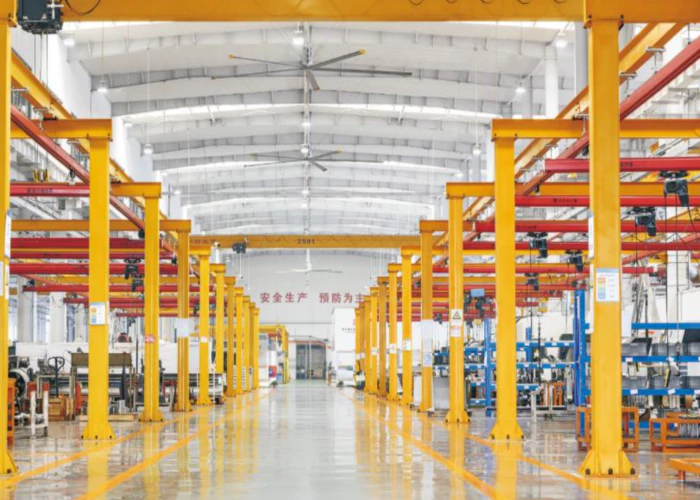
Don’t Just Take My Word For It
We believe in transparency. Walk through our welding bays and see the sparks flying right now.
👉 Нажмите здесь, чтобы посетить нашу VR-фабрику
No passport needed. Just pure engineering.
Часто задаваемые вопросы: Вопросы, которые нам задают на местах.
Is it really harder to repair a welded cylinder compared to a tie-rod cylinder?
In short, yes, but it is a trade-off. With a tie-rod, you just unbolt it. With a welded unit, you typically have to unscrew a threaded gland with a specialized spanner wrench or, in some older designs, cut the weld. However, because welded cylinders are so robust, the service intervals are usually much longer, so you aren’t fixing them nearly as often.
What is the typical lead time for a custom-welded hydraulic cylinder shipment to Texas?
For the US market, specifically industrial hubs like Texas, we usually turn around custom designs in 4-6 weeks, including shipping. If you have a breakdown situation on an excavator, let us know; we have expedited air freight options that can cut that time significantly.
Can you manufacture welded cylinders that withstand 5000 PSI constant pressure?
Absolutely. High pressure is exactly where welded cylinders shine. We use high-tensile steel tubes and reinforced welds to handle pressures up to 5000 PSI (350 Bar) and beyond. Standard tie-rods would stretch and blow gaskets at those pressures.
How do I choose between a cross-tube mount and a clevis mount for my loader?
It depends on the range of motion. If your loader arm travels in a straight arc, a clevis is fine. But if there is any twisting or misalignment potential—which we see a lot in earthmoving—a cross-tube with a spherical bearing is much better at absorbing that side-load without scoring the rod.
Where can I find a supplier for replacement welded cylinders for Caterpillar or Komatsu machines?
You just found one. We manufacture aftermarket replacements that meet or exceed OEM specs for all major brands like CAT, Komatsu, and JCB. We often use upgraded seal kits that last longer than the factory originals.
Ready to Upgrade Your Fleet?
Stop replacing broken tie-rods. Let’s engineer a solution that outlasts the machine.