Hydraulic Support Balancing Cylinders: The Unsung Stabilizers of the Longwall Face
If you have ever stood under a 30-ton hydraulic roof support (shield) while the shearer cuts past, you know that the stability of that canopy is the only thing separating you from a catastrophic roof fall. It creates a very specific kind of tension in your gut. In my eighteen years crawling through coal seams from Pennsylvania to Shanxi, I have seen plenty of maintenance teams obsess over the main leg cylinders—and rightly so, they hold the weight—but they often completely overlook the Hydraulic Support Balancing Cylinder. This is a mistake that usually ends up costing the mine a fortune in downtime. The balancing cylinder (or equilibrium ram) is the pilot of the shield; it dictates the attitude of the canopy. If it fails, the canopy noses down, digs into the floor, or fails to engage the roof properly, creating gaps where rock can fall. Most printers and procurement officers see a simple double-acting cylinder on the spec sheet, but what they don’t realize is that this component takes more abuse from lateral vibration and shock loading than almost any other part of the support. It’s the “shock absorber” of the system, and when it fails, the whole geometry of the face goes out the window.
👀 Don’t Guess—Inspect Our Quality Directly
Spec sheets can lie, but the factory floor doesn’t. Step inside our facility right now via Virtual Reality and see how we hone our barrels.
🚀 PARTICIPE DO TOUR VIRTUAL DA FÁBRICA
100% Transparent Production Process.
The Engineering Reality: Why “Standard” Fails Underground
Let’s get technical about what actually kills a Hydraulic Support Balancing Cylinder. It isn’t usually the pressure burst; it’s the environment. We are talking about an environment where the hydraulic fluid is a 95/5 emulsion (mostly water), which has terrible lubricity compared to mineral oil. Standard industrial seals will be chewed up in weeks. We’ve seen cheap aftermarket cylinders fail because the manufacturer used standard chrome plating on the rod. In a salty, acidic mine environment, micro-cracks in the chrome lead to substrate corrosion, creating a sandpaper effect that destroys the wiper seal. Once the wiper is gone, coal dust enters the gland, and it’s game over. The trick is using a multi-layer laser cladding or a specialized double-chrome process that is impervious to the “pitting” caused by mine water. Furthermore, the mounting points (the clevis or eye) are subject to immense twisting forces as the shield advances over uneven floors. If the bushing material isn’t self-lubricating and impact-resistant, the cylinder will literally tear itself off the mount.
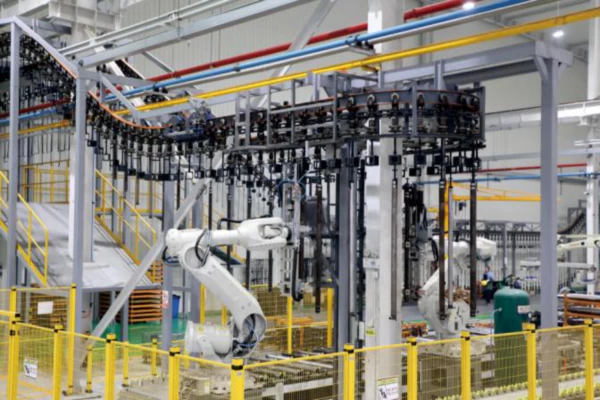
Precision honing is non-negotiable. Our shop achieves Ra 0.2µm finish to ensure seal longevity in emulsion fluids.
Technical Specs: Built for the Longwall
When you are spec’ing out these cylinders, you need to look beyond the bore size. The yield strength of the barrel material is critical because balancing cylinders are often exposed to rockfall. A standard ST52 tube might dent, locking the piston. We utilize high-yield 27SiMn steel that resists impact damage. Also, pay attention to the flow ports. We use Staple-Lock (Stecko) fittings exclusively because threaded fittings just vibrate loose in a week underground. Below is a breakdown of the typical specs we engineer for high-production longwalls.
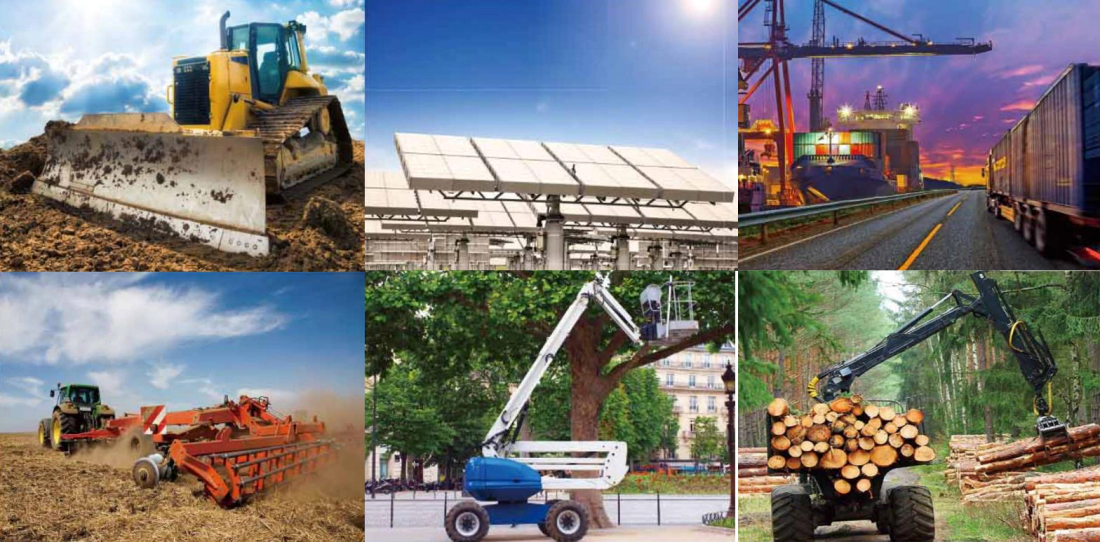
Maintaining the correct canopy angle is critical for roof control and preventing gob flushing.
Application Scenarios: From Flat Seams to Steep Dips
The role of the Hydraulic Support Balancing Cylinder changes depending on the geology. In flat seams, it’s primarily there to ensure the canopy contacts the roof evenly, preventing point-loading that can crack the roof strata. However, in inclined seams (steep dips), the cylinder becomes a safety-critical device. It fights gravity to keep the heavy canopy from swinging downhill during the advancement cycle. We have also seen them used extensively in “soft floor” conditions. Here, the balancing cylinder is used to tilt the canopy nose upward, shifting the center of gravity back so the base doesn’t sink into the mud. It’s a versatile tool, but only if the internal holding valves are leak-free. If the valve leaks, the canopy droops, and you lose control of the roof.
Case Study: The “Silesian Dip” Challenge
Client: Silesia Coal Group (Poland)
O problema: A deep coal mine in Southern Poland was operating on a 25-degree incline. The lateral forces on the shields were immense. Their OEM balancing cylinders were bending at the rod eye connection. Every time they advanced a shield, the canopy would shudder and misalign. They were replacing 5 cylinders a week, and the downtime was costing them roughly €15,000 per hour in lost production.
The Fix: We analyzed the failed units and realized the standard eyelet design couldn’t handle the side-load vector of the inclined seam. We engineered a custom Hydraulic Support Balancing Cylinder with an oversized, induction-hardened spherical bearing and a reinforced rod neck. We also upgraded the rod plating to a fused-ceramic coating to resist the highly saline mine water.
O resultado: The new cylinders were installed during a longwall move. Six months later, not a single unit had failed mechanically. The maintenance manager, Piotr, told us, “It’s the first time in years I haven’t had to worry about the canopies sliding.” Reliability isn’t just a buzzword; it’s profit.
SWOT Analysis: The State of Mining Hydraulics
Pontos fortes
Our laser cladding technology provides superior corrosion resistance compared to traditional chrome. We have deep experience with water-based emulsion fluids.
Pontos fracos
Custom heavy-duty manufacturing takes time. We cannot compete with “off-the-shelf” generic cylinder lead times (though they won’t last).
Oportunidades
Integration of “Smart Sensors.” Mines are demanding cylinders with internal LDTs to automate canopy attitude control.
Ameaças
Fluctuating steel prices and the influx of low-grade, recycled steel cylinders that compromise safety standards underground.
Trend Watch: The Rise of the “Smart” Shield
The days of manual lever control are fading. Modern longwalls are moving toward electro-hydraulic control systems where the shield automatically sets itself to the roof. This requires the Hydraulic Support Balancing Cylinder to be more than just a muscle; it needs a brain. We are seeing a massive trend in integrating Linear Displacement Transducers (LDTs) inside the cylinder rod. These sensors feed position data back to the main computer, allowing the shield to automatically level the canopy perfectly parallel to the roof cut. We are also seeing a push for higher system pressures—moving from 320 bar up to 450 bar—to allow for smaller, lighter cylinders that still pack a punch.
Factory & Customization: We Rebuild the Beast
Mining equipment is expensive, and tossing out a cylinder just because the bore is scored is wasteful. We operate a full remanufacturing line. We can take your old Joy, CAT, or DBT cylinders, bore them out oversized, and manufacture a new piston to fit. It’s usually 40% cheaper than buying new. But if you need new, we can reverse engineer from a sample. If you are finding that the factory mountings are cracking, we can redesign the trunnion or clevis with thicker steel or a different geometry to handle the stress better. We don’t just copy; we improve.
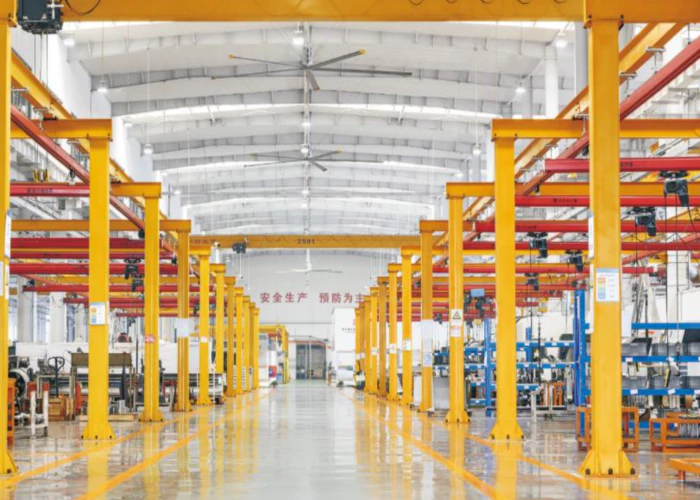
Deep penetration welding on the rod eyes is critical to prevent fatigue failure under cyclic loading.
Voices from the Coal Face
“Our emulsion mix is pretty aggressive. Ever Power suggested the laser-clad rods for our balancing rams. Two years later, zero pitting. These guys know mining.”
— Sergei K., Maintenance Director, Kuzbass, Russia
“We needed a modified cylinder for a low-seam application where the clearance was tight. They redesigned the ports to avoid collision. Great engineering.”
— John D., Longwall Superintendent, West Virginia, USA
“Price is fair, but the reliability is what keeps us coming back. No leaks, no drama. Just solid steel.”
— Li Wei, Procurement, Shanxi Coal Group
FAQ: Tough Questions from the Shift Boss
Why is my balancing cylinder leaking emulsion?
It’s usually one of two things: either the rod plating has pitted due to corrosion (damaging the seal), or the emulsion concentration is too low, causing high friction and heat that melts the seal. Check your fluid mix first.
How much does a replacement balancing cylinder cost?
It depends on the size and the rod coating technology. A standard chrome unit might be $800, but a laser-clad heavy-duty unit could be $1,500. The clad unit will last 3x longer, so it’s cheaper in the long run.
Can you ship mining cylinders to Australia or the USA?
Absolutely. We ship DDP (Delivered Duty Paid) to mining regions globally. We handle the crates, customs, and logistics so the parts arrive at your mine site ready to install.
Is laser cladding really better than chrome plating?
In a mine? 100% yes. Chrome is porous and will eventually flake off in acidic mine water. Laser cladding creates a metallurgical bond with the steel that is impervious to delamination and highly corrosion resistant.
What happens if the balancing cylinder fails?
The canopy loses its attitude control. It can nose down, digging into the floor, or fail to contact the roof evenly, leading to rock falls. It essentially makes the shield useless.
Can you repair my old cylinders instead of buying new?
Yes, we offer a full remanufacturing service. We can hone the barrel, re-rod it with better materials, and install fresh seals. It’s a great way to save budget.
Downtime is the Enemy. We are the Solution.
Secure your roof control with cylinders built for the crush. Talk to our engineers now.