Double-Acting 316L Stainless Steel Hydraulic Cylinders for Marine Hatch Cover Systems
Engineering resilience against seawater corrosion with advanced welded construction and PTFE sealing technology.
Operability in the maritime sector is defined by the weakest link in the mechanical chain. For bulk carriers and offshore support vessels, the hatch cover system is critical. A failure here does not just mean operational delay; it compromises cargo integrity and vessel safety. The harsh reality of open-deck environments—constant saltwater spray, hydrostatic pressure during submersion, and aggressive oxidation—demands a hydraulic actuator that transcends standard industrial specifications. We focus specifically on the engineering logic behind deploying Double-Acting 316L Stainless Steel Piston Cylinders, optimized for the rigorous cycle of opening and closing heavy hatch covers.
Standard carbon steel cylinders, even with marine paint systems, often succumb to pitting corrosion at the rod interface. Our approach utilizes a comprehensive material upgrade to 316L stainless steel, paired with Polytetrafluoroethylene (PTFE) sealing profiles. This configuration directly addresses the tribological challenges of salt crystallization on piston rods, ensuring smooth actuation even after prolonged periods of static inactivity.
Entre em nosso centro de produção.
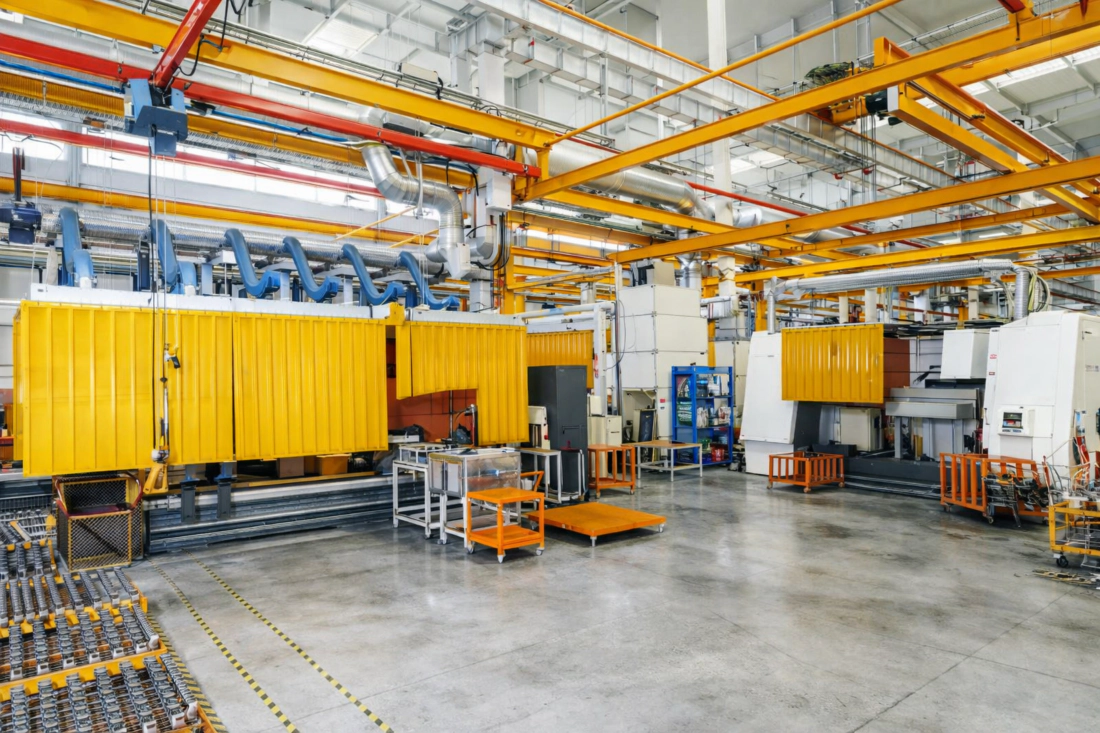
Transparency is the foundation of trust. Witness our CNC precision and assembly lines firsthand.
Engineering the Defense: 316L & Welded Construction
Why 316L Stainless Steel?
The marine environment is unforgiving. Chloride ions in seawater penetrate microscopic imperfections in steel, causing pitting. We utilize 316L (Low Carbon) grade stainless steel for the cylinder barrel and piston rod. The addition of Molybdenum (2-3%) in 316L drastically improves resistance to pitting and crevice corrosion compared to 304 grades. The ‘L’ designation means lower carbon content, which minimizes carbide precipitation during welding, preserving corrosion resistance at the weld seams.
Welded vs. Tie-Rod Structure
For hatch covers, structural rigidity is paramount. Tie-rod cylinders introduce elongation risks and bacterial/corrosion traps in the threads. Our construção soldada creates a hermetically sealed unit. The base and barrel are fused, eliminating leak paths and increasing the cylinder’s ability to withstand the jarring shocks of heavy seas or rapid hatch deployment. This compact design also fits better into the tight recesses of hatch coamings.
The PTFE Sealing Advantage
Rubber seals degrade under UV exposure and salt attack. We engineer our gland assemblies with 316L retainers and PTFE (Polytetrafluoroethylene) composite seals. PTFE offers an extremely low coefficient of friction (0.05-0.10), preventing “stick-slip” when the hatch is opened after weeks of inactivity. It is chemically inert to seawater and hydraulic fluids, ensuring a leak-free lifecycle even under high-pressure spikes.
Operational Advantages of Our Marine Cylinders
- Polished to Perfection: The piston rods undergo centerless grinding and polishing to Ra < 0.2μm. This mirror finish prevents salt adhesion and extends seal life.
- Double-Acting Precision: Precise control is required for both opening (retracting/extending depending on geometry) and closing. Double-acting hydraulics ensure positive force in both directions, vital for overcoming wind loads on large hatch panels.
- Environmental Class Compliance: Designed to meet C5-M (Marine) ISO 12944 corrosivity categories. Suitable for splash zones and intermittent submersion.
Global Success: The North Sea Retrofit
Client Profile: Nordic Bulk Logistics (Norway)
O desafio: A fleet of Handymax carriers operating in the North Sea was experiencing rapid hydraulic failure on their folding hatch covers. The incumbent OEM cylinders (painted carbon steel) were suffering from rod pitting after just 8 months, leading to seal shredding and hydraulic fluid leaks on deck.
A solução: We engineered a custom retrofit using 316L Stainless Steel Welded Cylinders. We customized the clevis mounting dimensions to perfectly match existing ship-structure brackets, eliminating the need for hot work on the vessel. We upgraded the seals to a heavy-duty PTFE/Bronze compound.
O resultado: After 24 months of continuous operation in freezing, saline conditions, the cylinders show zero signs of corrosion or leakage. Maintenance intervals have extended from 6 months to 24 months, saving the client approximately $45,000 annually per vessel in downtime and parts.
“The dimensional accuracy was spot on. We dropped the new stainless cylinders in without a single modification to the hatch coaming. Exceptional engineering.”
– Larsen K., Technical Superintendent
“We used to carry spare seals on every voyage. With these 316L units, we haven’t touched a seal in two years. The reliability is worth the investment.”
– Petrova S., Fleet Manager
“Response time from the engineering team in China was faster than our local suppliers. The detailed CAD drawings gave us full confidence before production.”
– Mark D., Procurement Officer
Especificações técnicas e parâmetros de desempenho
| Parâmetro | Especificação padrão | High-Performance Marine Config |
|---|---|---|
| Tipo Cilindro | Tie-Rod / Welded | Heavy Duty Welded Construction |
| Material do corpo | ST52 / E355 Carbon Steel | AISI 316L / Duplex 2205 Stainless Steel |
| Superfície da haste do pistão | Hard Chrome Plated (20μm) | 316L + Hard Chrome (50μm) + Polished |
| Sistema de Vedação | NBR / Poliuretano | PTFE + Bronze / Viton (High Temp) |
| Pressão de trabalho | 160 Bar – 210 Bar | 210 Bar – 350 Bar (Tested to 1.5x) |
| Faixa de temperatura | -20°C a +80°C | -40°C to +120°C (Arctic/Tropical) |
| Classe de corrosão | C3 / C4 | C5-M (Very High Marine) |
Diverse Marine Applications
While our focus is often on bulk carrier hatch covers, the versatility of our 316L stainless steel cylinders extends throughout the vessel. The robust welded design is ideal for any scenario where seawater exposure is inevitable and reliability is non-negotiable.
- ✔
Folding Hatch Covers: High-force actuation to lift and fold heavy steel panels. - ✔
Side-Rolling Hatches: Precise linear motion for wheel-mounted rolling systems. - ✔
Ro-Ro Ramps & Bow Doors: Critical safety equipment requiring failsafe hydraulic locking. - ✔
Davits & Cranes: Luffing and slewing cylinders exposed to direct ocean spray.

Perguntas frequentes
Ready to Upgrade Your Marine Systems?
Contact our engineering team today for technical drawings and pricing.
© 2026 Ever Power Hydraulic Manufacturers. Todos os direitos reservados.