Roll Change Cylinders: Shaving Minutes off the Critical Path
There is a specific, sinking feeling you get when the “red hot” strip is stopped, the mill stand is open, and the roll change rig just… stalls. In the steel and aluminum game, we don’t measure downtime in hours; we measure it in thousands of dollars per minute. Having spent over eighteen years crawling around the grease pits of hot strip mills and cold reversing stands, I’ve learned that the Roll Change Cylinder is often the most overlooked component until it becomes the bottleneck. While everyone obsesses over the massive AGC (Automatic Gauge Control) cylinders, the roll change system is the unsung hero that determines your actual availability. It operates in a nasty environment—blasted by scale, submerged in cooling water, and subjected to massive side loads when the roll chocks don’t align perfectly (and let’s be honest, they rarely do). Most printers and procurement teams just see a long-stroke cylinder on a drawing, but I see a critical actuator that needs to extend 4 meters without buckling while pushing a 30-ton work roll set. The trick isn’t just power; it’s rigidity and seal technology that can handle fire-resistant fluids without swelling.
👀 Walk The Line (Virtually)
Don’t rely on a catalog. Step inside our honing workshop and see the heavy-duty manufacturing process for yourself right now.
🚀 PARTICIPE DO TOUR VIRTUAL DA FÁBRICA
See how we build cylinders that last.
The Engineering Reality: Why “Standard” Fails in the Mill
Let’s get real about the operating conditions. A Roll Change Cylinder sits idle for hours or days, often covered in mill scale and sprayed with coolant, and then it must perform instantly at full speed. This intermittent duty cycle is actually harder on seals than continuous operation. The primary failure mode we see isn’t pressure burst; it’s rod scoring and seal hydrolysis. Most rolling mills use Water Glycol (HFC) or Ester-based (HFDU) fire-resistant fluids. Standard polyurethane seals found in off-the-shelf cylinders will turn into jelly or brittle plastic in these fluids within months. We engineer our cylinders with specific PTFE-Bronze composite seals and Fluorocarbon (Viton) energizers that are chemically compatible with your specific mill fluid.
Furthermore, let’s talk about side-loading. When you are pushing a work roll or backup roll out of the stand, the sled tracks are often worn or covered in debris. This creates drag that isn’t perfectly linear. A standard cylinder rod will bow under this load, causing the gland bushing to wear out elliptically. We combat this by using 42CrMo4 (AISI 4140) induction hardened rods and significantly increasing the length of the guide bearing. It adds cost, sure, but it stops the rod from buckling when the roll sled hits a snag.
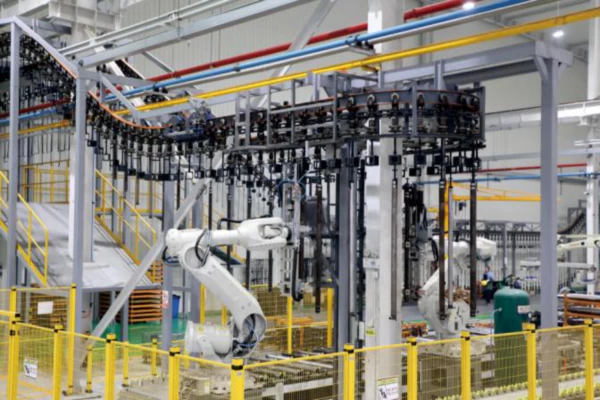
Our extra-long honing machines are essential for manufacturing the long-stroke barrels required for roll change extraction.
Technical Specs: What Separates Mill Duty from Light Duty
I’ve spent years arguing with purchasing departments about why a mill cylinder costs more than a log splitter cylinder. It comes down to the safety factors and the materials. In a rolling mill, we design for a safety factor of 4:1 minimum on yield strength. We also pay massive attention to the cushioning. When you are retracting a heavy sled, you can’t just slam it into the end cap; the shock wave will blow the fittings off. We design progressive, adjustable cushioning on both ends to decelerate the massive mass smoothly. Below is a breakdown of what makes our units “Mill Duty.”

From Work Roll extraction to Back-up Roll sled pushing, precision is key.
Application Scenarios: Hot, Cold, and Heavy
The term “Roll Change Cylinder” covers a few specific functions. In a Hot Strip Mill, the side-shift cylinders (shifting the work rolls axially) face intense radiant heat and scale. We often equip these with water-cooled jackets or high-temperature bellows to protect the rod. In Cold Rolling Mills, cleanliness is paramount. The roll change rig needs to be precise to avoid damaging the roll chocks. Here, we might integrate linear position sensors (LDTs) inside the cylinder to give the PLC exact feedback on the sled position. Then there are the massive backup roll change cylinders. These are the beasts, often with bores exceeding 400mm and strokes of 5 meters. Moving a 60-ton back-up roll requires immense breakaway force, so we focus on low-friction seal designs to prevent “stick-slip” movement that can cause the roll to jump and damage the liner plates.
Case Study: The “Scale Jack” Problem
Client: Southeast Asian Steel Corp (Vietnam)
O desafio: A high-volume hot strip mill was experiencing repeated failures on its F1-F6 finishing stand roll change cylinders. The cylinders were mounted low, near the floor, and were constantly buried in mill scale and cooling water. The standard chrome rods were pitting within 3 months, leading to seal failure and oil leaks that contaminated the rolling emulsion. Roll change times blew out from 15 minutes to 40 minutes due to the hydraulic issues.
A solução: We engineered a custom solution. First, we moved away from Chrome. We utilized a Laser Cladding (HVOF) coating for the rods, which provides a ceramic-like hardness and zero porosity. Second, we designed a custom “Scraper Housing” at the gland. This housing contained a heavy-duty brass scraper followed by a double-lip wiper, effectively shaving the mill scale off the rod before it could reach the main seals.
O resultado: The new cylinders have been in operation for 2 years without a single leak. The maintenance manager, Mr. Tran, reported that the ROI was achieved in just 4 months due to the reduction in downtime and hydraulic fluid savings.
SWOT Analysis: The State of Mill Hydraulics
Pontos fortes
Our in-house ability to handle long-stroke honing (up to 12 meters) allows us to manufacture single-stage cylinders that others have to weld together.
Pontos fracos
High-grade laser cladding and custom sealing solutions are not cheap. We lose bids to “lowest price” competitors who don’t understand mill duty.
Oportunidades
The push for fully automated “Man-less” roll changes. This requires smart cylinders with integrated sensors, which is our specialty.
Ameaças
Poor maintenance practices in mills. Even the best cylinder will fail if the hydraulic fluid is full of particulates (ISO 4406 cleanliness is key).
Trend Watch: Smarter, Faster, Cleaner
The industry is moving towards the “Smart Mill.” We are seeing more requests for Roll Change Cylinders with integrated linear transducers (magnetostrictive sensors) inside the rod. This allows the PLC to control the acceleration and deceleration profiles precisely, reducing the mechanical shock on the roll sleds. Another trend is the move towards higher pressure systems (350 bar) to allow for smaller, more compact cylinders that fit into tighter mill housings. We are also seeing a shift towards biodegradable fluids, which requires careful selection of seal materials to prevent chemical incompatibility.
Factory & Customization: We Build What You Need
Got an old SMS, Danieli, or Primetals mill from the 1980s? The OEM parts might be obsolete or have a 6-month lead time. That is our sweet spot. We specialize in reverse engineering. You send us the drawing (or the broken cylinder), and we build a drop-in replacement that meets or exceeds the original specs. We can modify the mounting, change the port orientation to make the hose connection easier, or upgrade the rod material. We manufacture everything in-house, from the deep hole boring to the final paint job.
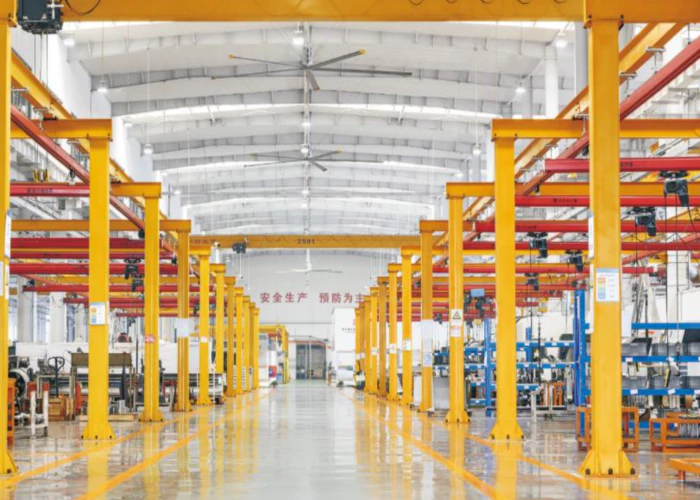
Precision welding is critical; a weld failure on a roll change hook can stop the entire mill.
Voices from the Mill Floor
“Our roll change times were inconsistent because the old cylinders would stick. Ever Power’s new cylinders with low-friction seals made the process smooth as silk.”
— Hans G., Mill Manager, Germany
“I was worried about compatibility with our water-glycol fluid. Their engineering team knew exactly which seal compound to use. No swelling, no leaks.”
— Rajesh K., Maintenance Lead, India
“Quality is top tier. The welds look like a stack of dimes, and the rod finish is like a mirror. Better than the original parts that came with the mill.”
— Bill S., Procurement, USA
FAQ: Questions from the Control Pulpit
Why is my roll change cylinder sticking during extension?
Sticking, or ‘stick-slip,’ is usually caused by high seal friction or rod bending. If the roll sled tracks are worn, the side load increases, causing the rod to bind in the gland. Also, check if your seals have swollen due to fluid incompatibility.
What is the cost of a custom long-stroke roll change cylinder?
It depends on the stroke length and bore. A 4-meter stroke cylinder is a specialized build. Prices typically range from $3,000 to $10,000, depending on the rod coating and sensor integration.
Can you ship massive cylinders internationally?
Yes. We specialize in shipping long, heavy cargo. We build custom reinforced crates and handle the DDP (Delivered Duty Paid) logistics to get the cylinder to your mill, whether it’s in Ohio or Osaka.
Which hydraulic fluid is best for roll change systems?
Most mills use Water Glycol (HFC) for fire safety. It’s a tough fluid for seals. You MUST ensure your cylinders have compatible seals (like Viton/FKM or specialized PTFE), or they will fail rapidly.
How do I measure a cylinder for a replacement quote?
We need the retracted length (pin-to-pin), stroke length, bore diameter, rod diameter, and mounting style dimensions. Photos of the ID tag or the cylinder in situ are extremely helpful.
Can you repair a scored cylinder rod?
Yes, we can strip the old chrome, grind the rod down, re-plate it (or laser clad it), and polish it back to spec. It’s often cheaper than buying a whole new rod, especially for large diameters.
Stop Losing Time on Roll Changes
Upgrade to cylinders designed for the red-hot reality of your mill. Talk to our engineers now.