High-Precision Servo Hydraulic Cylinders for Metallurgical Crane Rotary Tables
Eliminating rotational drift in the world’s most aggressive lifting environments. A technical analysis of double-acting, alloy steel actuators designed for positioning accuracy under extreme thermal load.
The Criticality of Positioning in Molten Metal Handling
In the vertical hierarchy of steel mill machinery, the metallurgical crane—whether a ladle handler, a slab lifter, or a scrap charger—represents the primary logistical artery. The rotary table mechanism, responsible for the precise orientation of the load, operates under conditions that defy standard hydraulic engineering. As an application engineer with nearly two decades focused on heavy-duty fluid power, I have analyzed countless failures where generic cylinders caused “load drift”—an unintentional rotation of a 200-ton ladle due to internal leakage. This is not merely a maintenance nuisance; it is a critical safety hazard.
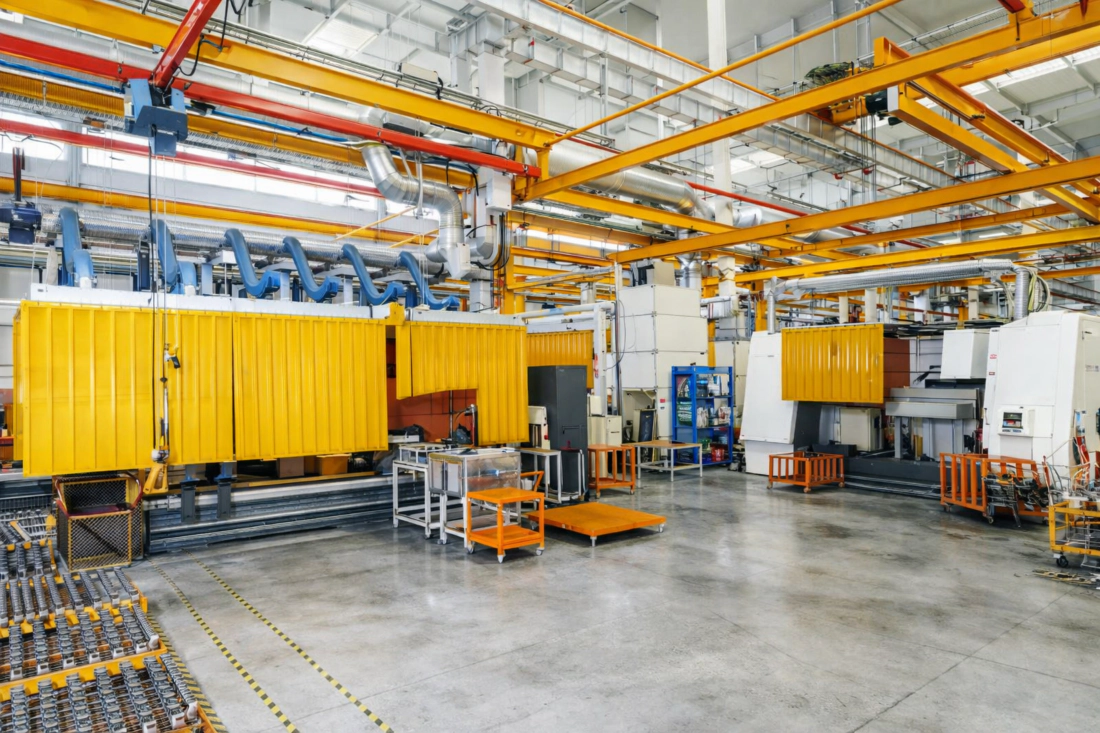
The hydraulic cylinder governing this rotation must act as a rigid structural link when static and a precision servo actuator when dynamic. It must withstand radiant heat surging past 150°C, abrasive conductive dust, and the immense mechanical vibration transmitted through the crane structure. At Zawsze Moc, we engineer cylinders that thrive in these hostile zones. We invite you to bypass the brochure and step directly onto our manufacturing floor. Through our immersive virtual reality tour, you can inspect our honing precision, welding robotics, and clean-room assembly protocols from anywhere in the world.
Experience the manufacturing capability of Zawsze Moc firsthand.
Engineering Against Failure: The Battle Against Internal Leakage
The dominant failure mode for rotary table cylinders is internal bypass, leading to positioning errors. In a standard cylinder, the piston seal is the only barrier holding the rotary torque. When exposed to the thermal cycling of a steel mill—where oil viscosity drops significantly due to heat—standard seals allow fluid to migrate from the high-pressure side to the low-pressure side. This results in the load slowly rotating on its own, forcing the crane operator to constantly correct the position, which increases cycle time and operator fatigue.
Our solution involves a transition from standard hydraulics to “Servo-Structural” architecture. We utilize a welded body construction using high-strength Alloy Steel (42CrMo), which offers superior rigidity compared to standard carbon steel. This rigidity ensures that the cylinder bore remains perfectly round even under eccentric side loads, maintaining the integrity of the seal interface. Furthermore, we implement a zero-leakage sealing arrangement combining heavy-duty PTFE bronze-filled slide rings with high-temperature energizers, ensuring static position holding for hours without drift.
Technological Superiority in High-Temp Applications
Metalurgia stali stopowej
We strictly utilize 42CrMo or 27SiMn alloy steel for the cylinder barrel and rod. This material choice provides the necessary yield strength to resist the shock loads generated when the crane accelerates or stops abruptly, preventing the permanent deformation that causes piston binding.
Heat-Resistant Sealing
Standard polyurethane seals fail above 80°C. Our rotary table cylinders are equipped with Viton (FKM) and PTFE composite seals capable of withstanding continuous operation at 200°C. This chemical stability is vital when using fire-resistant hydraulic fluids (HFC/HFD).
Integrated Position Feedback
To achieve automation readiness, we offer options for integrated Magnetostrictive linear displacement sensors. Protected inside the cylinder rod, these sensors provide real-time, micron-level position data to the crane PLC, enabling automated stacking and rotation sequences.
Case Study: Upgrading Ladle Turret Control in India
Project Location: Jamshedpur, India | Industry: Integrated Steelworks
Wyzwanie
A major steel producer was experiencing erratic movements on their 350-ton ladle crane rotary table. The existing cylinders, sourced from a general machinery supplier, suffered from stick-slip phenomenon. The jerky movement caused dangerous molten steel sloshing during the rotation from the lifting bay to the caster turret. Maintenance teams were replacing seals monthly due to heat degradation.
Rozwiązanie Ever Power
We engineered a custom “High-Damping” servo cylinder. The design featured a 280mm bore with a specialized low-friction coating on the rod. We integrated a water-cooled jacket around the cylinder gland to actively reduce the seal temperature. The internal valving was modified to provide progressive cushioning at the end of the stroke, eliminating mechanical shock.
Operational Impact
The new system eliminated the stick-slip effect completely. The crane now rotates with fluid precision, improving the safety of the casting operation. Seal life has been extended from 4 weeks to over 18 months.
“The stability of the rotation is night and day. The operator has full confidence in the positioning now.”
– Amit P., Maintenance Lead
“We needed a supplier who understood the heat of a steel shop. Ever Power delivered exactly that.”
– Operations Director
“The custom water-cooling solution saved us thousands in downtime costs.”
– Chief Engineer
Macierz specyfikacji technicznych
| Parametr | Standard Crane Configuration | High-Precision Servo Option |
|---|---|---|
| Materiał cylindra | Q345B Steel | 42CrMo / 27SiMn Alloy |
| System uszczelniający | Merkel / Parker Polyurethane | Viton (FKM) + PTFE (Low Friction) |
| Positioning Accuracy | ± 2.0 mm | ± 0.1 mm (with feedback) |
| Powierzchnia pręta | Hard Chrome (25μm) | Nickel-Chrome / Ceramic Coating |
| Temperatura pracy | -20°C do +80°C | -20°C to +200°C (Radiant) |
Versatility Across the Steel Mill
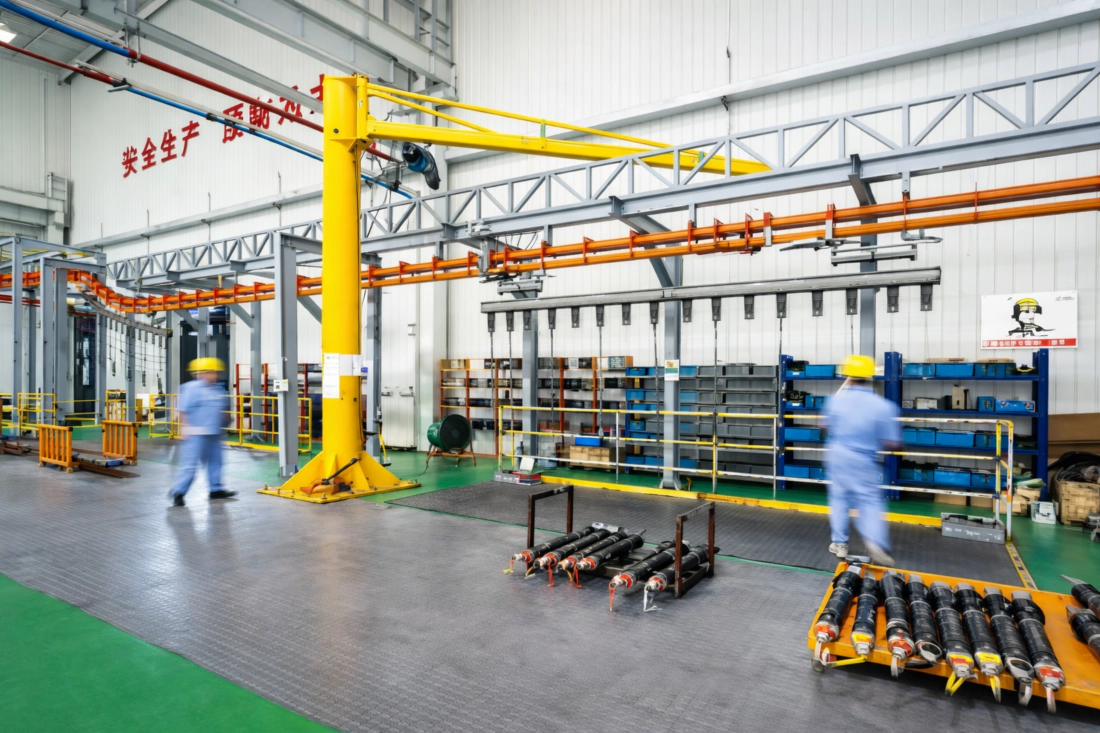
While the rotary table is a primary application, the high-vibration, high-temperature technology we deploy is essential for various crane-mounted hydraulic systems.
- Slab Tong Grasping: Requiring immense clamping force and holding security to prevent load drops.
- Scrap Grab Actuation: Handling extreme shock loads and physical impacts from scrap metal.
- Coil Lifter Expansion: Where precise linear movement translates to secure internal gripping of steel coils.
World-Class Engineering from China’s Industrial Hub
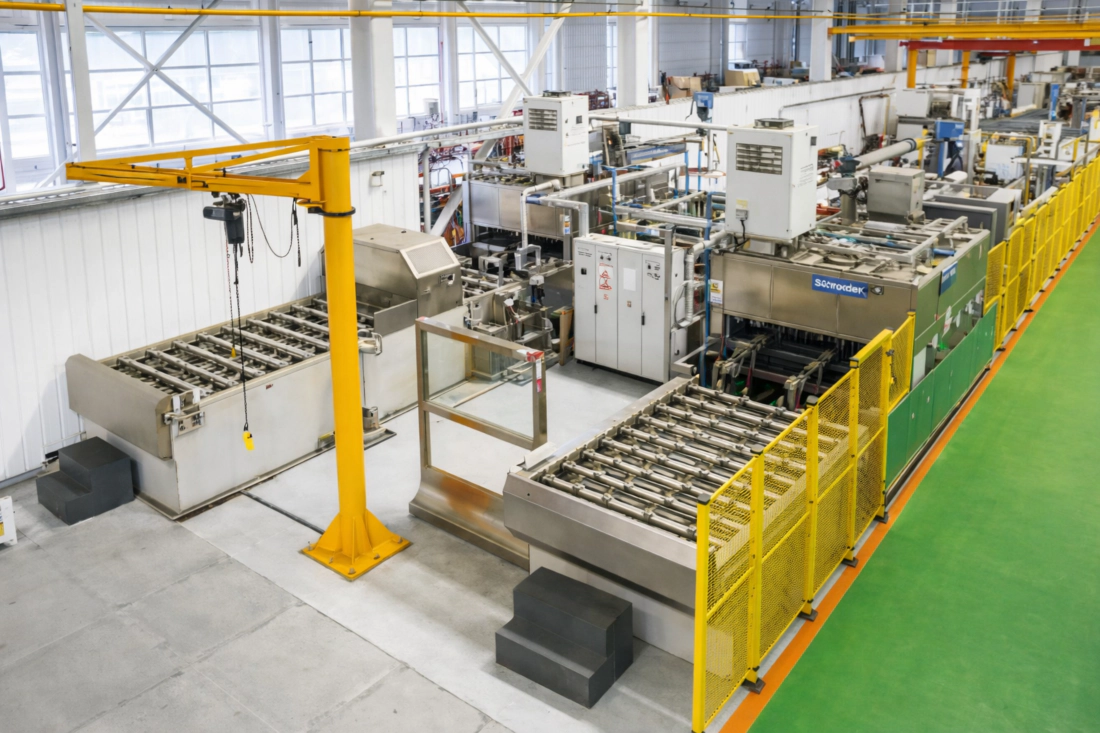
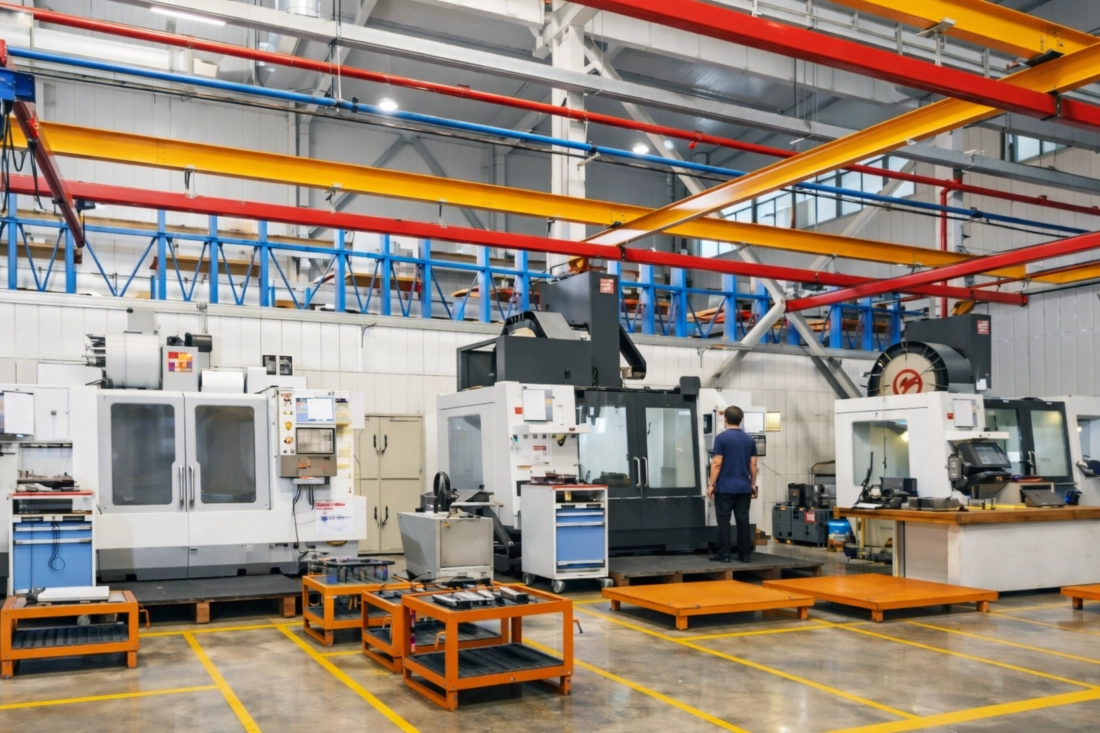
Ever Power challenges the outdated perception of Chinese manufacturing. We operate a state-of-the-art facility equipped with German CNC machining centers and Japanese welding robots. Our location in a premier heavy industry zone grants us access to the highest grades of alloy steel and specialized surface treatment technologies.
We are not just a factory; we are a global solution provider. We offer comprehensive customization services, DDP shipping to Europe and the Americas, and full documentation (Material Certificates, Pressure Test Reports) with every cylinder.

Expert Answers: Hydraulic FAQ
How do you prevent hydraulic cylinder drift in crane applications?
We prevent drift by using “Zero Leakage” sealing arrangements (often PTFE based) and ensuring the cylinder bore maintains perfect roundness via high-strength materials. For critical safety, we also integrate pilot-operated check valves (PO Check) directly onto the cylinder ports to mechanically lock the fluid.
What is the best surface treatment for cylinders exposed to radiant heat?
While Hard Chrome is standard, for high-heat and dusty environments, we recommend Nickel-Chrome plating or Ceramic Coating. These treatments offer superior hardness and resistance to micro-cracking, which prevents contaminants from embedding in the rod and damaging the hot seals.
Can Ever Power replace Rexroth or Parker cylinders for cranes?
Yes, we specialize in aftermarket replacements. We can manufacture cylinders that are dimensionally identical to OEM units from Rexroth, Parker, or Eaton, ensuring a drop-in fit while often upgrading the internal components to better suit your specific mill conditions.
How long does it take to manufacture a custom crane cylinder?
Our typical lead time for custom engineered cylinders is 4 to 5 weeks. However, we understand the cost of downtime, so we offer an expedited “Red Light” service that can reduce production time to 2-3 weeks for emergency breakdown situations.
Do you test the cylinders before shipping from China?
Absolutely. Every single cylinder undergoes a 100% static and dynamic pressure test at 1.5x the rated working pressure. We provide a detailed test certificate and video evidence of the test with every shipment for your peace of mind.
Precision Control for Heavy Industry.
Empowering your cranes with reliability.
© 2026 Ever Power Hydraulic Cylinder Manufacturer. All Rights Reserved.