Eye Bracket Hydraulic Cylinders: The Articulation Expert
Simple. Robust. The backbone of mobile machinery.
I’ve spent more time than I care to admit staring at broken mounting points on excavators and farm tractors. You know the sight: a sheared pin, a wallowed-out hole, or a bracket that’s been twisted like a pretzel. It’s frustrating because it’s usually avoidable. The Eye Bracket Hydraulic Cylinder (sometimes called a Pin Eye or Clevis Bracket cylinder) is the bread and butter of the mobile hydraulic world, yet it’s often the most overlooked component in the design phase. Engineers tend to focus on the pressure rating or the seal material—which are important, don’t get me wrong—but they forget that if the cylinder can’t articulate smoothly with the load, the best seals in the world won’t save you. In my 18+ years on the floor, I’ve found that the secret to a long-lasting eye bracket cylinder isn’t just the steel; it’s the tolerance of the pin fit and the quality of the weld at the base.
When we talk about “Eye Brackets,” we are essentially talking about a single lug mount with a hole through it, usually fitted with a bushing or a spherical bearing. It sounds simple enough. But here is where most printers (I mean, manufacturers) cut corners. They use a standard mild steel tube for the eye and weld it directly to the cap. That’s fine for a garden tractor, but put that on a 30-ton dump trailer? It’ll snap. We’ve seen fatigue cracks initiate at the weld toe within months on cheaper units. The trick is using a forged base cap with the eye machined directly into it, or ensuring a full-penetration weld with proper heat treatment. This ensures the force travels through the centerline without creating stress risers. It’s about building a component that moves *with* your machine, not against it.
Under the Paint: Technical Specs That Matter
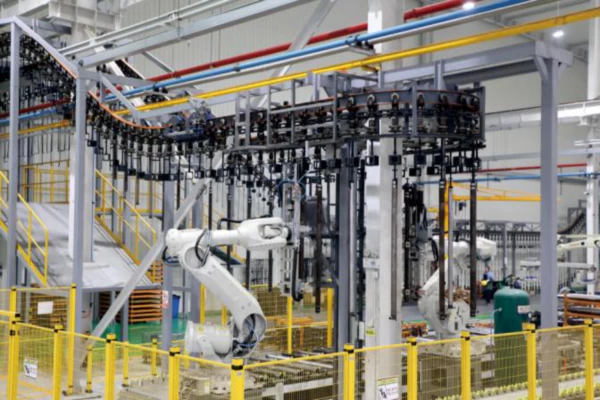
Precision welding of heavy-duty eye brackets in our CNC fabrication bay.
Let’s get into the weeds of the materials. For the rod eye, we typically use C45 or 4140 steel, induction hardened if it’s going to be exposed to rock strikes. The bushing inside the eye is where the magic happens. Old school designs used hardened steel bushings that required daily greasing. (And let’s be honest, who actually greases those Zerk fittings every single morning? Maybe 5% of operators). That is why we are shifting towards composite, self-lubricating bushings or PTFE-lined spherical bearings. These allow for a maintenance-free life cycle and handle the high static loads much better. The dimensional tolerance of the eye hole is critical—usually H7/f7. If it’s too loose, the pin hammers the bracket every time the valve shifts direction.
| Funkcja | Specyfikacja standardowa (Ever Power) | Wgląd „starego wyjadacza” |
|---|---|---|
| Styl montażu | Single Eye / Spherical Eye | Use spherical eyes if your frame has any flex. It prevents rod bending. |
| Eye Material | Forged C45 / Cast Steel | Forged is always superior to welded plate for shock resistance. |
| Bushing Type | Bronze / Hardened Steel / Composite | Composite bushings are the future—no grease, no mess, less wear. |
| Powłoka prętowa | Chrome (20μm) / Nickel-Chrome | For fertilizer or salt spreaders, upgrade to Nickel-Chrome. |
| Ocena ciśnienia | 3000 PSI (Continuous) | Ensure the pin shear strength matches the cylinder force! |
SWOT Analysis: Is Eye Bracket Right for You?
Every mounting style has a trade-off. I always tell my clients to look at the kinematic geometry first. Here is how the Eye Bracket stacks up strategically.
Mocne strony
- Prostota: Easiest cylinder to install and remove. Just pull the pin.
- Articulation: Allows for rotation in one plane (or more with sphericals).
- Space: Narrow profile fits into tight boom channels.
Słabości
- Pin Wear: The pin takes all the load; if it wears, the whole system gets sloppy.
- Column Strength: Less rigid than a flange mount for very long strokes.
Możliwości
- Maintenance-Free: Retrofitting with self-lubricating polymers.
- Smart Tech: Integrating load pins to measure weight directly at the mounting point.
Zagrożenia
- Tani import: Poor quality welds on budget cylinders leading to eye separation.
- Side Loading: Misaligned frames destroying rod bearings prematurely.
Gdzie widzimy ich blask
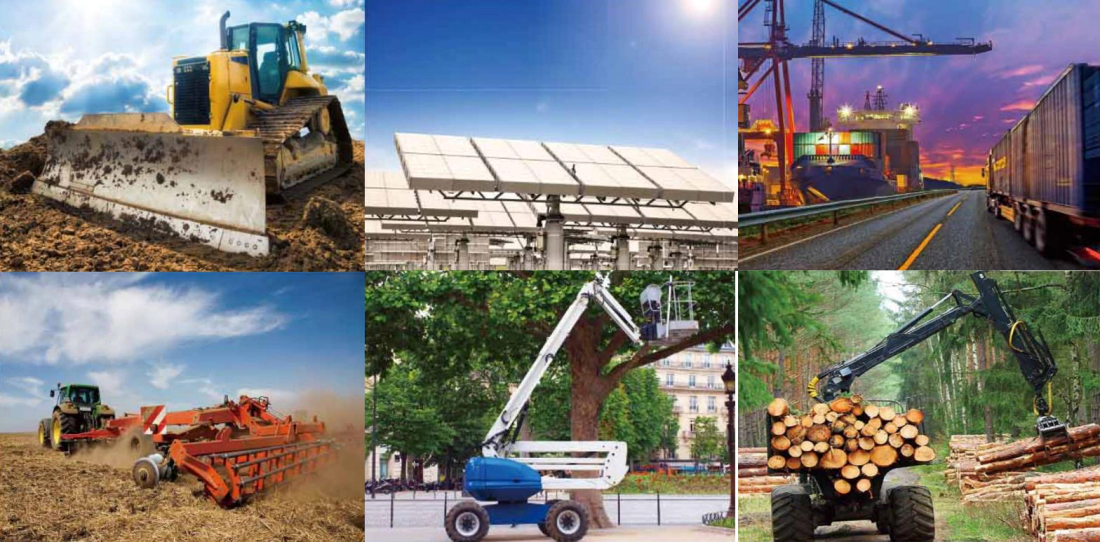
The classic home for the Eye Bracket Cylinder is Mobile Construction Equipment. Skid steer buckets, excavator thumbs, and backhoe stabilizers almost universally use this design because the linkage needs to rotate as it extends. But we are seeing a massive surge in the Solar Tracking Industry. Large solar arrays use hydraulic actuators to tilt the panels to follow the sun. These cylinders move slowly but are constantly exposed to wind buffeting. The eye bracket mount handles that oscillation well, especially when equipped with spherical bearings to account for the slight twisting of the solar frame in high winds. Another key area is Material Handling Lift Tables (scissor lifts). The geometry of a scissor lift changes constantly, and the eye bracket allows the cylinder to pivot freely as the table rises.
Trend Analysis: The Death of the Grease Gun?
I mentioned it earlier, but it bears repeating: the industry is trying to kill the grease gun. We are seeing OEM requests shift from standard steel bushings to high-load composite bushings (like filament-wound fiberglass with PTFE liners). These can handle 30,000 PSI of static load without a drop of grease. For rental fleets, this is a game-changer because you don’t have to rely on the renter to maintain the equipment. Also, “Smart Pins” are becoming a thing—replacing the standard mounting pin with a load-sensing clevis pin that talks to the machine’s ECU.
Case Study: The Spanish Solar Solution
Klient: SolVida Energy Systems | Lokalizacja: Andalusia, Spain
Wyzwanie: SolVida operates a 50MW solar tracking plant in a valley known for high wind gusts. Their existing single-axis trackers used standard pin-eye cylinders. The problem was that the wind caused the long tracker rows to twist slightly. This torque was transferred directly to the cylinder rod, causing side-loading. They were replacing rod seals every 6 months, and the mounting brackets were elongating (wallowing out) due to the constant vibration.
Nasze rozwiązanie: We engineered a custom **Spherical Eye Bracket Cylinder**.
1. **Mounting:** Replaced the rigid pin eye with a high-angle spherical bearing (GE series) that allowed for 7 degrees of misalignment.
2. **Reinforcement:** Used a forged rod eye with a thicker cross-section to handle the wind shock loads.
3. **Sealing:** Upgraded to a low-friction seal kit to reduce the “stick-slip” effect during slow tracking movements.
Wynik: Seal life extended to over 3 years. The spherical bearings absorbed the frame twist, protecting the cylinder rod. Maintenance costs dropped by 70%.
“The difference was immediate. You could see the bearing pivoting during the wind storms while the rod stayed perfectly straight. Simple engineering saved us a fortune.”
— Mateo G., Site Maintenance Lead
“Ever Power’s team understood that ‘static load’ isn’t the same as ‘dynamic wind load.’ Their design was robust where it counted.”
— Lucia R., Chief Engineer
“We needed 400 replacement units fast. They managed the production and shipping logistics flawlessly.”
— Alejandro S., Procurement Director
Factory Direct: We Build The Pivot Points
You can’t buy reliability from a middleman who has never held a welding torch. We machine our own eye brackets from solid billets or forgings. We have friction welding capabilities to fuse the rod eye to the piston rod, creating a bond stronger than the parent metal itself. Whether you need a 1-inch pin or a 100mm pin, we can bore it, bush it, and align it. We pressure test every cylinder to 1.5x working pressure to ensure that the base weld doesn’t have any porosity.
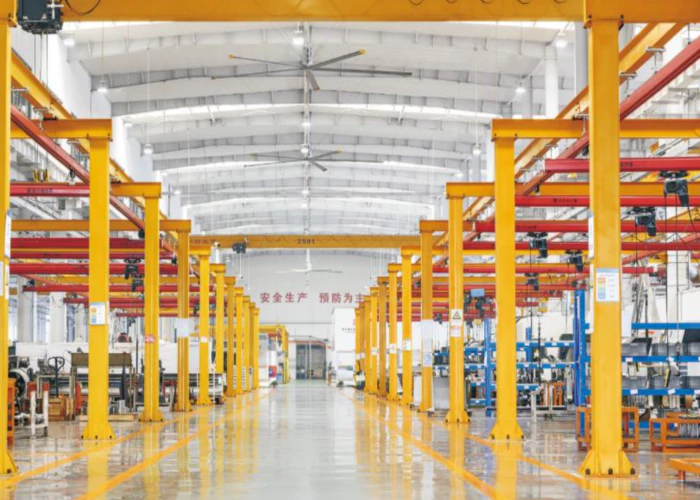
Step Inside Our Facility
We believe in transparency. Walk through our welding bays and assembly lines right now from your screen.
👉 Kliknij tutaj, aby odwiedzić naszą fabrykę VR
No hard hat required. Experience the quality virtually.
FAQ: Questions We Get From The Field
How much does a custom eye bracket hydraulic cylinder cost for a skid steer loader?
It varies based on the bore and stroke, naturally, but for a standard replacement on a Bobcat or similar, you are typically looking at the $180 to $450 range. Custom heavy-duty versions with induction hardened rods will run a bit higher, but they save you money in the long run by not snapping under load.
What is the difference between a standard pin eye and a spherical bearing eye bracket?
This is crucial. A standard pin eye is just a hole—it only pivots in one plane. A spherical bearing (we often call them swivel eyes) allows for misalignment in multiple directions. If your machine frame twists or flexes, you need the spherical type, otherwise, you will snap the piston rod or ovalize the mounting hole.
Can you ship custom eye bracket cylinders to agricultural zones in Brazil or Argentina?
Yes, we ship to South America regularly. We handle the export crating and documentation. Since harvest season waits for no one, we also have expedited air freight options for urgent breakdown replacements.
Why is my eye bracket cylinder making a grinding noise at the pivot point?
That is the sound of metal-on-metal death. It usually means the bushing has worn through or the grease zerk is clogged (a common oversight). You need to check the pin for scoring immediately. If the bracket hole is elongated, you might need to bore it out and sleeve it, or just replace the cylinder.
Do you manufacture eye bracket cylinders with integrated linear position sensors?
We sure do. Smart farming and automation require feedback. We can gun-drill the rod to accept a magnetostrictive sensor or install an external Hall effect sensor, giving you precise control over the stroke position.
Need to Pivot with Precision?
Stop dealing with loose pins and cracked welds. Let’s spec an eye bracket that fits perfectly.