Double-Acting Brush Offset Hydraulic Cylinders for Railway Track Cleaning Vehicles
Mastering dynamic angle adjustment under extreme eccentric loading. Delivering absolute precision and unyielding durability for automated urban rail and heavy-haul track sweeping systems.
Railway track cleaning vehicles operate in an exceptionally harsh environment characterized by a constant barrage of abrasive dust, metallic shavings from rail wear, and compacted environmental debris. The mechanical sweeping systems attached to these vehicles must dynamically adjust to varying track gauges, platform edges, and trackside obstacles, necessitating a highly responsive and robust hydraulic actuation system. The brush offset hydraulic cylinder serves as the critical component responsible for this precise angle adjustment, translating fluid power into the lateral and rotational movement required to perfectly position the heavy rotating sweeping brushes. When the active brush encounters compacted ballast, localized ice buildup, or unexpected trackside debris, the resulting kinetic reaction forces transmit instantaneously back through the mechanical linkage directly into the hydraulic cylinder, creating intense and highly unpredictable eccentric loads. Standard off-the-shelf pneumatic or light-duty hydraulic actuators fundamentally fail to manage these asymmetric forces, leading to rapid degradation of the internal sealing architecture and bending of the piston rod. Operating a commercial railway network requires absolute operational uptime, and any failure in the track clearing apparatus can cascade into severe network delays, making the selection of a highly specialized, purpose-built offset cylinder a paramount engineering decision for rolling stock manufacturers and maintenance contractors globally.
Addressing the complex kinematics of track sweeping requires a deliberate departure from conventional hydraulic cylinder design paradigms. The operational requirement dictates continuous, high-frequency angle adjustments while simultaneously bearing the brunt of side-loading forces. We have engineered a highly specialized double-acting small piston cylinder configuration specifically optimized for these spatial and mechanical constraints. This architectural choice provides the exact volumetric efficiency necessary for rapid extension and retraction cycles, ensuring the sweeping brush can be maneuvered instantly to avoid rigid obstacles. The double-acting mechanism guarantees that the brush is not only deployed with forceful authority but is also actively retracted and locked into its stowed position, preventing dangerous drift during high-speed vehicle transit. By confining the fluid power within a meticulously calculated internal volume, we eliminate the sluggish response times that plague inferior single-acting systems. The integration of this compact piston architecture allows the entire hydraulic offset module to fit within the congested undercarriage of modern rail cleaning vehicles, providing maximum articulation without compromising the vehicle’s structural clearance envelope or aerodynamic profile.
Experience Precision Manufacturing in Virtual Reality
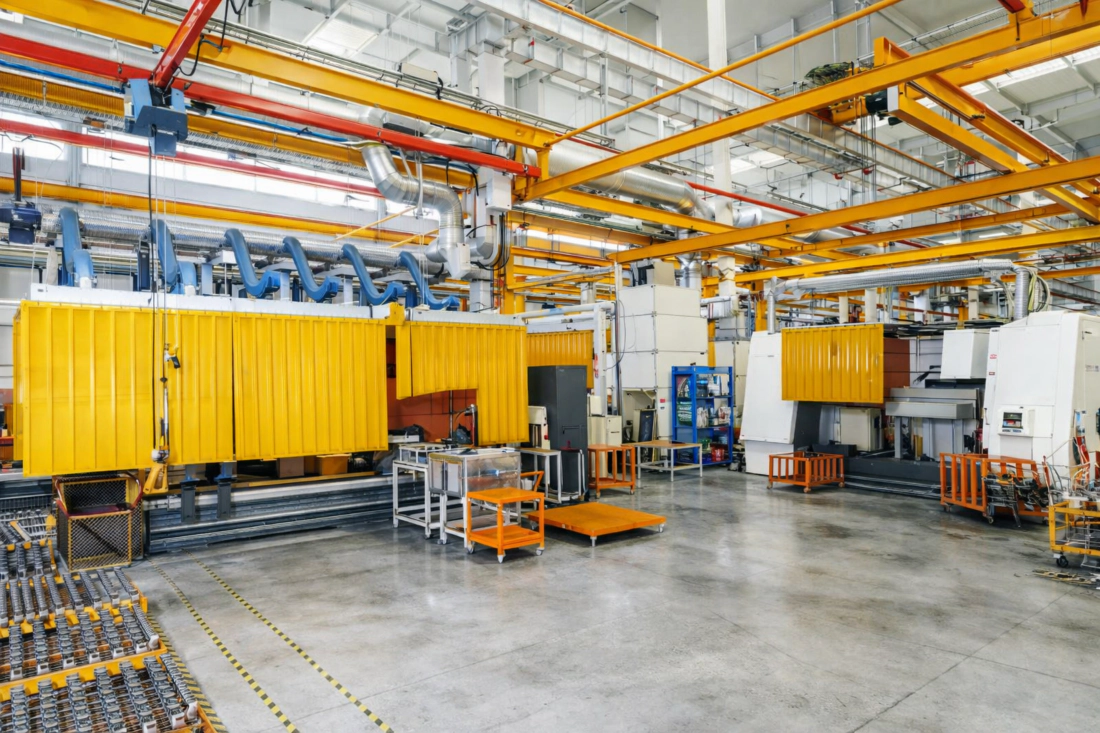
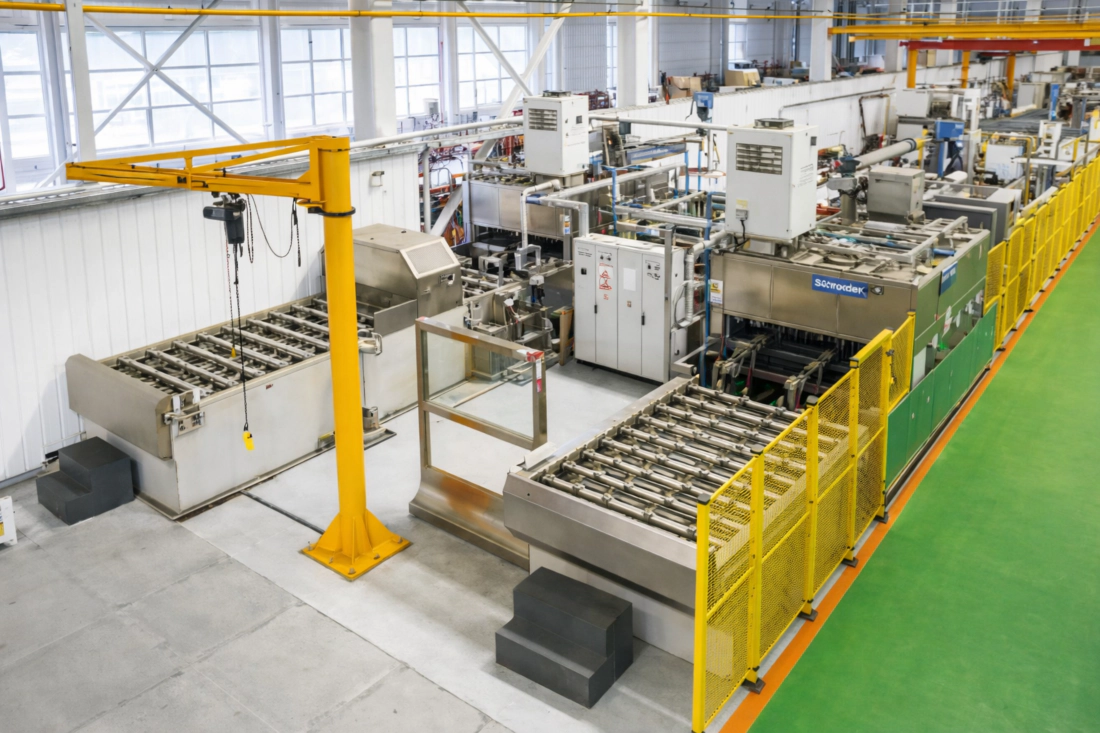
Industrial procurement demands absolute transparency and verifiable manufacturing excellence. We invite global engineering teams and rolling stock procurement officers to step inside our digital twin manufacturing facility. Witness the automated robotic welding of our high-strength 27SiMn steel components, the precision honing of our cylinder barrels, and our rigorous pressure testing protocols directly from your workstation. Verify our capacity to deliver world-class fluid power solutions before placing your engineering trust in our hands.
Metallurgical Superiority: 27SiMn High-Strength Steel Architecture
The foundation of our brush offset cylinder’s resilience lies in the uncompromising selection of 27SiMn (Silicon-Manganese) steel alloy for both the cylinder barrel and the heavy-duty piston rod. In the highly restrictive spatial envelope of a railway cleaning vehicle, minimizing component weight while maximizing tensile strength is the ultimate engineering objective. 27SiMn provides a phenomenal strength-to-weight ratio, boasting a yield strength that significantly eclipses standard ST52 or 45# carbon steels traditionally used in fluid power applications. This elevated metallurgical profile allows us to engineer a cylinder with thinner wall dimensions that can still effortlessly contain the extreme internal pressure spikes generated when the sweeping module impacts immovable trackside infrastructure. Furthermore, the inherent hardenability and fatigue resistance of the 27SiMn alloy guarantee that the cylinder body will not succumb to the continuous high-frequency vibrations transmitted from the bogies traversing uneven railway ties and ballast.
Eliminating mechanical vulnerabilities is paramount for components subjected to relentless vibration. Standard tie-rod cylinder constructions are inherently flawed for railway applications, as the dynamic loads inevitably cause the retaining nuts to loosen, leading to catastrophic fluid leakage and loss of pressure containment. Our engineering team has completely eradicated this failure vector by adopting a fully 100% welded manufacturing structure. By utilizing advanced robotic gas metal arc welding (GMAW), the heavy-duty end caps and mounting clevises are permanently fused directly to the 27SiMn cylinder barrel. This creates a monolithic, rigid pressure vessel that functions as a structural member of the offset mechanism, entirely impervious to the loosening effects of mechanical resonance. This welded integrity ensures zero-leak performance over a vastly extended service lifecycle, drastically reducing maintenance interventions and ensuring the track cleaning vehicle remains deployed on the rail network rather than sidelined in the repair depot.
Engineering the Ultimate Defense Against Eccentric Loading
The most pervasive and destructive failure mode in brush offset mechanisms is “rod eccentric wear” (杆偏磨). When the extended sweeping arm encounters sudden resistance, it acts as a massive lever, transmitting severe bending moments directly into the hydraulic cylinder’s piston rod. This side-loading forces the piston and the rod gland to scrape violently against the internal bore and the rod sealing architecture. Over a brief operational period, this asymmetric friction scores the cylinder wall, destroys the primary polyurethane seals, and causes the hard chrome plating to flake off the bent rod, culminating in total systemic failure. Resolving this requires a comprehensive redesign of the internal guidance system.
Wide Guide Ring Integration
To neutralize lateral forces, we mandate the use of ultra-wide, heavily glass-filled PTFE or phenolic composite guide rings. By significantly increasing the axial width of the guidance bands on both the piston head and the rod gland, we massively expand the load-bearing surface area. This geometric enhancement effectively disperses the localized pressure caused by eccentric loading, preventing metal-to-metal contact and preserving the integrity of the delicate hydraulic seals under extreme mechanical duress.
Thickened Hard Chrome Plating
The external environment of a track sweeping vehicle is flooded with abrasive airborne silica and metallic brake dust. We protect the 27SiMn piston rod with an exceptionally thick layer of hard chrome plating. This dense, micro-crack-free barrier provides a surface hardness exceeding 850 HV. It rejects the adhesion of abrasive particulate, ensuring the double-lip wiper seals can effectively clear the rod upon retraction without scratching the substrate, maintaining flawless fluid containment.
Spherical Plain Bearing Mounts
To further isolate the hydraulic cylinder body from the destructive twisting forces of the brush mechanism, both the base clevis and the rod end are equipped with high-capacity spherical plain bearings. These multi-directional pivoting joints act as a mechanical buffer, absorbing angular misalignment and torsional stress. They allow the cylinder to push and pull linearly while the surrounding sweeping framework shifts, effectively decoupling the hydraulic actuator from structural deflection.
Technical Parameters: Offset Angle Adjustment Series
| Specyfikacja projektu | Standard Industrial Grade | Ever Power Railway Grade |
|---|---|---|
| Architektura cylindryczna | Tie-Rod Construction | 100% Welded (Vibration Proof) |
| Core Material Metallurgy | ST52 / 45# Carbon Steel | 27SiMn (stop o wysokiej wytrzymałości) |
| Eccentric Load Defense | Standard Nylon Guide Rings | Ultra-Wide PTFE Composite Guide Rings |
| Obróbka powierzchni prętów | Flash Chrome Plating | Thickened Hard Chrome (>850 HV) |
| Interfejs montażowy | Rigid Welded Clevis Pin | Self-Lubricating Spherical Plain Bearings |
| Mechanizm działania | Single-Acting Spring Return | Double-Acting Small Piston Cylinder |
Broadening the Scope of Railway Fluid Power
The robust engineering principles applied to our brush offset cylinders—specifically the welded 27SiMn construction and eccentric load management—are highly adaptable. These compact, high-force actuators are the ideal solution for various spatial-constrained, high-vibration applications across the entire Maintenance of Way (MoW) vehicle spectrum.
- ✔
Snow Plow Wing Extension Actuators - ✔
Ballast Regulator Plow Positioning Cylinders - ✔
Rail Grinding Module Lift and Tilt Control - ✔
Track Inspection Sensor Deployment Arms
Unlocking China’s Hydraulic Manufacturing Potential
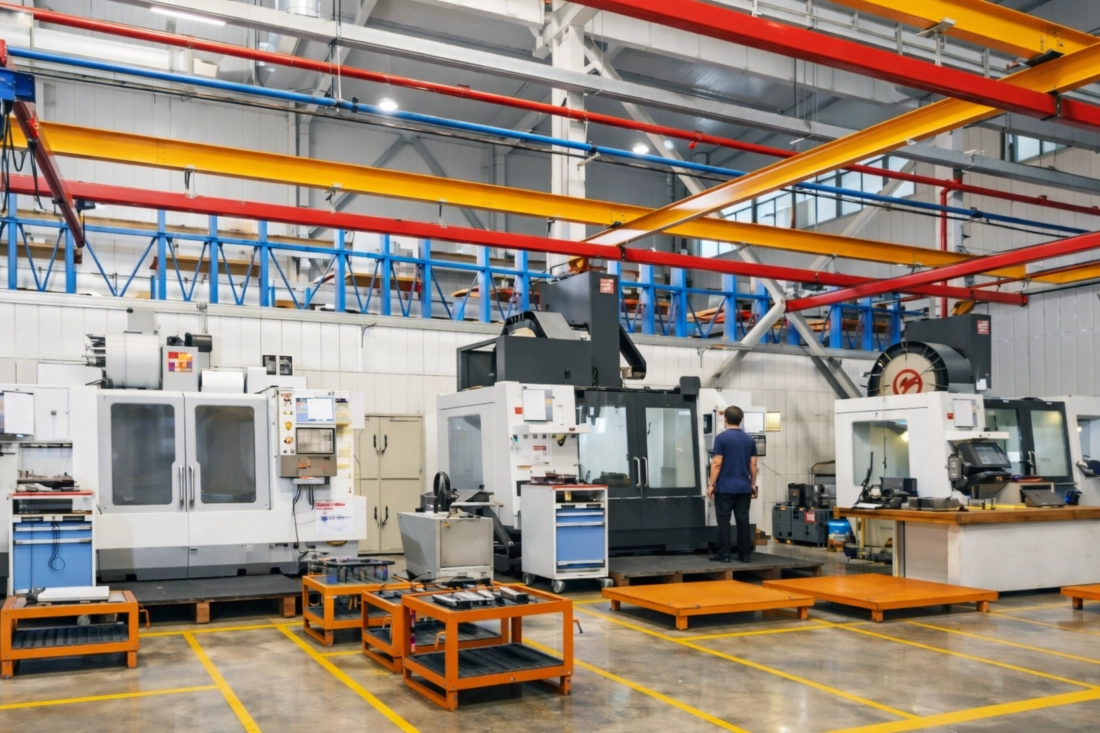
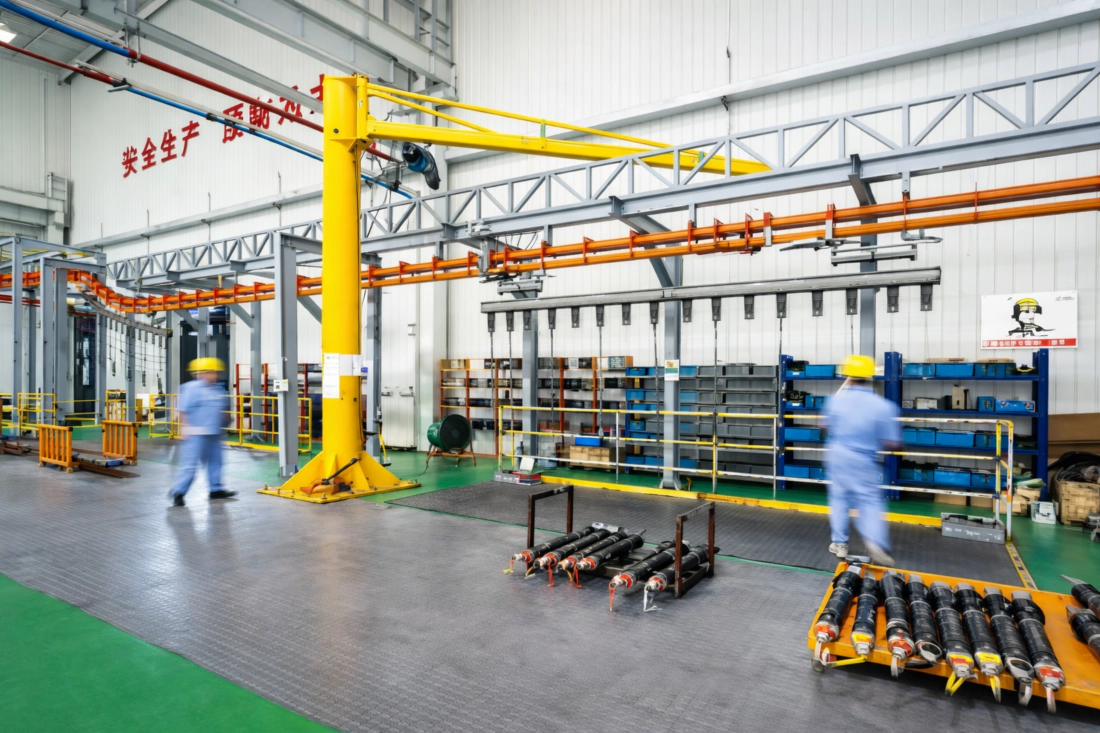
Sourcing mission-critical railway components requires a manufacturing partner that integrates advanced metallurgy with absolute precision machining. Based in the heart of China’s premier industrial hydraulic zone, Ever Power controls the entire production ecosystem. Our direct access to certified high-strength 27SiMn steel foundries and our utilization of state-of-the-art multi-axis CNC machining centers allow us to produce bespoke fluid power solutions that exceed stringent European and North American rail safety standards.
We do not offer a “one-size-fits-all” catalog. Our application engineers collaborate directly with your design teams to dictate stroke lengths, optimize wide guide ring dimensions based on your specific side-load calculations, and engineer custom spherical plain bearing mounts for drop-in replacement on existing equipment. Learn more about our deep technical heritage on our O nas page, and discover how our localized manufacturing scale can dramatically reduce your global procurement costs while elevating vehicle reliability.

Często zadawane pytania inżynierskie
What causes rod eccentric wear in track sweeping vehicle hydraulic systems?
Rod eccentric wear is caused by severe asymmetric side loads. When the cleaning vehicle’s sweeping brush hits compacted debris or frozen ballast, that kinetic energy forces the piston rod to bend laterally, causing it to scrape heavily against the internal cylinder bore and destroy the rod seals.
How much does a custom brush offset hydraulic cylinder cost for railway vehicles?
Pricing depends heavily on the specific stroke length, operating pressure, and batch order size. However, by utilizing our vertically integrated manufacturing facility in China, clients typically secure 27SiMn heavy-duty cylinders at highly competitive global market rates. Poproś o szczegółową wycenę for precise component pricing.
Which surface treatment is best for hydraulic cylinders exposed to railway dust?
For railway track environments flooded with abrasive silica and metallic brake dust, an ultra-thick layer of hard chrome plating is essential. This creates an incredibly hard, non-porous surface that prevents abrasive particles from sticking to the rod and tearing the polyurethane wiper seals during retraction.
Where can I find a reliable supplier for 27SiMn track cleaning cylinders?
You can source directly from Ever Power. We are a premier manufacturer based in China with over 18 years of specialized fluid power experience, building fully welded, double-acting hydraulic cylinders tailored specifically for heavy-duty railway maintenance equipment applications.
When should we replace the wide guide rings in our offset hydraulic actuators?
Wide guide rings are designed as sacrificial wear components to protect the cylinder barrel and rod. They should be inspected during major vehicle overhaul intervals, typically every 5,000 to 8,000 operational hours, or immediately if any scoring is noticed on the external hard chrome piston rod.
Eliminate Eccentric Wear from Your Railway Fleet
Stop replacing standard tie-rod cylinders that succumb to track sweeping side-loads. Upgrade to 27SiMn welded durability and precision angle adjustment.