Cutting Head Balance Cylinders: Keeping the Boom Steady When the Rock Fights Back
There is a specific vibration you feel in your teeth when a roadheader cutting head engages with quartz sandstone. It’s not just noise; it’s a physical assault on every pin, bushing, and seal in the machine. In my eighteen years crawling through tunnels and visiting open-pit mines, I’ve learned that the Cutting Head Balance Cylinder is the unsung hero of the entire operation. While the main lift cylinders get the glory for hoisting, the balance cylinder (often working in pairs) has the thankless job of dampening that violent chatter and keeping the head geometry consistent. Most printers and procurement managers see a cylinder on a parts list and think “it’s just a tube with a rod,” but they don’t see the micro-fractures forming in standard chrome plating when that head bounces 50 times a second. We’ve seen OEM cylinders fail in under 400 hours because the manufacturer didn’t account for the “water hammer” effect created by the cutting picks striking rock. The trick isn’t just making the walls thicker; it’s about the valve integration and the seal energizers. If you are tired of replacing seals every time you change picks, you are reading the right page.
👀 Zajrzyj do naszego warsztatu o dużej wytrzymałości
Don’t just take my word for it. Walk our production line virtually and inspect our honing machines and pressure test bays right now.
🚀 WEŹ UDZIAŁ W WYCIECZCE VR FABRYCZNEJ
100% Transparent. No hard hat required.
The Engineering Reality: Why “Standard” Fails Underground
Let’s get technical about what kills a Cutting Head Balance Cylinder. It is rarely a simple over-pressure burst. Instead, it is the side-loading and contamination. When a roadheader or continuous miner is sumping in, the forces aren’t linear. The head wants to twist, and that torque is transferred directly to the balance cylinder rod. If the guide bushing (the gland) is standard length, the rod will flex, crushing the wiper seal. Once that wiper seal is compromised, coal dust or rock silica—which is essentially grinding paste—enters the system.
In our experience, the only way to combat this is by extending the guide bearing surface area by at least 30% compared to standard ISO cylinders. We also integrate the counterbalance valves (load holding valves) directly into the cylinder port block. Why? because external hoses vibrate. Vibration loosens fittings. Loose fittings leak oil onto a hot machine, and nobody wants a fire underground. By machining the valve cavity into the rear clevis or the barrel, we eliminate leak points and ensure the cutting head doesn’t “droop” when the operator lets go of the joystick.
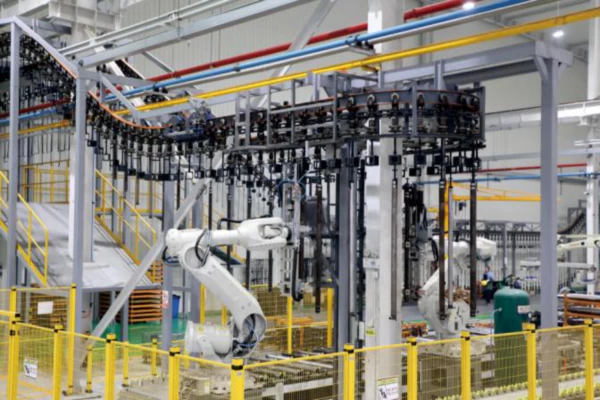
Our large-bore honing facility ensures roundness tolerances that keep seals tight even during high-frequency vibration.
Technical Specs: Built for the Abuse
When you are spec’ing out a replacement Cutting Head Balance Cylinder, pay close attention to the rod plating. Standard hard chrome (20 microns) is porous. In a damp, acidic mine environment, rust will form under the chrome, causing it to flake off. We typically recommend a double-chrome process or, for extreme saline environments, a laser cladding overlay. Below is a comparison of what you might find on a generic cylinder versus what we engineer for mining applications.
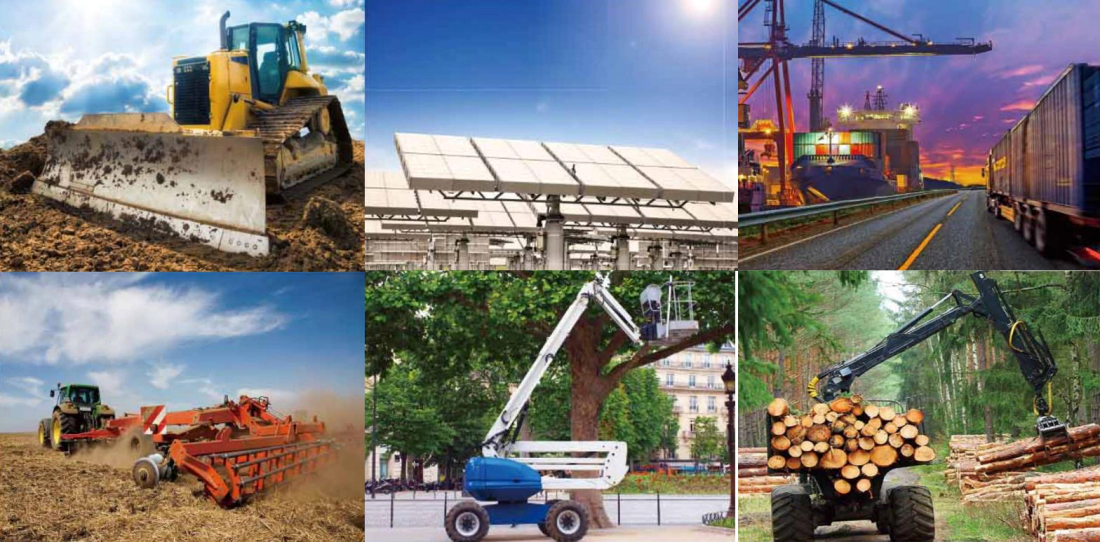
From tunneling roadheaders to underground coal scalers, stability is safety.
Application Scenarios: Where the Rubber Meets the Rock
These cylinders don’t sit in a clean warehouse. You find them on Roadheaders digging subway tunnels in granite, where the dust is so fine it gets everywhere. In this scenario, the balance cylinder holds the heavy cutting boom in position while the turret rotates. If the cylinder drifts, the tunnel profile is wrong, leading to expensive concrete overbreak rework. We also see them on Continuous Miners in soft rock (potash/salt). Here, corrosion is the enemy. The salt air eats standard steel rods for breakfast. For these clients, we apply a specific ceramic coating that is virtually impervious to chemical attack. Another common application is on Scaling Jumbos, where the cylinder must withstand falling rock debris impacting the rod directly. For this, we often install a heavy-duty steel shroud or bellows boot over the rod.
Case Study: The “Salty” Problem
Client: Metro-Link Tunneling Consortium (Eastern Europe)
Wyzwanie: The project involved excavating a 5km tunnel through a salt-rich geological formation. The OEM Cutting Head Balance Cylinders on their roadheaders were failing every 300 hours. The combination of vibration and a salty, abrasive paste (formed by dust and humidity) was scoring the rods and destroying the seals. Maintenance was costing them $15,000 a week in downtime and parts.
Rozwiązanie: We re-engineered the cylinder design. We replaced the standard chrome rods with a Nickel-Chrome base overlay (high corrosion resistance) and installed a custom “Ice Scraper” metal wiper ring in tandem with a standard PU wiper. This aggressive scraper shaved the salt paste off the rod before it could reach the main seal. We also upgraded the guide bands to a high-load phenolic resin to better handle the side loads.
Wynik: The new cylinders ran for over 2,200 hours before needing a simple seal kit change. The rod surface remained pristine. The site manager, Nikolai, told us, “We finally stopped worrying about the hydraulics and focused on the digging.”
SWOT Analysis: The State of Mining Hydraulics
Mocne strony
Our vertical integration allows us to control the honing and plating quality directly. We have a deep library of seal profiles specific to mining environments (dust/mud/salt).
Słabości
Custom engineering takes time. We prioritize durability over speed, so our lead time for bespoke cylinders is usually 3-4 weeks, not 24 hours.
Możliwości
Smart Mining. We are seeing demand for cylinders with internal position sensors (LDTs) to automate the cutting profile. We are fully equipped to integrate these.
Zagrożenia
Low-cost copycats using inferior steel (Q235 instead of 42CrMo). They look the same on the outside, but will buckle under the first hard rock impact.
Trend Watch: Smarter and Tougher
The mining industry is getting smarter. We are moving away from manual “feel” to automated profile cutting. This means the Cutting Head Balance Cylinder is no longer just a muscle; it’s a sensor. We are increasingly integrating magnetostrictive linear displacement transducers (LDTs) inside the cylinder rod. This gives the machine’s PLC exact feedback on the head position, allowing for automated tunneling. However, putting sensitive electronics inside a vibrating cylinder is tricky. We have developed specialized shock-mounting systems for these sensors to ensure they survive the vibration. Another trend is higher pressures. Systems are moving from 250 bar to 350-400 bar to allow for smaller, lighter cylinders that generate the same force, freeing up visibility for the operator.
Factory & Customization: We Rebuild the Beast
Got an old Sandvik or Atlas Copco roadheader where the OEM parts are obsolete or cost a fortune? That is our sweet spot. We can reverse engineer a cylinder from a physical sample or even a rough drawing. We check the rod for straightness, analyze the failure mode of the old unit, and build a replacement that is often better than the original because we use modern seal materials. We can customize the mounting points—if your clevis is worn out, we can machine a new one with an oversized pin. We weld everything in-house with certified welders because a weld failure on a balance cylinder can drop the boom and hurt someone.
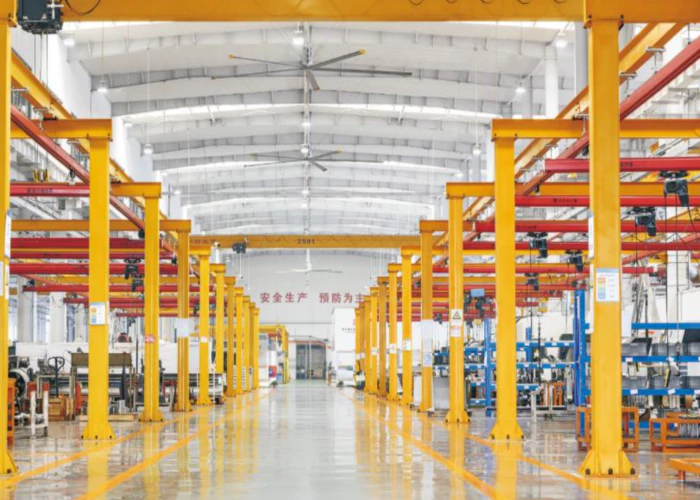
Precision welding is critical; we use ultrasonic testing (UT) to ensure zero porosity in the trunnion welds.
What the Industry is Saying
“Our roadheader boom was drifting 2 inches every hour. Ever Power sent us cylinders with integrated counterbalance valves. Problem solved immediately. Solid build quality.”
— Mark D., Maintenance Super, Nevada Gold Mines
“I was skeptical about buying aftermarket cylinders for our Mitsui roadheader. But the price was half of the OEM, and the chrome looks thicker. Running 1000 hours now with no leaks.”
— Carlos R., Tunneling Contractor, Spain
“We needed a rush order for a breakdown. They expedited the manufacturing and we had the parts in 2 weeks. The fitment was perfect.”
— Liam T., Procurement, Australia
FAQ: Questions From the Pit
Why is my roadheader cutting head drifting down?
Drift is almost always caused by internal leakage across the piston seal or a leaking counterbalance valve. In high-vibration mining, valves often vibrate loose. Check the valve torque first, then the seals.
What is the cost of a custom balance cylinder?
It varies by size, but a heavy-duty mining cylinder typically ranges from $1,500 to $4,500. The price depends on whether you need integrated valves and advanced rod plating, like laser cladding.
Can you ship hydraulic cylinders to remote mining sites?
Yes, we ship globally with DDP (Delivered Duty Paid) terms. We handle the crates and customs, delivering directly to your mine site or workshop, no matter how remote.
Is it better to repair or replace a mining cylinder?
If the barrel is scored deeply or the rod is bent, replace it. The structural integrity is compromised. If it’s just a leaking seal and the metal is good, a rebuild is cost-effective.
What hydraulic oil is best for cold-weather mining?
Standard AW46 gets too thick in freezing temps. Switch to a high Viscosity Index (VI) fluid like multigrade ISO 32 to ensure the pump lubricates properly on startup.
How long does a balance cylinder last in hard rock?
In extreme hard rock, a standard cylinder might last 500 hours. Our heavy-duty cylinders with upgraded seals and plating typically run 2000-3000 hours before needing a seal refresh.
Downtime Costs More Than a Cylinder
Stop the drift and stabilize your production. Talk to our engineers now.