Precision in the Clouds: The Ultimate Guide to 27SiMn Servo-Controlled Tilt Cylinders for Aerial Work Platforms
You know that sinking feeling when you’re 30 meters up in the air, the wind starts picking up off the North Sea, and the platform beneath your feet gives a little… shudder? If you’ve spent as much time around hydraulic systems as I have (going on 18 years now, how time flies), you know that stability isn’t just a comfort feature—it’s the difference between a job well done and a safety report nobody wants to write.
When we talk about Aerial Work Platforms (AWP), specifically the mechanism that keeps the basket level regardless of the boom angle, we are talking about the unsung hero of the industry: the platform tilt cylinder (or leveling cylinder). It’s not just a steel tube with oil in it. It’s a precision instrument.
Over the years, I’ve seen manufacturers try to cut corners with standard ST52 tubes or cheap seals, thinking “it’s just a slave cylinder.” Big mistake. In the Netherlands, where safety standards like EN 280 are non-negotiable, and the weather is, let’s say, unpredictable, you need hardware that fights back. That’s why we’ve shifted our focus entirely to Double-acting, 27SiMn Welded Piston Cylinders with integrated servo control capabilities.
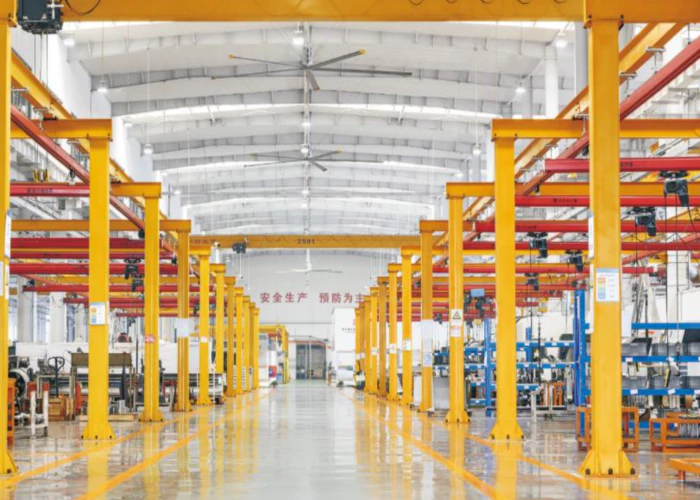
Want to see where the magic happens? We don’t hide behind a website. Step right into our production line without leaving your chair.
We’ve set this up so you can inspect our welding stations and testing rigs personally. Transparency is everything in this business.
Vraag een offerte aan voor cilinders op maat.
The “Secret Sauce”: Why 27SiMn and Servo Control Matter
Let’s get technical for a minute (but I promise to keep it practical). Standard hydraulic cylinders often use 45# steel or ST52. They work fine for log splitters. But for a platform nivelleringscilinder, weight and tensile strength are critical. You are hanging this weight at the end of a long boom; every kilogram counts.
We use 27SiMn (silicium-mangaan) staal. Why? Because after quenching and tempering, the tensile strength hits upwards of 980-1050 MPa. Compare that to standard ST52, which hovers around 520 MPa. This allows us to make the cylinder walls thinner—reducing weight—without sacrificing safety factors. In our experience, this weight reduction at the basket end significantly improves the overall stability of the boom lift.
And then there’s the “Servo Control” aspect. Modern AWPs are moving towards intelligent leveling. The old passive hydraulic leveling (master-slave) is reliable, but it drifts. By integrating servo-feedback capabilities (linear displacement sensors built into the rod), our cylinders allow the platform’s ECU to make micro-adjustments in milliseconds. It’s the difference between “mostly flat” and “perfectly horizontal,” even when you shift your weight.

Technische specificaties: De gegevens die u nodig hebt
We know engineers need numbers, not just fluff. Here is the typical configuration for our high-altitude safety cylinders. (Keep in mind, we customize this for almost every client.
| Parameter | Specificatie | Notes |
|---|---|---|
| Cilindertype | Dubbelwerkende zuiger / gelast | Designed for max structural rigidity. |
| Materiaal | 27SiMn (gehard en getemperd) | Yield Strength > 835 MPa. |
| Werkdruk | 210 bar – 350 bar | Tested to 1.5x working pressure. |
| Stangcoating | Hardchroom (30-50 micron) | Salt-spray tested (96h+), crucial for Dutch coastal areas. |
| Zeehonden | Hallite / Parker / Nok | Zero-leakage profile for safety holding. |
| Controle | Servo / Proportional Valve Ready | Integrated sensor ports are available. |
| Temperatuur | -30°C to +80°C | Low-temp seals available for winter ops. |
The Silent Killer: Internal Leakage & “Drift”
If there is one thing that keeps me up at night, it’s internal leakage. In a tilt cylinder, leakage means the platform slowly tilts forward or backward while the operator is working. We call it “drift.” Most printers of safety manuals won’t tell you this, but strict EN 280 standards have very tight tolerances for this.
The trick is in the sealing system and the barrel honing. We use a skiving and roller burnishing process for the inner wall. It creates a mirror finish (Ra 0.2) that extends seal life by 40%. We combine this with a double-lip wiper seal to keep out the grit found on construction sites. We don’t just rely on the check valve; the cylinder itself must be tight.
🌍 Localized for the Netherlands
Operating in the Netherlands presents unique challenges. The high humidity and salt air near the coast (Rotterdam, The Hague) can pit a standard chrome rod in six months. We’ve seen it happen. That is why we apply a specialized multi-layer chrome plating process specifically for our European exports. It prevents the corrosion that tears up seals.
SWOT Analysis: Our Tilt Cylinder Technology
To give you a balanced view (because no product is perfect for everyone), here is a breakdown of how this technology fits into the market.
💪 Sterke punten
- High Strength-to-Weight: 27SiMn material reduces boom load.
- Precisie: Servo-ready for <0.5° leveling accuracy.
- Duurzaamheid: Anti-corrosion treating beats standard chroming.
⚠️ Weaknesses
- Kosten: Higher initial investment than standard ST52 cylinders.
- Levertijd: Custom welding/testing takes longer than off-the-shelf.
🚀 Kansen
- Dutch Safety Market: Rising strictness in safety inspections aligns with our quality.
- Smart Construction: Integration with IoT and remote monitoring systems.
🛡️ Threats
- Goedkope importproducten: Low-cost cylinders that look the same but fail under sustained load.
Customer Success Story: Leveling Up in Utrecht
I want to share a story about a client of ours (name changed for privacy), let’s call them Van der Meer Hoogwerkers B.V., a mid-sized rental company based near Utrecht.
De uitdaging: They were running a fleet of 24-meter telescopic boom lifts. The original cylinders (from a generic supplier) were experiencing “morning sickness”—drift during the first hour of operation in cold Dutch winters. Operators were complaining about the basket tilting 3-4 degrees unexpectedly.
De oplossing: We retrofitted their fleet with our 27SiMn Low-Temp Servo Tilt Cylinders. We customized the mounting trunnions to fit their existing booms exactly—no welding needed on their end.
Het resultaat: The drift was eliminated. But more importantly, the maintenance intervals for seal replacements went from every 12 months to every 30 months. That’s huge for a rental business.
Wat de branche zegt
“Honest advice and solid steel. The team explained why our old cylinders were failing (seal extrusion) and provided a solution that actually lasts. Shipping to Rotterdam was smooth.”
— Jeroen K., Fleet Manager, Amsterdam
“We needed a custom stroke length for a specialized bridge inspection unit. Ever Power delivered the prototype in 3 weeks. The welding quality is top-tier.”
— Pieter V., OEM Engineer, Eindhoven
“Finally, a manufacturer that understands the difference between ‘cheap’ and ‘value’. The chrome plating on these rods holds up against the sea spray.”
— Mark D., Maintenance Lead, Vlissingen
Toepassingsscenario's
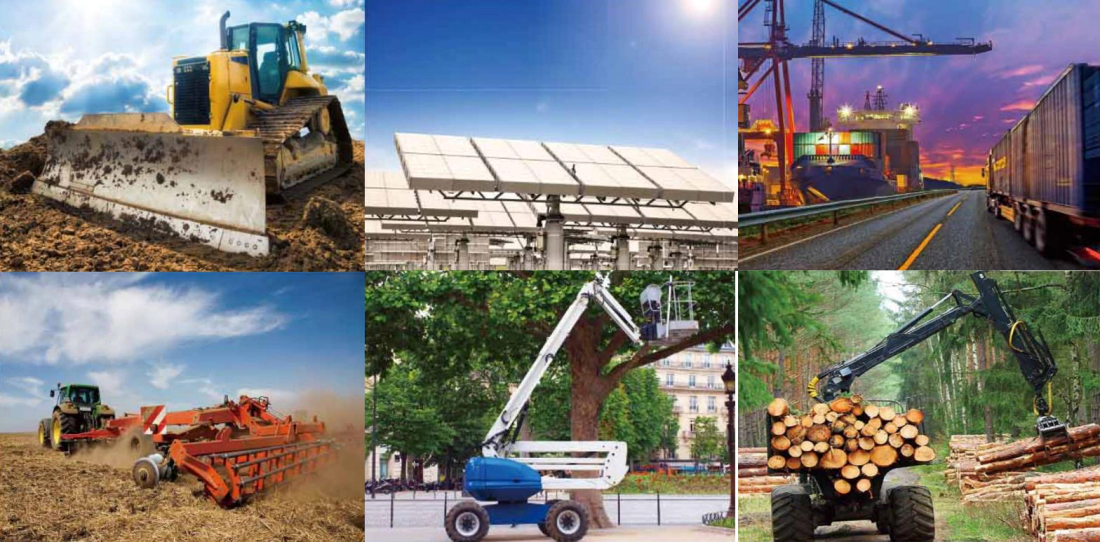
While we focused on the tilt cylinder here, this technology applies across the entire machine. Whether you are building a Scissor Lift, an Articulating Boom Lift, or a Telehandler, the hydraulic principles remain similar.
Common applications for this cylinder include:
- Platform Leveling: Ensuring the basket remains horizontal.
- Jib Cylinder: For that extra reach and articulation at the top.
- Stuurcilinders: For multi-wheel steer capability on rough terrain.
Customization: We Build What You Draw
Most people don’t realize that 80% of our output is custom. We aren’t just stocking shelves; we are engineering partners. If you have a specific mounting requirement (clevis, trunnion, cross-tube) or a unique port orientation to fit tight spaces, we handle it.
Our engineering team uses SolidWorks to model the cylinder within your assembly before we cut a single piece of steel. This ensures zero collisions during operation.
FAQ: Questions We Get Asked Frequently
It depends on the specs, honestly. A standard replacement might be in the €200–€400 range, but a custom servo-controlled unit with 27SiMn steel will be higher. Since we ship directly to ports like Rotterdam, we cut out the middleman. Send us your drawing, and I can give you an exact price within 24 hours.
That’s the classic “internal leakage” issue. It’s usually either the piston seal failing or the holding valve (counterbalance valve) passing oil. If you replace the valve and it still drifts, your cylinder barrel is likely scored. Our cylinders use high-grade Hallite seals to prevent this.
Absolutely. That is our baseline. We understand the safety factors required for aerial work platforms in Europe (usually 3:1 or 4:,1 depending on the component). All our AWP cylinders undergo 100% pressure testing before crating.
For a new design, allow about 30–35 days for production after drawing approval. Repeat orders are faster, usually 20–25 days. We know downtime is money, so we try to keep things moving fast.
In the Netherlands, you get damp and cold. We recommend a high viscosity index (HV) oil like ISO VG 32 or 46. It keeps the flow smooth when it’s near freezing, but doesn’t thin out too much in summer.
Ready to Stop the Drift?
Don’t settle for “good enough” when lives are up in the air. Let’s build a cylinder that outlasts the machine.