Mastering Precision Bending: Dive into Roll Bending Cylinders for Rolling Mill Machines
When you’re shaping metal in a rolling mill, the roll bending cylinder for the rolling mill machine is the unsung hero that keeps everything aligned – applying just the right force to bend rolls and ensure uniform thickness without warping the product. We’ve seen mills struggle with cylinders that can’t maintain consistent pressure, leading to uneven sheets and wasted material (and trust me, scrapping a run of steel isn’t cheap). But dial in a solid design, one that handles high-tonnage bends with finesse, and your rolling mill machine turns out perfect plates every time, boosting yield. In our experience over decades of tweaking these setups, the difference often comes from cylinders that adapt to load variations, preventing crown defects in the rolls. Most mill operators don’t realize how a well-calibrated roll bending cylinder for a rolling mill machine can fine-tune camber control, cutting down on rework. And reliability? We’ve built these to endure the heat and grit of continuous ops, ensuring your machine stays productive – because downtime in a mill hits hard, doesn’t it?
Welcome to tour our VR factory: Besøk VR-fabrikken vår – immerse yourself and see how we engineer these roll bending cylinders for rolling mill machines!
Breaking down the essence of a roll bending cylinder for a rolling mill machine, it’s the hydraulic pressure that actuates the piston, bending the rolls to counteract deflection and achieve flat output. We’ve noticed that using high-alloy steel for the barrel enhances resistance to fatigue cracks under cyclic loads, while chrome-plated rods minimize friction for smoother operation. Seals, typically heavy-duty Viton compounds, maintain integrity at pressures up to 300 bar, crucial for avoiding leaks that disrupt bend accuracy (ever chased a pressure drop mid-roll? Maddening). Performance parameters shine with strokes from 100 to 500 mm, bores 200 to 400 mm for forces exceeding 500 tons. In hot rolling scenarios, the cylinder applies lateral force to the work rolls, correcting shape flaws on the fly. We’ve incorporated position sensors in advanced models for real-time feedback, allowing precise adjustments. Materials like forged pistons boost compressive strength, and in our installs, they’ve held up in high-heat mills without deformation over thousands of cycles.
| Parameter | Spesifikasjon | Fordel |
|---|---|---|
| Boringsdiameter | 200-400 mm | Generates high bending force |
| Slaglengde | 100-500 mm | Allows precise roll adjustment |
| Driftstrykk | Opptil 300 bar | Handles heavy-duty bending |
| Kraftutgang | Over 500 tons | Corrects roll deflection effectively |
| Materiale | High-alloy steel, chrome-plated | Resists fatigue and corrosion |
| Tetninger | Viton/nitrile | Prevents leaks in hot environments |
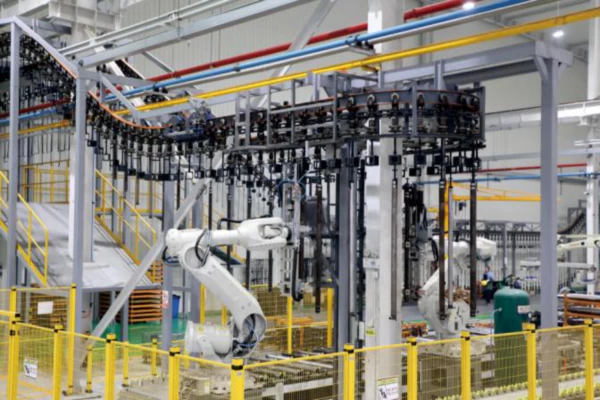
Shifting to the realms where roll-bending cylinders for rolling mill machines make their mark, envision steel mills in Germany – bending rolls to produce flawless automotive sheets, countering thermal expansions. We’ve equipped aluminum rollers in China, where the cylinder fine-tunes pressure for thin foils without tears. In shipbuilding plates from Japan, they ensure flatness for hulls, adapting to thick gauges. Cold rolling in the US benefits from them for precision strips, with quick responses to gauge variations (ever rolled with inconsistent bends? Wavy output galore). Copper mills in Chile use them for conductive sheets, seals holding against acidic residues. And titanium forging in Russia relies on high-force cylinders for aerospace parts, maintaining crown control. The key is syncing the cylinder with mill controls; mismatch it, and you’re chasing defects that scrap batches and eat profits.

Gazing forward at developments in roll bending cylinders for rolling mill machines, innovation is steering toward smart sensors embedded for real-time bend monitoring, catching deviations before they ruin runs. We’re spotting hybrid materials like ceramic-coated internals, slashing friction for cooler ops in high-speed mills. In our mill-side chats, energy-efficient designs with regenerative circuits are rising, recycling pressure to cut power bills. AI integration allows predictive bending adjustments based on material data, optimizing flatness. But heads up: steel tariffs might bump costs, so local sourcing gains traction. Regulations on emissions push low-leak tech, and we’re refining seals for that. The field’s bending toward modular cylinders, easy to swap for minimal downtime in 24/7 mills.
A shining case emerged with a steel fabricator in India, rolling structural beams in Mumbai’s industrial belt. Their outdated cylinders fluctuated under heat, causing crowned beams that failed specs and delayed construction projects. We customized roll-bending cylinders for rolling mill machines with thermal-stable pistons and auto-adjust valves to hold bend precision in humid climes. After integration, product uniformity jumped 40%, speeding deliveries and saving INR 5 million in rejects yearly. The production head noted how the steady force reduced roll wear, extending maintenance cycles – key in bustling mills where stops cascade delays.
Don’t take it from us; listen to those who’ve rolled with them. “These roll bending cylinders for rolling mill machines steadied our UK plate lines – no more wavy edges, just spot-on flatness!” raved Alan from a British steelworks. Sofia from a Brazilian aluminum plant: “In tropical heat, others warped, but these hold true; thinner foils, happier clients.” And Juan, a Spanish roller: “We bend thick ship plates now without defects – the control is superb, fewer scraps too.”
Over in our workshop, our flair for customizing roll bending cylinders for rolling mill machines stands out – tweaking bores for unique roll diameters or adding coatings for corrosive alloys, our crew crafts fits that outperform stocks. We’ve navigated bespoke challenges, like syncing with CNC controls for automated bends or compacting for space-tight mills (and hitting the mark prevents retrofit pains). Advanced honing and pressure trials – simulating mill forces – confirm every cylinder’s mill-ready. Our speedy prototyping transforms notions into testable units fast, perfecting your design pre-launch. Curious about matches? A simple discussion reveals tailored tweaks.
SWOT Analysis: Roll Bending Cylinder for Rolling Mill Machine Market Outlook
| Styrker | Svakheter |
|---|---|
| – Precise bending control for superior product quality. – Customizable parameters fitting diverse mill needs. – Durable materials for long-term mill reliability. – Advanced sensors for real-time optimization. |
– Higher initial investment for premium features. – Requires expert calibration in setups. – Bulkier in high-force configurations. – Dependent on clean hydraulics. |
| Muligheter | Trusler |
| – Growing demand in emerging steel markets. – AI integrations for smart mill controls. – Eco-friendly materials for green manufacturing. – Partnerships with mill OEMs. |
– Low-cost imports are undercutting prices. – Supply chain volatility on alloys. – Shifts to alternative bending tech. – Economic slowdowns in the metal sectors. |
Ofte stilte spørsmål
What is the average cost for roll-bending cylinders from suppliers in the Chinese steel rolling mill industry?
Prices vary with specs, but typically ¥15000 to ¥40000 for high-quality units tailored to hot rolling – force and stroke affect it.
How can I get a quote for bending hydraulic cylinders for rolling mill machines in German automotive sheet production?
Provide your mill model and bend requirements; quotes are customized for precision, high-speed lines.
Which manufacturer offers the best price for roll cylinders in Indian construction beam rolling mills?
Seek heat-resistant designs; ours start at INR 200000 with warranties for humid, heavy-duty ops.
Where to find reliable suppliers providing quotes for hydraulic bending cylinders in US aluminum foil rolling plants?
Look for certified pros with fast turnaround; we cover US standards for thin-gauge precision.
When should I replace my roll-bending cylinder in heavy-duty rolling mill machines in Brazilian shipbuilding?
Monitor for pressure inconsistencies or leaks; in corrosive coastal mills, check every 10000 cycles.