The kinetic reality of modern rail transit involves the continuous management of monumental physical forces. As locomotives, light rail vehicles, and high-speed passenger cars traverse complex track geometries at velocities frequently exceeding 300 kilometers per hour, the bogie assembly becomes the absolute focal point of dynamic mechanical stress. The phenomenon known as hunting oscillation—a self-exciting, violent lateral swaying motion inherently caused by the interaction of conical wheelsets and parallel steel rails—threatens not only passenger ride comfort but the very structural integrity of the train chassis and the track infrastructure itself. Mitigating this immense kinetic energy requires fluid power actuators capable of split-second responsiveness, absolute precision, and unyielding durability. The yaw hydraulic cylinder emerges as the indispensable dampening and actuating component within the advanced bogie steering control matrix. Engineered specifically to operate under relentless high-speed vibration, these highly specialized fluid power units provide the critical steering assistance necessary to guide heavy rail vehicles smoothly through sweeping curves and high-speed straightaways, actively neutralizing lateral kinetic instability before it cascades into a critical mechanical failure.
Translating theoretical fluid dynamics into tangible, high-performance railway components requires a manufacturing environment defined by absolute precision and uncompromising quality control. Relying on basic industrial specifications is insufficient when engineering the primary lateral stabilization systems for global mass transit networks. Our approach to manufacturing the silinder omboh for bogie applications is rooted in decades of highly specialized application engineering. We invite global B2B procurement directors, rolling stock design engineers, and railway maintenance executives to bypass static brochures and directly observe our advanced metallurgical processing and CNC machining capabilities. Experience the exact environment where raw steel is transformed into life-critical transit infrastructure.
Immersive Manufacturing Transparency: Step Onto Our Production Floor
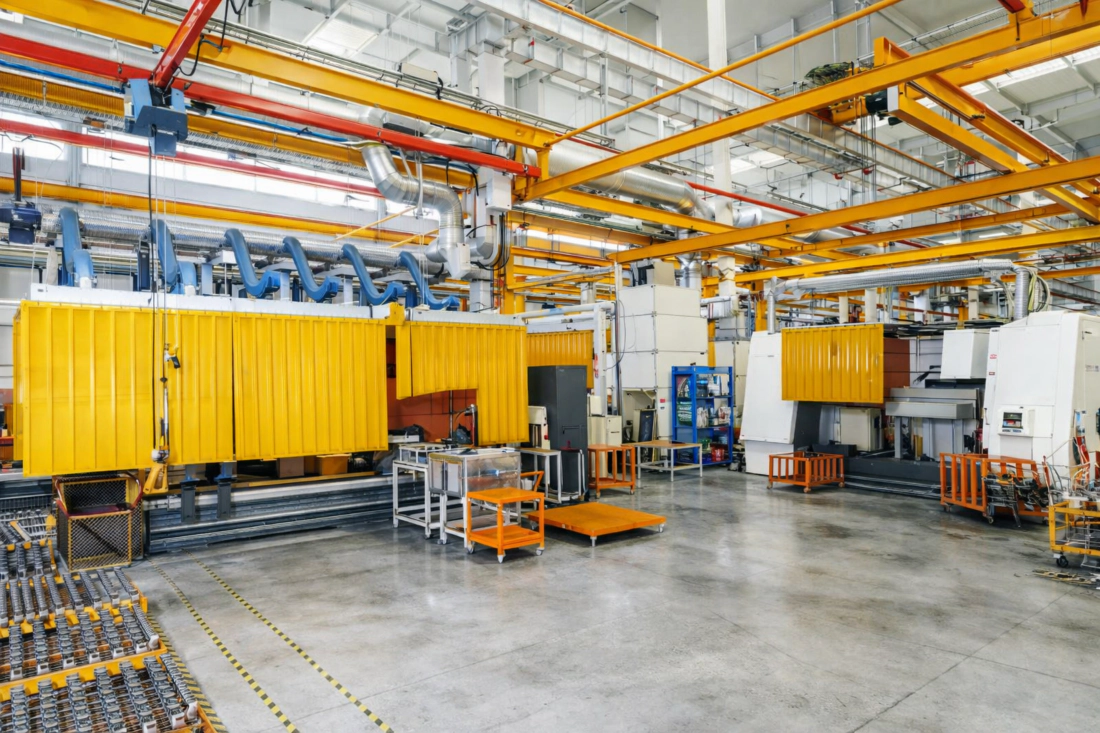
Enter our digital twin facility to witness the automated submerged-arc welding stations, the micron-level surface honing rigs, and the severe-duty cyclic pressure testing clean-rooms where every individual yaw actuator is validated before global deployment.
Observe our strict adherence to international railway manufacturing standards.
Having witnessed the technological rigor of our production capabilities, the technical intricacies of our fluid power solutions become vividly contextualized. Our manufacturing facility serves a global B2B clientele, producing a comprehensive portfolio of actuation solutions. Every silinder hidraulik dispatched from our loading docks is the culmination of rigorous material science and highly localized engineering adaptations designed for the world’s most demanding transit environments.
Metallurgical Resilience and Structural Architecture
Pembinaan Kimpalan Monolitik
The fundamental architecture of our rail-grade actuators relies on a heavily reinforced dikimpal structure. Conventional fluid power designs utilizing mechanical fasteners and threaded tie-rods are entirely unsuited for the brutal high-speed vibration environment of a train bogie undercarriage. Over thousands of operational hours, the continuous microscopic vibrational frequencies induce structural loosening in threaded joints. By employing a continuous, automated submerged-arc welding process, we fuse the heavy-duty cylinder barrel and the end caps into a singular, monolithic pressure vessel. This hermetically sealed architecture permanently neutralizes the risk of vibration-induced structural separation and catastrophic fluid leakage.
Premium Alloy Steel Metallurgy
The core material selected for this pressure vessel is a highly specialized grade of alloy steel, strictly configured to endure the unique stresses of railway applications. High-carbon alloy steel, enriched with precise ratios of chromium and molybdenum, possesses the immense tensile strength, elevated yield limits, and critical fatigue resistance required to endure the millions of micro-impact cycles generated by the rail-wheel kinetic interface. This uncompromising metallurgical foundation actively prevents the internal cylinder barrel from micro-expanding under extreme pressure spikes during emergency dampening events, ensuring the internal tribological tolerances remain absolute.
Eradicating the Apex Failure Mode: Rod Eccentric Wear
Operating within the highly exposed, debris-filled undercarriage of a rail vehicle subjects the extending piston rod to a hostile cocktail of environmental contaminants and severe kinetic abuse. The primary mechanical enemy of any bogie-mounted actuator is undeniably rod eccentric wear (frequently referred to as side-load scoring). As the bogie physically pivots and navigates irregular track conditions, immense lateral forces are inevitably transmitted directly to the extending cylinder rod. If the cylinder is rigidly mounted, these violent lateral forces press the internal rod fiercely against one side of the internal guide band. This uneven pressure rapidly erodes the primary seals, scores the internal metal surfaces, and initiates a catastrophic progression leading to total fluid loss and system failure.
To systematically eradicate this failure vector, our engineering protocol mandates the strict integration of heavy-duty spherical joint connections at both the base and rod-end mounting interfaces. A high-precision spherical joint allows for critical multi-axis angular displacement, effectively decoupling the internal hydraulic sealing mechanisms from the structural bending moments and twisting forces of the bogie chassis. By absorbing this geometric deflection, the piston rod experiences only pure axial push-pull loads. This allows the internal guidance bands and PTFE composite seals to function optimally without uneven radial compression.
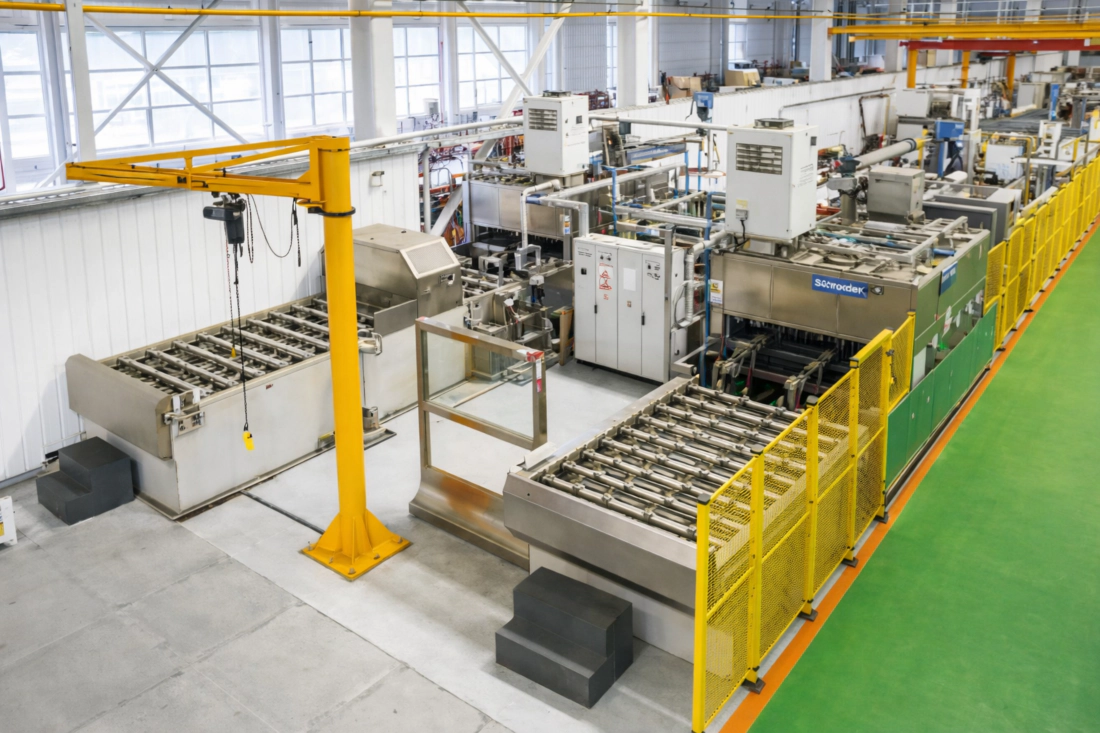
Furthermore, the alloy steel rod itself undergoes a severe, multi-stage chrome plated surface treatment. Following micron-level cylindrical grinding, a dense layer of hard chrome is electroplated onto the surface, achieving a Vickers hardness rating exceeding HV850. This impenetrable chrome barrier aggressively repels silica track dust, iron brake particulates, and atmospheric moisture. By maintaining an incredibly low coefficient of friction against the wiper seals, the chrome plating ensures that dynamic rod wear becomes virtually immeasurable, securing the long-term viability of the double acting steering mechanism.
Engineering Parameter Matrix
The deployment of our actuating hardware is governed by strict mathematical and material tolerances. The operational mechanics of the double acting configuration ensure that pressurized hydraulic fluid actively powers both the extension and retraction strokes, guaranteeing instantaneous, high-force kinetic control rather than relying on sluggish passive spring returns.
| Atribut Teknikal | Spesifikasi Konfigurasi | Operational Rationale |
|---|---|---|
| Prinsip Tindakan | Lakonan Berganda | Delivers active, bidirectional hydraulic force for precise push/pull steering adjustments. |
| Pengelasan Struktur | Silinder Omboh | Provides optimized internal geometry for severe-duty load bearing and fluid displacement. |
| Senibina Pembuatan | Dikimpal | Monolithic integrity that completely prevents mechanical loosening induced by track resonance. |
| Sistem Bahan Asas | Keluli Aloi | Extreme tensile and yield strength to resist internal pressure ballooning and external impacts. |
| Tribological Surface Treatment | Bersadur Krom (>30µm thickness) | Ultra-low friction finish that repels abrasive silica dust and prevents atmospheric oxidation. |
| Ambient Environmental Grade | High-Speed Vibration Tolerant | Seals and guides calibrated to sustain continuous oscillation without material fatigue or extrusion. |
| Kinetic Working Feature | Steering Assistance | Actively mitigates hunting oscillation to maintain wheelset centering on complex track curves. |
| Primary Failure Mode Prevented | Rod Eccentric Wear (Side-load scoring) | Prevents uneven seal compression and catastrophic fluid loss caused by geometric binding. |
| Antara Muka Pemasangan | Spherical Joint Connection | Absorbs multi-axis angular displacement, ensuring only pure axial loads reach the piston rod. |
Critical Bogie Application Scenarios
The versatility and extreme durability of our yaw hydraulic cylinder architecture render it the superior choice across a vast spectrum of rail transit configurations. While the underlying kinetic challenges of steel-on-steel transit remain universal, the specific dampening profiles required vary significantly across different vehicle classes.
High-Speed & Intercity Passenger Rail
Operating at extreme velocities demands absolute suppression of the hunting oscillation. Our actuators provide the precise active steering resistance required to maintain passenger comfort and prevent derailment scenarios on sweeping high-speed curves.
Heavy-Haul Freight Locomotives
Pulling thousands of tons of bulk cargo generates immense tractive effort and profound lateral shifting on the locomotive bogie. The heavy-walled welded construction and alloy steel components effortlessly manage these high-mass kinetic transfers.
Urban Metro & Light Rail Transit
Navigating tight underground tunnels with frequent stops requires constant, rapid steering adjustments. The ultra-low friction chrome plated rods ensure immediate, stick-slip-free actuation for continuous daily operations.
Custom Engineering & Precision Manufacturing from China
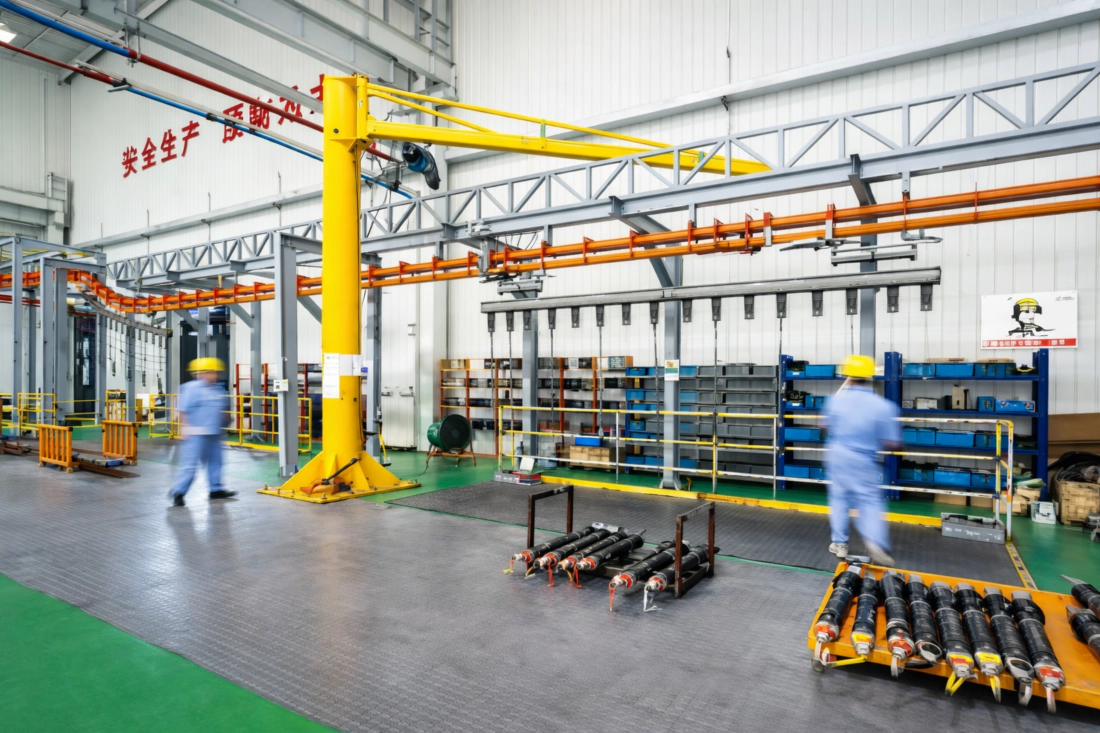
Securing a reliable supply chain for complex rail transit components is a critical mandate for global procurement teams. Situated at the epicenter of China’s advanced heavy manufacturing sector, our facility represents the pinnacle of localized industrial capability combined with stringent international quality compliance. We do not merely act as vendors of off-the-shelf hardware; we operate as strategic engineering partners. By leveraging extensive product customization services, our technical teams can reverse-engineer legacy actuators, optimize stroke lengths, integrate specialized damping valves, and customize mounting geometries to match your exact chassis blueprints. From rapid prototyping to high-volume B2B serial production, we deliver unparalleled fluid power excellence globally.

Ready to fortify your rolling stock’s kinetic stability?