We all know that sinking feeling. It’s pouring rain, you have a massive load of slippery pine logs in the grapple, and as you tilt back to load the truck, you see the clamp arm slowly starting to open on its own. It’s terrifying, it’s dangerous, and it’s costing you money. In my 18 years of designing hydraulics for heavy yellow iron, I’ve learned that the Loader Log Grapple Clamp Cylinder is the single most abused component in the forestry sector. Most printers and purchasing agents treat it like a commodity, just grabbing whatever fits the pin holes. But they don’t realize that a grapple cylinder lives in a chemical bath of acidic tree sap, saltwater (if you’re near the coast), and abrasive mud.
The problem with standard cylinders is usually two-fold: the rod rusts due to porous chrome, and the seal fails because the barrel balloons under the shock load of a “flying log.” We’ve tackled this head-on by moving away from standard materials. Our heavy-duty grapple cylinders are built from 42CrMo (Kromium-Molibdenum) steel—which is significantly tougher than standard 1020 steel—and feature a specialized Penyaduran nikel-krom to fight off the wet rot. Plus, we integrate a pilot-operated check valve right into the cylinder body. This isn’t just an accessory; it’s your insurance policy against a hose burst dropping a 2-ton log on someone’s head.
👀 See How We Build Them
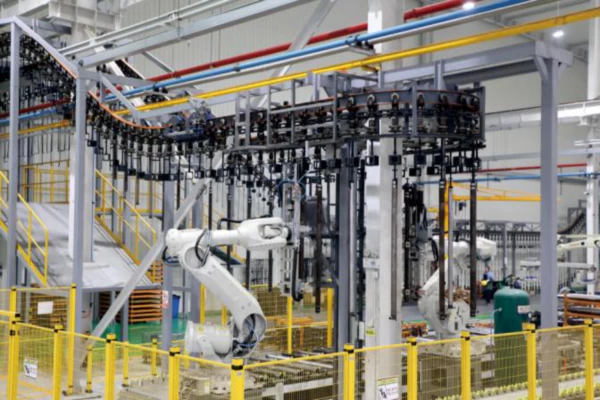
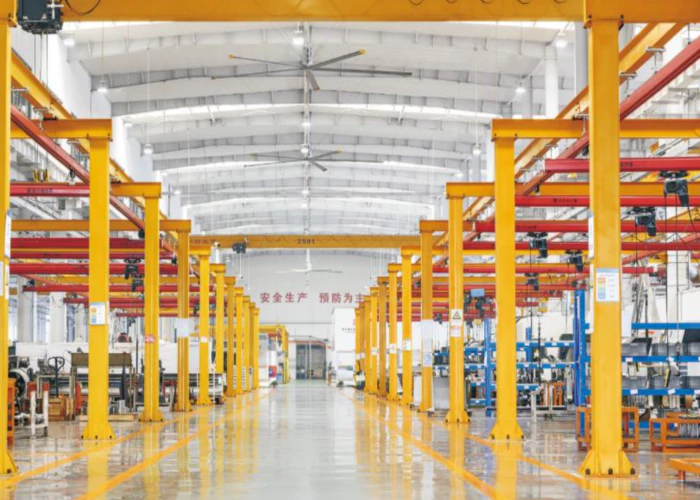
We don’t just talk about quality; we digitized our entire production floor so you can verify it. Walk up to our welding robots and inspect the nickel plating tanks yourself.
Step inside our facility right now:
The “Wet & Heavy” Challenge: Engineering the Solution
Let’s get under the hood. The Loader Log Grapple Cylinder is a Double-Acting Piston design, but the devil is in the details. In a typical lumber yard, the cylinder is exposed to 100% humidity and constant splashing. Standard hard chrome plating is hard (good for wear), but it has microscopic cracks. Water molecules are small enough to get through those cracks, rust the steel rod underneath, and then the plating flakes off like old paint. Once the rod is rough, it acts like a file on your wiper seal.
To fix this, we implement a Penyaduran Nikel-Krom process. We apply a base layer of nickel (which is chemically inert and seals the steel), followed by a hard chrome layer for abrasion resistance. But the structure matters too. We use 42CrMo Steel for the barrel and rod. This alloy has a much higher yield strength than standard ST52. This is critical because when a loader hits a bump while carrying 5 tons of logs, the shock load tries to “balloon” the cylinder. If the barrel flexes, the oil bypasses the piston seal, and you lose clamping force. Finally, the Pilot Operated Check Valve (Oil Control Valve) is welded directly to the port. It mechanically locks the fluid in the piston chamber until pilot pressure is applied to release it.
| Ciri | Standard Cylinder Spec | Our Forestry Heavy-Duty Spec |
|---|---|---|
| Bahan Tong | 1020 / ST52 Steel | 42CrMo (High Tensile) |
| Penyaduran Rod | Krom Tunggal (20μm) | Nickel + Hard Chrome (Ni-Cr) |
| Injap Keselamatan | External Block (Optional) | Integrated Pilot Check Valve |
| Meterai | NBR Piawai | Mud-Resistant PU + Scraper |
| Clamping Pressure | 210 Bar | 350 Bar (Peak 400 Bar) |
Di Mana Silinder Ini Berada?
The most obvious home for this cylinder is on the Wheel Loader Log Grapple attachment. You see these machines working furiously in port terminals, sorting yards, and sawmills. But the application environment varies wildly. In a sawmill yard, the ground is flat, but the cycle times are fast—open, close, lift, drop—hundreds of times a shift. This generates heat.
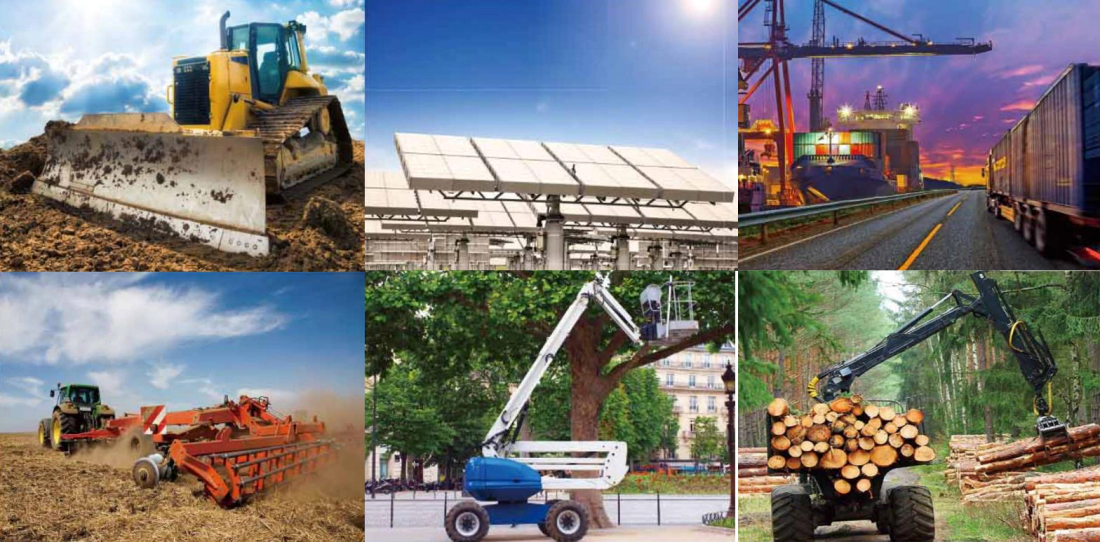
In the forest landing (the “bush”), the terrain is rough. When the loader drives over a stump with a full load, the grapple bounces. This dynamic shock load is transmitted directly to the cylinder rod. If the rod material is weak, it bends. If the valve is weak, it pops open. We also see these cylinders used in Pipe Handling Grapples in the oil and gas industry, where the “anti-slip” safety feature is even more critical due to the smooth surface of the pipes. The nickel plating is a huge bonus here, too, as drilling mud can be incredibly corrosive.
Case Study: The Coastal Timber Challenge
Pelanggan: “Pacific Rim Forestry” – A large export terminal in British Columbia, Canada.
Sakit Kepala: They were running CAT 980 loaders with large grapples. The operation is right on the ocean—salt spray is constant. Their OEM cylinders were pitting within 4 months, and the seals were failing shortly after. The biggest issue was safety: they had two incidents where logs slipped out of the grapple because the check valves were leaking internally.
Penyelesaian Kami: Kami merekayasa tersuai 42CrMo Nickel-Plated Cylinder.
- ✅ Plating: Applied a 45-micron Nickel-Chrome layer to the rods.
- ✅ Valve: Integrated a heavy-duty Sun Hydraulics counterbalance valve directly into the cylinder cap.
- ✅ Seal: Switched to an “Ice-Scraper” wiper seal to handle the frozen mud in winter.
Hasilnya: The retrofit cylinders have been running for 18 months with zero failures. The maintenance manager, Dave, told us: “The rods are still shiny. I haven’t touched a seal kit in over a year. That never happens.”
Voice from the Yard
“We handle heavy hardwood. The clamping force on these cylinders is legit. Once you grab the load, it doesn’t move. The check valve works perfectly.”
— Mike T., Loader Operator, Oregon
“I was skeptical about the nickel plating price difference, but looking at the maintenance logs, we saved money. No rust means no leaks.”
— Lars J., Fleet Manager, Sweden
“Fast shipping and they got the pin size right. Most aftermarket guys mess up the mounting dimensions, but this dropped right in.”
— Kenji R., Workshop Lead, New Zealand
Analisis Strategik (SWOT)
Kekuatan
- Superior corrosion resistance (Nickel-Chrome).
- Integrated safety valves (Zero Drift).
- High-yield-strength 42CrMo material.
- Custom fit for any loader brand.
Kelemahan
- Kos yang lebih tinggi daripada silinder keluli lembut generik.
- Slightly longer lead time for plating process.
- Heavier weight due to reinforced walls.
Peluang
- Retrofitting older loaders with safer hydraulics.
- Shift towards Bio-degradable oils (requires Viton seals).
- Expansion into saltwater marine applications.
Ancaman
- Cheap, unsafe knockoffs without check valves.
- Fluctuating alloy steel and nickel prices.
- Supply chain delays for high-quality seals.
Future Trends: The Smart Grapple?
We are keeping an eye on two major trends. First, Bio-Oil Compatibility. Environmental regulations in forests are getting stricter. If a hose blows, you can’t spray standard mineral oil everywhere. Bio-oils (like HEES) are great for the earth, but they dissolve standard Nitrile seals. We are now standardizing on FKM (Viton) or HPU seals for all our forestry exports. Second, “Smart” Cylinders. We are prototyping cylinders with integrated pressure sensors that tell the operator exactly how much clamping force is being applied, preventing crushing damage to high-value timber.
Custom Built for Your Loader
Here is the reality: Grapples get modified. Mounting ears get bent, pins get swapped. Often, an OEM replacement won’t fit your specific setup. That’s where we shine. We don’t just pull boxes off a shelf. You send us a sketch, or the old cylinder, and we build a new one that fits *your* reality. Need a thicker rod? Done. Need the ports moved 90 degrees to avoid a hose pinch point? Easy.
Soalan Lazim (FAQ)
Why is my loader log grapple cylinder losing pressure and dropping logs unexpectedly?
In our experience, this nightmare scenario—often called “phantom drift”—is usually caused by a failed internal seal or, more critically, a malfunction in the holding valve. If your cylinder doesn’t have a high-quality Pilot Operated Check Valve integrated into the port, oil bleeds back to the tank, and the clamp loosens. You need a cylinder with a mechanical lock on the fluid.
Is nickel plating really better than hard chrome for forestry hydraulic cylinders?
Absolutely. Standard hard chrome is micro-porous. In wet, sap-heavy forestry environments, moisture penetrates the chrome and rusts the steel underneath, causing the plating to flake off. Nickel is chemically inert and creates a sealed barrier. We’ve seen nickel-plated rods last 3-4 times longer in coastal logging yards compared to standard chrome.
How much does a custom heavy-duty grapple cylinder cost for a Komatsu or Volvo loader?
It depends on the tonnage and the specific mounting dimensions, but generally, a high-spec 42CrMo cylinder with nickel plating and a safety valve will run between $400 and $1,200. While that’s higher than a generic agricultural cylinder, it is significantly cheaper than the downtime caused by a dropped load or a snapped rod.
Can you manufacture a replacement cylinder if I don’t have the original part number?
We do this every day. Since ID plates often get scraped off in the woods, we just need the physical dimensions: Pin Diameter, Closed Center-to-Center length, and Stroke. A photo of the hydraulic ports helps too. We can reverse engineer it and often upgrade the seals to a modern mud-resistant profile.
What is the typical lead time for a custom-welded grapple cylinder?
We know a parked loader costs you money. For custom-welded designs using 42CrMo, we typically look at 3 to 4 weeks for production to ensure the welding stress relief and nickel plating are done right. However, for urgent breakdown situations, we have an expedited track that can ship in under 20 days.
Secure Your Load. Stop the Leaks.
Upgrade to Nickel-Plated 42CrMo cylinders and forget about rust.