Welded Construction | 27SiMn Silicon-Manganese Steel | Hard Chrome Rod | Grass-Specific Dual-Lip Wiper Seal | Full Custom Engineering Support
Professional vegetation management machinery used in orchards, municipal parks, highway maintenance programs, and rural road corridors relies on hydraulic systems to precisely position the cutting head relative to terrain contours that change continuously during operation. The brush cutter head angle adjustment cylinder performs this positioning function on every tilt-adjustable vegetation cutting machine: it receives a control signal from the operator or the machine’s automatic leveling system, converts hydraulic pressure into controlled linear force, and translates that force through a mechanical linkage into angular rotation of the cutting head that brings the cutting disc or flail rotor to the correct working angle. The geometry of this angle control determines whether the machine maintains consistent cutting height across slope transitions, whether the cutting attachment maintains safe clearance from fixed obstacles on road shoulders, and whether the operator can hold a precise angle against cutting reaction force and gravity component without continuous manual correction.
What distinguishes the brush cutter head angle adjustment cylinder’s operating environment from most hydraulic cylinder applications is its proximity to the cutting zone. The cylinder sits immediately adjacent to the rotating disc or flail rotor — the region of maximum contamination on the entire machine. Cut grass strands, plant fiber, fine dust from dried vegetation stems, and occasional woody debris fragments from shrub cutting operations accumulate continuously on the cylinder rod surface and around the rod seal assembly during every minute of cutting work. This contamination is categorically different from the mineral dust environments that most hydraulic cylinder specifications are written for, because the fibrous, strand-like nature of grass and plant debris requires a wiper seal geometry specifically designed to exclude it. A standard dust wiper selected from a general catalog will allow grass fiber accumulation at the contact line that conventional wiper designs cannot shed, and the accumulated fiber mat then acts as a distributed abrasive against the chrome rod surface on each extension-retraction cycle.
Our small double-acting piston hydraulic cylinders for brush cutter head angle adjustment are engineered for this specific operating environment. Built from 27SiMn silicon-manganese alloy steel with welded construction that eliminates the mechanical joint vulnerabilities of tie-rod designs, fitted with precision hard chrome-plated rods and grass-specific dual-lip wiper seals developed for vegetation cutting applications, these cylinders address the two failure modes most commonly responsible for premature service termination — rod surface scratching and seal wear — rather than treating vegetation contamination as an acceptable service-life constraint.
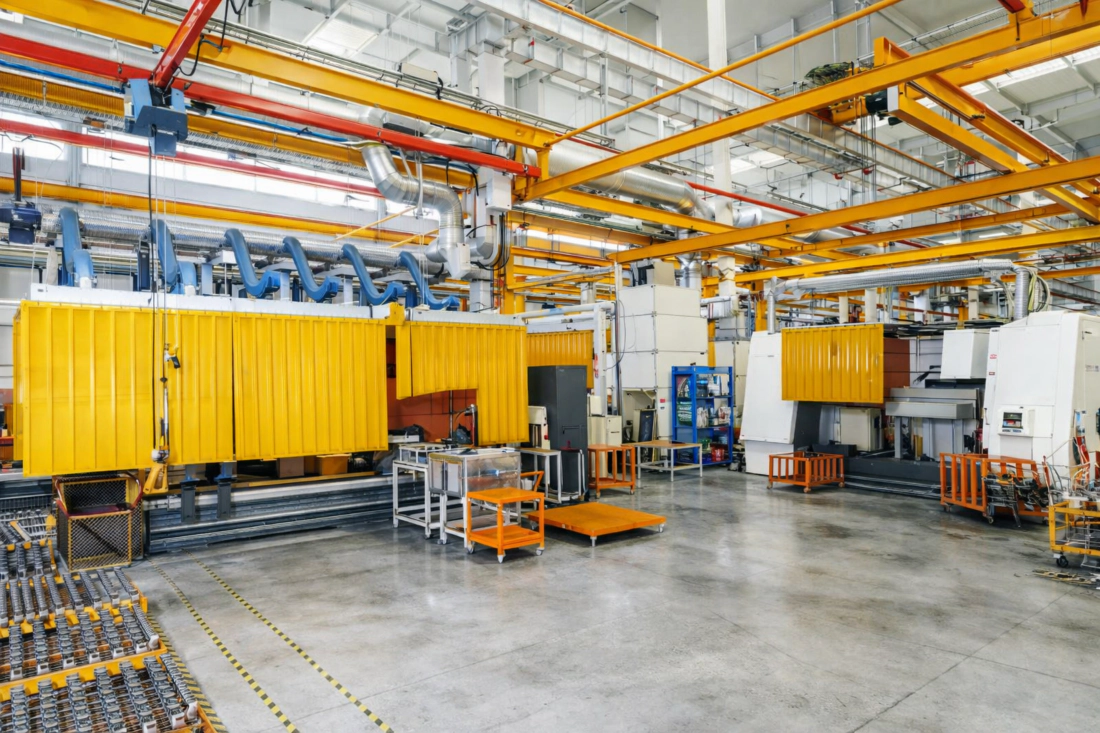
Tour Our Manufacturing Facility Virtually
We welcome horticultural equipment designers, procurement engineers, and OEM purchasing teams to explore our production facility from anywhere in the world. View our CNC honing lines, small-bore cylinder assembly stations, and chrome plating operations for compact hydraulic cylinder production — all without leaving your office.
VR 공장 투어에 참여하세요
Inquire Now — Send Your Cylinder Specifications
How the Angle Adjustment Cylinder Controls Cutting Head Position
The double-acting piston cylinder generates controlled hydraulic force in both the forward-tilt and back-tilt directions, giving the operator or the machine’s automatic control system full authority over cutting head position throughout the working angular range. Unlike a single-acting design that relies on spring return or gravity for one direction of movement, our double-acting configuration maintains positive hydraulic control in both tilt directions. This bidirectionality is critical in continuous terrain-following operation: the cutting head angle changes constantly as the machine traverses slope transitions, dips, and camber changes, and both directions of adjustment must respond smoothly and immediately to valve commands. When the cutting head must hold a specific angle against cutting reaction force or gravitational loading without continuous proportional valve pressure, only a double-acting cylinder with competent seal integrity can maintain position without drift.
Welded cylinder construction is the structural choice that defines long-term reliability for brush cutter angle adjustment. At the bore diameters typical of this application — 40 to 80 mm — a tie-rod cylinder’s end-cap assembly occupies a substantial fraction of the overall cylinder length, and the threaded joint interface between end cap and barrel is vulnerable to fretting and micro-motion under the high-frequency vibration generated by the rotating cutting head mounted directly adjacent to the cylinder. Full-penetration weld joints distribute stress uniformly around the barrel circumference, eliminate these mechanical interfaces entirely, and create a sealed, monolithic structure that does not degrade under vibration-induced micro-motion across thousands of operating hours. The welded construction also allows the cylinder to be more compact for equivalent bore and stroke compared to tie-rod designs — an important consideration in the space-constrained angle adjustment linkage of brush cutter heads.
The piston assembly incorporates dual-directional bronze guide rings that maintain rod concentricity through the full tilt stroke. Brush cutter angle adjustment cylinders rarely operate with the cylinder axis aligned with the applied load — the linkage geometry almost always applies some bending moment to the rod at operating angles. Guide rings that prevent this bending from contacting the barrel bore surface protect the bore finish and the rod seal assembly from metal-to-metal contact wear that would generate metallic particles in the hydraulic fluid. Every completed cylinder is pressure-tested to 1.5 times rated operating pressure before any seals or end fittings are installed, confirming the structural integrity of each weld joint under actual load conditions rather than relying on dimensional inspection alone.
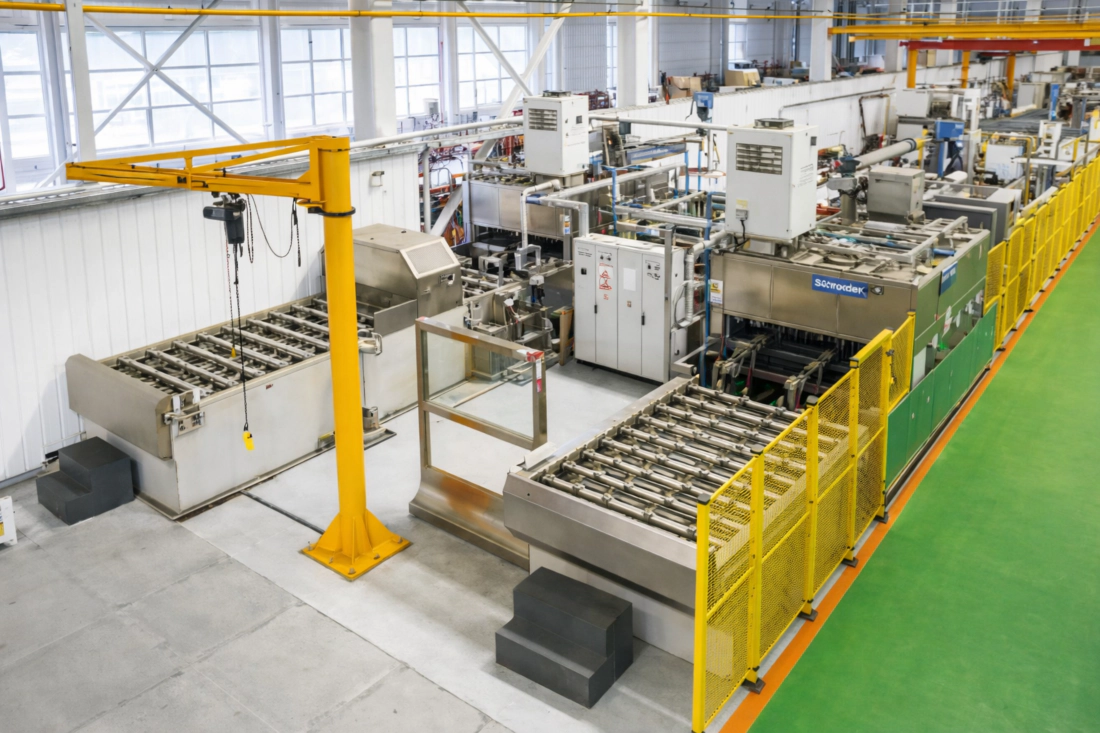
Technical Specifications — Brush Cutter Head Angle Adjustment Cylinders
The following parameters represent our standard production capability for brush cutter head angle adjustment hydraulic cylinders. All dimensions and configuration details are fully customizable through our application engineering process. The bore and stroke values reflect the range most commonly used in horticultural machinery tilt adjustment linkages; values outside this range can be accommodated on request with engineering review of the application load data.
| 매개변수 | 사양 | Engineering Notes |
|---|---|---|
| Action type | Double-acting piston | Full hydraulic authority both tilt directions |
| 건설 | Welded (full-penetration) | No end-cap joint or tie-rod vulnerabilities |
| 보어 직경 | 40 mm to 120 mm | Standard brush cutter range: 50 to 80 mm |
| 막대 직경 | 25 mm to 70 mm | Sized for combined axial and bending load |
| Stroke range | 80 mm to 400 mm | Determined by head tilt angle and linkage geometry |
| Operating pressure | Up to 25 MPa | Test pressure: 1.5x rated, 100% of units |
| Cylinder material | 27SiMn silicon-manganese alloy steel | Tensile strength 980 to 1,080 MPa (Q+T) |
| Rod material | 27SiMn, induction-hardened | Surface hardness HRC 52 to 58 |
| Chrome plating | Hard chrome, micro-crack type | Thickness 0.020 to 0.040 mm; HV 850 to 1,000 |
| Rod surface finish | Ra 0.2 to 0.4 µm | Ground and polished before chrome plating |
| Wiper seal | Grass-specific dual-lip wiper (standard) | Custom geometry for fibrous vegetation debris |
| Rod seal | Polyurethane (standard); FKM optional | PU for abrasion resistance in dusty conditions |
| 온도 범위 | -15 degrees C to +75 degrees C | Extended low-temp compounds available |
| Mounting options | Clevis, trunnion, flange, rod eye | Custom geometry from customer CAD data |
27SiMn Silicon-Manganese Steel — Compact Strength for Small-Bore Horticultural Cylinder Production
27SiMn silicon-manganese alloy steel occupies a well-defined position in the hydraulic cylinder material selection hierarchy for small-bore, high-strength applications in agricultural and horticultural machinery. The silicon content — 1.10 to 1.40 percent by weight — provides solid-solution strengthening that raises yield strength to 835 MPa and tensile strength to 980 to 1,080 MPa in quenched and tempered condition, without the elevated carbon content that would compromise weldability. The manganese addition — 1.20 to 1.60 percent — contributes the hardenability needed to achieve consistent mechanical properties across the wall sections of 40 to 80 mm bore cylinders. For brush cutter angle adjustment applications, where bore sizes remain within this small-bore range, 27SiMn delivers mechanical performance fully adequate for the application’s pressure and load requirements at a material cost approximately 15 to 20 percent lower than 42CrMo — a significant factor when the cylinder is a cost-sensitive component within a competitively priced horticultural machine.
The weldability of 27SiMn is a practical production advantage that reinforces its suitability for our welded cylinder construction method. Its carbon equivalent value supports reliable full-penetration welding using standard procedures with moderate pre-heat requirements, producing consistent weld joint quality across production batches. The more demanding pre-heat schedules and post-weld heat treatment requirements of higher chromium-molybdenum alloys do not apply to 27SiMn at the wall thicknesses used in brush cutter cylinder production, allowing production efficiency that is directly reflected in competitive pricing for the small-bore custom configurations this application requires. Our welding processes for 27SiMn cylinder construction are qualified to meet the strength and quality requirements that horticultural equipment manufacturers specify in their supplier documentation requirements.
Induction hardening of 27SiMn piston rods achieves surface hardness of HRC 52 to 58 at case depths compatible with the chrome plating process, while the core material retains toughness sufficient to absorb impact loads from brush cutter obstruction events. Brush cutters regularly encounter sudden obstructions when the cutting head contacts buried roots, fence posts concealed in dense vegetation, or embedded stones in the cutting path — each generating a shock load transmitted through the angle adjustment linkage to the cylinder rod and barrel mounting points. A fully hardened rod would be vulnerable to fracture under these events; 27SiMn’s core toughness absorbs the shock energy and prevents brittle fracture while the hardened surface maintains the rod geometry required for chrome plating adhesion and seal compatibility over the full service life of the cylinder.
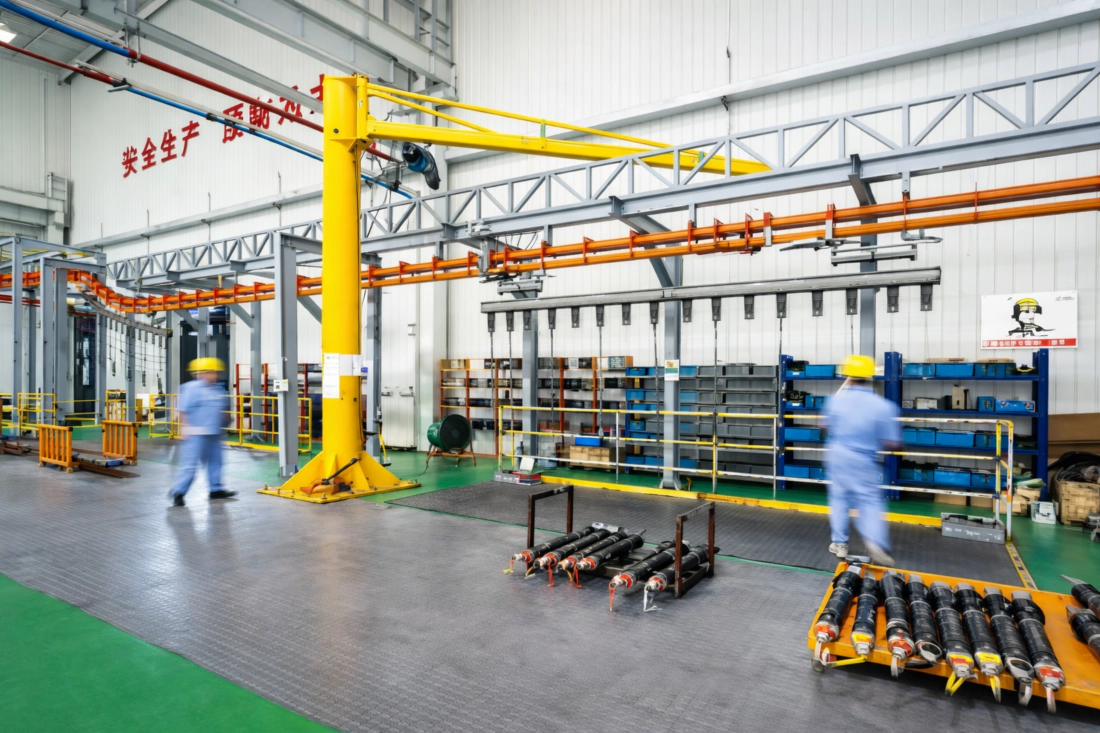
Hard Chrome Rod Plating and the Grass-Specific Wiper Seal System
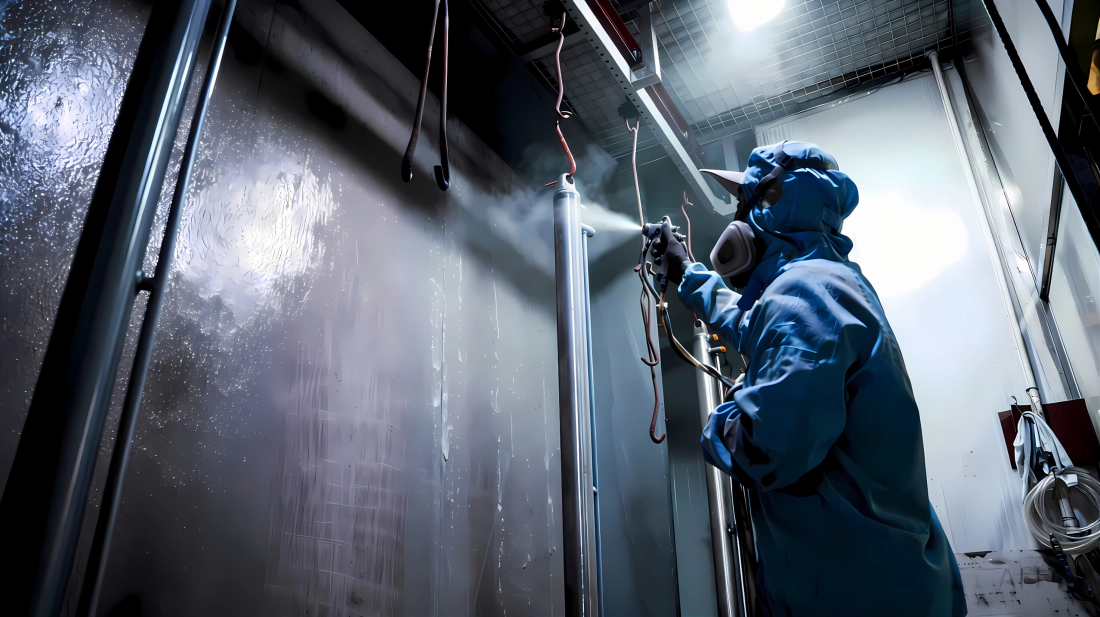
Applying consistent hard chrome plating to the small-diameter piston rods used in brush cutter angle adjustment cylinders requires process controls that differ meaningfully from large-bore cylinder rod production. At rod diameters in the 25 to 50 mm range, the geometric relationship between the plating bath anode configuration and the rod surface creates current density distributions that produce thickness non-uniformity if conventional large-bore plating geometry is used without modification. Our plating facility uses cathode shielding configurations specifically designed for the 25 to 50 mm diameter range, redistributing current density to maintain chrome thickness uniformity within plus or minus 0.005 mm across the full rod length. This dimensional consistency matters for seal function: a rod with chrome thickness variation outside this tolerance will present surface geometry variation that affects the hydrodynamic film at the wiper and rod seal contact zones, leading to uneven seal wear and earlier-than-expected bypass leakage. Chrome thickness of 0.020 to 0.040 mm, hardness HV 850 to 1,000, provides the corrosion protection and wear surface that vegetation-environment cylinder service requires.
The grass-specific dual-lip wiper seal is the component that most directly determines service life duration in brush cutter angle adjustment cylinders. Conventional single-lip wiper seals manage mineral dust and liquid contamination acceptably but are not designed for the fibrous, strand-like material generated by vegetation cutting. In field operation, grass fibers accumulate at the wiper contact line in a progressively thickening matted layer. As the rod extends and retracts through each tilt cycle, this accumulated fiber mat is dragged along the chrome rod surface by the wiper lip contact force, and because grass fibers contain abrasive silica particles absorbed from soil contact during plant growth, the dragging action progressively scores the chrome surface. The scratches deepen with continued operation, eventually creating surface roughness that breaks down the hydrodynamic film the rod seal depends on, causing accelerated rod seal wear and hydraulic fluid bypass leakage that requires machine withdrawal for cylinder service. This failure sequence — fiber accumulation, rod scratching, seal bypass — is the dominant service life limiter for standard cylinders in brush cutter applications across all regions and machine types.
Our dual-lip wiper geometry addresses this mechanism at its source. The outer lip is shaped with a wider contact angle and a lateral relief geometry that allows fibrous material to shed from the contact zone during rod movement rather than accumulating at the contact line. The inner lip provides secondary exclusion for fine abrasive particles that pass through the outer contact zone. Between the two lips, a retention cavity carries a pre-packed grease charge that lubricates both lip surfaces and provides additional contamination barrier function against the fine dust fraction that accompanies grass-cutting debris. The combination of this wiper geometry with the micro-crack chrome rod surface — which retains a lubricating film in the micro-crack network at the wiper contact point — eliminates the root cause of rod scratching in vegetation cutting environments. Customers who have switched from standard wiper seals to our grass-specific design on equivalent cylinders in equivalent operating conditions consistently report service interval extension of two to three times compared to their previous experience.
Application Scenarios — Where Brush Cutter Angle Adjustment Cylinders Perform Critical Work
Tilt-adjustable brush cutters operate across a broader range of horticultural and vegetation management contexts than any single machine design can address without precise angle control. The cylinder enabling that angle control appears in machines ranging from compact tractor-mounted inter-row mowers in narrow orchard rows to large highway shoulder maintenance vehicles managing roadside vegetation on arterial roads. The four primary deployment scenarios below represent the operating environments where our brush cutter angle adjustment cylinders are most commonly specified — environments that span China’s diverse agricultural geography and international horticultural markets.

Orchard Terrace and Hillside Management
Hillside orchard operations in Yunnan, Sichuan, Guizhou, and Fujian provinces require brush cutters that can continuously adjust cutting head angle to follow terrace slopes and cross-slope gradients as the tractor traverses the working row. The angle adjustment cylinder operates under near-continuous cyclic demand at relatively low force levels but high cycle frequency, and seal durability across thousands of daily cycles determines whether the machine completes the full inter-row pass without developing position drift from seal bypass. Our cylinders in this application have demonstrated multi-season seal service without replacement on Yunnan hillside orchards with dense grass understorey growth.
Municipal Park and Green Belt Maintenance
Urban park maintenance contractors in China’s major cities operate brush cutters across grass areas that combine maintained turf sections with unmaintained perimeter zones where vegetation growth is denser and includes woody stems from shrubs and ornamental ground cover. The angle adjustment cylinder must position the cutting head to clear maintained turf without scalping while also handling the transition to denser unmaintained growth — two different cutting angle requirements that the operator adjusts continuously through the working shift. Fine urban dust and lawn debris accumulation around the cylinder rod is heavy in summer cutting seasons when grass growth rates peak and cutting frequency increases.
Tea Garden and Vineyard Row Management
Tea gardens in Zhejiang, Fujian, and Anhui provinces, and vineyard operations in international export markets, use inter-row brush cutters that must maintain precise cutting height between rows of trained plants while clearing ground-cover vegetation that would otherwise compete for nutrients and moisture. The cutting head angle adjustment cylinder controls both the lateral tilt to clear the base of adjacent plant rows and the cutting height adjustment for the ground cover treatment — a combined positioning requirement that the cylinder performs in response to terrain variation and operator input across every working row.
Highway Shoulder and Canal Bank Management
Highway shoulder brush cutters and canal bank vegetation management machines operate across road networks and irrigation infrastructure corridors where vegetation growth on side slopes requires cutting at angles determined by the bank slope geometry. The angle adjustment cylinder must maintain consistent positioning as the machine traverses slope transitions — the points where the bank angle changes from horizontal to full slope — and hold position against gravity component and cutting reaction force during the full bank slope working pass. High ambient dust from road surfaces and fine material ejected from dried grass stems create the contamination profile this application’s cylinder specification must address.
Engineering Advantages That Extend Service Life in Vegetation Management Applications
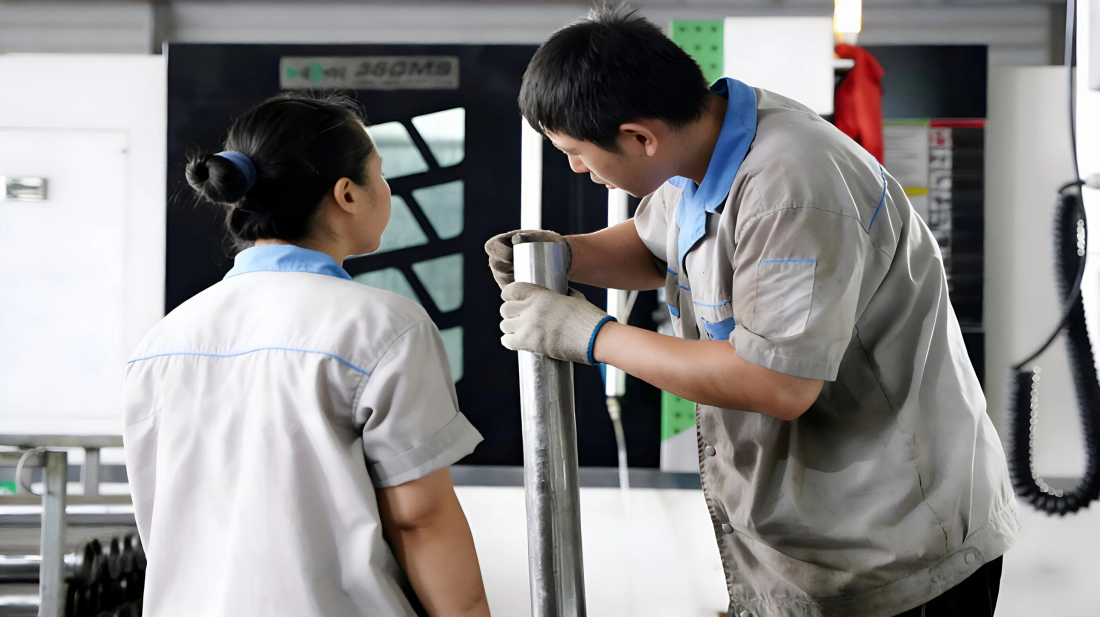
Field data from horticultural machinery operations across China’s agricultural provinces shows that brush cutter angle adjustment cylinders equipped with standard wiper seals and conventional chrome rods typically require seal replacement within four to six months of operation in continuous orchard and tea garden work — periods during which the machine may accumulate 800 to 1,200 operating hours. Our cylinders fitted with grass-specific dual-lip wipers and micro-crack chrome rods have demonstrated seal replacement intervals of fourteen months or longer in equivalent operating conditions — a two-to-three-fold service interval improvement that reduces maintenance program costs, eliminates the machine downtime associated with seal replacement scheduling, and allows operators to complete full growing-season maintenance programs without mid-season service interruptions. For horticultural contractors operating on fixed maintenance contracts, unplanned machine downtime from seal failure has direct financial consequences; extended seal intervals directly improve operational reliability and contract margin.
The compact rod diameter used in brush cutter angle adjustment cylinders — determined by the linkage geometry’s packaging constraints — is maintained within safe structural limits through careful analysis of the combined axial and bending loads the rod experiences at each position within the tilt range. Angle adjustment cylinders do not experience pure axial loading in typical brush cutter linkage geometries; the force applied through the linkage pivot points includes a bending component that varies with tilt angle and cutting head load. Our rod sizing procedure accounts for this bending component using the actual linkage geometry the customer provides, ensuring that the rod diameter maintains adequate safety margin against yield under the maximum combined loading the application generates. This analysis-based sizing prevents both the over-engineering that would make the cylinder too large for the linkage packaging constraints and the under-sizing that would allow progressive rod deflection and eventual permanent deformation.
| 특징 | Our Cylinders | Standard Catalog Cylinders |
|---|---|---|
| Wiper seal | Grass-specific dual-lip (custom geometry) | Single-lip dust wiper (general catalog) |
| Rod seal | Polyurethane — abrasion resistant | 표준 NBR |
| Chrome type | Micro-crack, uniform thickness (±0.005 mm) | Conventional chrome, batch-verified only |
| Rod sizing | Combined axial and bending load analysis | Axial load only |
| 건설 | Full-penetration welded, UT + pressure tested | Tie-rod or threaded end-cap |
| Typical seal interval | 14+ months in continuous operation | 4 to 6 months in vegetation environments |
Custom Manufacturing and Engineering Support — From Horticultural Machine Brief to Production Cylinder
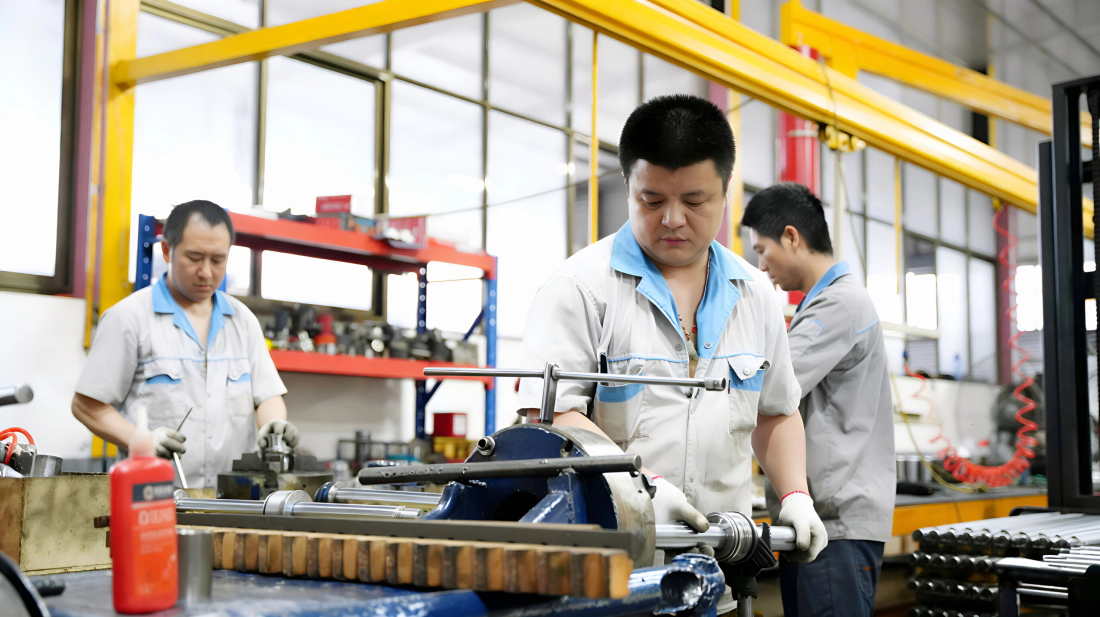
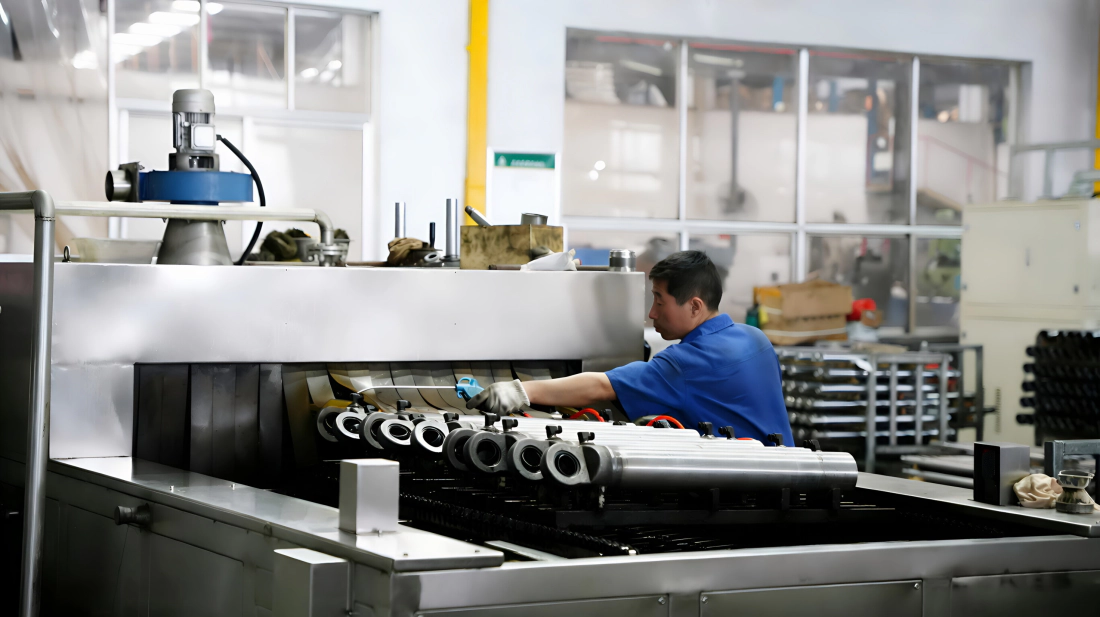
Our manufacturing facility in China operates a dedicated small-bore cylinder production line with CNC deep-hole boring equipment calibrated for bore diameters starting at 40 mm, precision honing machines for bore surface preparation, and chrome plating systems equipped with small-rod-specific cathode shielding geometries for consistent plating on 25 to 70 mm diameter rods. Production capability covers bore 40 to 120 mm, stroke 80 to 600 mm, and operating pressure to 25 MPa for brush cutter angle adjustment cylinder configurations. Engineering documentation provided with every order includes material certifications for 27SiMn stock, dimensional inspection records with bore concentricity and surface finish measurements, chrome plating thickness records with measurement positions along the full rod length, and pressure test certificates — complete documentation supporting equipment manufacturers’ quality assurance records and export compliance requirements. Learn more about our engineering team and manufacturing history at our About Us page.
Horticultural equipment manufacturers developing new brush cutter platforms or updating existing models are encouraged to engage our engineering team during the head mechanism design phase, before the angle adjustment linkage geometry is fixed. Early collaboration allows the cylinder bore, stroke, and mounting geometry to be optimized alongside the linkage design rather than requiring either component to adapt to constraints imposed by the other after both are developed. Our engineering team has experience with the kinematic requirements of four-bar linkage and slider-crank angle adjustment mechanisms used in brush cutter head designs, and provides cylinder force and stroke calculations from linkage geometry inputs — a service that replaces the iterative trial-and-error that machine builders without in-house hydraulic engineering resources often rely on for cylinder selection in new mechanisms.
The grass-specific dual-lip wiper seal used in our standard brush cutter cylinder specification is not available from general hydraulic component distributors — it is a custom-developed seal geometry produced by our specialized seal manufacturing partner to our application engineering requirements. Customers sourcing replacement seals for their field fleet can obtain them through our service parts supply channel, which maintains stock sized to each cylinder’s specific rod diameter and gland geometry. We supply complete seal kits dimensioned to each configuration, eliminating the compatibility uncertainty that arises when maintenance technicians substitute general catalog seals for application-specific components. Field seal replacement instructions are available on request for equipment manufacturers who service their own fleet.
Customer Success Stories — Brush Cutter Angle Adjustment Cylinders in the Field
Horticultural Equipment Manufacturer, Bordeaux Wine Region
A French manufacturer of tractor-mounted horticultural machinery developed a new tilt-adjustable inter-row brush cutter for the Bordeaux hillside vineyard market. Their previous cylinder supplier’s standard units had experienced rod scratching and seal leakage within the first operating season — attributed to fine vineyard soil dust combined with vine shoot fiber ejected by the cutting head. Our engineering team reviewed the linkage geometry, specified a 50 mm bore, 160 mm stroke cylinder with dual-lip grass wiper and micro-crack chrome rod, and delivered prototype units in 26 working days. The prototypes completed a full two-year field evaluation across four vineyard installations without seal replacement or rod service. The manufacturer subsequently specified our cylinders as standard on their current production model and two subsequent machine variants in the range.
“Two full years in Bordeaux vineyard conditions — fine soil dust, vine shoot fiber, uneven terrain — without a single seal replacement. Our previous cylinders lasted less than one season.”
— Product Engineering Manager, Horticultural Equipment Manufacturer, France
Municipal Landscaping Contractor, Zhejiang Province
A landscaping contractor in Zhejiang Province manages urban park maintenance and roadside green belt cutting across the Yangtze River Delta region, operating a brush cutter fleet of 14 vehicles through summer cutting seasons with dense grass growth, high humidity, and fine urban road dust. Previous cylinder seal failures at four-to-six-month intervals were causing mid-season machine withdrawals that disrupted contracted maintenance schedules and required additional labor to complete delayed work. Switching to our cylinders with grass-specific dual-lip wipers and polyurethane rod seals extended the fleet-wide seal replacement interval to fourteen months — allowing complete summer and autumn cutting seasons without planned cylinder service. The contractor has subsequently standardized our cylinders across all vehicles added to the fleet since the transition.
“Fourteen months without a seal change across the full fleet — two complete cutting seasons. Our contracts depend on machines being available when scheduled. These cylinders have made that possible.”
— Operations Manager, Municipal Landscaping Contractor, Zhejiang Province, China
Orchard Machinery Manufacturer — Hillside Apple and Pear Growing Regions
A South Korean agricultural machinery manufacturer developing a hillside orchard brush cutter for apple and pear growing regions required custom cylinder dimensions — a bore and stroke combination not available from any standard catalog source. Our engineering team responded with a dimensional proposal and preliminary drawing within three working days of receiving the linkage geometry data. The custom cylinder — 63 mm bore, 200 mm stroke, with a non-standard port position required by the head mechanism’s hydraulic routing and a specific clevis geometry matching the existing boom arm mounting interface — was prototyped and shipped in 28 working days. The manufacturer completed a full field evaluation season on test machines and subsequently placed production orders covering their first two model years of production volume.
“Non-standard bore, stroke, and port position — all in 28 days with complete dimensional drawings and material certs included. Engineering response was fast and accurate. These are now in our production specification.”
— Purchasing Manager, Agricultural Machinery Manufacturer, South Korea
자주 묻는 질문
+What type of hydraulic cylinder works best for brush cutter head angle adjustment on horticultural machinery used in Chinese orchard and tea garden environments where grass and plant fiber contamination is heavy?
A small double-acting piston cylinder with welded construction is the recommended configuration for brush cutter head angle adjustment in any environment where vegetation debris is present. The double-acting design provides full hydraulic control in both tilt directions — essential for holding a specific angle against cutting reaction force without continuous valve pressure. For orchard and tea garden environments specifically, the critical differentiator is the wiper seal selection: a grass-specific dual-lip wiper geometry that allows fibrous debris to shed laterally during rod movement — rather than accumulating at the contact line as conventional single-lip wipers do — combined with a micro-crack hard chrome rod surface that retains lubricating film at the wiper contact. This combination addresses the root cause of the rod scratching and seal wear failure mode that limits standard cylinder service life in Chinese orchard and tea garden brush cutter applications to four to six months.
+How much does a custom small-bore double-acting hydraulic cylinder for brush cutter head angle adjustment typically cost from a manufacturer in China, and what factors most affect the quoted price?
Custom pricing for brush cutter angle adjustment hydraulic cylinders depends primarily on bore diameter, rod diameter, stroke length, and order quantity. For typical configurations in the 50 to 80 mm bore range with 27SiMn construction, hard chrome plating, and grass-specific dual-lip wiper seals, production-volume pricing (50 or more units per batch) from Chinese manufacturers is substantially more competitive than equivalent cylinders from European or North American suppliers. Factors that add cost beyond the base configuration include non-standard port positioning, custom mounting geometry that requires special tooling, extended chrome plating inspection requirements, and expedited lead time requests. Prototype pricing for engineering sample quantities (one to five units) reflects the setup costs that are amortized across larger production runs. We recommend submitting your specific bore, stroke, and application load data to receive an accurate quotation, as configuration variables make published price ranges unreliable for project budgeting.
+Which hydraulic cylinder rod seal material performs better in brush cutter angle adjustment applications — polyurethane or standard NBR — and is the material upgrade cost worth it for horticultural machinery operators?
Polyurethane (PU) rod seals significantly outperform standard nitrile rubber (NBR) in brush cutter angle adjustment cylinders operating in vegetation debris environments. The performance difference comes from polyurethane’s substantially higher abrasion resistance against the fine abrasive particles that inevitably reach the rod seal contact zone after passing through the wiper — even a well-designed wiper seal does not provide absolute exclusion. A polyurethane rod seal maintains its lip geometry and contact force against the chrome rod surface through many more abrasive contact cycles than NBR before the lip wears enough to reduce its sealing effectiveness. For horticultural machinery operators running continuous orchard or park maintenance programs, the seal material upgrade cost — typically a small percentage of the total cylinder cost — is recovered within the first avoided mid-season seal replacement event, considering both the parts cost and the labor and machine downtime costs associated with unscheduled cylinder service. For machines operating fewer than 200 hours per year, the performance difference is less critical and NBR may be adequate.
+Where can I find a reliable hydraulic cylinder supplier in China with custom small-bore engineering capability and grass-specific wiper seals for brush cutter head angle adjustment on horticultural machinery?
China has a well-developed hydraulic cylinder manufacturing sector, but manufacturers with application-specific engineering capability for small-bore custom cylinders — including the specialized wiper seal geometry required for vegetation cutting environments — are a subset of the broader supplier base. Key indicators of genuine application engineering capability include: the supplier’s willingness to discuss failure modes and specify from load data rather than simply quoting from bore-and-stroke dimensions; the availability of grass-specific or vegetation-cutting wiper seals as a documented product option; and the provision of complete material certifications, dimensional inspection records, and chrome plating thickness measurements as standard documentation. Our facility, located in China, ships custom brush cutter angle adjustment cylinders to horticultural equipment manufacturers across more than 40 countries and maintains engineering documentation standards compatible with CE-marked equipment programs and international OEM quality requirements. Prototype lead times of 25 to 35 working days and production lead times of 30 to 50 working days apply to most custom configurations.
+When should the wiper seal and rod seals be replaced on a hydraulic cylinder used for brush cutter head angle adjustment, and what field signs indicate seal wear is approaching the end of service life before outright failure occurs?
Early warning signs that brush cutter angle adjustment cylinder seals are approaching end of service life include: visible hydraulic fluid film on the chrome rod surface beyond a very thin lubricating layer — indicating rod seal bypass has begun rather than normal surface film; a visible debris ring accumulating on the rod at the wiper seal exit point that cannot be wiped off with the hand — indicating the wiper lip is no longer making effective contact across its full circumference; and reduced cutting head position holding accuracy when the proportional valve is closed and load is applied — indicating both bypass past the rod seal and reduced position retention. Our cylinders with grass-specific dual-lip wipers and polyurethane rod seals have demonstrated intervals of fourteen months or longer before these signs appear in continuous orchard and park maintenance operation. Cylinders with standard wiper seals in equivalent conditions typically show these signs within four to six months. Maintaining hydraulic fluid cleanliness at ISO cleanliness class 17/15/12 or better extends seal life regardless of seal compound specification.
+How does a grass-specific dual-lip wiper seal prevent the rod surface scratching that causes premature failure in standard hydraulic cylinders installed on brush cutter head angle adjustment linkages?
Rod scratching in brush cutter cylinders occurs through a specific mechanism: grass fibers accumulate against the conventional single-lip wiper contact line in a matted layer that the wiper cannot shed during rod movement. Because grass fibers absorb fine silica particles from soil contact during plant growth, this accumulated fiber mat acts as a distributed abrasive pad dragged along the chrome rod surface on each extension-retraction cycle. The scratches deepen progressively and eventually create surface roughness that breaks down the hydrodynamic film the rod seal depends on. A grass-specific dual-lip wiper prevents accumulation at the contact line through two design features: a wider outer lip contact angle with lateral relief geometry that allows fibrous material to shed sideways during rod movement rather than bunching at the contact; and an inner secondary lip that manages the fine particle fraction that passes through the outer contact. A grease-filled retention cavity between the two lips provides lubrication for both contact surfaces and additional barrier function. The outer lip geometry modification — not the addition of a second lip alone — is what specifically addresses the grass fiber shedding problem that conventional dual-lip designs (designed for liquid exclusion rather than fibrous debris) do not solve.
Ready to Specify Your Brush Cutter Angle Adjustment Cylinder?
Send us your linkage geometry, tilt angle range, maximum cutting head weight, and operating pressure. Our engineering team will provide a cylinder specification proposal and preliminary dimensional drawing within three working days — at no cost. We serve horticultural equipment manufacturers, municipal maintenance contractors, and agricultural machinery OEMs across China and international markets.
Full product range at hydrauliccylindersmanufacturer.com