It’s 2:00 AM, and you are deep under the city. The laser target on the guidance screen shows the TBM is drifting 15mm to the right. You try to correct it by extending the left bank of articulation cylinders, but nothing happens—or worse, the pressure holds for a second and then bleeds off. In my 18 years of crawling through the bellies of Tunnel Boring Machines, from soft-soil EPBs to hard-rock Grippers, I’ve learned one thing: the guidance cylinder (or articulation cylinder) is the pilot’s steering wheel. If it’s sloppy, you’re driving blind.
Most people focus on the massive thrust cylinders that push the machine forward, but the guidance cylinders are the ones doing the finesse work. They sit between the front shield and the rear/middle shield, constantly adjusting the angle to negotiate curves. The problem? They live in a cloud of “rock flour”—that ultra-fine, abrasive dust that acts like a lapping compound on hydraulic seals. We’ve seen OEM cylinders fail in weeks because the wiper seals couldn’t handle the grit. That’s why we engineered our cylinders with a focus on Alloy Steel construction and Precision Servo Control capabilities. It’s not just about pushing; it’s about holding a position within a millimeter while the whole machine vibrates like a drum.
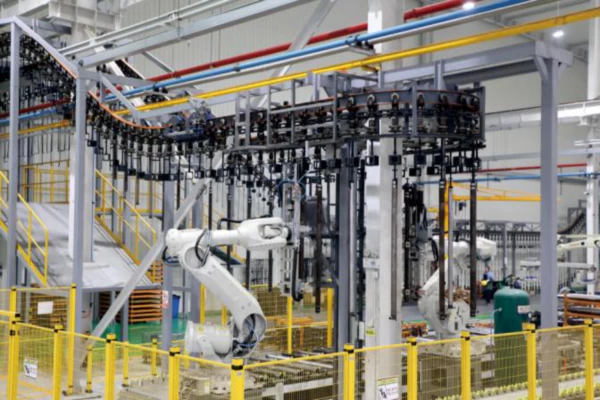
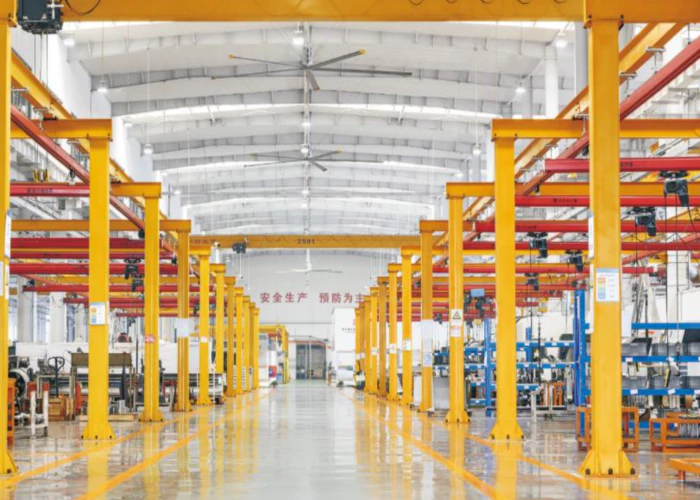
👀 Walk The Production Line
We don’t just talk about micron-level tolerances; we want you to see the machinery that achieves them. We’ve opened up a Virtual Reality tour of our factory. Check out the honing machines and the clean-room assembly area where we build these guidance systems.
The “Internal Leakage” Enemy
Here is the kicker with steering cylinders: they have to be stiff. When you set an articulation angle, the hydraulic fluid must act like a solid steel bar. If you have even a tiny amount of internal leakage across the piston seal, the front shield will slowly “drift” back to center (or worse, off-center) due to the reaction forces from the cutting face.
We solved this by using a Zero-Leakage sealing arrangement derived from servo-hydraulic applications. Instead of standard O-rings or simple piston seals, we use low-friction, glass-filled PTFE slide rings combined with an energizer. This allows for smooth “stick-slip” free movement when you need to make tiny adjustments (we’re talking 0.5mm corrections), but absolute holding power when static. Combined with a barrel made from 27SiMn or 42CrMo alloy steel, the cylinder doesn’t “balloon” under the massive pressure spikes, keeping the seal energized and the steering true.
Technical Specs: Built for the Curve
Every TBM is unique, but the demands on the guidance system are universal: high pressure, high side-load, and high dirt. Below is the specification baseline for our “Precision-Guide” series. We often customize the stroke and mounting, but the core DNA remains the same.
| 특징 | Specification & Benefit |
|---|---|
| 실린더 유형 | Double-Acting Piston / Welded Alloy Steel |
| 배럴 재질 | 42CrMo or 27SiMn (High Yield Strength) |
| 봉 도금 | Multi-layer Chrome (>40μm) or Ceramic Coating |
| 먼지 보호 | Aggressive “Ice-Scraper” style Wiper Seals |
| 작동 압력 | Rated 350 Bar / Peak 420 Bar |
| 센서 통합 | Internal MTS/Balluff Linear Transducer Ready |
| 내부 누출 | Zero-Leak Design (Static holding capability) |
Where Precision Meets the Rock
These cylinders are installed in the Articulation Joint. In a Shielded TBM, the machine isn’t one long tube; it’s usually two sections (Front Shield and Gripper/Tail Shield) connected by these cylinders. The guidance cylinders push against the rear section to angle the front section.

This setup is critical for negotiating tight curves (like 250m radius turns in metro lines) and for correcting the machine’s roll. If these cylinders fail, you can’t steer. Period. We also see similar high-precision cylinders used in the Gripper Shoes of Hard Rock TBMs, where holding the machine steady against the tunnel wall while the thrusters push is vital.
SWOT Analysis: The Alloy Steel Advantage
Let’s look at this objectively. No product is perfect for every budget, but for critical steering, you need to know the trade-offs.
강점
- 정도: Zero-drift seals ensure exact steering angles.
- 내구성: Alloy steel resists ballooning under peak pressure.
- Intelligence: Built-in sensor ports for automated control.
약점
- 비용: High-grade sensors and alloy steel increase BOM cost.
- 유지: Sensor replacement requires skilled technicians.
기회
- Retrofitting older TBMs for autonomous driving projects.
- Expansion into micro-tunneling guidance systems.
위협
- Electrical noise in tunnels is interfering with sensitive sensors.
- Supply chain delays for specialized seal compounds.
Customer Success Story: Correcting the Curve in Istanbul
We were called into a Metro Project in Istanbul about three years ago. The contractor was driving a refurbished TBM through a nasty mix of fractured rock and clay. The machine was struggling to hold the curve radius. Every time they pushed, the front shield would slip out of alignment, forcing them to stop and regrip. They were averaging 4 meters a day. It was painful to watch.
They thought it was a PLC issue. We inspected the hydraulics and found the guidance cylinders—standard aftermarket replacements—had an internal bypass. They were spongy. We supplied a full set of 14 Custom 42CrMo Articulation Cylinders with integrated Balluff sensors. We also upgraded the wiper seals to handle the rock flour. Within 48 hours of installation, the “sponginess” was gone. The autopilot system could finally lock onto the laser target. Their advance rate jumped to 12 meters a day, and they finished the drive two weeks ahead of the revised schedule.
Voice of the TBM Pilots
“Steering used to be a fight. Now, I input the angle, and the machine just goes there. The rigidity of these cylinders is noticeable.”
– Burak Y., TBM Operator, Turkey
“We usually change guidance cylinders every 2km because the seals get chewed up. We are at 5km now with the Ever Power units, and no leaks.”
– Jean-Luc P., Site Mechanic, France
“The sensor integration was plug-and-play. They matched the connector types perfectly.”
– Rajiv M., Electrical Lead, India
Trend Analysis: The Rise of Autonomous TBMs
The industry is moving away from “cowboy steering” (where the operator steers by feel) toward **Autonomous TBM Operation**. This requires hydraulic cylinders that are more than just muscles; they need to be smart. We are seeing a surge in requests for cylinders with redundant linear transducers and embedded pressure sensors. The data from these cylinders feeds into AI algorithms that adjust the steering in real-time to minimize ground settlement. If your cylinders aren’t “sensor-ready,” your machine is already obsolete.
Customization: We Reverse Engineer Perfection
Most TBMs are custom-built, which means the cylinders are too. You might have a Herrenknecht front shield with a Robbins back-end (we’ve seen some Frankenstein machines out there!). You can’t just buy these off the shelf. We specialize in taking your worn-out, leaking sample, reverse-engineering the mounting geometry, and building a new unit with upgraded materials. We keep the fitment identical but improve the guts.
자주 묻는 질문(FAQ)
Tunneling doesn’t allow for mistakes. Here are the answers to the questions we get asked by project managers and lead engineers.
Why is internal leakage fatal for a TBM guidance cylinder?
It destroys steering accuracy. If the oil bypasses the piston seal, the cylinder creeps, and the shield angle changes without the operator knowing. You end up zigzagging the tunnel, which breaks segments and ruins the alignment.
Can you retrofit guidance cylinders with linear position sensors?
Yes, we do this a lot. We can gun-drill the piston rod to accept MTS or Balluff sensors, turning a standard hydraulic cylinder into a smart servo-actuator for automated steering systems.
How do you protect the rod from rock flour and grout?
We use a multi-stage sealing system. A hardened scraper ring first, followed by a double-lip polyurethane wiper. Plus, the chrome plating is harder (HV900+) to resist the micro-scratching from the silica dust.
What is the delivery time for a custom set of articulation cylinders?
For a full ship-set (usually 12-16 units, depending on TBM diameter), we typically need 30 to 40 days. The alloy steel heat treatment takes time, and we don’t rush the welding process.
Do you ship heavy TBM parts to projects in the Middle East?
We ship globally. We have dedicated crates for heavy sea freight to ensure the polished rods don’t get damaged on the way to sites in Saudi Arabia, UAE, or Turkey.
Steer Straight. Finish Fast.
Don’t let drift delay your breakthrough. Upgrade your guidance system today.