The Backbone of Stability: Heavy-Duty Main Boom Lift Cylinders for High-Altitude Aerial Platforms
If you’ve spent as much time on a shop floor or a construction site as I have—going on 18 years now—you learn pretty quickly that gravity is an unforgiving boss. When you’re dealing with Main Boom Lifts, especially those pushing the envelope past 30 or 40 meters, the hydraulic cylinder isn’t just a muscle; it’s the structural spine of the machine. I recall back in the mid-2000s, standard cylinders were “good enough” for scissor lifts, but as architects started designing taller, more complex structures, the demand for high-altitude aerial work platforms (AWP) skyrocketed. Suddenly, “good enough” was getting people hurt. The shudder you feel in a basket when a cylinder stick-slips? That’s not just uncomfortable; it’s a sign that the hydraulic system is fighting physics and losing.
In our experience, the biggest failure point isn’t usually the seal itself, but the barrel deformation under what we call “side loading.” Most printers and catalog designers don’t realize that when a boom is fully extended at an angle, the wind load and the leverage create massive lateral forces on the rod and piston. A standard tube will ovalize—just a fraction of a millimeter—but that’s enough for oil to bypass the seal. That’s why we shifted our focus entirely to a Heavy Wall, Double-Acting Welded design using 42CrMo steel. It’s overkill for a log splitter, sure, but for a human life suspended in the air? It’s the baseline. The trick is balancing that heavy-duty rigidity with the weight limits of the chassis.
👀 Step Inside Our Precision Workshop
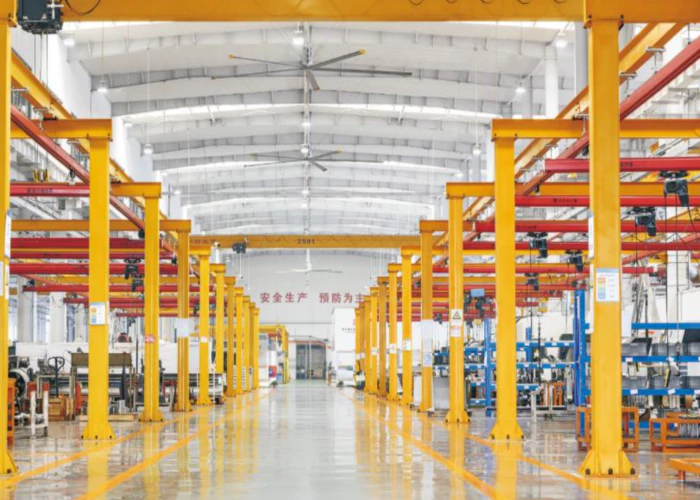
Reading about 42CrMo steel and honing tolerances is one thing, but seeing the sparks fly is another. We’ve digitized our entire production floor so you can walk through it from your office.
Take the virtual tour here: 저희 VR 팩토리에 오신 것을 환영합니다.
Why Material Science Matters: 42CrMo vs. The World
Let’s get technical for a minute, but I promise to keep it practical. The industry standard for piston rods has long been CK45 carbon steel. It’s cheap, it machines well, and it works—until it doesn’t. When you have a main boom lift cylinder fully extended, that rod acts like a giant lever. We’ve seen CK45 rods bend under high buckling loads (Euler’s column load theory, for the engineers reading this). This is why we almost exclusively recommend and utilize 42CrMo(크롬-몰리브덴)강 for these applications. It has a significantly higher yield strength and toughness. It’s the difference between a rod that snaps and a rod that might flex but brings the operator down safely.
But strength isn’t the only factor; surface finish is king. The main boom lift cylinder is exposed to everything: rain, salt spray, construction dust, and welding slag. We employ a multi-layer chrome plating process, often topped with a high-grade polish to achieve an Ra value of less than 0.2µm. Why? Because a rough rod acts like a file on your wiper seals. Once that wiper is gone, contamination gets into the cylinder, scores the heavy wall barrel, and you’re looking at a $5,000 replacement bill. Our design philosophy incorporates a “Zero-Leak” sealing system specifically configured for low-speed, high-pressure holds, ensuring the platform doesn’t drift downward while the worker is focused on their job.

Technical Specs: The Anatomy of a High-Altitude Cylinder
Case Study: Defying the North Sea Winds
Let me share a story that really highlights why customization matters. We were approached by “HighPoint Maintenance,” a specialist contractor in the UK (names changed for privacy, obviously) who maintains wind turbine blades along the coast. Their problem was terrifying: their 135-foot boom lifts were experiencing severe “judder” when the main boom was lowering. In high winds, this instability made precision work impossible and scared the daylights out of the technicians. They suspected the hydraulic valves, but we had a hunch it was the cylinder barrel ballooning.
We analyzed their failed cylinders (sourced from a generic supplier) and found that under the immense leverage of a 135-foot boom, the cylinder walls were flexing outward by 0.08mm. This broke the fluid film. We engineered a replacement solution: a Double-Acting Cylinder with a 20% thicker barrel wall and integrated a specialized “soft-stop” cushioning design. We also upgraded the rod to 42CrMo with a nickel-chrome overlay to resist the salty sea air. The result? The “judder” vanished. The platform became rock-solid even at full extension. HighPoint reported a 40% reduction in maintenance downtime over the next 18 months. That’s the kind of reliability that builds reputations.
What Our Partners Are Saying
“We used to replace our boom lift cylinders every 2 years due to seal failure. The heavy-wall units from Ever-Power have been running for 4 years now without a leak. The ROI is undeniable.”
— Carlos M., Fleet Director, Brazil Construction Corp
“As an OEM, I need consistency. Their welding quality on the cylinder base is superb. No porosity, beautiful penetration. It makes my QC job much easier.”
— J. Schmidt, Lead Engineer, German AWP Manufacturer
“The cushioning design they implemented completely stopped the ‘clunk’ we were getting at full retraction. Smooth operation makes our rental customers happy.”
— Sarah Jenkins, Procurement, Australian Rental Group
Applications: Where These Giants Work
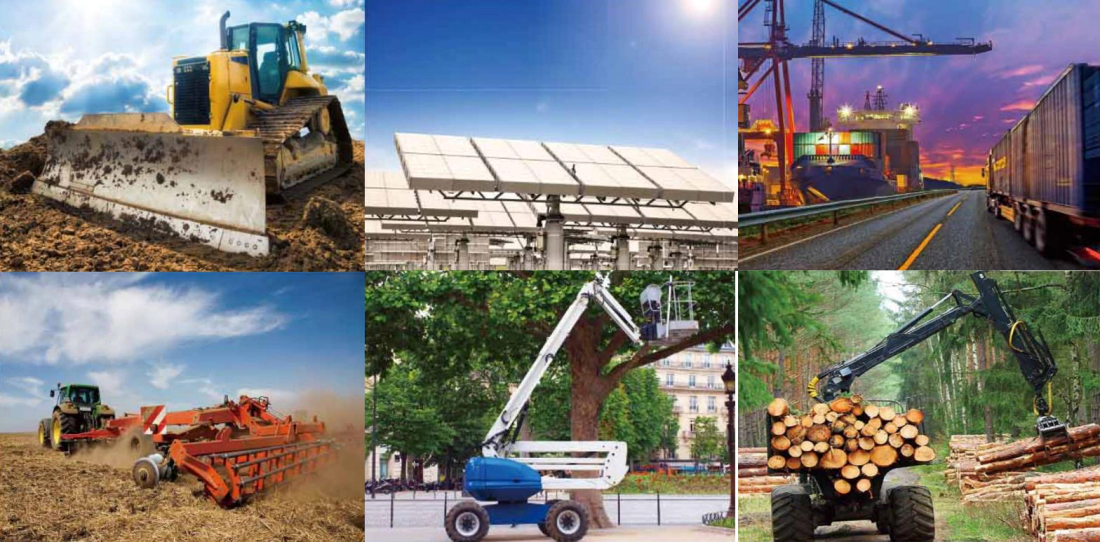
These aren’t your average garage jacks. Our main boom lift cylinders are designed for environments where failure causes catastrophe. We categorize the applications into three tiers of intensity:
- Urban Construction & Glazing: High precision is needed here. When you are installing a glass pane on the 10th floor, you need smooth lifting (no jerkiness). Our low-friction seal kits excel here.
- Power Grid & Utility Maintenance: These trucks go off-road. The cylinders withstand massive vibration and dirt. The 42CrMo rod toughness is essential to prevent bending when the truck isn’t perfectly level.
- Shipyard & Port Logistics: Salt air is the enemy. Our marine-grade plating and heavy-wall design fight corrosion and the heavy loads of ship hull maintenance.
Trend Analysis: The Future of Lifting
I’m often asked where the AWP market is heading. The buzzword is “Smart Hydraulics.” We are increasingly integrating linear position sensors (LVDTs) directly inside the cylinder rod. This allows the machine’s computer to know the exact extension length to the millimeter, enabling safer load moment limiting. Furthermore, there’s a huge push for Lightweighting. Manufacturers want to reach higher without making the machine heavier. We are achieving this not by using less material, but by using stronger alloys and hollow-rod designs where applicable, reducing the deadweight of the cylinder itself without compromising that critical buckling strength.
Strategic SWOT Analysis: Ever-Power vs. Generic Importers
Choosing a supplier is a strategic decision. Here is an honest look at where we stand in the market.
💪 강점
- Deep expertise in 42CrMo processing.
- In-house plating and honing (Control over quality).
- Customization capability for small batches.
📉 약점
- Not the cheapest “budget” option on the market.
- Production lead time is longer than off-the-shelf stock.
🚀 기회
- Growing demand for electric AWP (EHA systems).
- Expansion into the North American aftermarket parts.
⚠️ 위협
- Fluctuating global steel prices.
- Supply chain disruptions in shipping routes.
맞춤 제작은 저희의 기본입니다.
We don’t believe in “one size fits all” for main boom cylinders. Your geometry, your load charts, and your operating environment dictate the design. Our engineering team uses SolidWorks simulation to test the cylinder design against your specific load vectors before we even cut a piece of steel. Whether you need a specific trunnion mount, a spherical bearing eye, or a specialized counterbalance valve block integrated directly onto the cylinder port, we build it.
자주 묻는 질문(FAQ)
How does the heavy wall design prevent cylinder barrel deformation in high-altitude lifts?
What is the typical lead time for a custom 42CrMo main boom cylinder delivered to the US West Coast?
Why is a double-acting welded cylinder better than a tie-rod design for aerial work platforms?
Can you provide a price quote for a replacement boom lift cylinder for a Genie or JLG machine in Europe?
How does the cushioning function work to improve operator safety during main boom lowering?
Stop Compromising on Stability
Your operators deserve the safety of heavy-wall, precision-engineered hydraulics. Let’s solve your side-loading issues today.