Double-Acting Micro Hydraulic Cylinders for Fruit Picker Gripper Control in Automated Orchard Harvesting Machinery
Full SS304 Stainless Steel Construction | Double-Acting Micro Cylinder | Mechanically and Electropolished Rod | Sugar-Acid Corrosion Resistant | FKM Seals | Custom Bore and Stroke
Automated fruit harvesting machinery represents one of the most precise and corrosively demanding applications in modern orchard management. The gripper mechanism that contacts, positions around, and gently detaches individual pieces of fruit operates in a working environment characterized by continuous exposure to fruit juice, sugar solution, organic fruit acids, and the moisture that defines orchard working conditions throughout the harvest season. The hydraulic cylinder controlling this gripper — extending and retracting to set the finger opening diameter for each piece of fruit, then applying the controlled closure force that detaches the fruit without bruising — must complete thousands of positioning cycles per working day in direct contact with these corrosive fluids, at the dimensional precision that automated vision-guided harvesting systems require. At the compact scale of fruit picker gripper cylinders — bore diameters of 10 to 25 mm and strokes of 20 to 60 mm — the entire cylinder body, rod, and end assembly can be manufactured from a single corrosion-resistant material without incurring the weight or cost penalties that full stainless steel construction would impose on large industrial cylinders. This scale advantage makes full stainless steel construction the practical specification choice that larger equipment applications cannot easily achieve.
The pitting corrosion mechanism that most commonly terminates hydraulic cylinder rod service life in fruit picking applications is initiated and sustained by the electrochemical interaction between the rod surface and the sugar-acid solution that fruit juice represents. Apple, citrus, grape, kiwi, and stone fruit juices all contain organic acids — malic acid, citric acid, tartaric acid — at concentrations and pH levels that make the solution significantly more aggressive toward standard cylinder rod surface treatments than clean irrigation water or mineral dust environments. Carbon steel rods with hard chrome plating develop pitting at the chrome layer’s inherent micro-crack network, where acidic juice solution penetrates through the chrome to the steel substrate and initiates galvanic corrosion cells that progressively undermine chrome adhesion from below. The resulting pitting disrupts the rod surface geometry that the rod seal requires for consistent sealing contact, creating hydraulic fluid bypass channels that contaminate the harvested fruit with mineral hydraulic oil — an outcome with serious implications for food safety compliance in export-market harvesting operations.
Our double-acting micro hydraulic cylinders for fruit picker gripper control resolve this corrosion challenge at its source through full stainless steel 304 construction — barrel, piston rod, end caps, port fittings, and internal components all precision-machined from the same SS304 alloy — combined with mechanical polishing to Ra 0.4 µm surface finish that eliminates the surface defects at which pitting nucleation occurs. The combination of a homogeneous stainless material system without galvanic interfaces and a polished surface without the micro-crack porosity of applied coatings delivers corrosion protection that standard surface treatment approaches cannot match in the sugar-acid fruit juice environment. These cylinders are designed and manufactured in China for orchard harvesting equipment builders, agricultural robotics developers, and mechanical gripper mechanism designers working in apple, pear, citrus, grape, kiwi, and stone fruit sectors across Chinese and international markets.
Tour Our Manufacturing Facility Virtually
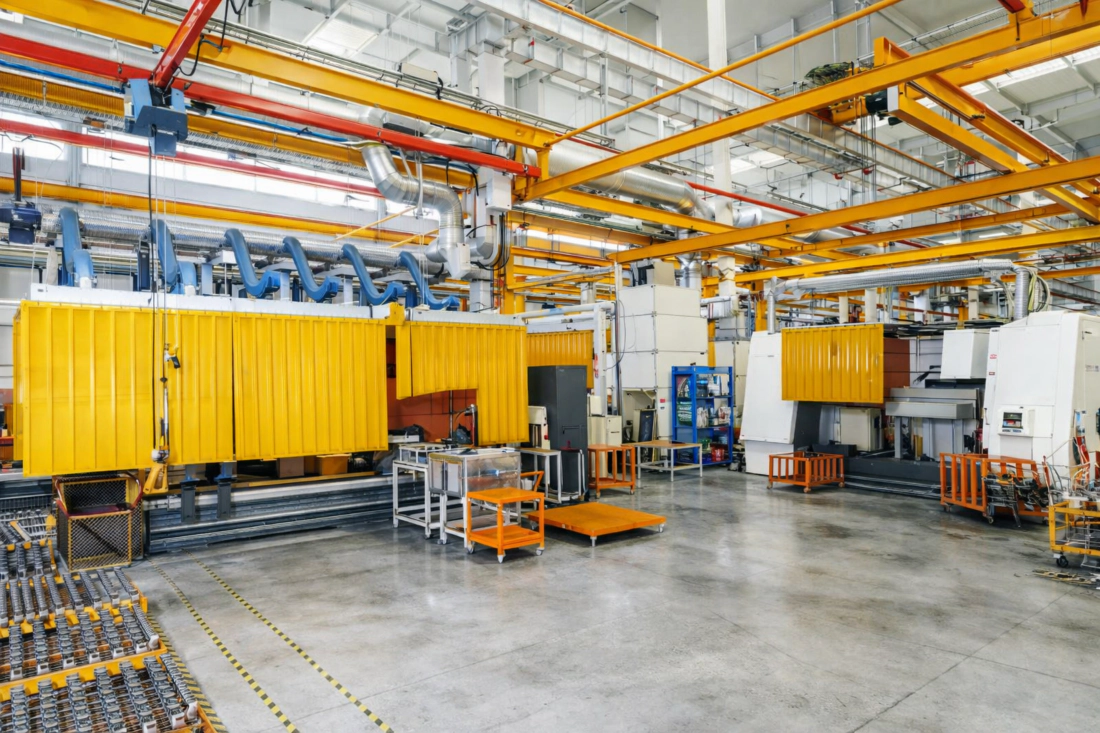
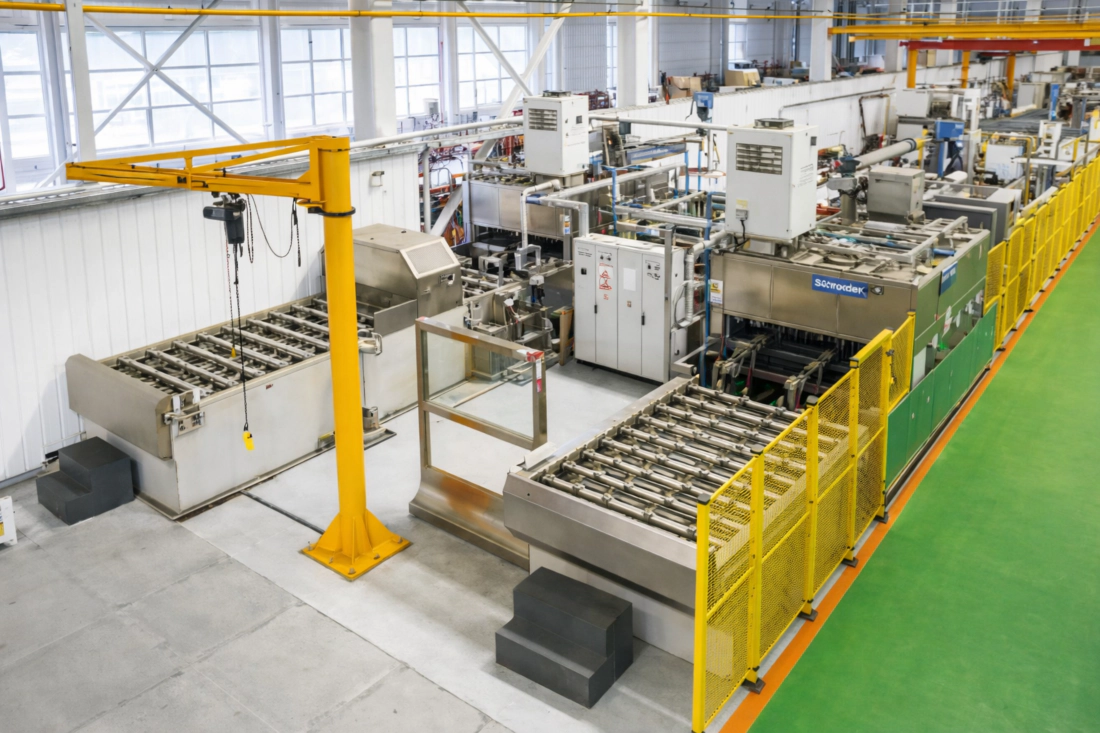
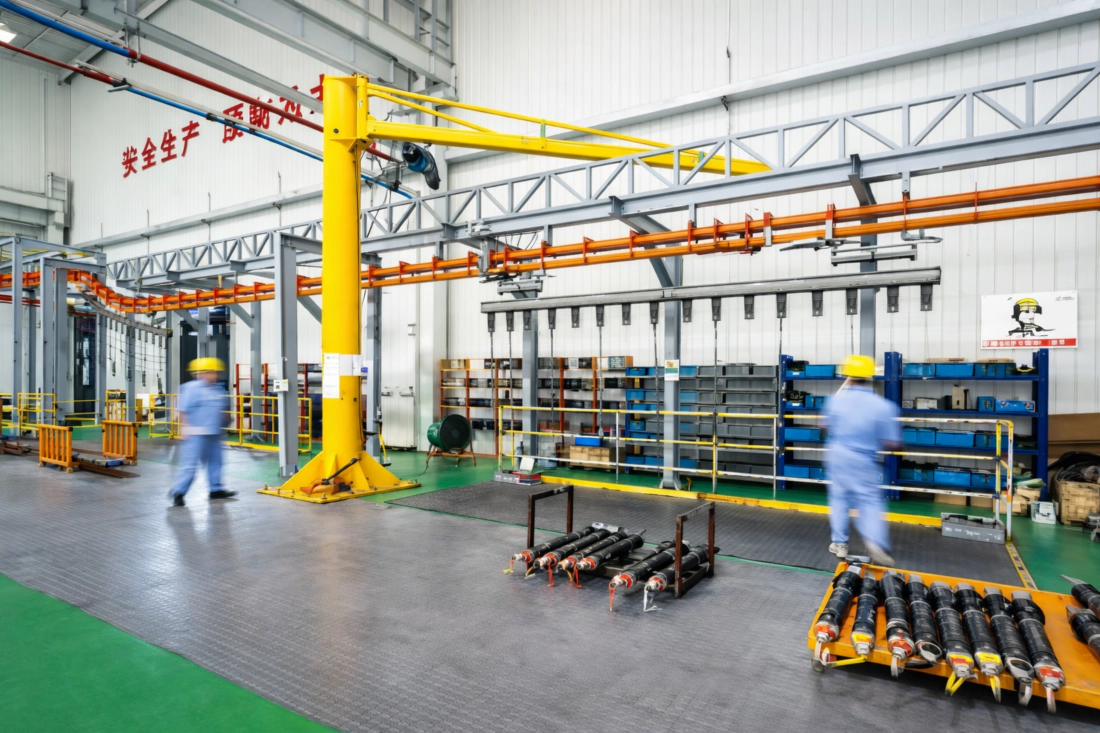
We welcome orchard equipment designers, agricultural robotics engineers, and gripper mechanism developers to explore our production facility from anywhere in the world. View our precision CNC turning centers, electropolishing stations, and micro cylinder assembly cells — all dedicated to producing stainless steel hydraulic cylinders that perform reliably in the demanding corrosive environments of fruit harvesting operations.
VR工場見学に参加しよう
Inquire Now — Send Your Gripper Cylinder Requirements
How a Double-Acting Micro Cylinder Enables Precise Gripper Positioning
The double-acting piston cylinder controlling the fruit picker gripper generates hydraulic force in both the extension and retraction directions throughout the stroke range — allowing the harvesting system’s control logic to position the gripper fingers at any intermediate aperture between fully open and fully closed, not merely to cycle between two fixed end positions. In automated fruit harvesting, this continuously variable positioning capability is operationally essential: individual pieces of fruit vary in diameter by 20 to 40 mm across a single tree, branch position varies with tree architecture, and the harvesting system’s vision or proximity sensors must communicate a different target aperture to the gripper cylinder for each successive pick event. A single-acting cylinder with spring return can only fully open or fully close — it cannot hold an intermediate aperture against the spring force with the precision that consistent fruit grasping requires. The double-acting design allows the proportional valve to balance flow to both cylinder ports at any intermediate position, maintaining the gripper at the commanded aperture against the spring-loading of the gripper mechanism until the pick event is complete.
Micro cylinders for fruit picker gripper applications are manufactured by precision CNC machining rather than the fabrication and welding processes used for larger agricultural or construction cylinders. The cylinder barrel is produced by boring and honing the internal bore to the required diameter and finish from solid SS304 bar stock on a CNC turning center, then fitted with precision-machined end caps retained by thread engagement or snap-ring features that do not require welding — welding SS304 at the bore diameters typical of fruit picker cylinders (10 to 25 mm) would create heat-affected zones and weld profile features that compromise the internal dimensional precision and surface finish the cylinder seals require. The piston rod is turned from solid SS304 bar stock, precision-ground to the required diameter and target surface roughness, and fitted with a machined piston head carrying FKM O-ring seal grooves. All machined components are produced from the same SS304 alloy, eliminating the dissimilar metal interfaces that would create galvanic corrosion risk when fruit juice contacts both materials simultaneously. This material homogeneity is a fundamental structural advantage that SS304 micro cylinders provide over mixed-material alternatives that fit a stainless rod into a carbon steel or aluminum barrel — a construction approach that introduces galvanic corrosion risk at the barrel-end-cap interface that the stainless rod alone cannot eliminate.
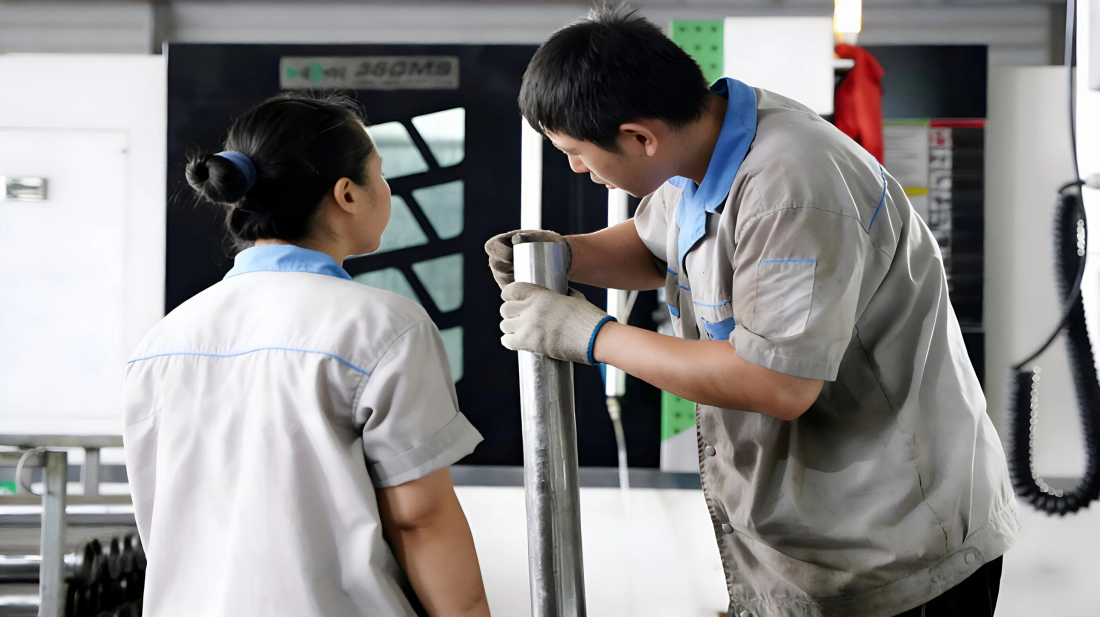
The positional precision of the gripper cylinder within its stroke range is determined by three manufacturing parameters that our production process controls specifically for fruit picker applications: bore diameter tolerance (affecting the piston fit and seal drag consistency), rod diameter tolerance (affecting the rod seal drag and hysteresis), and internal surface finish (affecting seal friction variation between different positions in the stroke). For automated harvesting systems where the gripper must close to within 2 to 3 mm of the target fruit diameter to achieve a successful pick without crushing, the cumulative effect of these manufacturing tolerances on positional accuracy is directly measurable as harvest efficiency and fruit damage rate across the picking session. Our micro cylinders for this application are manufactured to dimensional tolerances that minimize seal drag variation along the stroke — producing consistent positioning performance from beginning to end of each picking day, rather than degrading positioning accuracy as the seals warm and begin to show friction variation that is characteristic of lower-precision bore and rod finish combinations.
Technical Specifications — Fruit Picker Gripper Micro Hydraulic Cylinders
The following parameters define our standard engineering range for full SS304 micro hydraulic cylinders for fruit picker gripper applications. All specifications are configurable through our custom engineering process, and the values listed reflect the design space appropriate for automated fruit harvesting gripper control. The specific configuration for each gripper design is determined from the customer’s stroke requirement, operating pressure, fluid type, and deployment environment.
| パラメータ | 仕様 | 注記 |
|---|---|---|
| Action type | Double-acting piston | Full hydraulic control for intermediate position holding |
| Cylinder type | Micro cylinder (precision CNC machined) | No weld joints — fully machined from bar stock |
| ボア径 | 10 mm to 32 mm | Standard gripper range: 12 to 20 mm |
| ロッド径 | 6 mm to 20 mm | Precision-ground to h6 tolerance |
| Stroke range | 10 mm to 100 mm | Standard gripper stroke: 20 to 60 mm |
| Operating pressure | Up to 10 MPa | Test pressure: 1.5x rated; pressure decay test included |
| Material — all components | Full SS304 stainless steel | No galvanic interfaces; SS316L available for citrus/low-pH |
| Rod surface finish | Ra 0.4 µm (mechanical polish) or Ra 0.1 to 0.2 µm (electropolished) | Electropolished recommended for citrus and low-pH environments |
| Bore surface finish | Ra 0.4 to 0.8 µm (honed) | H7 tolerance for seal compatibility and low-drag operation |
| Seal material | FKM (fluoroelastomer) standard; EPDM optional | FKM: excellent acid and organic solvent resistance |
| Fluid compatibility | Mineral oil, food-grade hydraulic fluid, biodegradable ester | Food-grade fluid specified for harvest equipment in export markets |
| Port options | G1/8, G1/4, M5, 1/8 NPT, or custom | Port position configurable per gripper layout |
| 動作温度 | -10 degrees C to +70 degrees C | Covers cold morning harvest start to warm midday operation |
| Inspection | Dimensional check + pressure test + surface finish measurement | Material certificate and test report included |
SS304 Full Stainless Steel Construction — Why Material Homogeneity Matters in Fruit Juice Environments
Stainless steel 304 — the austenitic 18-8 chromium-nickel alloy — derives its corrosion resistance from a self-repairing chromium oxide passive film that forms spontaneously on the metal surface in oxygen-containing environments and regenerates automatically when locally disrupted by contact damage. This passive film mechanism is fundamentally different from the applied coatings used on carbon steel cylinder rods in two important respects: it is integral to the metal rather than an applied layer that can be undermined from below, and it self-heals minor surface damage rather than leaving a permanently compromised zone at each scratch or contact mark. In the fruit juice environment of an orchard harvesting machine gripper — where the cylinder rod is repeatedly contacted by fruit skin, leaf fragments, and stem debris during each pick cycle — this self-healing capability prevents the progressive corrosion acceleration that occurs when chrome or nickel coating is locally removed by contact damage, exposing the underlying steel substrate to the full corrosive attack of the sugar-acid solution.
The full stainless steel 304 construction of our fruit picker micro cylinders — encompassing barrel, rod, end caps, port fittings, and all internal machined components — eliminates every dissimilar metal interface within the cylinder assembly. This material homogeneity matters in the fruit juice environment because galvanic corrosion between dissimilar metals is significantly accelerated by the electrolyte conductivity of sugar-acid solution compared to clean water. Mixed-material cylinder designs that fit a stainless rod into a carbon steel barrel, or that use carbon steel end caps on a stainless barrel, create galvanic cells at the interfaces between materials where fruit juice provides the conductive path — leading to accelerated pitting at the lower-nobility metal in the couple. A full SS304 assembly presents no dissimilar metal pairs to the electrochemical attack of fruit juice, removing galvanic acceleration entirely and leaving only the relatively slow uniform corrosion that SS304’s passive film suppresses to negligible rates in sweet fruit juice at field temperatures. For applications where chloride levels are higher — as in some citrus growing regions with saline groundwater irrigation — we offer full SS316L construction with the same precision machining capability, providing enhanced pitting resistance through the molybdenum addition that distinguishes SS316L from SS304.
The mechanical properties of SS304 in the precision-machined condition provide adequate structural performance for fruit picker micro cylinder operating pressures and bore sizes. Tensile strength of 520 to 620 MPa and yield strength of 210 to 310 MPa in annealed condition are substantially lower than 42CrMo alloy steel used in large agricultural cylinders — but for bore diameters of 10 to 32 mm at operating pressures of up to 10 MPa, the resulting hoop stress in an appropriately dimensioned SS304 barrel wall is well within the material’s yield limit, providing structural safety factors of 2.5 or greater without requiring impractically thick walls. The material’s machinability on modern CNC turning equipment allows the bore to be finished to H7 tolerance and the rod to be ground to h6 tolerance in a single production flow — dimensional quality that determines the seal drag consistency and positional precision that automated gripper control systems require. SS304’s austenitic crystal structure also provides excellent toughness at the low temperatures encountered during cold morning harvest starts in northern Chinese apple-growing regions, where dawn temperatures below 5 degrees Celsius are common during autumn harvest season.
Polished Surface Treatment — How Surface Finish Prevents Pitting in Sugar-Acid Fruit Juice Environments
Pitting corrosion in stainless steel initiates preferentially at surface heterogeneities — micro-scale inclusions, surface scratches, machining marks, heat-affected zones, and roughness peaks — where the local passive film is thinner, disrupted, or absent relative to the surrounding surface. The sugar-acid fruit juice environment provides the electrochemical driving force for pitting: the organic acids (malic, citric, tartaric) reduce the local pH at the passive film interface, while the sugar solution creates an electrolyte with sufficient ionic conductivity to support the galvanic pitting cell once initiation occurs. A cylinder rod with a rough or unpolished surface finish presents numerous such initiation sites per unit area — the machining marks from the turning operation, the grinding scratches from the initial rod sizing pass, and the micro-inclusions exposed at the surface during cutting. Mechanical polishing to Ra 0.4 µm removes or smooths the majority of these heterogeneities, reducing the density of pitting initiation sites and measurably extending the time before stable pitting begins under sustained fruit juice contact.
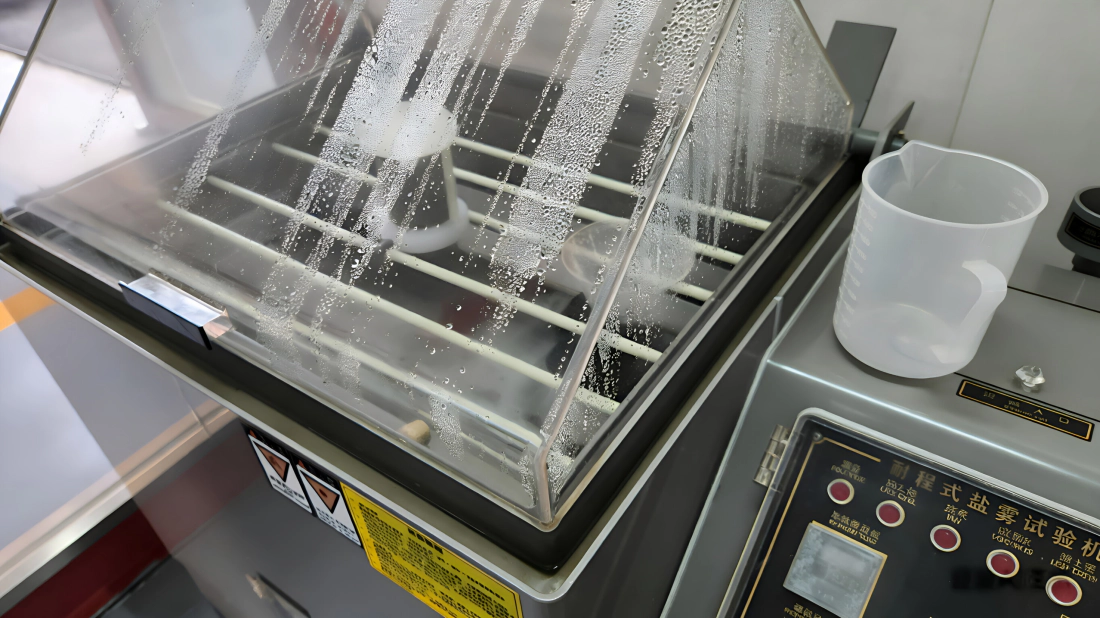
Electropolishing — the electrochemical surface finishing process used as the premium surface treatment option for our fruit picker cylinder rods — achieves surface roughness of Ra 0.1 to 0.2 µm while simultaneously modifying the near-surface chemistry of the SS304 alloy in a way that mechanical polishing alone cannot replicate. The electropolishing process removes material preferentially from surface high points and defects, leaving a smoother average surface than mechanical abrasive polishing can achieve, while the anodic dissolution process enriches the chromium concentration in the passive film near the surface — creating a chromium-enriched passive layer that is chemically more resistant to breakdown by acidic fruit juice than the standard passive film formed on a mechanically polished SS304 surface. Salt spray and immersion corrosion testing consistently shows that electropolished SS304 specimens withstand fruit juice contact for measurably longer periods before pitting initiation compared to mechanically polished equivalents at the same base material specification — a performance difference that translates directly to extended service intervals and reduced cylinder replacement frequency in orchard harvesting operations. Our engineering team recommends electropolished rod finish as standard for citrus, lemon, and grapefruit harvesting applications where juice pH values below 3.5 create more aggressive pitting conditions, and as the recommended option for apple, pear, and grape operations where operational analysis suggests the premium is justified by the season length or harvest volume.
The internal bore surface of the cylinder barrel receives a separate surface preparation appropriate to its function as the piston seal interface rather than the primary corrosion exposure surface. Honing to Ra 0.4 to 0.8 µm provides the surface texture that FKM piston seals require for effective sealing contact — a finish smooth enough that the seal lip maintains continuous contact without abrasive wear, but rough enough in the honed cross-hatch pattern that it retains the thin lubrication film the seal lip needs to prevent dry-running friction. The bore surface is not electropolished, as the ultra-smooth electropolished finish would reduce the lubricant retention that the piston seal depends on and increase seal drag variation along the stroke. This distinction between the rod surface (electropolished for pitting resistance) and the bore surface (honed for seal function) reflects the different performance requirements of each surface in the cylinder’s operating environment — an engineering distinction that requires application-specific specification rather than a single surface treatment applied uniformly across all cylinder surfaces.
Application Scenarios — Where SS304 Micro Cylinders Serve Orchard Harvesting Operations
Full stainless steel 304 micro hydraulic cylinders for gripper control serve automated harvesting applications across a broad spectrum of fruit types and orchard management systems, from large-scale commercial apple orchards using multi-arm harvesting robots in Shaanxi and Shandong provinces to specialist kiwi and citrus harvesting equipment in international export markets. The common operating requirement across all these applications is precise, repeatable gripper positioning in a continuous juice and moisture exposure environment — a requirement that only full stainless construction with polished rod surfaces satisfies without incurring the corrosion maintenance burden of carbon steel alternatives.

Apple and Pear Automated Harvesting
Apple orchards in Shaanxi, Gansu, and Shandong provinces — China’s primary commercial apple production regions — are seeing increasing deployment of mechanical harvesting assistance platforms and fully automated picking robots that use hydraulic gripper cylinders to handle fruit. Apple juice (pH 3.5 to 4.0, high sugar) is one of the more corrosive fruit environments for carbon steel cylinder components, making SS304 construction with mechanical polishing the appropriate base specification. The gripper stroke for apple harvesting typically ranges from 30 to 55 mm to accommodate the diameter variation across commercial apple varieties during a single picking pass.
Citrus and Low-pH Fruit Operations
Citrus harvesting in Guangdong, Fujian, Hunan, and Guangxi provinces, and lemon operations in international export-market orchards in Spain, Italy, and the United States, represent the most corrosively challenging fruit juice environment for gripper cylinder components. Lemon juice (pH 2.0 to 2.5) and grapefruit juice (pH 3.0 to 3.5) create pitting conditions that exceed what SS304 with standard mechanical polishing can sustain for full season operation without service intervention. Our electropolished SS304 or full SS316L construction is standard for citrus applications, providing the chromium-enriched passive layer and ultra-smooth surface that resist pitting at these low pH values across multiple sequential picking seasons without rod replacement.
Grape and Berry Harvesting Automation
Vineyard harvesting automation in China’s Xinjiang, Ningxia, and Hebei wine-grape regions, and export-market berry harvesting equipment for strawberry and blueberry operations, use gripper cylinders at particularly small bore sizes — 10 to 16 mm — to position delicate gripper fingers without bruising soft-skinned fruit. The grape and berry environment combines moderate acid levels (tartaric acid, pH 3.0 to 3.8) with high sugar concentrations that create sticky residue on the cylinder rod surface between harvest passes. Our electropolished SS304 cylinders are specified for these applications specifically because the ultra-smooth surface sheds sugar residue more completely during rainwater rinsing between orchard rows, reducing the concentrated acid contact that sugary dried residue creates when it re-dissolves on the next wet day.
Kiwi and Stone Fruit Gripper Systems
Kiwi harvesting in New Zealand and China’s Shaanxi and Sichuan kiwi growing regions uses grippers that must handle elongated, soft-skinned fruit with particular care for surface marking. The gripper cylinder controls both the approach aperture and the closing force through proportional valve control, with the cylinder’s positional precision directly determining whether the gripper contacts the fruit skin without excessive pressure. Kiwi juice (pH 3.1 to 3.5, high actinidain enzyme content) has corrosive properties that include enzymatic degradation of natural rubber seal compounds — making FKM seal material mandatory and electropolished SS304 construction the recommended standard for kiwi gripper cylinders in extended service.
Engineering Advantages That Distinguish Full Stainless Micro Cylinders From Coated Carbon Steel Alternatives
The service life comparison between full SS304 micro cylinders and chrome-plated carbon steel alternatives in fruit picker gripper applications reflects the fundamental difference between a corrosion-resistant material and a corrosion-resistant coating. Field experience across apple, citrus, and kiwi harvesting operations in China and internationally shows that chrome-plated carbon steel gripper cylinders typically develop visible rod surface pitting within one to two harvest seasons in full juice exposure environments — the chrome micro-crack network provides the penetration pathways that accelerate substrate corrosion, and the pitting that results at the chrome-steel interface undermines chrome adhesion, creating larger exposed areas that accelerate further. Once pitting of this type begins on the rod surface, the disrupted surface geometry causes accelerated rod seal wear, increasing hydraulic fluid bypass that contaminates fruit, and the corroded rod must be replaced rather than simply re-sealed. Full SS304 rods with polished surfaces in equivalent juice exposure environments show no pitting at inspection intervals of two to three seasons, and the cylinder’s service life is determined by seal wear rather than rod surface degradation — a meaningfully longer and more predictable maintenance cycle that reduces both the direct cost of rod replacement and the operational disruption of mid-season cylinder service during the harvest period when machine availability is critical.
The food safety implication of hydraulic fluid type in fruit picker gripper cylinders — a consideration that is commercially important for operations supplying export markets where maximum residue limits for hydraulic fluid contamination of fresh fruit are regulated — is addressed by our cylinder’s compatibility with food-grade and biodegradable hydraulic fluids. Food-grade hydraulic fluids (H1 or H2 classification under NSF standards, or equivalent Chinese food contact material standards) use base oils and additives that are approved for incidental contact with food products. Our SS304 cylinders with FKM seals are fully compatible with these food-grade fluid formulations — the fluoroelastomer seals maintain their mechanical properties and dimensional stability in food-grade white mineral oil and synthetic ester base stocks, while SS304 is non-reactive with all food-grade hydraulic fluid types. This compatibility allows operators of export-market harvesting equipment to specify food-grade fluid in the gripper cylinder circuit without concern about seal compatibility or cylinder corrosion from the fluid chemistry.
| 特徴 | Our SS304 Micro Cylinders | Chrome-Plated Carbon Steel Alternatives |
|---|---|---|
| Corrosion mechanism | Self-repairing passive film; no galvanic interfaces | Applied coating with micro-crack pathways to steel substrate |
| Rod surface | Mechanically polished Ra 0.4 µm or electropolished Ra 0.1 µm | Hard chrome with inherent micro-crack porosity |
| Material interfaces | None — full SS304 homogeneous construction | Steel-chrome galvanic couple; possible steel-aluminum end cap |
| Seal material | FKM — excellent fruit acid and enzymatic resistance | NBR or polyurethane — limited resistance to some fruit acids |
| Food-grade fluid compatible | Yes — SS304 + FKM compatible with H1/H2 food-grade fluids | Seal compatibility varies; check required per fluid type |
| Typical rod service life in juice | 3+ seasons without pitting failure | 1 to 2 seasons before pitting disrupts sealing surface |
Custom Manufacturing — Precision SS304 Micro Cylinders From Your Gripper Design Data
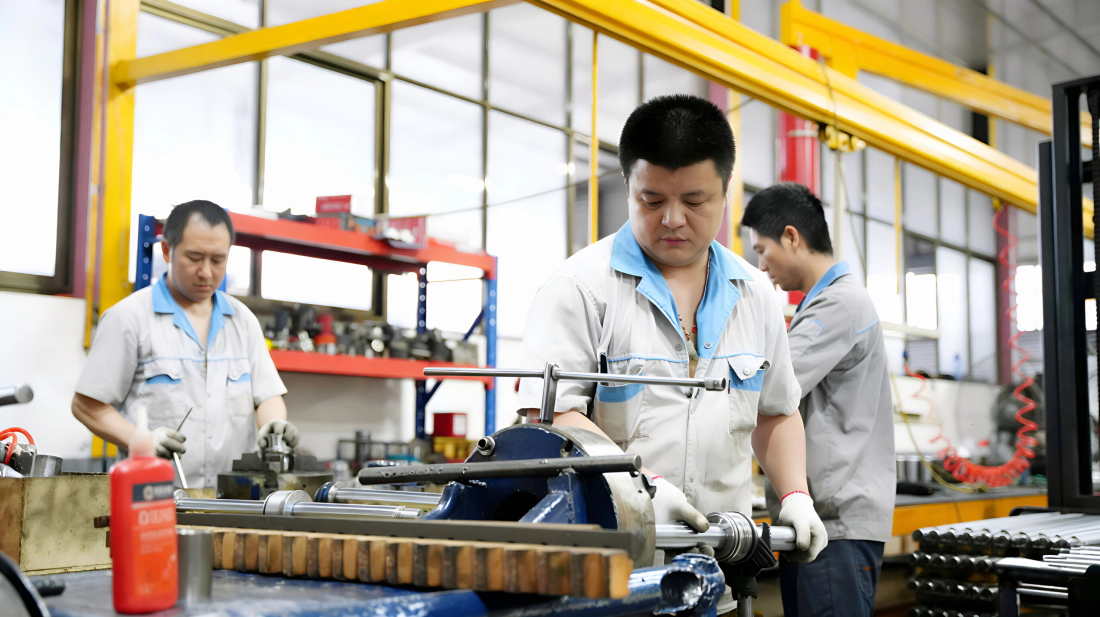
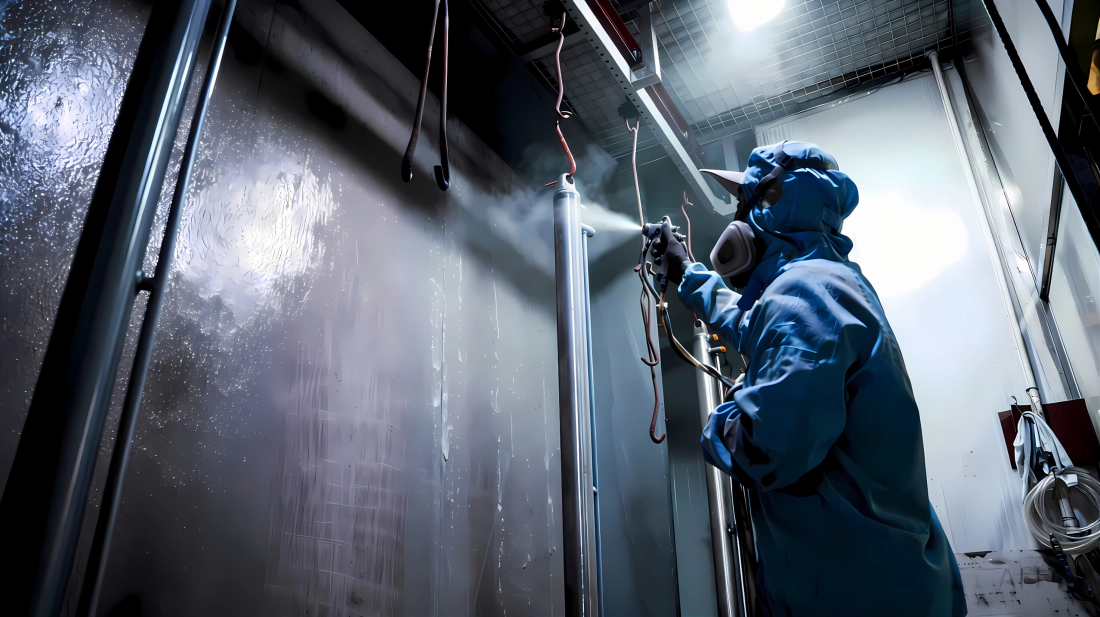
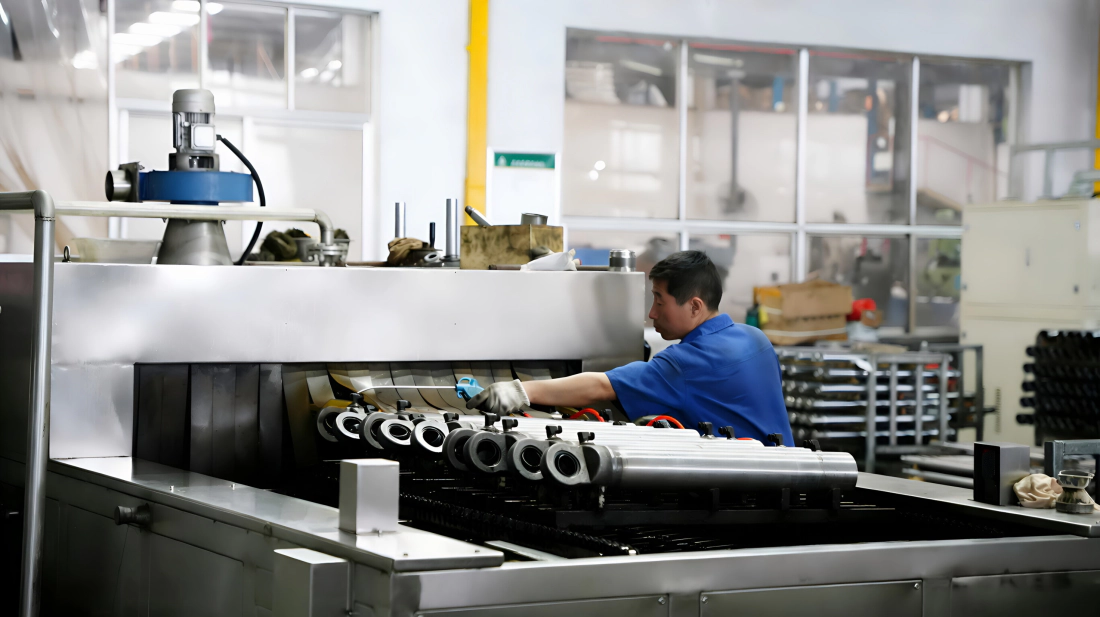
Our manufacturing facility operates precision CNC turning and grinding equipment capable of producing micro cylinders from SS304 and SS316L bar stock across the bore range of 10 to 32 mm and rod range of 6 to 20 mm with the dimensional tolerances and surface finishes that fruit picker gripper applications require. The electropolishing station processes finished SS304 rods through a controlled anodic dissolution process monitored for current density, bath temperature, and treatment time to achieve the Ra 0.1 to 0.2 µm target finish and surface chemistry enrichment that differentiates electropolished performance from mechanically polished equivalents. Material traceability is maintained from raw bar stock through finished cylinder to shipment — SS304 or SS316L mill certificates, material test reports, and heat numbers are recorded and provided as standard documentation with each order, supporting customers whose quality management systems require raw material traceability for food contact equipment. All micro cylinders are pressure-tested to 1.5 times rated operating pressure with a pressure decay hold test that verifies both structural integrity and internal seal performance before any cylinder ships. Further details about our production quality systems and team are available at our About Us page.
Gripper mechanism designers and agricultural robotics engineers are encouraged to engage our engineering team from the early design phase, when the gripper’s stroke requirement, force requirement, and mounting envelope are being established but before the cylinder dimensional specification is locked. Early engagement allows the cylinder bore, rod diameter, end cap geometry, port position, and mounting interface to be developed alongside the gripper linkage design rather than requiring the gripper to be adapted around a standard catalog cylinder that may not optimally match the stroke-force requirement of the specific gripper mechanism. Our team can provide cylinder force calculations from the operator-specified fluid pressure and bore diameter, stroke-force diagrams over the operating stroke range, and dimensional proposals in CAD formats compatible with the customer’s design environment. For agricultural robotics developers working on new automated harvesting platforms, this collaborative approach shortens the iteration cycle between gripper design versions and reduces prototype validation time by ensuring the cylinder specification is matched to the gripper’s actual mechanical requirements from the initial prototype build.
Prototype micro cylinders for custom gripper configurations are available within 15 to 25 working days for most bore and stroke combinations within our standard material and surface treatment capability. Serial production lead times of 25 to 40 working days accommodate most harvesting equipment production schedules, with the ability to prioritize production timing around seasonal harvest equipment build programs where delivery before the harvest season is a commercial requirement. We supply cylinders pre-filled with the customer’s specified hydraulic fluid on request — eliminating the air purge and fill step during gripper assembly — and can supply matched cylinder pairs for dual-cylinder gripper designs with bore and rod dimensions matched within tighter-than-standard tolerances to ensure identical force output and stroke performance between the two actuators in the same gripper head. Custom port thread standards, mounting flange geometries, and rod end configurations are all producible within the precision CNC machining capability of our facility without requiring special tooling surcharges for quantities above the prototype level.
Customer Success Stories — SS304 Micro Cylinders in Orchard Harvesting Operations
Citrus Harvesting Equipment Manufacturer, Valencia Region
A manufacturer of automated citrus harvesting equipment based in Valencia — Spain’s primary commercial citrus growing region — was developing a new mechanical picking head for orange and clementine harvest. Their previous gripper cylinder supplier had used chrome-plated carbon steel rods that developed pitting within the first citrus season, contaminating the hydraulic circuit with metallic corrosion products that damaged the proportional valve controlling the gripper. Our team specified 15 mm bore, 40 mm stroke electropolished SS304 cylinders with SS316L as an available upgrade for lemon operations. After two full citrus seasons, the cylinders showed no rod pitting at seasonal inspection. The manufacturer standardized our SS316L variant for their full citrus picker range and our SS304 variant for their orange-only model.
“Two Valencia citrus seasons, no pitting, no valve contamination. The chrome cylinders were ruining a proportional valve every season. These have changed our maintenance picture completely.”
— R&D Engineering Manager, Citrus Harvesting Equipment Manufacturer, Valencia, Spain
Orchard Automation Technology Company, Shaanxi Province
An agricultural technology company in Shaanxi Province developing automated apple picking robots for the Loess Plateau apple-growing region required gripper cylinders that could operate through the full autumn harvest season — typically 45 to 60 working days — without mid-season maintenance intervention on the gripper head, which is not easily accessible on their multi-arm robot platform. Their design called for an 18 mm bore, 45 mm stroke cylinder with a non-standard threaded mounting interface. Our engineering team produced a dimensionally matched SS304 cylinder with electropolished rod and FKM seals within a 20-day prototype lead time. The robot completed two sequential apple harvest seasons without any cylinder-related service requirement on the gripper circuit, and the company subsequently placed a production order for 120 units covering their first robot fleet deployment in three pilot orchards.
“Two full Shaanxi apple seasons without touching the gripper circuit. Twenty-day prototype, non-standard thread, exact dimensions — exactly what we needed for the robot design. We’re now on production quantities.”
— Chief Mechanical Engineer, Orchard Automation Technology Company, Shaanxi Province, China
Kiwifruit Harvesting Equipment Developer, Bay of Plenty Region
A kiwifruit harvesting technology company in New Zealand’s Bay of Plenty region — the world’s largest kiwifruit production area — was developing a semi-automated harvesting aid that used hydraulic grippers to assist manual harvest by pre-positioning fruit before detachment. The kiwifruit environment’s actinidain enzyme content had degraded the NBR seals in their previous cylinder supply within three weeks of the picking season start. Our team recommended FKM seals as mandatory for kiwifruit enzyme resistance, specified electropolished SS304 construction for the juice pH and enzyme environment, and produced matched pairs of 12 mm bore, 30 mm stroke cylinders for their dual-gripper head design with dimensions matched within 0.01 mm between paired units. The cylinders completed the full kiwi harvest season without seal degradation or positional drift between the matched pair.
“The actinidain enzyme had destroyed our NBR seals in three weeks. FKM and electropolished SS304 — the full season, no seal issues, matched pair performing identically. This is the specification we needed.”
— Lead Engineer, Kiwifruit Harvesting Equipment Developer, Bay of Plenty, New Zealand
よくある質問
+What type of hydraulic cylinder is best for controlling a fruit picker gripper in Chinese apple and pear orchard automated harvesting systems operating in continuous juice and moisture exposure environments?
A double-acting micro cylinder with full SS304 stainless steel construction and a mechanically polished or electropolished rod surface is the specification that best addresses the combined requirements of fruit picker gripper control in Chinese orchard harvesting environments. The double-acting design is essential for positioning the gripper at intermediate apertures between fully open and closed — matching each pick event to the specific fruit size detected by the machine’s sensors. Full SS304 construction eliminates the galvanic corrosion interfaces that cause rapid deterioration in mixed-material cylinder designs exposed to apple and pear juice (pH 3.5 to 4.0). The polished rod surface prevents pitting nucleation by removing the surface defects at which fruit acid initiates corrosive attack. FKM seals are mandatory for fruit acid chemical resistance. For operations supplying export markets requiring food safety documentation, food-grade hydraulic fluid compatibility — which all our SS304 cylinders with FKM seals provide — is an additional specification requirement that the full stainless steel micro cylinder satisfies without modification.
+How much does a custom full SS304 stainless steel micro hydraulic cylinder for fruit picker gripper control cost from a manufacturer in China, and what factors affect the price?
Custom pricing for full SS304 micro cylinders for fruit picker gripper applications depends on bore diameter, rod diameter, stroke length, surface treatment (mechanically polished vs. electropolished vs. standard machined finish), seal material (FKM carries a premium over NBR), port configuration, and order quantity. SS304 material carries a higher raw material cost than carbon steel, and the precision CNC machining required for micro cylinder bore and rod tolerances is more time-intensive than fabrication processes for larger cylinders — both factors reflected in per-unit pricing. At production volumes of 50 or more units, pricing from Chinese precision engineering manufacturers for electropolished SS304 micro cylinders remains substantially competitive compared to equivalent European or North American precision stainless micro cylinder suppliers. Prototype single-unit pricing for custom configurations reflects setup and fixturing costs amortized over the production run. Submitting your bore, stroke, operating pressure, surface treatment requirement, and annual volume estimate to our engineering team is the most efficient path to an accurate project-specific quotation.
+Why does stainless steel 304 outperform chrome-plated carbon steel for hydraulic cylinder rods in sugar-acid fruit juice environments, and what makes the pitting failure mechanism different?
The performance difference between SS304 and chrome-plated carbon steel in fruit juice environments comes down to the corrosion protection mechanism of each material. Hard chrome plating is a physical barrier coating with inherent micro-cracks in its structure — cracks that are beneficial for lubricant retention at seal contact zones but that simultaneously provide penetration pathways for acidic fruit juice to reach the steel substrate below. Once juice reaches the steel, galvanic corrosion cells form between the chrome and steel, initiating pitting that progressively undermines chrome adhesion from below. The pitting happens at the steel-chrome interface where it cannot be seen until it reaches the surface — by which time the chrome has lifted away from a substantial area. SS304’s passive film corrosion protection, by contrast, is integral to the alloy surface and self-repairs when locally disrupted by contact damage. There is no substrate exposed to galvanic attack, no coating to be undermined, and no micro-crack network for acid penetration. The passive film is thin but chemically stable in fruit juice at the pH values of apple, pear, grape, and kiwi — making it a fundamentally more reliable protection mechanism than applied coatings for continuous fruit juice immersion or contact.
+Which hydraulic cylinder seal material is most resistant to fruit juice and organic acid corrosion in automated orchard picking machine gripper control systems — FKM, NBR, or polyurethane?
FKM (fluoroelastomer, also known by the trade name Viton) is the seal material with the most comprehensive chemical resistance to the range of fruit acids, sugars, and enzymes encountered in orchard harvesting gripper cylinder applications. FKM maintains its mechanical properties and dimensional stability across the full pH range of commercial fruit juices — from relatively mild apple juice (pH 3.5 to 4.0) through citrus (pH 2.5 to 3.5) and lemon (pH 2.0 to 2.5) — without swelling or hardening that would compromise sealing performance. NBR (nitrile rubber) provides acceptable resistance in less aggressive fruit environments but degrades in concentrated citric and malic acid exposure over extended seasonal contact. Polyurethane seals, while offering excellent abrasion resistance in dusty mineral environments, have limited chemical resistance to fruit acids and can hydrolyze under sustained contact with acidic moisture — making polyurethane unsuitable for fruit picker gripper cylinders regardless of the fruit type being harvested. For kiwifruit operations specifically, the actinidain protease enzyme in kiwi juice actively degrades natural rubber and NBR, making FKM effectively mandatory. FKM is our standard seal material for all fruit picker gripper cylinder configurations.
+Where can I find a reliable manufacturer in China that supplies custom SS304 stainless steel micro hydraulic cylinders with polished rods for fruit picker gripper applications in automated orchard harvesting equipment?
Precision micro cylinder manufacturing from SS304 stainless steel with electropolishing capability is a specialty capability within the broader Chinese hydraulic cylinder manufacturing sector — not all suppliers who list stainless cylinders in catalogs operate the precision CNC turning, grinding, and electropolishing equipment needed to produce food-grade quality micro cylinders for automated harvesting applications. Key qualification indicators: the supplier should be able to provide SS304 and SS316L mill certificates with heat number traceability; should specify electropolished surface finish in measurable Ra values rather than descriptive terms; should offer FKM seals as a documented standard option rather than an afterthought; and should confirm food-grade hydraulic fluid compatibility specifically. Our facility in China exports full stainless micro cylinders to orchard equipment manufacturers, agricultural robotics companies, and harvesting technology developers in more than 40 countries, with material traceability documentation compatible with food equipment quality audits in European and North American markets. Prototype lead times of 15 to 25 working days make early-stage development engagement practical.
+How does polishing the rod surface on a stainless steel hydraulic cylinder prevent pitting corrosion in automated fruit harvesting equipment operating in sugar-liquid and fruit acid environments?
Pitting corrosion in stainless steel requires two conditions to initiate: an electrochemical driving force (provided by the acidic fruit juice solution) and a nucleation site at which the passive film is locally weakest or absent (provided by surface heterogeneities such as machining marks, inclusions, and roughness peaks on an unpolished rod surface). Mechanical polishing to Ra 0.4 µm removes or flattens the majority of these heterogeneities, reducing the number of nucleation sites per unit area and extending the induction period before stable pitting begins under fruit juice contact. Electropolishing to Ra 0.1 to 0.2 µm achieves two additional benefits: the ultra-smooth surface has even fewer nucleation sites, and the anodic dissolution process enriches the near-surface chromium concentration in the SS304 alloy, creating a thicker and more chemically stable passive film that resists acidic breakdown more effectively than the standard passive film on a mechanically polished surface. The practical result is that electropolished SS304 rods begin pitting under lemon juice immersion at substantially longer exposure times than mechanically polished equivalents — a performance difference that translates directly to cylinder service life in field operation. Neither polishing approach eliminates pitting risk entirely in the most aggressive environments (concentrated citric acid at low pH), which is why SS316L construction with its molybdenum-enhanced pitting resistance is recommended for lemon and grapefruit harvesting applications.
Ready to Specify Your Fruit Picker Gripper Cylinder?
Send us your gripper stroke range, required closing force, bore size constraint, fruit type and juice environment, and hydraulic fluid specification. Our engineering team will recommend bore, rod, surface treatment, and seal material — and provide a preliminary dimensional proposal within two working days at no cost. We serve orchard equipment builders, agricultural robotics teams, and harvesting technology developers across China, Spain, New Zealand, Italy, and more than 40 other markets.
Full product range at hydrauliccylindersmanufacturer.com