TBM Hydraulic Cylinders: Driving the “Mole” Through Hell and High Water
If you have ever stood in the back-up gantry of a Tunnel Boring Machine (TBM) when the cutterhead engages hard rock, you know exactly what raw power feels like. The floor vibrates, the noise is deafening, and the entire operation relies on the immense thrust generated by the propulsive cylinders. In my eighteen years of engineering hydraulic systems for underground infrastructure, I have learned that there is no environment more hostile to hydraulics than a tunnel face. We aren’t just dealing with high pressure here; we are dealing with an abrasive slurry of rock dust, bentonite, and saltwater that wants nothing more than to eat your seals for breakfast. Most printers and procurement managers see a TBM Hydraulic Cylinder on a spec sheet and think it looks like a standard industrial kit. It’s not. Standard cylinders fail within weeks underground because they can’t handle the eccentric side-loads caused by steering corrections or the “ingression” of microscopic silica particles. The trick is designing a sealing system that acts like a fortress, keeping the oil pristine while the rod is literally submerged in muck.
👀 Don’t Just Take My Word For It
See the precision engineering that goes into every cylinder. Walk through our massive honing facility and assembly lines right now from your phone.
Experience 100% Transparent Manufacturing.
The Engineering Reality: Why “Off-the-Shelf” Means Downtime
何が実際に死をもたらすのか技術的に考えてみましょう TBM Hydraulic Cylinder. The primary culprit is almost always rod surface degradation. In a typical Earth Pressure Balance (EPB) machine, the propel cylinders are pushing off concrete segments. The environment is humid, salty, and gritty. Standard 20-micron hard chrome plating is porous on a microscopic level. Over time, the corrosive elements in the tunnel atmosphere penetrate the chrome, causing the base metal to rust. This rust lifts the chrome (flaking), which then acts like a razor blade against the wiper seals. Once the wiper is gone, the main seal follows, and suddenly you have a massive internal bypass or external leak. To combat this, we’ve shifted towards using Double Chrome plating or even Ceramic Coatings (Ceraplate) for projects with high salinity. Furthermore, the guide bands need to be extra wide. When the TBM steers, the cylinders extend at different lengths, creating massive side loads. If the bearing area is too small, the rod buckles or scores the barrel. It’s all about calculating the column load correctly (Euler’s formula is our best friend here) and adding a safety factor that accounts for the “unknowns” of geology.
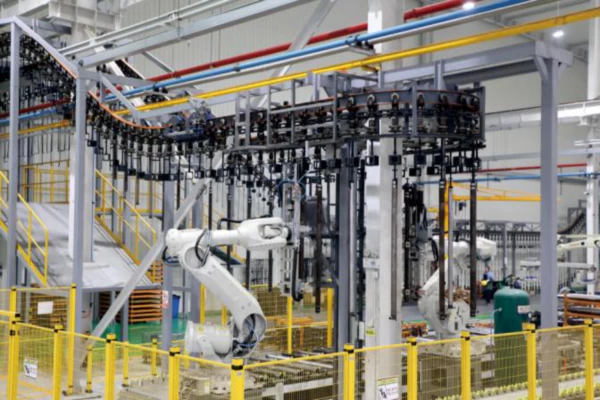
Our specialized honing machines can handle cylinder barrels up to 12 meters long, ensuring perfect roundness for TBM propel systems.
Technical Specs: Built for the Underground
When you are 100 meters underground, you can’t just pop to the shop for a spare part. Reliability is the only metric that matters. We engineer our TBM cylinders—whether they are thrust cylinders, articulation cylinders, or gripper cylinders—to withstand pressures that spike well above the system’s nominal rating. We often integrate Linear Displacement Transducers (LDTs) directly inside the rod to give the pilot precise feedback on extension, which is critical for maintaining the correct tunnel trajectory. Below is a snapshot of the typical specifications we engineer for main drive cylinders.
| Component / Feature | Standard Construction Spec | Ever Power TBM Grade |
|---|---|---|
| ピストンロッド | 45# Steel, 20µm Chrome | 42CrMo4, Double Chrome >40µm / Ceramic Option |
| シーリングシステム | Standard PU Wiper | Merkel/Parker Mud-Blocker + Buffer Ring |
| 動作圧力 | 250 Bar | 350 Bar (Rated) / 450 Bar (Peak) |
| 位置検知 | External Sensors | Integrated Magnetostrictive LDT (Internal) |
| Side Load Bearing | Standard Nylon Bands | High-Load Composite Bronze/Phenolic |
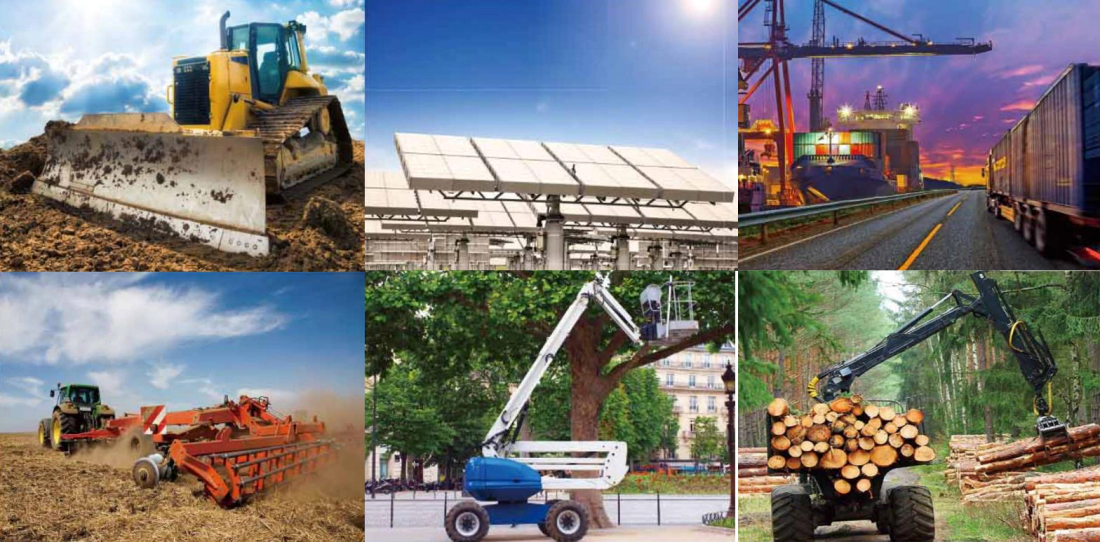
From segment erectors to main thrust systems, our cylinders keep the project moving forward.
Application Scenarios: Different Rock, Different Rules
A TBM boring through granite in the Swiss Alps needs a completely different hydraulic setup than one digging through soft clay in London. In hard rock grippers, the TBM Hydraulic Cylinder, responsible for clamping against the tunnel wall, must hold immense static pressure for hours without “creeping.” Even a millimeter of slip can cause the machine to lose traction. We use specialized zero-leak holding valves integrated directly into the cylinder port block for these beasts. Conversely, in soft-ground Slurry TBMs, the main challenge is the pressurized face. The hydraulic system often has to work against a back-pressure of the slurry. We design our segment erector cylinders (the ones that pick up the concrete tunnel lining) with extreme precision and “cushioning” to ensure they don’t crack the delicate concrete segments during placement. It’s a ballet of heavy metal, performed in the dark.
Case Study: The “Salty” Challenge in Mumbai
Client Profile: Coastal Metro Consortium (India)
問題: The project involved boring a metro tunnel under a tidal creek. The groundwater was highly saline and pressurized. The OEM thrust cylinders (supplied by a generic manufacturer) started failing 3 months into the drive. The salt water was bypassing the wipers, corroding the rods, and mixing with the hydraulic fluid, turning it into a milky sludge that destroyed the pumps.
解決策: We were called in for an emergency retrofit. We couldn’t change the machine design, so we engineered a custom “drop-in” replacement cylinder. We used a proprietary Nickel-Chrome plating process (40µm nickel base + 20µm chrome top), which is virtually impervious to saltwater. We also installed a triple-lip wiper system designed specifically for sub-sea applications.
結果: The new cylinders completed the remaining 4 kilometers of the drive without a single seal failure. The Project Director later told us that our cylinders “saved the timeline” and prevented what could have been a multimillion-dollar penalty for delays.
Strategic Analysis: The State of Tunneling Tech (SWOT)
強み
In-house capability to hone large bore cylinders (up to 1000mm). An extensive database of seal performance in specific geologies (Clay vs. Granite).
弱点
Our heavy-duty customization means we are not the cheapest option. We prioritize longevity over the lowest initial bid price.
機会
Integration of IoT sensors for real-time condition monitoring. Predicting seal failure before it happens is the “Holy Grail” of TBM maintenance.
脅威
Supply chain volatility for high-grade seal materials (PTFE/Viton) and specialized alloy steels.
Trend Watch: Smarter, Deeper, Faster
The days of “dumb” iron are fading. The biggest trend we are seeing in TBM Hydraulic Cylinder design is intelligence. Tunneling contractors want data. They want to know exactly how much force each cylinder is exerting to optimize the steering of the cutterhead. This requires cylinders with integrated load cells and pressure transducers that can talk to the TBM’s main PLC via CAN bus. We are also seeing a push for higher system pressures—moving from the standard 350 bar up to 450 bar systems—to allow for smaller cylinder diameters while maintaining the same thrust force, which frees up valuable space in the gantry for other equipment.
Customization: We Build What the Geology Demands
Every tunnel is a unique puzzle. Maybe you are boring through abrasive sandstone, or maybe you are dealing with sticky clay that clogs everything. We don’t force a catalog product on you. Our engineering team can take your TBM specs—whether it’s a Herrenknecht, Robbins, or Komatsu machine—and reverse engineer or upgrade the hydraulic cylinders. We specialize in retrofitting. If your segment erector is “jerky,” we can redesign the internal cushions. If your gripper cylinders are losing pressure, we can upgrade the holding valve manifold. We build the cylinder to fit the tunnel, not the other way around.
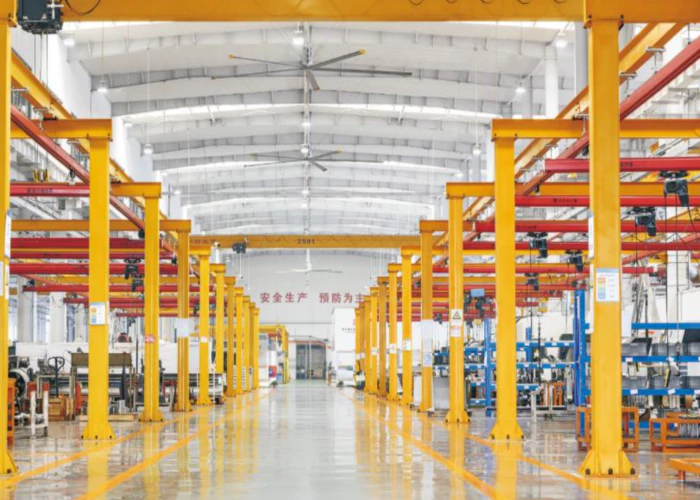
Precision welding and assembly are critical when a cylinder failure means stopping a mega-project.
What Our Partners Are Saying
“We had a articulation cylinder fail on our main drive 2km in. Ever Power manufactured a replacement in 10 days and air-freighted it to Dubai. The fit was perfect. Saved our bacon.”
— Ahmed K., Site Manager, UAE
“The ceramic coating option they suggested for our sub-sea tunnel was a game changer. Two years of operation and the rods look brand new. No corrosion at all.”
— Jean-Luc P., Equipment Director, France
“They understand the difference between a standard cylinder and a TBM cylinder. The seal kits they use are legit heavy-duty. Good technical support too.”
— Mike S., Tunneling Contractor, USA
FAQ: Field Questions Answered
We hear these questions from engineers in the mud every day. Here is the straight talk.
Why do TBM propel cylinders fail so often in wet ground?
It is usually ‘ingression.’ When the rod retracts, microscopic mud particles stick to it. If the wiper seal isn’t aggressive enough, that grit gets pulled into the oil, turning it into grinding paste that destroys the main seals and pumps.
What is the cost of replacing a main thrust cylinder?
It varies by bore size and length, but a heavy-duty custom TBM cylinder can range from $5,000 to $20,000. It sounds high, but it’s cheap compared to the $100k/day cost of TBM downtime.
Can you retrofit a cylinder with internal position sensors?
Yes, we can. We can drill the piston rod (gun drilling) to accept a magnetostrictive sensor probe. This gives you absolute position feedback without external cables that can get snagged.
Where can I find a TBM cylinder supplier that ships globally?
We ship to tunnel sites worldwide. We handle the logistics and crates to ensure the cylinders arrive at your shaft or portal ready to install, whether you are in Seattle or Singapore.
Which plating is best for saltwater tunnel environments?
Standard chrome will pit. You need Double Chrome (Nickel base + Chrome top) or a Laser Cladding / Ceramic coating (Ceraplate). These offer 5-10x the corrosion resistance of standard rods.
How do I measure a cylinder for a replacement quote?
We need the retracted length (pin to pin), stroke length, bore diameter, rod diameter, and port size/location. If you have the OEM part number or a drawing, that’s even better.
Tunneling Doesn’t Wait for Downtime
Ensure your project stays on schedule with cylinders built for the job.