You know the sound. You are standing in a damp tunnel, the shotcrete machine is humming, and suddenly the rhythm breaks. The hopper stops churning. The concrete, which was supposed to be flowing smoothly into the pumping cylinders, starts to bridge and harden. In my 18 years working with hydraulic systems on construction sites, I’ve found that the hopper agitator cylinder (or stirring cylinder) is the most overlooked component on the entire rig. It’s small, it’s tucked away under the grate, and most people don’t think about it until they are chipping out hardened concrete with a jackhammer because the mixer died.
The problem isn’t usually the hydraulic force; it’s the environment. We aren’t just pushing oil here; we are fighting a slurry of sand, cement, and accelerator that wants nothing more than to eat your seals alive. Most OEMs equip these machines with standard cylinders that might work fine on a clean forklift, but they fail miserably when coated in abrasive dust and subjected to the 24/7 vibration of a piston pump. That’s why we took a different approach. We moved to a welded 27SiMn steel construction with a specific focus on “rod hygiene”—keeping the chrome clean so the oil stays inside.
👀 Take a Virtual Walk Through Our Workshop
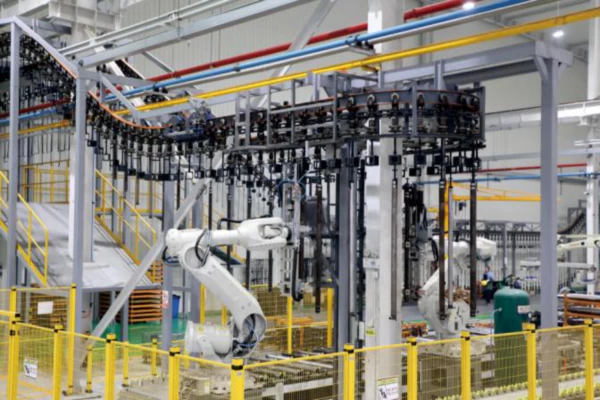
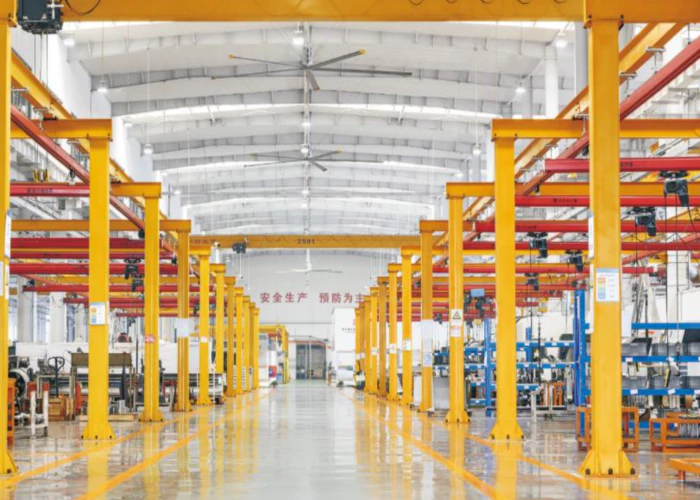
I can describe our welding robots and pressure test benches all day, but seeing is believing. We have opened up our facility for a virtual tour. You can see exactly how we machine these 27SiMn barrels to withstand the vibration.
The “Dust Ingress” Nightmare
Here is the thing most printers (and even some engineers) miss: The primary failure mode of a hopper cylinder isn’t over-pressure; it is contamination. The cylinder is positioned right next to the falling concrete. Fine dust particles settle on the extended piston rod. If the chrome plating is too soft, or if the wiper seal is just a standard NBR rubber, that dust gets dragged right into the cylinder head.
Once that grit gets past the wiper, it embeds itself in the guide bands. Now, every time the cylinder strokes, you are essentially sanding down your piston rod. We’ve seen rods that look like they were chewed by a dog (honestly, it’s painful to look at). To combat this, we use a Double-Lip Polyurethane Wiper combined with a hard chrome plating that exceeds HV850 hardness. The first lip breaks the crust of dried cement; the second lip catches the fine dust. It’s a simple change that doubles the lifespan of the component.
Why We Weld with 27SiMn (and why you should care)
You might be asking, “Why 27SiMn? Why not just standard mild steel?” In the world of agitator cylinders, vibration is the enemy. A shotcrete machine isn’t a static press; it shakes. Violently. Standard tie-rod cylinders rely on four long bolts to hold the end caps on. Under constant high-frequency vibration, those nuts back off, the tie rods stretch, and eventually, the cylinder blows a seal or falls apart.
We utilize a costruzione completamente saldata. But you can’t just weld any steel and expect it to hold. 27SiMn (Silicon-Manganese steel) has high tensile strength and excellent weldability compared to standard 45# carbon steel. It allows us to weld the base and the gland port directly to the barrel without creating brittle zones that crack under fatigue. It makes the cylinder a single, solid unit that moves with the machine, not against it.
Technical Specifications: Built for the Mix
We don’t believe in “one size fits all,” but we do believe in a baseline of quality. Below is the specification for our “High-Dust” series agitator cylinders, which are compatible with most Sany, Zoomlion, and Putzmeister shotcrete rigs.
| Parametro | Dettagli delle specifiche |
|---|---|
| Tipo di cilindro | Double-Acting Piston (Welded) |
| Material (Barrel) | 27SiMn (High Tensile Structural Steel) |
| Rivestimento delle aste | Hard Chrome (30-50μm), Polished Ra<0.4 |
| Dust Protection | Polyurethane Double-Lip Wiper + Scraper Ring |
| Pressione di esercizio | 16 MPa – 21 MPa (Medium Load) |
| Diametro del foro | Commonly 63mm, 80mm, 100mm |
| Intervallo di temperatura | -30°C to +110°C (All-weather capable) |
Scenari di applicazione nel mondo reale
These cylinders live a hard life. They are usually mounted horizontally or at a slight angle on the hopper of wet-spray manipulators (robotic shotcrete arms). Their job is to swing the agitation paddle back and forth to keep the aggregate in suspension. If this cylinder fails, the concrete segregates. The heavy rocks sink, the paste floats, and your main pump gets jammed.
SWOT Analysis: The 27SiMn Agitator Cylinder
To give you a balanced view (because I’m an engineer, not just a salesman), here is how this product stacks up in the market.
Punti di forza
- Vibration Proof: Welded 27SiMn eliminates fastener loosening.
- Dust Resistance: Proprietary wiper design keeps cement out.
- Cost-Effective: Significantly cheaper than replacing the main pump due to jams.
Punti deboli
- Repairability: Welded units are harder to service in the field than tie-rod units (requires cutting).
- Peso: 27SiMn is denser/heavier than aluminum alternatives.
Opportunità
- Huge retrofit market for older machines with failing seals.
- Expansion into mining backfill applications.
Minacce
- Low-quality “copycat” cylinders using soft Q235 steel.
- Electric actuator technology is slowly entering the market (though still expensive).
Customer Success Story: Keeping the Metro Moving
We recently worked with a contractor on the Santiago Metro Line 7 expansion in Chile. They were running a mixed fleet of older European sprayers. The volcanic aggregate they were using was incredibly abrasive—sharp, glassy stuff. Their original hopper cylinders were leaking after just 200 hours, and the downtime was killing their schedule. They were swapping cylinders weekly.
We supplied a batch of custom 80mm bore 27SiMn cylinders with our “Severe Duty” seal kit. We also modified the rod eye to include a spherical bearing to better handle the misalignment caused by the worn hopper shafts. The result? They pushed the maintenance interval from 200 hours to over 900 hours. The foreman told me they actually forgot about the agitators for a few months because they just stopped breaking.
Cosa dice il campo
“I was skeptical about the welded design at first, thinking it would be hard to fix. But they don’t break, so I don’t have to fix them. Works for me.”
– Mateo R., Workshop Lead, Chile
“The chrome plating is noticeably thicker than the OEM parts we were buying. The price point helped me get approval from procurement instantly.”
– Sarah J., Supply Chain Manager, Global Tunneling Corp
“Fitment was perfect. We sent a sketch of the mounting ears, and Ever Power matched it exactly. Plug and play.”
– Lars K., Maintenance Tech, Norway
Trend Analysis: The Future is Maintenance-Free
The trend in the concrete machinery sector is shifting towards “sealed-for-life” components. While we aren’t quite there yet with hydraulics (you still need to change oil), the demand is for cylinders that don’t need daily greasing or weekly seal checks. We are currently testing a new generation of self-lubricating composite bushings for the rod eyes, which would eliminate the need for the operator to climb up and grease the agitator pins. It’s small details like this that save labor hours.
Customization: If You Can Draw It, We Can Weld It
Standard parts are great, but sometimes you have a modified hopper, or you’re retrofitting a 10-year-old machine where the manual is long lost. This is where we shine. You don’t need a CAD team. Send us a photo with a tape measure next to the cylinder, or ship us the broken unit. We reverse engineer the dimensions, upgrade the materials to 27SiMn, and send you a drawing for approval before we cut a single piece of steel.
Domande frequenti (FAQ)
We get these questions every day from the guys actually turning the wrenches. Here are the honest answers.
How often should I replace the seals on a concrete hopper agitation cylinder?
In a heavy-use tunneling environment, we recommend checking them every 500 hours. However, with our upgraded anti-dust wiper structure, we have seen customers run up to 1,200 hours before seal degradation occurs. It depends heavily on how clean you keep the rod.
Can I use a standard tie-rod cylinder for the shotcrete hopper mixer?
We strongly advise against it. The vibration from the concrete pump causes tie rods to stretch and loosen. A welded 27SiMn cylinder is structurally necessary to handle the constant shaking without falling apart.
What is the typical price range for a custom 27SiMn agitation cylinder?
Depending on the bore size (usually 63mm to 100mm) and stroke, prices generally range between $250 and $600 per unit. Custom valve blocks or sensors will affect the final quote.
Do you ship replacement hydraulic cylinders to construction sites in South America?
Yes, we ship globally. We have robust logistics partners that can deliver crated, heavy-duty cylinders directly to mining or construction sites in Chile, Peru, and Brazil. We handle the export paperwork.
Why is 27SiMn steel better than 45# steel for this application?
27SiMn offers higher tensile strength and better hardenability. This means the barrel walls can be thinner (lighter) while being stronger against the internal pressure spikes caused by concrete jams.
Don’t Let a Stuck Hopper Stop the Pour
Send us your specs. We’ll build the durability you need.