In our experience (and we’ve seen thousands of these setups), the confusion stems from the mechanics. Most people don’t realize that in a Ram cylinder, the rod is the piston. There is no machined surface inside the tube that needs to remain pristine. This sounds like a small detail, but when you’re building a cylinder with a 4-meter stroke, honing that barrel to a mirror finish costs a fortune. With a Plunger Cylinder, we don’t care about the inside of the tube nearly as much because the oil just fills the void. The sealing happens at the neck, or the “gland.” This makes them incredibly robust. You could practically have sand inside the bottom of the barrel (don’t actually do that, please), and the cylinder would likely still stroke because the moving parts aren’t grinding against the tube wall. It’s the brute force solution for a delicate world.
The Anatomy of a Ram: Specs That Matter
Let’s strip it down. The principle here is displacement. The force isn’t generated by oil pushing against a piston head; it’s generated by the pressure acting on the cross-sectional area of the rod itself. This is why the rod in a plunger cylinder is usually massive compared to a standard cylinder. If you look at the specs below, you’ll see we prioritize column strength and surface hardness. Since the rod is the only sealing surface, if you scratch the rod, you leak. Period. That’s why we obsess over the chrome plating thickness.
| Componente / Parametro | Specifiche standard | L'intuizione del "Vecchio Professionista" |
|---|---|---|
| Materiale dell'asta | C45E or 42CrMo4 Hard Chrome | For Rams, we insist on 30μm chrome minimum. Thin chrome peels under displacement loads. |
| Barrel Finish | Skived or Rolled (Ra 0.8 – 1.6μm) | Doesn’t need to be mirror-smooth! This saves you about 20% on manufacturing costs. |
| Sistema di tenuta | V-Packing (Chevron Seals) | Adjustable gland nuts allow you to tighten seals as they wear, extending life without downtime. |
| Pressione massima | Up to 400 Bar (5800 PSI) | Ram cylinders handle pressure spikes better because there’s no piston seal to blow out. |
SWOT Analysis: Is the Ram Right for Your Rig?
I often have to talk customers out of buying a Plunger Cylinder, just as often as I talk them into it. It’s not a universal tool. If you need to pull a load back with hydraulic force, this isn’t for you (unless you use a complex counter-weight system, but why bother?). However, for simple, brutal lifting, it’s unmatched. Here is a strategic breakdown of how this component fits into modern machinery.
Punti di forza (interni)
- Durata: No internal barrel seals to fail.
- Costo: Cheaper to manufacture for long strokes (no honing).
- Manutenzione: Seals are external (at the gland) and easy to change.
Debolezze (interne)
- Retraction: Gravity return only. If the load is light, it won’t go down.
- Peso: The rod is solid (or thick-walled), making the unit very heavy.
- Height: The collapsed length is longer than the telescopic options.
Opportunità (esterne)
- High Tonnage: Perfect for 500+ ton presses.
- Harsh Environments: Ideal for foundries and mining, where oil gets dirty.
Minacce (esterne)
- Buckling: Long, slender rams are prone to Euler buckling if not guided.
- Side Loading: Any side load will destroy the gland seal instantly.
Trend Watch: It’s Not Just Steel Anymore
You might think a chunk of steel like a Ram cylinder doesn’t change much, but you’d be wrong. The biggest trend we are seeing right now is surface engineering. In offshore applications, traditional hard chrome is being replaced by Rivestimento laser and ceramic coatings (like CeraPlate). Why? Because chrome is porous. Over 5 years in saltwater, chrome will pit. Laser cladding creates a metallurgical bond that is impervious to corrosion. We are also seeing “Smart Rams” where linear position sensors are bored down the center of the rod, giving real-time height data to the controller—essential for automated levelling platforms.
Case Study: The Aegean Shipyard Challenge
Cliente: Poseidon Marine Logistics | Posizione: Greece | Industria: Shipbuilding/Repair
Il mal di testa: Poseidon was operating a synchronized ship lift system using older European-made plunger cylinders. The problem wasn’t the lifting capacity; it was the seal life. The salt spray combined with fine sand from sandblasting operations nearby was creating a grinding paste that accumulated on the rods. Their V-packing seals were lasting 3 months, tops. Every time a seal blew, they had to dry-dock the lift itself, costing roughly €15,000 a day in lost productivity.
La nostra soluzione: We realized that standard wipers weren’t enough. We designed a custom Plunger Hydraulic Cylinder retrofit with a “Double-Defense” gland system.
1. We applied a High-Velocity Oxygen Fuel (HVOF) coating to the rods instead of chrome. This is harder than steel and doesn’t flake.
2. We engineered a custom gland housing that included a brass scraper ring before the primary wiper. The brass ring was physically shaved off the salt crust and sand before it could touch the soft rubber seal.
Il risultato: The new cylinders have been in operation for 22 months without a single leak. The maintenance interval went from quarterly to biannually.
— Nikos A., Maintenance Lead
— Elena S., Procurement Director
— George K., Operations Manager
From the Shop Floor: We Build the Big Ones
Look, anyone can buy a tie-rod cylinder off the shelf. But Plunger Cylinders? These are custom beasts. We have the turning capability to handle rods up to 12 meters long and 800mm in diameter. We don’t outsource the plating; we control it. This is crucial because if the plating has a single microscopic defect, a plunger cylinder will fail. We also offer custom port configurations. If you need SAE flanges because you’re tired of NPT threads leaking (aren’t we all?), we machine them directly into the barrel. We tailor the “Stop Tube” length inside to prevent the rod from exiting the gland, a safety feature many cheap shops skip.
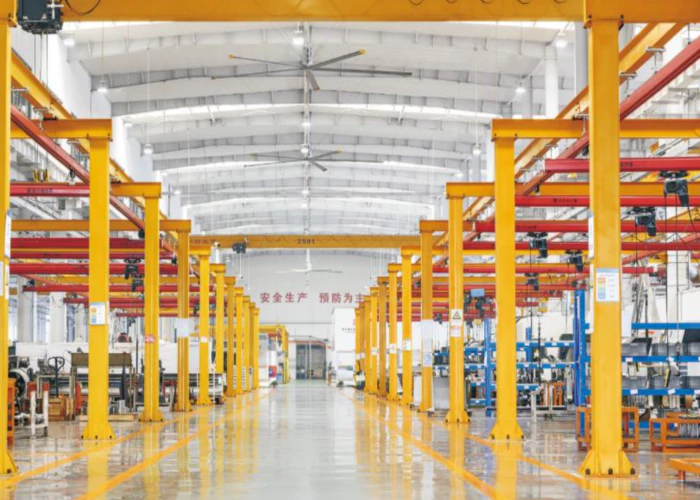
Entra (virtualmente) nella nostra fabbrica
We believe in total transparency. Don’t take my word for it—see the honing machines and assembly lines yourself.
👉 Clicca qui per visitare la nostra VR Factory
Non è richiesto alcun viaggio. Solo pura ingegneria.
FAQ: Common Questions We Get on the Support Line
What is the main technical difference between a plunger cylinder and a standard piston cylinder?
The biggest difference is the seal location. In a plunger (or ram) cylinder, the rod is the piston. There is no internal seal inside the barrel; the sealing happens at the gland (neck). This means the barrel doesn’t need to be honed to a mirror finish, making it tougher and cheaper for long strokes.
Can I use a single-acting plunger cylinder for horizontal pushing applications in construction?
You can, but it’s tricky. Since there’s no piston guide inside, the rod can sag at full extension if it’s horizontal, putting massive stress on the gland seals. If you must go horizontal, we have to engineer external guides or a crosshead system to support the weight.
How do I get a price quote for a custom replacement ram cylinder for a hydraulic press?
It is faster than you think. Just measure the rod diameter, the outer barrel diameter, and the closed length. Send those numbers to our engineering team via the contact form, and we usually turn around a quote with a 3D drawing within 24 hours.
Why is my hydraulic ram leaking oil from the top gland during the lifting cycle?
That is usually a sign of worn V-packing or a scored rod. Since the rod is the sealing surface, any scratch or dent on the chrome will tear up the gland seals instantly. Check the rod surface first before just throwing new seals at it.
Where can I find a manufacturer who builds large-bore plunger cylinders for marine ship lifts?
Right here. We specialize in large-diameter marine rams. We use special ceramic coatings or double-chrome plating to fight the saltwater corrosion that eats standard cylinders for breakfast.