Defining the geometric limits of modern rail infrastructure. Engineered to eliminate internal leakage and maintain absolute position holding in high-dust outdoor construction environments.
In the intricate choreography of metro construction, the Track Laying Vehicle serves as the primary architect of the rail alignment. While lifting and lining cylinders handle the bulk mass, the Limit Hydraulic Cylinder (often referred to as the locking or positioning cylinder) performs the most critical function: establishing the geometric boundaries of the operation. These actuators are not designed for continuous dynamic cycling, but rather for absolute rigidity. They must extend to a precise pre-set length and mechanically or hydraulically “lock” the work unit to prevent over-extension or to hold a fixed gauge width during the concrete pouring or ballast compaction phases.
The operational environment for these components is deceptively hostile. Unlike indoor factory automation, metro track laying occurs in a “gray zone” of semi-enclosed tunnels and open-air cuts. The cylinders are bombarded with cement dust, silica particulates, and metallic grinding debris. Standard hydraulic cylinders often fail in this application due to a specific phenomenon: Internal Leakage causing Position Drift. When fine dust contaminates the hydraulic fluid or damages the piston seal, the oil bypasses the piston head. In a limit cylinder, even a few milliliters of bypass can result in the track alignment drifting by several millimeters—a catastrophic failure in high-speed rail or metro standards.
To counter this, our engineering philosophy centers on a Pistone saldato a doppio effetto architecture crafted from Q345D Low-Alloy Steel. We diverge from standard chrome plating by utilizing an advanced Placcatura in nichel-cromo process. Nickel provides superior adhesion and corrosion resistance against the acidic humidity often found in curing concrete environments, while the outer chrome layer offers the necessary hardness. Furthermore, we address the critical “Limit Action” requirement by integrating specialized low-leakage sealing systems that prioritize static holding capability over high-speed actuation.
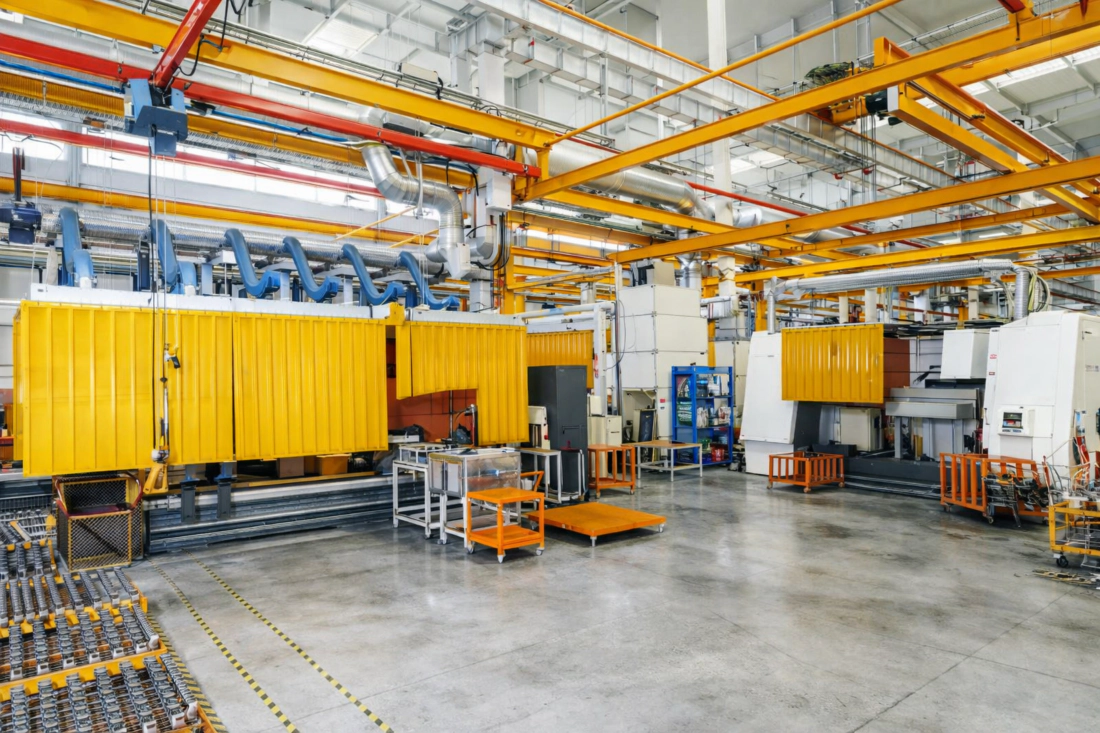
Step Inside Our Precision Manufacturing Hub
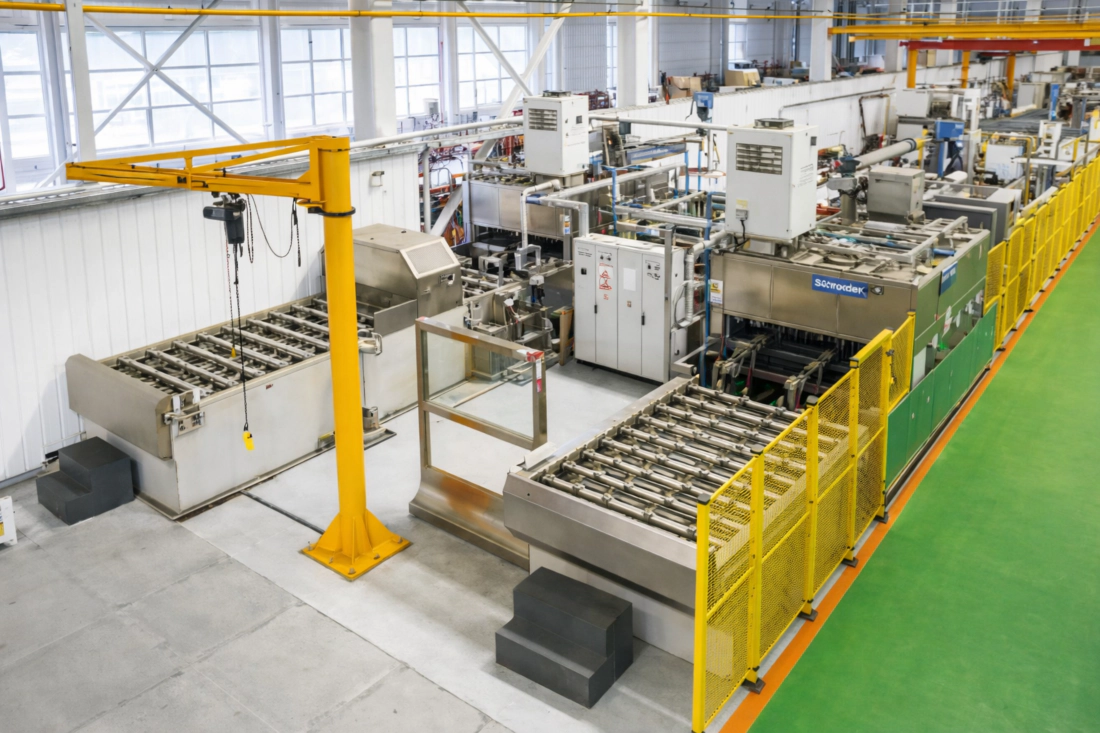
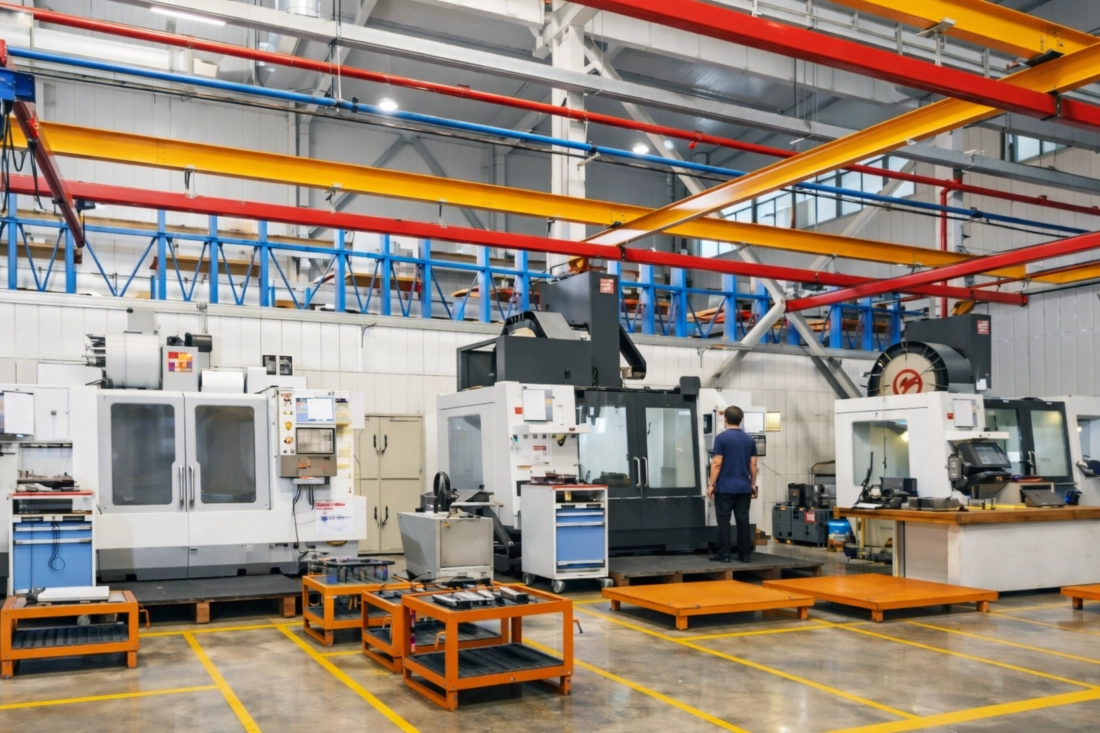
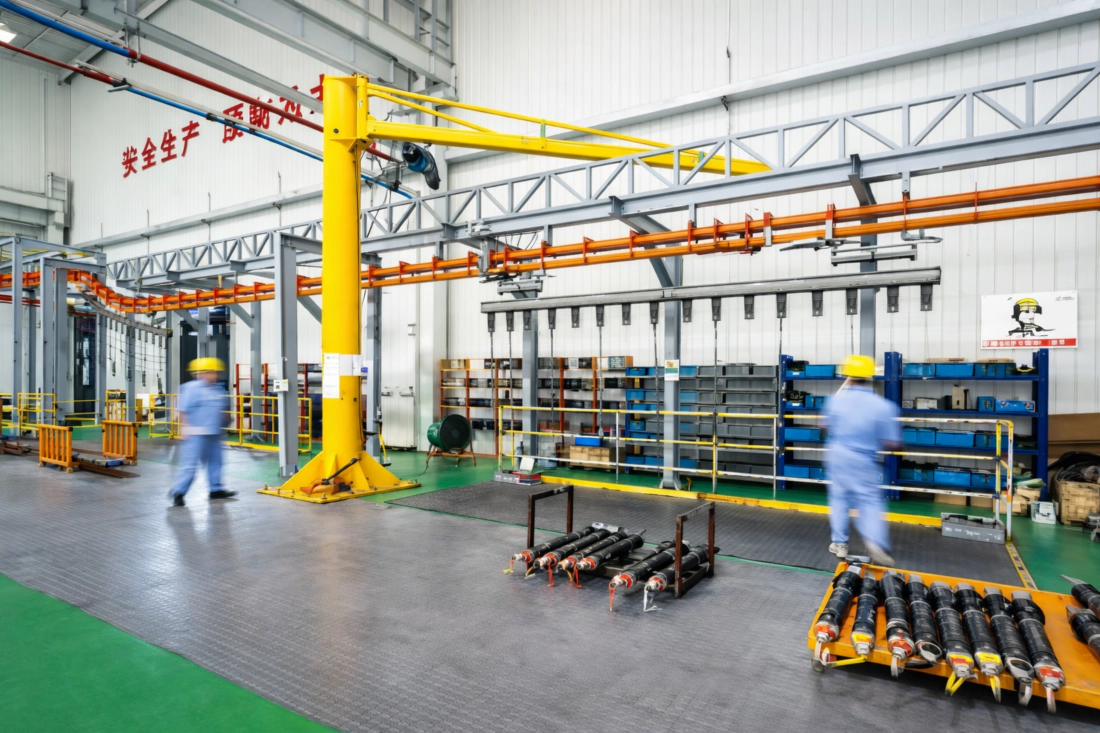
We believe that high-quality metallurgy should be visible. Take a virtual tour of our facility to see how we weld Q345D steel and apply micron-perfect Nickel plating to create the world’s most durable limit cylinders.
Re-Engineering for “Zero-Drift” Performance
Q345D Welded Integrity
Limit cylinders often act as mechanical stops. We utilize Q345D low-alloy structural steel for the barrel and end caps. Unlike cast steel, Q345D offers exceptional weldability and impact toughness down to -20°C. The fully welded construction eliminates the possibility of thread fatigue or bolt elongation that plagues tie-rod cylinders in high-vibration track laying scenarios.
Nickel-Chrome Surface
Standard chrome is porous. In the chemically aggressive environment of wet concrete and tunnel dampness, base metal corrosion is a major risk. Our cylinders feature a base layer of Electroless Nickel (20μm) followed by Hard Chrome (25μm). This “duplex” coating provides an impenetrable barrier against corrosion while maintaining the hardness required to resist scratching from ballast dust.
Low-Leakage Sealing
The primary failure mode is internal bypass. We employ a specialized “Zero-Leak” piston seal configuration, utilizing a pre-loaded elastomeric energizer with a PTFE cap. This design increases sealing force as pressure rises, ensuring that once the cylinder reaches its limit position, it holds that position indefinitely without the “creep” associated with standard U-cup seals.
Case Study: São Paulo Metro Line 6 Extension
Overcoming tropical humidity and abrasive soil conditions with custom limit hydraulics.
La sfida: The consortium responsible for the Line 6 project faced a critical issue with their gantry track laying machines. The positioning cylinders, responsible for setting the final spacing of the track slabs, were experiencing “morning drift.” After sitting overnight in the humid, dusty tunnel environment, the cylinders would lose pressure, requiring recalibration every shift. This delayed the start of work by 90 minutes daily, accumulating significant costs.
La soluzione: Ever Power engineering team diagnosed the issue as micro-corrosion on the rod surface damaging the soft polyurethane seals. We supplied a retrofit kit of 40 units of our Series-L Limit Cylinders. These featured our Q345D welded body and the proprietary Nickel-Chrome rod coating. We also upgraded the piston seal to a glass-filled PTFE composite to handle the abrasive silica dust.
The Results: The new cylinders maintained zero-drift holding capability for 48 hours in static tests. The “morning drift” was eliminated, saving the consortium an estimated $25,000 per week in labor and downtime.
Feedback del cliente
“The positioning accuracy is rock solid now. We set the gauge, and it stays set.”
— Carlos M., Site Superintendent
“We were skeptical about the Chinese supply chain initially, but the Q345D material certs and the finish quality were world-class.”
— Ana S., Procurement Manager
“The lead time was excellent. Getting these customized units in 35 days saved our schedule.”
— Roberto G., Maintenance Lead
Technical Specifications: Series-L Limit Cylinders
| Parametro | Configurazione standard | Heavy-Duty (Dust/Extreme) |
|---|---|---|
| Materiale strutturale | ST52 / E355 | Q345D (bassa lega ad alta resistenza) |
| Trattamento superficiale delle aste | Cromo duro (25μm) | Nickel (20μm) + Chrome (25μm) |
| Tecnologia di sigillatura | Standard Polyurethane (PU) | PTFE Slide Ring (Zero Static Leakage) |
| Guarnizione tergicristallo | Single Lip PU | Double Lip with Metal Scraper |
| Pressione di esercizio | 16 MPa | 25 MPa (Peak 32 MPa) |
| Intervallo di temperatura | da -20°C a +80°C | da -40°C a +110°C |
* All specifications can be customized to match specific OEM mounting dimensions (e.g., Plasser, Matisa, Harsco).
Broad Application in Railway Maintenance
The technology we developed for limit cylinders—specifically the Q345D welded structure and low-leakage sealing—is perfectly adaptable to other critical functions in the “Maintenance of Way” ecosystem.
- Rail Clamp Cylinders: Requires high holding force safety.
- Sleeper Placement Actuators: Requires precise sequencing.
- Conveyor Fold Cylinders: Requires mechanical locking integration.
- Stabilizer Leg Cylinders: Requires zero drift for machine safety.
Global Engineering, Direct from China
Located in the heart of China’s premier heavy industry zone, Ever Power leverages a mature supply chain to deliver world-class hydraulic solutions at competitive rates. We don’t just assemble; we innovate. Our proximity to top-tier steel mills allows us to source premium Q345D plates with full traceability.
Whether you are an OEM in Germany requiring a prototype for a new track layer, or a maintenance contractor in Brazil needing urgent replacement parts, our logistics team ensures seamless delivery. We offer full customization services, including CAD modeling and rapid prototyping.

Domande frequenti
What causes internal leakage in limit cylinders used in dusty environments?
Internal leakage is primarily caused by abrasive dust particles (like silica from ballast) entering past the wiper seal and scoring the piston rod or the bore. This creates a path for oil to bypass the seal. Our cylinders use Nickel-Chrome plating and aggressive double-lip wipers to prevent this ingress.
How much does a custom Q345D limit cylinder cost compared to standard models?
While a Q345D welded cylinder with Nickel plating has a slightly higher initial manufacturing cost than a standard tie-rod cylinder, the Total Cost of Ownership is lower. The extended lifespan and elimination of downtime due to drift often result in a 30-40% operational saving. Contact us for a precise price quote tailored to your specs.
Why is Nickel plating recommended over chrome for metro tunnel construction?
Metro tunnels are often damp and acidic due to curing concrete and groundwater. Standard chrome is hard but micro-porous, allowing corrosion to reach the base steel. Nickel provides a dense, non-porous barrier layer that seals the steel, offering superior chemical resistance in these specific environments.
Can you manufacture replacement limit cylinders for Plasser & Theurer machines?
Yes, we are experts in aftermarket solutions. We can reverse engineer and manufacture drop-in replacements for Plasser, Matisa, and other major rail equipment brands, often upgrading the material to Q345D for better durability. Visit our Chi siamo page to learn about our engineering capabilities.
Stop Position Drift Before It Starts
Equip your track laying fleet with the reliability of Q345D Welded Limit Cylinders.